
Latest News
NUG Leaders Must Kick Off E-ID Cards Distribution Date Immediately

![TAZKERA __22-08-2015 DARI - SOT.avi_snapshot_00.02_[2015.08.23_10.24.04]](https://ariananews.af/wp-content/uploads/2015/08/TAZKERA-__22-08-2015-DARI-SOT.avi_snapshot_00.02_2015.08.23_10.24.04.jpg)
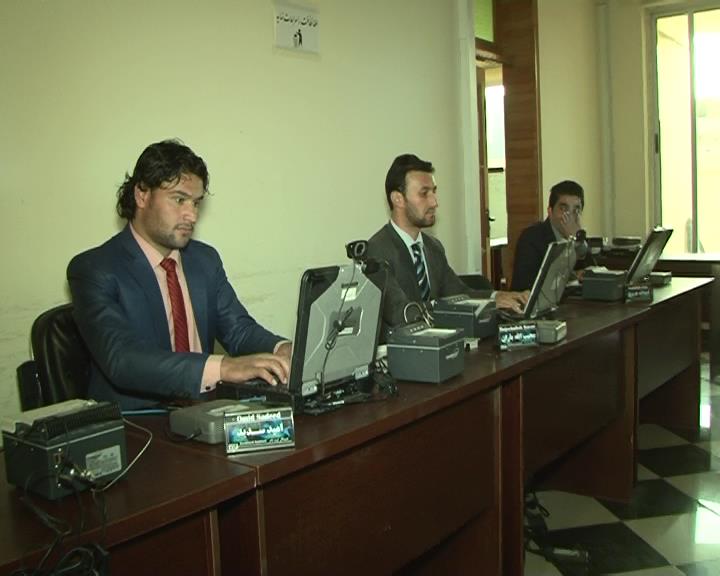
The Afghan government is obliged to distribute the national electronic ID cards immediately as the Population Registration Act has already been approved.
The Population Registration Act was approved at the end of President Hamid Karzai’s government and his successor President Ghani issued a decree to publish the law in the official gazette.
According to the law the distribution process of the electronic ID cards was supposed to be started, but it is still suspended.
Recently Chief Executive of Afghanistan Abdullah Abdullah announced during minister’s council that the process will be started on August 19, at Afghanistan’s Independence Day, but the due date is still in a vague.
![TAZKERA __22-08-2015 DARI - SOT.avi_snapshot_00.47_[2015.08.23_10.24.59]](https://ariananews.af/wp-content/uploads/2015/08/TAZKERA-__22-08-2015-DARI-SOT.avi_snapshot_00.47_2015.08.23_10.24.59.jpg) Expert says,” Legally, any law after the Parliament approval and after the President signed is enforceable; therefore, the Population Registration Act is applicable, but there are some political issues and a number of circles have seized the law,” Abdul Subhan Mosbah deputy of Afghanistan’s Lawyers Union said.
Expert says,” Legally, any law after the Parliament approval and after the President signed is enforceable; therefore, the Population Registration Act is applicable, but there are some political issues and a number of circles have seized the law,” Abdul Subhan Mosbah deputy of Afghanistan’s Lawyers Union said.
After Minister’s Council decided to launch the distribution of e-ID cards President Ghani announced that technical issues still exist which delays the process, but officials in the electronic ID Card office said there are will prepared to start the process.
Now, a number of people and experts say they will not accept any excuse to delay the process anymore.
“There is no legal obstacle to distribute electronic ID cards, unfortunately the process was stopped by a verbal decree, even donors have warned to cut funds if the process delays anymore, there is no excuse to stop distribution process,” Senate member Faisal Samay said.
At the same time a number of civil society activists says the national unity government leaders are cheating people on due date of the process.
“Unfortunately Afghanistan’s political leaders deceive people, they always play with public opinions, if the process delays or stopped it will bring a huge distrust gap in the society which is harmful for the government and for the national unity,” Aziz Rafiy Managing Director of Afghan Civil Society Forum stated.
Delays in the distribution of the electronic ID cards process rose over the word ‘Afghan’ after a group of people asked to mention the word in the electronic ID card.
![TAZKERA __22-08-2015 DARI - SOT.avi_snapshot_00.45_[2015.08.23_10.24.51]](https://ariananews.af/wp-content/uploads/2015/08/TAZKERA-__22-08-2015-DARI-SOT.avi_snapshot_00.45_2015.08.23_10.24.511.jpg)
Reported by: Hameed Sediqi

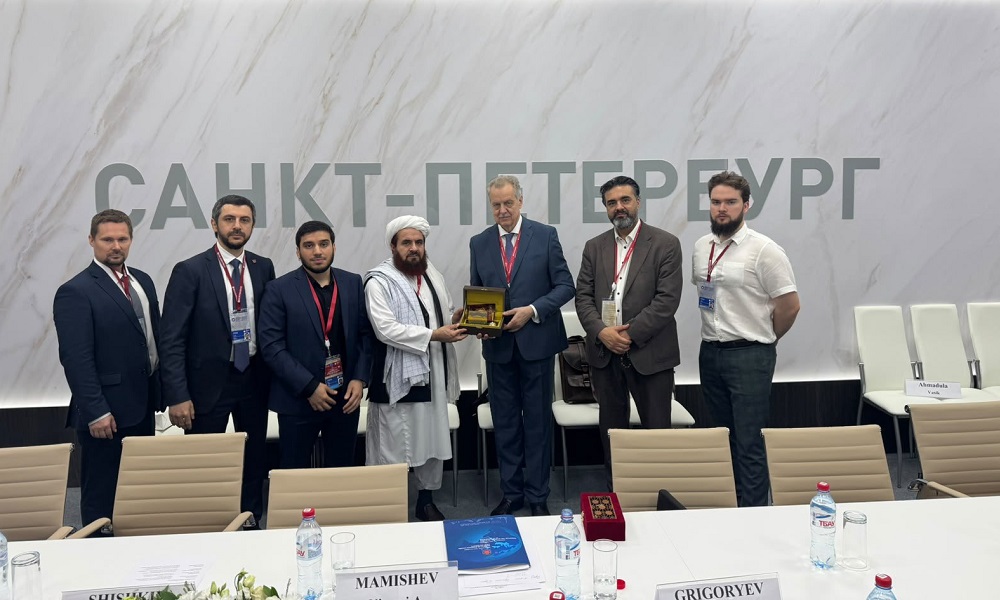
Gul Hassan Hassan, the Islamic Emirate of Afghanistan’s Ambassador to Moscow, met Saturday separately with Russian Deputy Prime Minister Alexey Overchuk, President of the Russian Chamber of Commerce and Industry Sergey Katyrin, and several other Russian officials on the sidelines of the St. Petersburg International Economic Forum.
According to the Afghan Embassy in Russia, the discussions focused on strengthening bilateral economic and trade ties, expanding opportunities for Afghan traders, and supporting Afghan nationals and students residing in St. Petersburg.
Latest News
Canada convenes UN Afghanistan meeting amid ongoing humanitarian crisis
The meeting comes as the UN Security Council prepares to renew UNAMA’s mandate before its expiry on 17 June, alongside its quarterly briefing on Afghanistan.
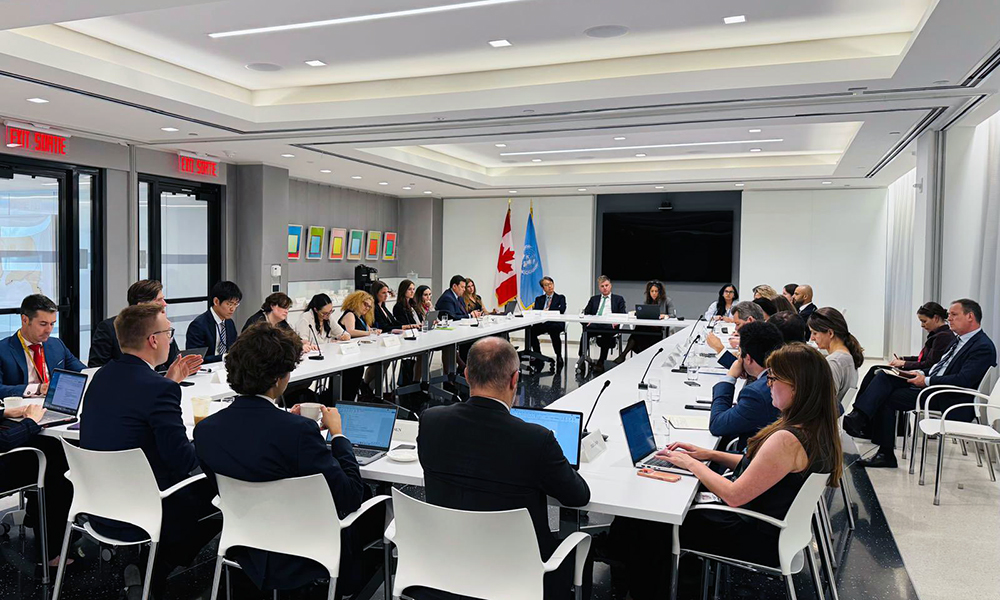
Canada has convened a meeting of the Group of Friends of Afghanistan at the United Nations, bringing together international partners to assess the country’s worsening political, humanitarian, security, and human rights situation ahead of a key UN Security Council review of the mission in Kabul.
Briefings from the United Nations Assistance Mission in Afghanistan (UNAMA) and the International Committee of the Red Cross (ICRC) highlighted the scale of Afghanistan’s ongoing crises, including severe humanitarian need, rising insecurity, and deepening restrictions on human rights.
UN officials warned that nearly 21.9 million people require humanitarian assistance in 2026, with millions facing acute food insecurity and a worsening child malnutrition crisis.
Funding shortfalls and restricted humanitarian access continue to limit relief operations, while large-scale returns from Iran and Pakistan are adding further pressure on already overstretched systems.
Security concerns remain acute, with UNAMA reporting continued cross-border tensions between Afghanistan and Pakistan, including intermittent clashes, airstrikes, and drone activity. These incidents have disrupted trade routes, heightened regional instability, and contributed to civilian casualties.
Human rights conditions, particularly for women and girls, were also raised as a central concern, with UN agencies warning that ongoing restrictions are deepening exclusion from education, work, and public life, and entrenching systemic discrimination.
The meeting comes as the UN Security Council prepares to renew UNAMA’s mandate before its expiry on 17 June, alongside its quarterly briefing on Afghanistan. Diplomats are expected to review the mission’s role amid calls from some members for a strategic reassessment of its priorities.
While Council members broadly agree on the need for an inclusive government and prevention of terrorism, divisions remain over international engagement, sanctions, and the linking of aid to human rights conditions.
Canada has continued to position the Group of Friends as a platform to sustain international attention on Afghanistan and coordinate responses to the country’s prolonged crisis.
Latest News
Uzbekistan advances feasibility study for Trans-Afghan Railway Project
The project gained momentum in July 2025 when Uzbekistan, Afghanistan and Pakistan signed a trilateral agreement in Kabul to jointly prepare the feasibility study for the railway.
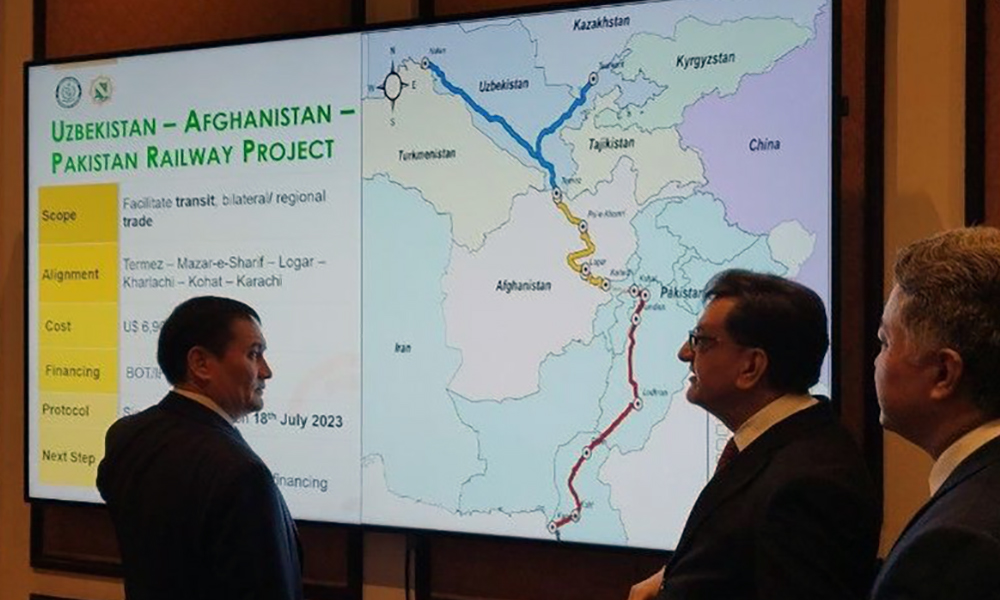
Uzbekistan has entered the active phase of preparing a feasibility study for the proposed Trans-Afghan Railway Project, a key regional initiative aimed at strengthening transport and trade links between Central and South Asia.
Speaking on the sidelines of the Termez Dialogue in Tashkent, Uzbekistan’s Deputy Minister of Investment, Industry and Trade, Shokhrukh Gulyamov, said field studies and technical assessments for the project are already underway.
“We have already begun the active phase of preparing the feasibility study for this project,” Gulyamov said, adding that authorities expect to have concrete figures by the end of the year to help determine the next stage of implementation.
The Trans-Afghan Railway Project is expected to connect Central Asian countries with Pakistani ports through Afghanistan, creating a shorter and more efficient trade route between Central and South Asia. Officials view the railway as one of the region’s most important connectivity initiatives.
Gulyamov said the project could eventually become part of a broader transport network across Afghanistan, further enhancing regional trade and transit opportunities.
He also noted that the railway complements wider regional infrastructure efforts, including cooperation with Kazakhstan and Kyrgyzstan and the China-Kyrgyzstan-Uzbekistan railway project.
According to Uzbek officials, growing trade volumes between Central and South Asia are increasing the need for expanded transport infrastructure and alternative transit corridors.
The project gained momentum in July 2025 when Uzbekistan, Afghanistan and Pakistan signed a trilateral agreement in Kabul to jointly prepare the feasibility study for the railway.
Once completed, the study is expected to provide key details on project costs, financing options, technical requirements and potential implementation timelines.
The proposed railway is widely seen as a strategic project that could boost regional connectivity, facilitate trade and strengthen economic integration across Central and South Asia.


Tahawol: Impact of Middle East crisis on aid transfers to Afghanistan

Saar: Calls to strengthen economic and trade cooperation discussed

Afghan ambassador in Moscow, Russian deputy PM discuss economic ties

Canada convenes UN Afghanistan meeting amid ongoing humanitarian crisis

Uzbekistan advances feasibility study for Trans-Afghan Railway Project

New Afghanistan-China transport corridor launched via Turkmenistan

Afghanistan signs $46 million deal to develop standard laboratory complexes

Large blast near Beit Shemesh part of pre-planned test: Israeli defense firm

Trump returns from China with stability but little progress

Afghanistan announce squad for India series
Tahawol: Impact of Middle East crisis on aid transfers to Afghanistan
Saar: Calls to strengthen economic and trade cooperation discussed

Tawsia: Signing of $20 million Herat salt mining deal discussed

Tahawol: Discussion on fear of internal disputes in Iran

Tahawol: Welcoming Qatar’s cooperation with Afghanistan discussed
-
 Business3 days ago
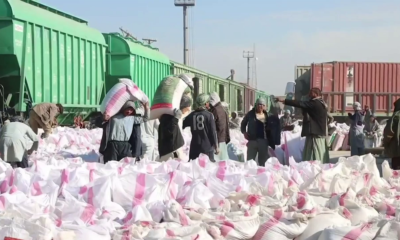
Afghanistan’s trade with Central Asia records sharp growth
-
 Latest News5 days ago
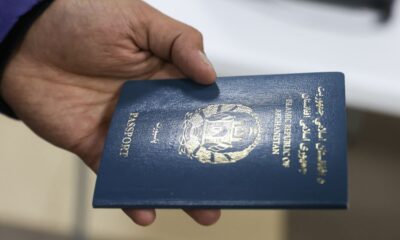
Russian business official proposes visa-free travel between Russia and Afghanistan
-

 Sport2 days ago
Gaikwad set to replace injured Kohli for Afghanistan ODI Series
-
 Latest News5 days ago
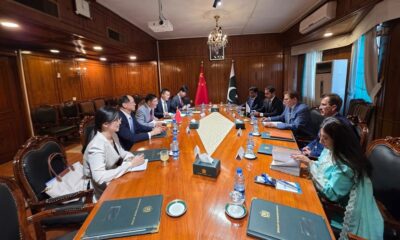
China and Pakistan’s special envoys for Afghanistan discuss Urumqi Process
-

 Sport5 days ago
Six Afghan cricketers selected for 2026 Lanka Premier League
-

 Latest News4 days ago
Three Afghans among four farmworkers burned alive in Italy; two Pakistanis arrested
-

 Sport3 days ago
Afghanistan name squad for A-team tri-series in Sri Lanka
-

 Latest News5 days ago
Russia-Afghanistan military deal focuses on repair of Soviet-made equipment, Kabulov says