
Business
Salvager hopes to free ship blocking Suez Canal by start of next week

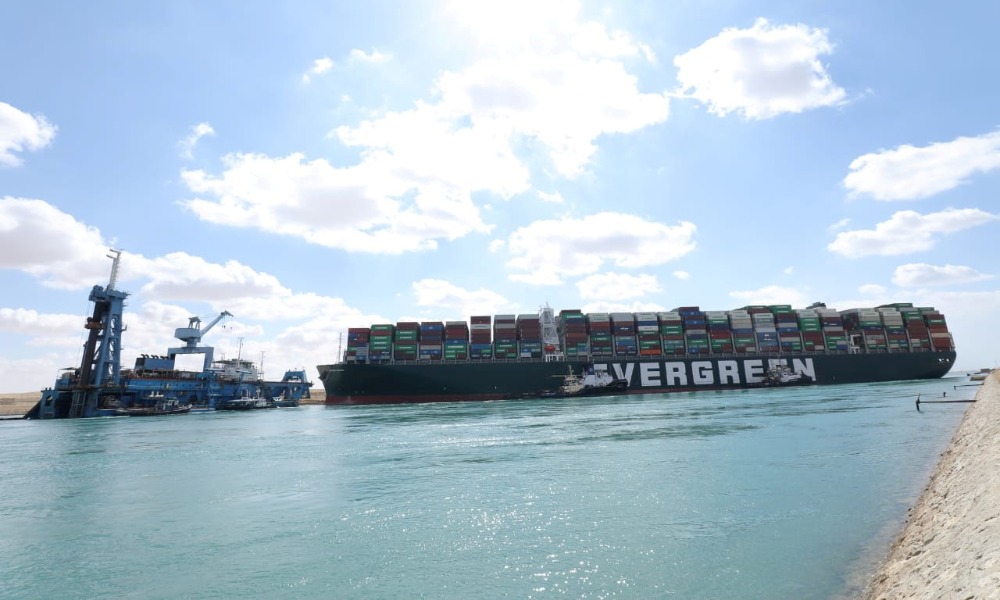
A giant container ship grounded in the Suez Canal could be freed by the start of next week if heavier tugboats, dredging, and a high tide succeed in dislodging it, Reuters reported, citing a Dutch firm working to free the vessel.
According to the report, the 400-meter (430-yard) long Ever Given became wedged diagonally across a southern section of the canal amid high winds early on Tuesday, disrupting global shipping by blocking one of the world’s busiest waterways.
About 15% of world shipping traffic passes through the canal, and hundreds of vessels are waiting to pass through the waterway once the blockage has been cleared.
Dredgers had removed some 20,000 tonnes of sand from around its bow by Friday, but tugging operations to free the ship were suspended overnight.
“We aim to get it done after the weekend, but everything will have to work out exactly right for that,” Peter Berdowski, chief executive of Boskalis, told Dutch TV program Nieuwsuur late on Friday.
Boskalis owns Smit Salvage, which was brought in this week to help with efforts by the Suez Canal Authority (SCA) to dislodge the ship.
“The bow is really stuck in the sandy clay, but the stern has not been pushed totally into the clay, which is positive. We can try to use that as leverage to pull it loose,” Berdowski said.
“Heavy tugboats, with a combined capacity of 400 tonnes, will arrive this weekend. We hope that a combination of the tugboats, dredging of sand at the bow and a high tide will enable us to get the ship loose at the beginning of next week.”
Egyptian Prime Minister Mostafa Madbouly on Saturday thanked foreign partners for offers to help refloat the ship and said the SCA’s chairman would brief media shortly on details of the operation to release the ship.
TANKER RATES UP
Shipping rates for oil product tankers nearly doubled after the ship became stranded, and the blockage has scrambled global supply chains, threatening costly delays for companies already dealing with COVID-19 restrictions.
If it drags on, shippers may decide to reroute around the Cape of Good Hope, adding about two weeks to journeys and extra fuel costs.
A total of 288 vessels were waiting to enter or continue their transit through the canal as of Friday, including 65 container ships, 63 bulk carriers and 23 liquefied natural gas (LNG) or liquefied petroleum gas (LPG) carriers, according to a shipping source.
Three shipping agents said on Saturday that none of the ships waiting at the canal’s entrances had yet requested to be rerouted.
Boskalis and Smit Salvage have warned that using too much force to tug the ship could damage it.
Berdowski said a land crane would be brought in at the weekend which could lighten the Ever Given’s load by removing containers, though experts have warned that such a process could be complex and lengthy.
“If we don’t succeed in getting it loose next week, we will have to remove some 600 containers from the bow to reduce the weight,” he said.
“That will set us back days at least, because where to leave all those containers will be quite a puzzle.”




Business
Afghanistan-Kazakhstan trade reaches $581 million in six months
The latest discussions come as Kabul and Astana work on a bilateral economic cooperation roadmap, with the two countries aiming to increase annual trade to $3 billion.
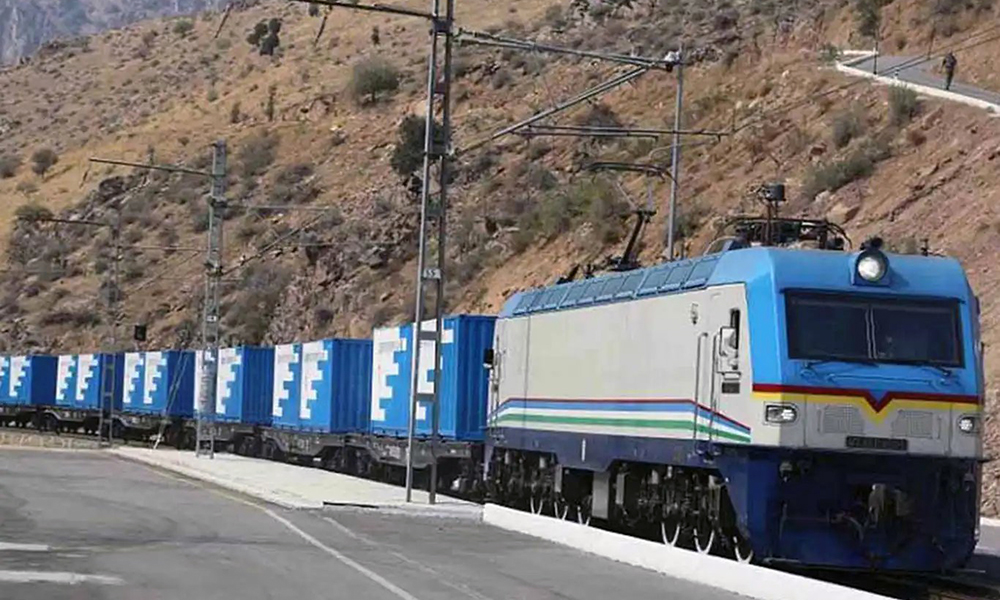
Trade between Afghanistan and Kazakhstan reached $581 million in the past six months, officials in Afghanistan’s western Herat province said.
The figure was discussed during a meeting between Herat Governor Noor Ahmad Islam Jar and a Kazakh delegation led by Yerkin Tukumov, Kazakhstan’s special representative for Afghanistan.
Tukumov stressed the need to expand transit capacity and remove customs barriers to facilitate increased trade between the two countries. He also invited Afghan officials to attend a joint economic meeting scheduled to take place in Kazakhstan.
Islam Jar highlighted Herat’s strategic location and security, describing the province as having significant potential to serve as a hub for investment and regional trade.
Afghanistan and Kazakhstan have previously discussed expanding trade in agricultural products, including Afghan agricultural exports in exchange for flour imports from Kazakhstan.
The two sides have also reached understandings on cooperation over the Torghundi-Herat railway project, which is intended to strengthen transport and trade links.
The latest discussions come as Kabul and Astana work on a bilateral economic cooperation roadmap, with the two countries aiming to increase annual trade to $3 billion.
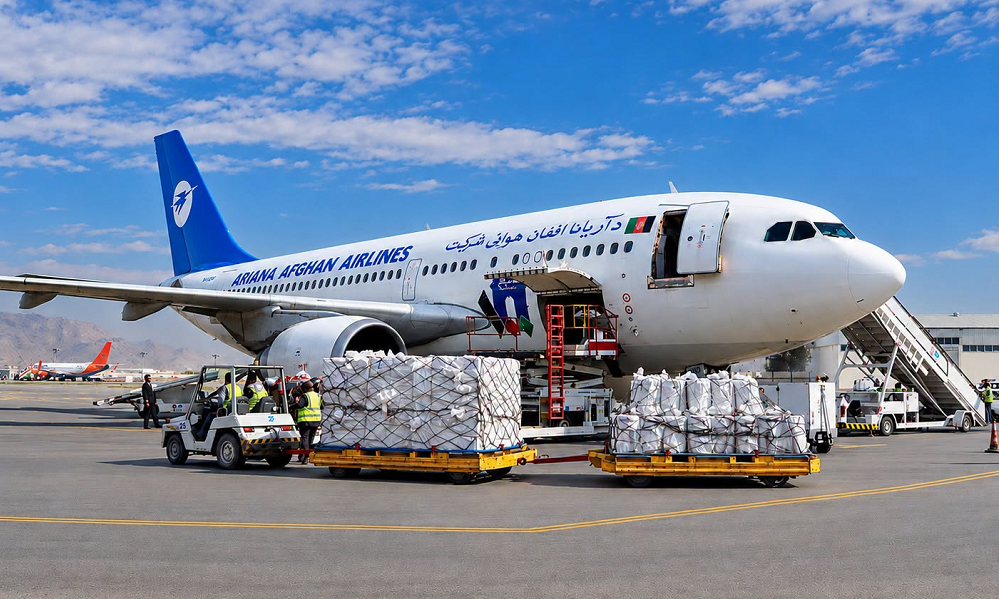
Ariana Afghan Airlines has increased cargo flights between Kabul and Delhi to facilitate the transportation of commercial goods and support Afghan traders.
In a statement issued Saturday, the airline said it will now operate two scheduled cargo flights daily on the Kabul-Delhi route, up from one flight per day previously.
The airline said Afghan traders and commercial companies can use the daily cargo services to transport their goods quickly, safely and reliably between Afghanistan and India.
Ariana Afghan Airlines said it is working to further expand and improve its air cargo services to support trade, meet the needs of Afghan traders and facilitate Afghanistan’s exports and imports.
Business
Afghanistan, Turkmenistan agree to establish joint road transport commission
The sides also agreed to establish a joint commission to address road transport issues and improve coordination.
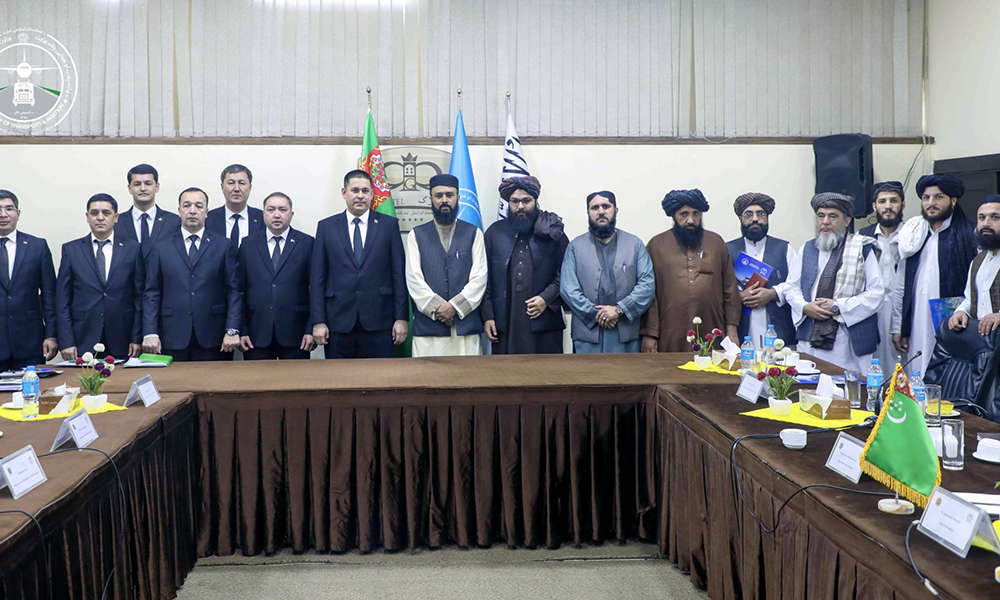
Afghanistan and Turkmenistan have agreed to establish a joint commission on road transport and facilitate transit between the two countries following two days of talks in Herat.
Afghanistan’s Ministry of Transport and Civil Aviation said the meeting brought together technical delegations from both countries to strengthen bilateral transport and transit cooperation.
The talks focused on easing visa procedures for Afghan and Turkmen drivers and traders, operationalising the Lapis Lazuli transit corridor and increasing the movement of transit vehicles between the two countries.
The sides also agreed to establish a joint commission to address road transport issues and improve coordination.
Representatives from Afghanistan’s ministries of foreign affairs, industry and commerce and the railway authority attended the talks, alongside the Ministry of Transport and Civil Aviation. Railway links, bilateral trade and wider transit cooperation were also discussed, with private-sector representatives expected to participate in future discussions.
The agreement comes as Turkmenistan works to strengthen its role as a regional transport and logistics hub, using its road, rail and Caspian Sea infrastructure to connect Central Asia with markets to the west and south.
A key part of that network is the International Seaport of Turkmenbashi, which links Turkmenistan with Azerbaijan and onward routes towards the South Caucasus and Europe.
Turkmenistan’s transport infrastructure also forms part of the wider Middle Corridor, or Trans-Caspian International Transport Route, connecting China and Central Asia with Azerbaijan, Georgia and Türkiye before reaching European markets.
For Afghanistan, the Lapis Lazuli Corridor is particularly important. It connects Afghanistan through Turkmenistan and across the Caspian Sea to Azerbaijan, Georgia and Türkiye, providing a potential route towards European markets.
Rail links such as the Herat-Torghundi line could further connect Afghanistan’s markets with Turkmenistan’s wider transport network.
The latest agreement puts road transport and transit facilitation at the centre of efforts by the two neighbours to expand trade and strengthen regional connectivity.


Khalilzad calls for end to Pakistan’s ‘double game’, urges new chapter with Afghanistan

Afghanistan-Kazakhstan trade reaches $581 million in six months

Trump says men arrested at UK air base used by US planned ‘big damage’

Serbia’s President Vucic resigns ahead of October parliamentary elections

Floods, landslides kill 56 in India and 14 in Nepal

Saudi energy group signs major Afghanistan deals covering gas exploration and pipeline plans

Trump floats idea of renaming Atlantic or Pacific Ocean

Nepal flood rescue mission enters critical phase as thousands remain missing

Iranian clubs to face Gulf opponents at neutral venues in Asian Champions League Elite

Khalilzad: Afghanistan ready to attract major investment

Saar: Afghanistan’s image at UNGA

Saar: Concerns over Pakistan’s political crisis discussed

Exclusive interview with Abdul Latif Mansoor, Minister of MRRD

Tawsia: Overview of Afghanistan’s iron mines

Tahawol: Discussion on fresh Pakistani airstrikes on Afghanistan
-

 Latest News5 days ago
Ariana Afghan Airlines ranks seventh among 45 Central Asian airlines
-

 Regional4 days ago
Iran airlines cancel flights as US sanctions hit
-

 Latest News5 days ago
Silk Road highway in Wakhan corridor now reaches the China border
-

 Sport4 days ago
Afghanistan open Asian Games cricket campaign with win over Japan
-
 World4 days ago
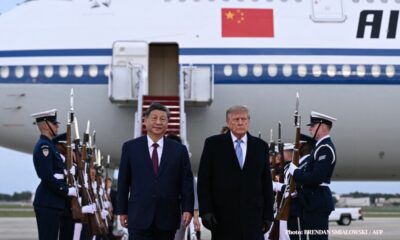
Trump welcomes Chinese President Xi as US-China summit gets underway
-
 Latest News5 days ago
Refugees minister, UNAMA deputy discuss challenges facing returnees
-
 Latest News4 days ago
Khalilzad warns Pakistan-Afghanistan tensions likely to worsen after fresh airstrikes
-

 Latest News1 day ago
Afghanistan says 28 killed, 32 captured in Nuristan operation