
Latest News
MSF reports basic medical needs of Afghans are not being met

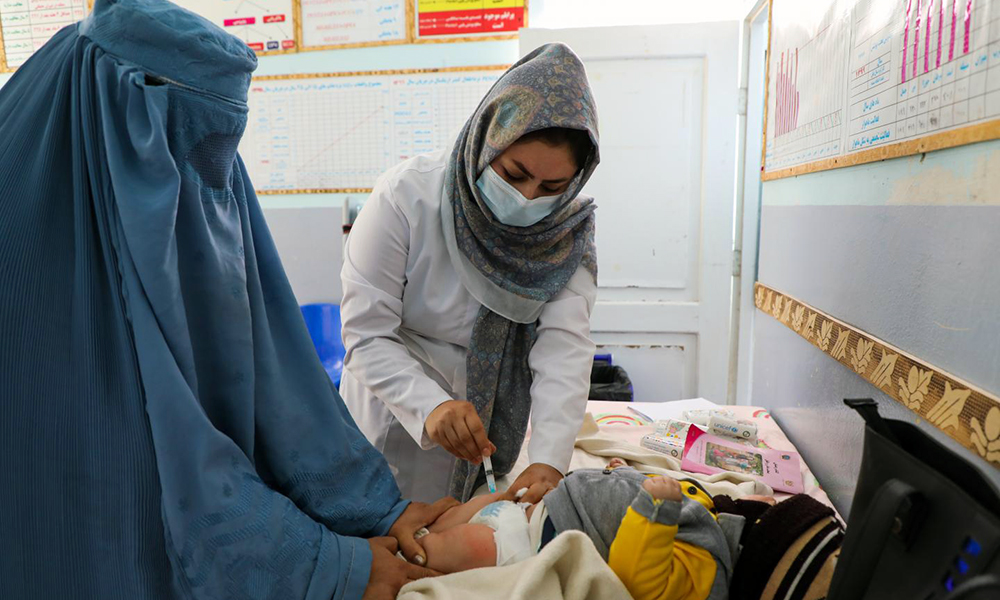
Médecins Sans Frontières/Doctors Without Borders (MSF) on Tuesday said despite the international community having touted the achievements of Afghanistan’s health care delivery model, strong evidence shows that the health system is unable to meet the basic medical needs of Afghans.
“Public health facilities in Afghanistan are under-funded and under-resourced, lacking qualified personnel, equipment, medicines and medical supplies.”
In a briefing paper published Tuesday MSF said Afghans today are struggling to access basic healthcare facilities as a result of violence and insecurity, poverty, and an under-funded and under-resourced health system.
“Every day, Afghans must undertake dangerous journeys across active frontlines and mined roads, through checkpoints and areas controlled by armed groups to seek medical care.
“They are often unable or too afraid to leave their homes, and, when medical emergencies happen, such delays can prove fatal.”
MSF also stated that healthcare facilities in Afghanistan are attacked more often than almost anywhere in the world, forcing their temporary or permanent closure and depriving millions of access to vital medical services.
“In addition to creating a climate of fear, such attacks severely limit access to vital medical services by forcing health providers to suspend or discontinue activities,” MSF reported.
Citing World Health Organization (WHO) findings, MSF stated that up to three million people were deprived of essential health services in Afghanistan in 2020 as a result of health facilities forced to close by parties to the conflict.
In addition, the organization said the humanitarian crisis, compounded by the health and socioeconomic shocks of the COVID-19 pandemic, is worsening throughout the country.
According to MSF, the COVID-19 pandemic has worsened the financial hardship for Afghans and that many have lost their livelihoods as a result of border closures, reduced commercial activity and job losses, and are receiving less in overseas remittances.
“Direct medical and non-medical costs put healthcare further out of reach for people living in poverty,” the report stated.
MSF stated that in recent years, “the international community has touted the achievements of Afghanistan’s health care delivery model, despite strong evidence that the health system is unable to meet Afghans’ basic medical needs.”
“Public health facilities in Afghanistan are under-funded and under-resourced, lacking qualified personnel, equipment, medicines and medical supplies.”
Actors, such as MSF, have stepped in to fill important gaps in health service provision. “However, the situation is not sustainable, as humanitarian needs multiply and add further pressure on already overburdened medical facilities,” MSF reported.
The organization also warned that national and international stakeholders must recognise that basic services, such as healthcare, are insufficient and incapable of addressing Afghans’ immediate needs, and that now is not the time to reduce humanitarian support to Afghanistan.
“Access to quality and affordable medical care for all must be made an urgent priority,” MSF said.

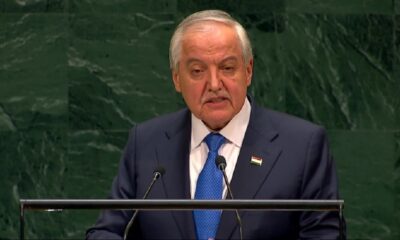




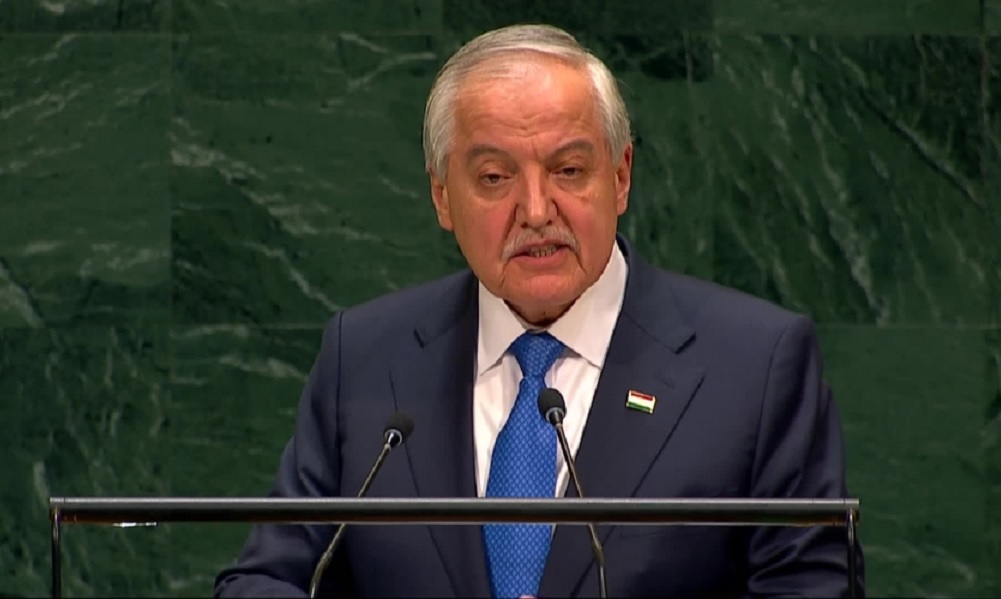
Tajikistan has reaffirmed its support for the Afghan people, stressing that peace, stability and economic opportunities in Afghanistan are closely linked to security and sustainable development in the region.
Speaking at the 81st session of the United Nations General Assembly in New York on Saturday, Tajik Foreign Minister Sirodjiddin Muhriddin said lasting security and sustainable development in the region are closely connected to the situation in Afghanistan.
“Afghanistan needs peace, stability and economic opportunity,” Muhriddin said.
He added that Tajikistan would continue to support the Afghan people and constructive regional cooperation aimed at achieving a peaceful and stable Afghanistan.
“When Tajikistan speaks about peace, we also speak from experience,” Muhriddin said.
Latest News
Germany reports 488 Afghans for possible deportation, 267 have no criminal convictions
The Interior Ministry says around 250 Afghan nationals have been deported to Afghanistan since the current coalition government took office.
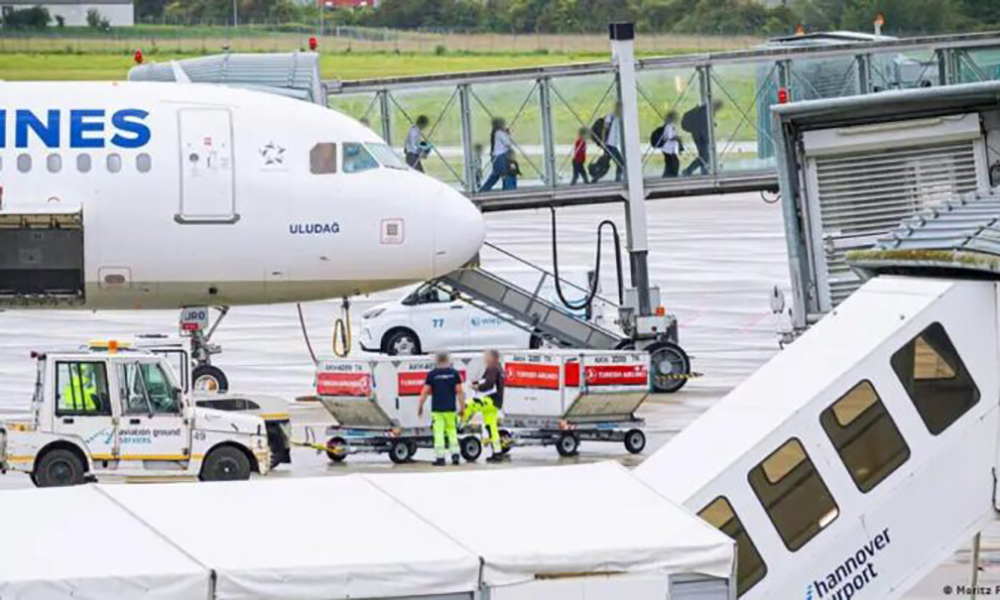
German authorities have identified 488 Afghan nationals for possible deportation to Afghanistan, including 267 who have no criminal convictions, according to figures from the Interior Ministry.
The figures were disclosed in a written response to a parliamentary inquiry by Left Party lawmaker Clara Bünger and reported by German media. They cover cases submitted by Germany’s federal states to the Federal Police between July 8 and September 18. All federal states except Bremen and Mecklenburg-Vorpommern submitted Afghan nationals for possible removal.
Seven Afghan nationals are currently being held in deportation detention at the request of the Federal Police, while another is in custody pending refusal of entry, the ministry said.
The figures come as Germany expands preparations for deportations to Afghanistan. In July, Germany carried out its first deportation of an Afghan national without a criminal conviction since the Islamic Emirate of Afghanistan (IEA) returned to power in 2021.
Germany had suspended deportations to Afghanistan following the IEA takeover in 2021. Flights resumed in 2024, initially focusing on people convicted of serious crimes. The government has since moved to broaden removals to some Afghans who have no criminal convictions.
The German government has said deportations should be carried out against people who are legally required to leave Germany and for whom no individual deportation ban applies. Earlier government statements said the initial focus would be on convicted criminals and people considered security threats.
The policy has drawn criticism from opposition politicians and refugee and human rights groups. Bünger questioned the deportation of Afghans without criminal convictions, citing security, humanitarian and human rights concerns in Afghanistan.
Germany’s Federal Constitutional Court has also ruled that the government cannot cancel certain humanitarian admission commitments to Afghans en masse without examining individual cases, adding to legal scrutiny of its Afghanistan policy.
The Interior Ministry says around 250 Afghan nationals have been deported to Afghanistan since the current coalition government took office.
Latest News
Afghanistan says 28 killed, 32 captured in Nuristan operation
The ministry claimed the individuals were subsequently sent into Afghanistan to create insecurity in Nuristan.
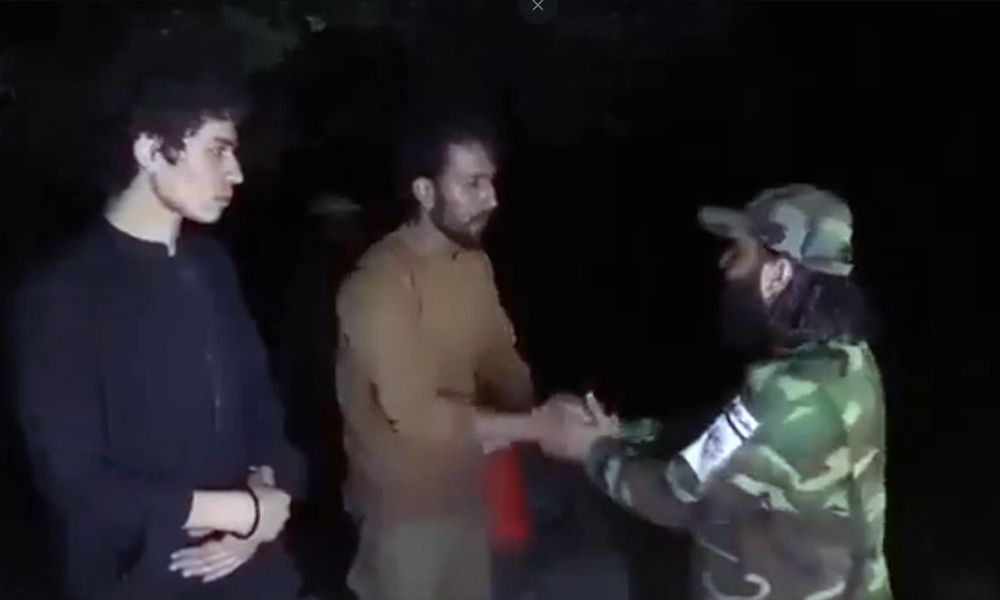
Afghanistan’s Ministry of Defense says its forces have killed 28 people and captured 32 others during an operation against groups it accused of attempting to enter the country through the Durand Line in Kamdesh district of Nuristan province.
In a statement issued on Saturday, the ministry said several groups affiliated with Daesh, along with what it described as “Shar-o-Fasad” elements, crossed into Afghan territory with the support and encouragement of Pakistani militias, allegedly with the aim of carrying out acts of subversion and creating insecurity.
The ministry said Afghan security and defense forces responded by launching operations against the groups.
“Twenty-eight of them were killed, while another 32 were captured alive,” the statement said. It added that a number of others fled back across the Durand Line or to the centres of Pakistani militias.
The Defense Ministry further claimed that Pakistani military personnel, Pakistan-affiliated “Arbaki” forces and Daesh elements were present in coordination with the groups, but fled the battlefield once fighting began.
The ministry also alleged that many of those involved were former military personnel who served under Afghanistan’s previous government.
According to the statement, Pakistani intelligence agencies allegedly took some of them to Pakistan after promising assistance in securing asylum and employment abroad, before transferring them to military camps along the Durand Line for training.
The ministry claimed the individuals were subsequently sent into Afghanistan to create insecurity in Nuristan.
It called on young people and former military personnel who it said had been deceived by Pakistani intelligence agencies and “Shar-o-Fasad” elements to avoid becoming involved in such activities and to surrender to Afghan security forces.
The statement also urged countries in the region to remain vigilant over what it described as Pakistan’s efforts to export conflict by training and deploying hostile groups into neighbouring countries.


Tajikistan reaffirms support for peace and stability in Afghanistan

Germany reports 488 Afghans for possible deportation, 267 have no criminal convictions

Afghanistan says 28 killed, 32 captured in Nuristan operation

Afghan bodybuilder Ali Bilal finishes runner-up at Mr Olympia for third straight year

UNDP, UN Women launch financing initiative for Afghan women entrepreneurs

Saudi energy group signs major Afghanistan deals covering gas exploration and pipeline plans

Trump floats idea of renaming Atlantic or Pacific Ocean

Nepal flood rescue mission enters critical phase as thousands remain missing

US hits Egyptian bank branches with Iran sanctions as war marks six months

Iranian clubs to face Gulf opponents at neutral venues in Asian Champions League Elite

Saar: Concerns over Pakistan’s political crisis discussed

Exclusive interview with Abdul Latif Mansoor, Minister of MRRD

Tawsia: Overview of Afghanistan’s iron mines

Tahawol: Discussion on fresh Pakistani airstrikes on Afghanistan

Saar: Calls for international support for Afghanistan discussed
-

 Latest News4 days ago
Ariana Afghan Airlines ranks seventh among 45 Central Asian airlines
-

 Regional4 days ago
US and Iran hold first talks since June after Trump’s ‘annihilation’ threat
-

 Regional3 days ago
Iran airlines cancel flights as US sanctions hit
-

 Latest News4 days ago
Silk Road highway in Wakhan corridor now reaches the China border
-
 Business4 days ago
Afghanistan, Turkmenistan agree to establish joint road transport commission
-
 Latest News4 days ago
India condemns Pakistani airstrikes on Afghanistan
-

 Sport3 days ago
Afghanistan open Asian Games cricket campaign with win over Japan
-
 World3 days ago
Trump welcomes Chinese President Xi as US-China summit gets underway