
Tahawol: Israel’s fierce attacks on Gaza discussed





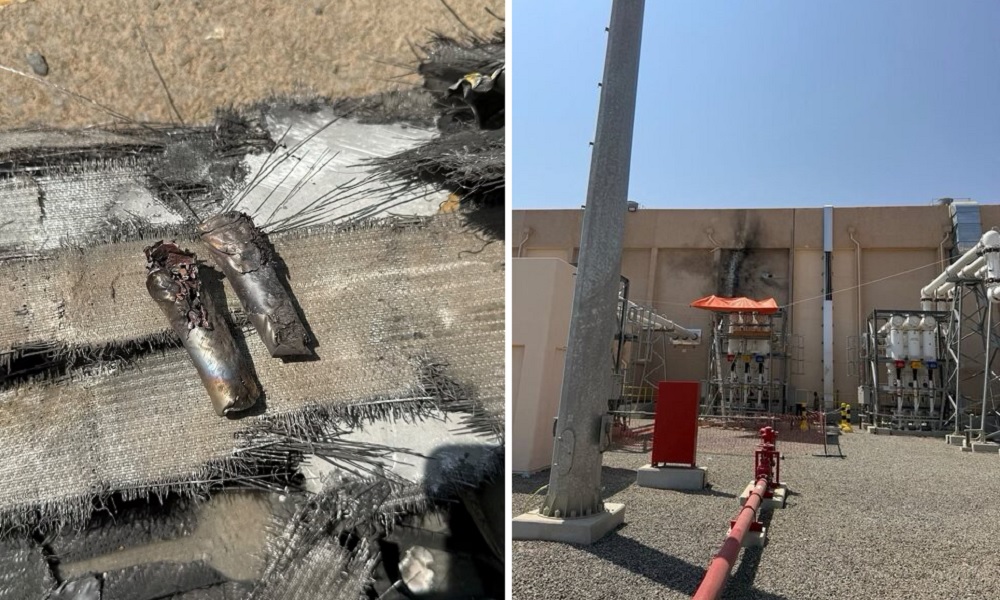
The Saudi-led coalition fighting Yemen’s Houthis said on Thursday that the Iran-aligned group had attacked a power distribution station in Medina which supplies electricity to the Prophet’s Mosque, one of Islam’s holiest sites.
The coalition said the attack put one transformer out of service but did not affect the power network. A Houthi military source, quoted by the Houthi-run Saba news agency, denied the coalition report, according to Reuters.
The Houthis later reported Saudi strikes on the Yemeni capital Sanaa and other parts of Yemen, with no immediate Saudi confirmation of the strikes.
A spokesperson for Yemen’s armed forces, which are aligned with the internationally recognised government, said coalition forces had attacked what it described as “high-value targets” in the capital Sanaa, without providing further details.
The recent escalation is the most serious fighting between Saudi Arabia and the Iran-aligned Houthis since a UN-brokered truce largely halted cross-border attacks in 2022.
Hostilities resumed this year after the Houthis declared a naval blockade on Saudi Arabia in July and began attacking Saudi territory and shipping, while Houthi forces also made major territorial gains along Yemen’s Red Sea coast.
Saudi Arabia has responded with air strikes in Yemen and backed government forces fighting to repel the Houthis.
The Saudi-led coalition said an investigation and examination of drone wreckage confirmed Houthi involvement in planning and carrying out Tuesday’s attack on the Medina power station.
A Houthi military source said the coalition claim was a “lie” intended to cover up what he described as Saudi Arabia’s failure to substantiate its earlier accusation that the Houthis targeted the Muslim holy city of Mecca, said the Saba news agency.
Saudi Arabia said two weeks ago it had intercepted and destroyed a Houthi drone south of Mecca before it entered restricted airspace over the city. The coalition described the incident as the second Houthi attempt to target Mecca since 2017, while the Houthis denied targeting Mecca or any other Islamic holy site.
The coalition said the Medina attack was part of what it described as repeated Houthi attempts to target the Two Holy Mosques and “provoke” Muslims worldwide. It said it would continue taking measures to protect the holy sites and pilgrims.
The coalition also said it had intercepted and destroyed a ballistic missile launched by the Houthis toward the southern Saudi city of Khamis Mushait. It gave no immediate details on any damage or casualties.
Local officials said early on Friday that the Houthis had also targeted the headquarters of the Saudi-led coalition forces command in Aden with several ballistic missiles and drones. There was no immediate comment from the coalition or the Houthis.
Latest News
UN expert calls for accountability after Pakistani airstrikes kill civilians in Afghanistan

UN Special Rapporteur on the situation of human rights in Afghanistan Richard Bennett has called for accountability following Pakistani airstrikes in Afghanistan’s Kunar and Helmand provinces that killed multiple civilians.
“Accountability is paramount after another air strike that has killed civilians, most of them children,” Bennett said in a post on X.
He questioned whether the incident resulted from “incompetence, negligence or worse,” adding that there was no justification for what he described as “irreparable harm” to civilians.
Bennett said the reported incident appeared to violate international human rights and humanitarian law.
The United Nations Assistance Mission in Afghanistan (UNAMA) said it had confirmed that at least 10 civilians were killed and nine others injured in the airstrikes carried out on Thursday.


Saudi-led coalition says Houthis attacked power station for Prophet’s Mosque in Medina

UN expert calls for accountability after Pakistani airstrikes kill civilians in Afghanistan

Tahawol: Pakistan’s airstrikes on civilians in Afghanistan discussed

Arman FC crush Toofan Herat 4-0 in ACL clash

Khurasan Faryab and Ariana Khost settle for 1-1 draw

Saudi energy group signs major Afghanistan deals covering gas exploration and pipeline plans

Iranian clubs to face Gulf opponents at neutral venues in Asian Champions League Elite

Khalilzad: Afghanistan ready to attract major investment

El Niño likely to intensify, may become strongest ever recorded, WMO says

Khyber Chamber demands reopening of Torkham crossing
Tahawol: Pakistan’s airstrikes on civilians in Afghanistan discussed

Tahawol: Improvement in Afghanistan-China relations discussed

Saar: Expanding ties with regional and global countries discussed

Tahawol: Absence of Afghanistan’s envoy at UNGA discussed

Saar: Assessment of war between Afghanistan and US discussed
-

 Sport5 days ago
Afghan bodybuilder Ali Bilal finishes runner-up at Mr Olympia for third straight year
-

 Latest News5 days ago
Afghanistan says 28 killed, 32 captured in Nuristan operation
-
 Sport4 days ago
Afghanistan vs India Asian Games quarter-final abandoned without a toss
-
 Latest News5 days ago
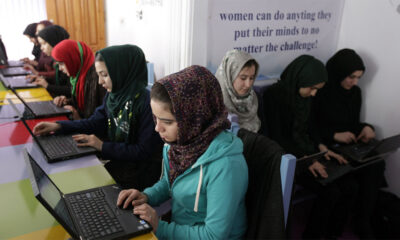
UNDP, UN Women launch financing initiative for Afghan women entrepreneurs
-
 Latest News5 days ago
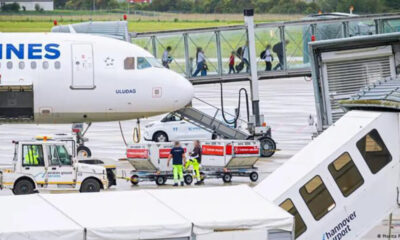
Germany reports 488 Afghans for possible deportation, 267 have no criminal convictions
-
 Regional4 days ago
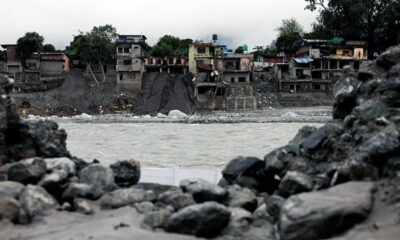
Floods, landslides kill 56 in India and 14 in Nepal
-

 World4 days ago
Trump says men arrested at UK air base used by US planned ‘big damage’
-
 Regional3 days ago
US, Iran separately talk with mediators in latest bid to end war