
Latest News
Pakistan offers 4,500 scholarships for Afghan students

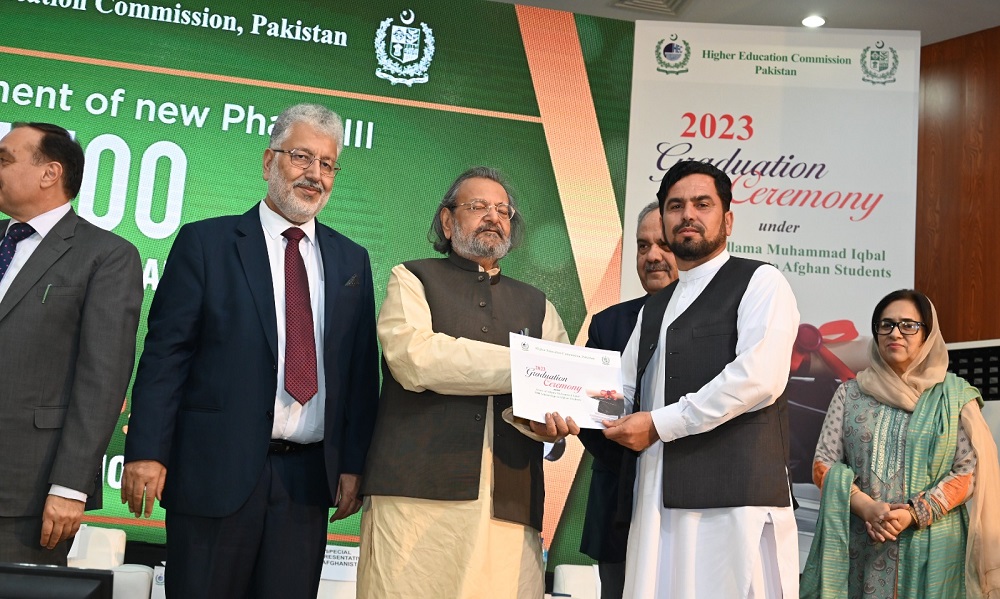
At a time when Pakistan is forcibly deporting undocumented Afghan nationals, the education ministry has launched the third phase of a scholarship programme to help Afghan students pursue higher education in the country.
“The Higher Education Commission (HEC) has launched the 3rd phase of the Allama Muhammad Iqbal Scholarships Programme for Afghan Nationals. Under this new phase, 4500 scholarships will be awarded to Afghan students over three years to study at ‘top-ranked’ Pakistani universities,” said the caretaker education minister, Madad Ali Sindhi.
He made these remarks while speaking at a graduation ceremony of 281 Afghan students who completed their studies under the phase-II of the programme, Dawn newspaper reported.
These students graduated from 25 universities across Pakistan and received their Bachelor’s and Master’s degrees in various disciplines, including medicine, engineering, agriculture, management and computer science. As many as 6,000 Afghan students were awarded scholarships during the first two phases.
Addressing the students, the caretaker minister emphasised that “this moment is the start of a new chapter in their lives”. He asked them to embrace the “increased sense of responsibility upon their return to Afghanistan”. The caretaker minister urged them to “identify challenges facing Afghanistan and utilise their intellectual capabilities to seek solutions”.
Sindhi emphasized the vital need for capacity building of Afghan students and faculty. He also acknowledged the crucial role of HEC in the provision of higher education opportunities for Afghan students via scholarships in Pakistan.
Earlier, HEC Chairman Mukhtar Ahmed congratulated the students on their achievements, commending them for their hard work and dedication. He appreciated the Afghan students who secured first positions in their respective degree programmes and acknowledged all the students for standing strong against numerous challenges as well.
Mukhtar also highlighted the importance of networking in career development, and encouraged the students to harness their potential, reminding them that “Pakistan is their second home”.
He underlined that Afghanistan deserves to flourish and become a developed nation. He applauded the vice chancellors for fostering an environment that “nurtures bright minds, ready to contribute effectively to their nation upon their return”.
Speaking on the occasion, Pakistan’s special envoy for Afghanistan, Asif Durrani, reflected on the “significant impact of such policies, where many Afghan alumni who pursued higher education opportunities in Pakistan are now actively contributing to various sectors in Afghanistan”. He extended his congratulations to the Afghan graduates and expressed hope that their return to Afghanistan would enable them to serve their nation effectively and take on diverse responsibilities.
He stressed that the knowledge and expertise these individuals acquired “will not only enlighten their families but will also foster informed decision-making in their professional and personal lives”.
He concluded by emphasizing the “symbiotic relationship between Pakistan and Afghanistan, underscoring the cherished bond that exists between the two countries and the positive impact it will have on their shared future”.












Kazakhstan’s Foreign Minister Mukhtar Tileuberdi has called for pragmatic and coordinated international engagement with Afghanistan, saying the country’s long-term stability is closely linked to the security and sustainable development of Central Asia.
Speaking during the general debate of the 81st session of the United Nations General Assembly in New York on Friday, Tileuberdi said humanitarian assistance to Afghanistan remains essential but alone cannot break the cycle of poverty, displacement and dependency.
He said Kazakhstan supports a “pragmatic, coordinated and step-by-step” approach to international engagement with Afghanistan, with the United Nations playing a central role.
Tileuberdi also said Kazakhstan is working with the UN to operationalize the United Nations Regional Centre for the Sustainable Development Goals for Central Asia and Afghanistan in Almaty.
He said the success of the centre should be measured by the results and assistance it delivers to the region.


Abu Muslim Farah defeat Khurasan Faryab 2-0 in ACL season six

Saar: Concerns over Pakistan’s political crisis discussed

Afghanistan Champions League: Omar Zawak Herat beat Toofan Herat 1-0

Blast in Pakistan’s Dera Ismail Khan kills 11, injures 30

Ariana Afghan Airlines increases Kabul-Delhi cargo flights

Saudi energy group signs major Afghanistan deals covering gas exploration and pipeline plans

Trump floats idea of renaming Atlantic or Pacific Ocean

US hits Egyptian bank branches with Iran sanctions as war marks six months

Nepal flood rescue mission enters critical phase as thousands remain missing

Iranian clubs to face Gulf opponents at neutral venues in Asian Champions League Elite
Saar: Concerns over Pakistan’s political crisis discussed

Exclusive interview with Abdul Latif Mansoor, Minister of MRRD

Tawsia: Overview of Afghanistan’s iron mines

Tahawol: Discussion on fresh Pakistani airstrikes on Afghanistan

Saar: Calls for international support for Afghanistan discussed
-

 World5 days ago
CNN, MS NOW and Politico sue Trump, challenging White House ban
-

 Latest News3 days ago
Ariana Afghan Airlines ranks seventh among 45 Central Asian airlines
-

 Latest News4 days ago
UN reiterates call for respect for international law after Kunar airstrikes
-

 Regional4 days ago
US and Iran hold first talks since June after Trump’s ‘annihilation’ threat
-

 Latest News3 days ago
Silk Road highway in Wakhan corridor now reaches the China border
-

 Latest News5 days ago
Afghan Official: Pakistan’s airstrikes will not go unanswered
-

 Sport4 days ago
Afghan boxing referee heads to China for international festival
-

 Regional5 days ago
G7 foreign ministers call on Iran to stop arming Houthis