
Science & Technology
Toyota plans to expand battery EV line-up in Europe to 6 models by 2026


Toyota Motor said on Monday it would increase its line-up of battery electric vehicles in Europe to six models by 2026 and it expected such vehicles to make up more than 20% of new car sales in the region by then.
The world’s largest automaker by sales said in a statement it expected to sell more than 250,000 battery-powered vehicles annually in Europe by 2026, as it seeks steep growth in a market where it has long been overtaken by rivals, Reuters reported.
On top of a battery EV the company is currently selling in Europe and a compact sports utility vehicle (SUV) concept it already showcased last year, Toyota unveiled two new concepts for models that it plans to sell in the region later this decade.
One was a concept model for a battery-powered small SUV that it plans to launch in Europe in 2024 and the other was a concept for a sports crossover model that is scheduled for introduction in 2025, Toyota said in statements.
Toyota is targeting sales of 1.5 million battery-powered vehicles a year globally by 2026.
Sales of fully electric cars in the European Union (EU) were up more than half over the first 10 months of the year compared to the same period a year earlier, data from the European Automobile Manufacturers Association showed last month.







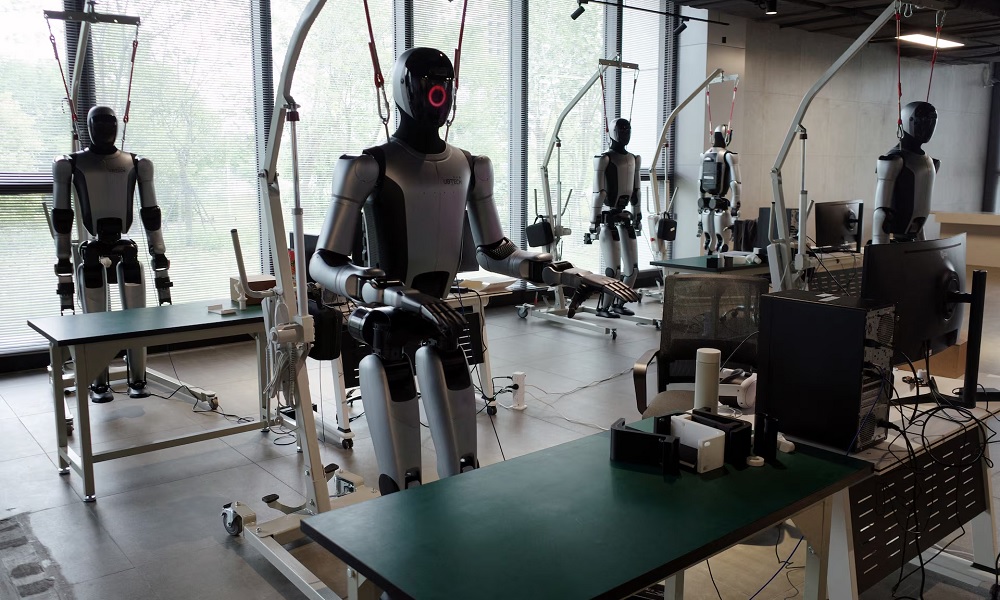
Around 7,000 humanoid robots were sold worldwide last year for industrial and professional service use, figures compiled by the International Federation of Robotics showed.
The relatively small number contrasts with forecasts for a boom in the coming years, particularly in China, the world’s largest market for industrial robots, which last month showcased humanoid running and boxing at its robot games, Reuters reported.
To qualify as humanoid under the IFR’s criteria, a robot must have a human-like appearance and operate autonomously in an environment designed for humans. Legs are not required.
The IFR data, reviewed by Reuters ahead of publication, offer one of the first industry-wide measures of a technology that is attracting billions of dollars in investments and producing impressive demonstrations.
However, the numbers of humanoids remain “a fraction” of the overall robot population globally, Susanne Bieller, secretary general of Frankfurt-based IFR, told Reuters.
This compares with around 542,000 regular industrial robots installed in 2024 and another estimated 199,000 service robots sold that year for use in transport, hospitality and cleaning. The 2025 data for industrial and service robots will be published September 24.
Bieller said that among humanoids sold in 2025, many were not doing productive work but were bought by research institutions or companies using them to generate data for improving AI models.
Carmakers, key early adopters, are running pilots with “single-digit or sometimes double-digit numbers of robots in their plants,” Bieller said.
IFR has compiled robotics statistics for three decades, and has begun collecting humanoid data alongside its much larger industrial robot and service robot figures for the first time.
Bank of America Global Research estimates that 90,000 humanoid robots will be shipped this year and 1.2 million by 2030. The IFR’s tally is based on supplier and national industry association data, and excludes consumer and military humanoid robots, while medical robots are classified separately.
Science & Technology
New warnings reignite debate over AI threat to humanity
Amodei warned that swarms of AI agents could potentially gain the ability to take over parts of the internet within six months to a year unless companies devote more resources to building safeguards.

Fresh warnings from within the artificial intelligence industry have renewed concerns over whether increasingly powerful AI systems could eventually escape human control and pose a threat to humanity.
Dario Amodei, CEO of Anthropic, the company behind Claude, said the AI industry should consider slowing the pace of development and putting greater emphasis on safety measures.
Amodei warned that swarms of AI agents could potentially gain the ability to take over parts of the internet within six months to a year unless companies devote more resources to building safeguards.
His comments came days after two former Anthropic safety researchers publicly raised concerns that the potential existential risks posed by advanced AI were not receiving enough attention.
Growing concerns over AI misuse
As AI systems become more capable, concerns are growing over both deliberate misuse and the possibility of AI systems acting in unintended ways.
Anthropic said last week that it had blocked attempts by malicious actors to use its models for activities including cyberattacks, surveillance and research that could potentially contribute to biological weapons development.
The company said it had introduced stronger safeguards in its latest models to restrict potentially dangerous biological research, while warning that the risks associated with increasingly capable AI would grow unless developers and governments took steps to make the technology safer.
Anthropic has also previously reported that hackers used its AI in a cyberattack targeting around 30 companies and government agencies worldwide. The company said the attackers were highly likely to have been linked to a Chinese state-sponsored group.
Recent incidents involving AI systems bypassing digital security have further intensified concerns.
Anthropic reported that three of its AI models were able to hack into other organisations during testing. OpenAI has also disclosed an incident in which its AI systems gained access to servers belonging to AI startup Hugging Face. Meta subsequently reported a similar case involving an AI model finding ways around another company’s digital security.
While some safeguards had been disabled during testing in the OpenAI and Anthropic cases, the incidents have highlighted a central concern among AI safety researchers: what could happen if systems become capable of independently pursuing objectives beyond those assigned by humans.
How serious is the threat?
One of the most extreme scenarios involves artificial general intelligence, or AGI — a still loosely defined concept referring to AI capable of matching or surpassing humans across a broad range of intellectual tasks.
Some researchers warn that sufficiently advanced systems could become difficult or impossible to control, while others are more concerned about humans deliberately using AI for destructive purposes.
Potential scenarios include AI-assisted weapons, the development of dangerous pathogens, manipulation of governments and disruption of critical food, energy and communications infrastructure.
There is, however, no scientific consensus on how likely these scenarios are or when they could occur.
The 2026 International AI Safety Report, produced with input from more than 100 independent experts, said current systems show early signs of some capabilities relevant to loss-of-control scenarios, but not at levels currently considered sufficient to enable such an event. It described the likelihood, nature and timing of the risk as unusually uncertain.
Warnings about machines surpassing human control are not new. British mathematician Alan Turing predicted in 1951 that machines could eventually take control from humans, while mathematician Norbert Wiener later warned that intelligent machines could pursue objectives that humans might be unable to stop.
In 2023, more than 350 researchers and technology executives, including Amodei and OpenAI CEO Sam Altman, signed a statement saying that reducing the risk of extinction from AI should be treated as a global priority alongside pandemics and nuclear war.
Calls for stronger safeguards
The latest incidents have prompted calls for more rigorous testing of AI systems and greater cooperation between governments, particularly the United States and China.
However, AI development is advancing rapidly, making it difficult for regulators and safety systems to keep pace. Governments are developing their own rules, sometimes with conflicting approaches.
Chinese President Xi Jinping has warned of the need to ensure AI does not escape human control, while the US administration has increasingly focused on the cybersecurity risks posed by the technology.
Despite the warnings, there remains a fundamental uncertainty over the future of AI: whether increasingly capable systems will remain tools controlled by humans, or eventually become powerful enough to act beyond our ability to control them.
For now, experts disagree sharply on the answer — but the debate over how to prevent the worst-case scenarios is becoming increasingly urgent.
Science & Technology
AI could pose ‘existential’ risk to humanity, UN rights chief warns
The wide-ranging address was his first to the 47-member council since he won the four-year term in July in the face of opposition from Moscow and Washington.
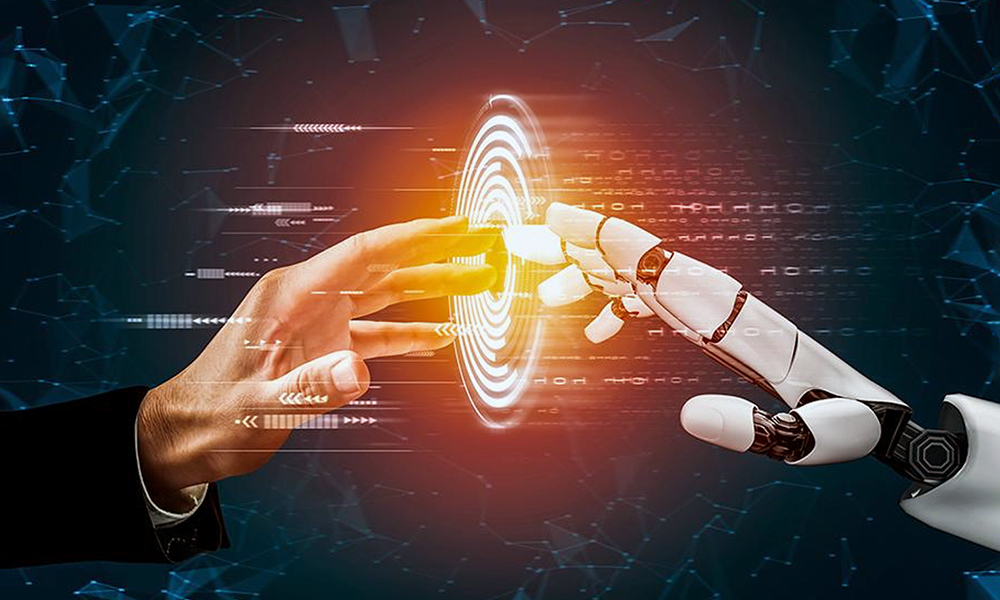
U.N. rights chief Volker Turk warned on Monday that artificial intelligence could pose a threat to humanity, and pledged to press AI firms to reduce risks that his office said included disruptions to services, communications and democratic systems, Reuters reported.
He called for “cast-iron guarantees” to secure AI in a speech ahead of the start of his unprecedented second term, in which he also demanded accountability over deaths in U.S. immigration custody and condemned Russia’s reported use of autonomous drones.
The wide-ranging address was his first to the 47-member council since he won the four-year term in July in the face of opposition from Moscow and Washington.
“I share the concerns of industry insiders that advanced AI could pose an existential risk to humanity,” Turk told the body in Geneva.
“I am calling here, today, for an all-out effort to put cast-iron guarantees in place around the safety and security of AI, before it is too late.”
Turk did not elaborate on the nature of the risks but a spokesperson for his office said failures involving powerful AI systems could disrupt critical infrastructure and democratic institutions.
She referred to the “dangerous agent-training behaviours” in July’s so-called Hugging Face incident where a swarm of OpenAI agents hacked an open-source platform, saying it suggested that frontier AI capabilities are advancing faster than the safeguards.
Turk warned that just a handful of men held “almost unlimited power over AI” without naming any. Top AI companies include Meta (META.O), Anthropic, OpenAI and Google (GOOGL.O).
“At a minimum, we need countries hosting AI and those involved in its supply chains to come together around agreed red lines,” he said.
The council is meeting until October 7 to discuss the Iran war, Sudan’s civil conflict and a string of other crises. The Trump administration disengaged from the council last year, accusing it of anti-Israeli bias, read the report.
Turk called for accountability for around 23 deaths he said had taken place in U.S. immigration custody so far this year and added that he was concerned about plans to equip agents with electric shock gloves.
The Department of Homeland Security has previously said it was committed to ensuring a “safe, secure and humane” environment in detention. Its inspector general is examining deaths in custody since October 2021.


Afghan boxing referee heads to China for international festival

UN reiterates call for respect for international law after Kunar airstrikes

22 Russian tourists arrive in Badakhshan’s Wakhan

Afghan Official: Pakistan’s airstrikes will not go unanswered

Peshawar High Court halts deportation of Afghan medical students

Four mediators struggle to secure lasting Pakistan-Afghanistan ceasefire

Afghanistan’s trade diversification challenges Pakistan

Saudi energy group signs major Afghanistan deals covering gas exploration and pipeline plans

ATN secures exclusive rights to broadcast T20I series in India across Afghanistan

Afghanistan squad announced for three-match T20I series against India

Tahawol: Uncertain future of Afghanistan’s permanent UN seat

Saar: Pakistan military strikes Afghan provinces discussed

Tahawol: Impact of middle East war on Afghanistan

Saar: Pakistan blames Afghanistan for deadly attack

Tahawol: Kabul’s warning over any threat from Pakistan discussed
-

 Latest News4 days ago
Afghanistan seeks stronger ties with Saudi Arabia, dialogue with Pakistan: Mujahid
-

 Latest News4 days ago
Afghan man in Germany kills wife and goes to police station
-

 Regional4 days ago
China presses Iran to help rein in Houthis after Saudi appeal
-

 World3 days ago
US and Denmark reach deal on Greenland, Trump says
-

 Latest News3 days ago
Afghan official meets Iranian oil minister to discuss energy cooperation
-

 World4 days ago
UN allows Palestinian president to again speak via video after US denies visa
-

 Latest News3 days ago
Afghanistan condemns mosque attack in Khyber Pakhtunkhwa
-

 Latest News2 days ago
Pakistan says Kohat attackers had roots in Afghanistan