
Latest News
UN says in latest report restrictions against women in Afghanistan continue
The UN report states the IEA’s intelligence agency forcibly closed the office of a women-led NGO earlier this year for allowing some of its female employees to physically report to work

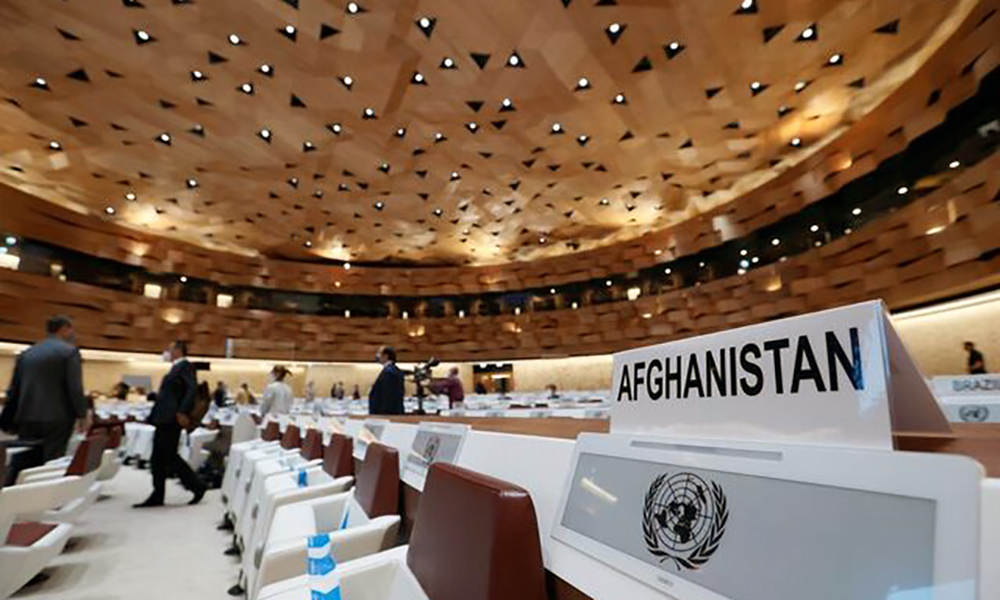
The UN has stated in its latest update on the human rights situation in Afghanistan that restrictions on women’s rights to work and freedom of movement continue to be implemented and that a number of incidents claimed by Islamic State – Khorasan Province (ISKP/Daesh) resulted in civilian casualties.
According to the report, based on monitoring undertaken by UNAMA’s Human Rights Service, for the period May to June 2024, the Islamic Emirate’s General Directorate of Intelligence officials forcibly closed the office of a women-led NGO for allowing some of its female employees to physically report to work.
The UN stated that the NGO, which was not named, was allowed to reopen days later after signing a commitment letter that it would not allow women employees to come to the office.
The UN also stated that between April and June, a number of incidents claimed by Daesh resulted in civilian casualties.
“According to the claims issued by ISKP, the incidents targeted Shi’a Muslims and the de facto authorities (IEA),” the report read.
Among the incidents reported was that of an IED on April 20 in Kabul city that wounded four adult men; a shooting in Herat province on April 29, which left six worshippers dead inside a mosque; and the May 17 attack in Bamiyan city, which saw gunmen shoot and kill five adults, including three Spanish tourists.
The UN also reported that in May and June, IEA security forces conducted a series of operations to clear poppy fields in Badakhshan province.
“On numerous occasions de facto security forces fired into crowds of local residents protesting the destruction of their crops, killing and wounding at least 17 people in total,” the report read.
On May 4, IEA spokesperson Zabihullah Mujahid, announced in a post on X that a committee had been formed to investigate the “poppy eradication process, and problems encountered in Badakhshan”.
He said: “Regrettably, there have been incidents where offenders attempted to attack the security forces involved in the fight against poppy cultivation, resulting in tragic events” and said that the committee had been tasked with conducting a comprehensive investigation into the incidents.
The UN reported that “no further information on the progress of investigations has been publicly shared.”
The UN also reported a number of cross-border incidents, in Paktia, and Khost provinces, on May 17 and 29 respectively, which resulted in civilian casualties.
The Embassy of Pakistan in Afghanistan stated that it had no recorded exchanges of fire with Afghanistan security forces on those days that resulted in civilian casualties.
On freedom of the media, the UN stated that following a March 31 announcement by the authorities on the prohibition of political parties, numerous media outlets with alleged political affiliations were suspended.
The report also noted that the IEA “continued to limit the activities of ‘diaspora media’ outlets which relocated their operations outside of Afghanistan after the Taliban (IEA) takeover and continued to produce media content for an Afghan audience.”
One journalist in Parwan province was arbitrarily detained on allegations of sharing information with a diaspora media outlet. He was released after three days, the UN report read.
Journalists have also been urged not to cooperate with “diaspora media”.
In addition, on 22 April, in Khost province, three employees of three different radio stations were interrogated and detained by the authorities for playing music and receiving phone calls from women during live radio programs. They were released after six days, the report read.
The UN also reported human rights violations as having been committed against former government officials and former security force members.
The report also noted incidents of corporal punishment, mostly floggings, being carried out on a regular basis in public.









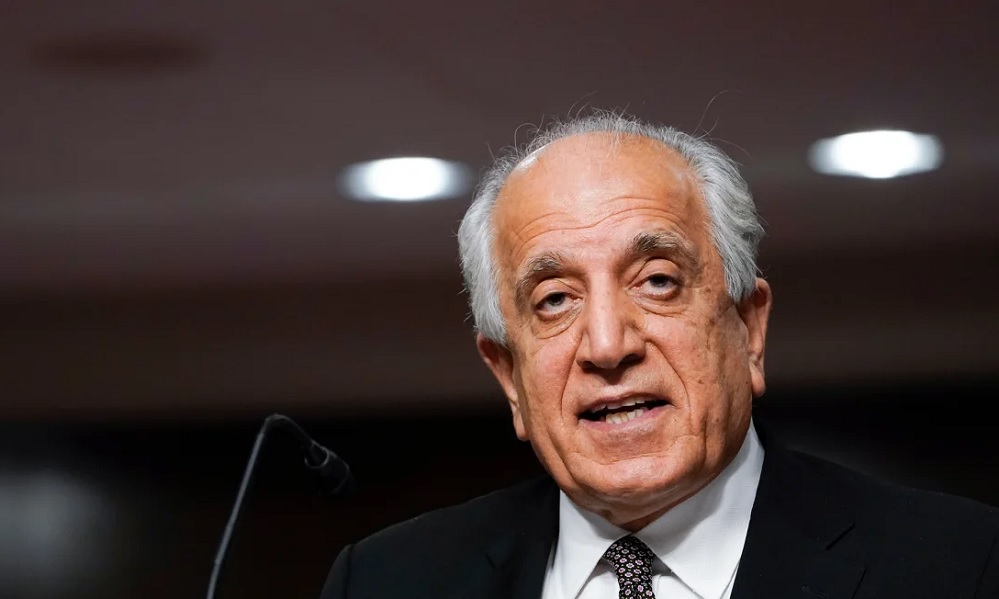
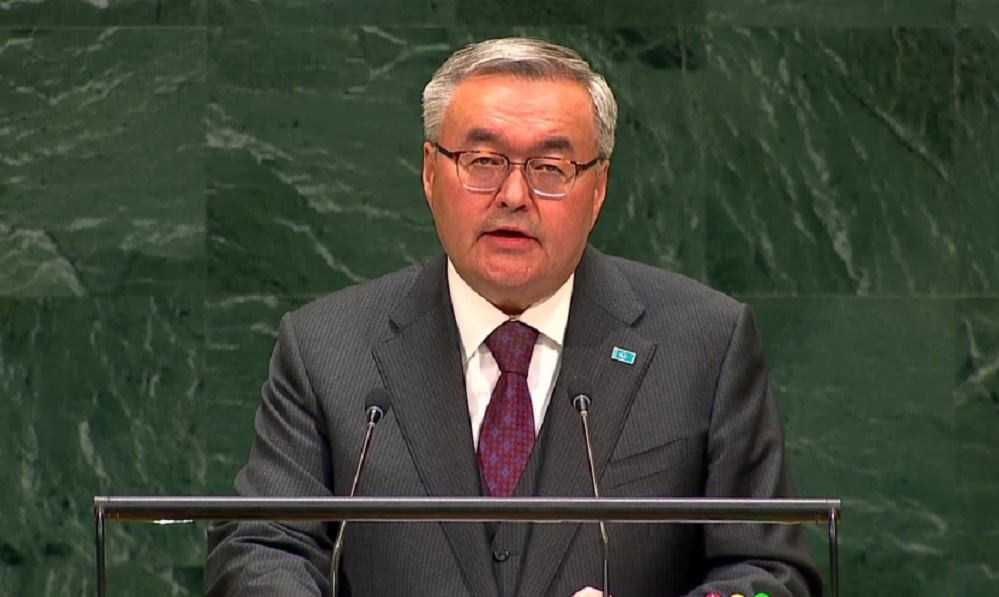
Kazakhstan’s Foreign Minister Mukhtar Tileuberdi has called for pragmatic and coordinated international engagement with Afghanistan, saying the country’s long-term stability is closely linked to the security and sustainable development of Central Asia.
Speaking during the general debate of the 81st session of the United Nations General Assembly in New York on Friday, Tileuberdi said humanitarian assistance to Afghanistan remains essential but alone cannot break the cycle of poverty, displacement and dependency.
He said Kazakhstan supports a “pragmatic, coordinated and step-by-step” approach to international engagement with Afghanistan, with the United Nations playing a central role.
Tileuberdi also said Kazakhstan is working with the UN to operationalize the United Nations Regional Centre for the Sustainable Development Goals for Central Asia and Afghanistan in Almaty.
He said the success of the centre should be measured by the results and assistance it delivers to the region.


Abu Muslim Farah defeat Khurasan Faryab 2-0 in ACL season six

Saar: Concerns over Pakistan’s political crisis discussed

Afghanistan Champions League: Omar Zawak Herat beat Toofan Herat 1-0

Blast in Pakistan’s Dera Ismail Khan kills 11, injures 30

Ariana Afghan Airlines increases Kabul-Delhi cargo flights

Saudi energy group signs major Afghanistan deals covering gas exploration and pipeline plans

Trump floats idea of renaming Atlantic or Pacific Ocean

US hits Egyptian bank branches with Iran sanctions as war marks six months

Nepal flood rescue mission enters critical phase as thousands remain missing

Iranian clubs to face Gulf opponents at neutral venues in Asian Champions League Elite
Saar: Concerns over Pakistan’s political crisis discussed

Exclusive interview with Abdul Latif Mansoor, Minister of MRRD

Tawsia: Overview of Afghanistan’s iron mines

Tahawol: Discussion on fresh Pakistani airstrikes on Afghanistan

Saar: Calls for international support for Afghanistan discussed
-

 World5 days ago
CNN, MS NOW and Politico sue Trump, challenging White House ban
-

 Latest News3 days ago
Ariana Afghan Airlines ranks seventh among 45 Central Asian airlines
-

 Latest News4 days ago
UN reiterates call for respect for international law after Kunar airstrikes
-

 Regional3 days ago
US and Iran hold first talks since June after Trump’s ‘annihilation’ threat
-

 Latest News3 days ago
Silk Road highway in Wakhan corridor now reaches the China border
-

 Latest News4 days ago
Afghan Official: Pakistan’s airstrikes will not go unanswered
-

 Sport4 days ago
Afghan boxing referee heads to China for international festival
-

 Regional5 days ago
G7 foreign ministers call on Iran to stop arming Houthis