
Latest News
Aid agencies sound alarm as Afghan returnee numbers from Iran spike

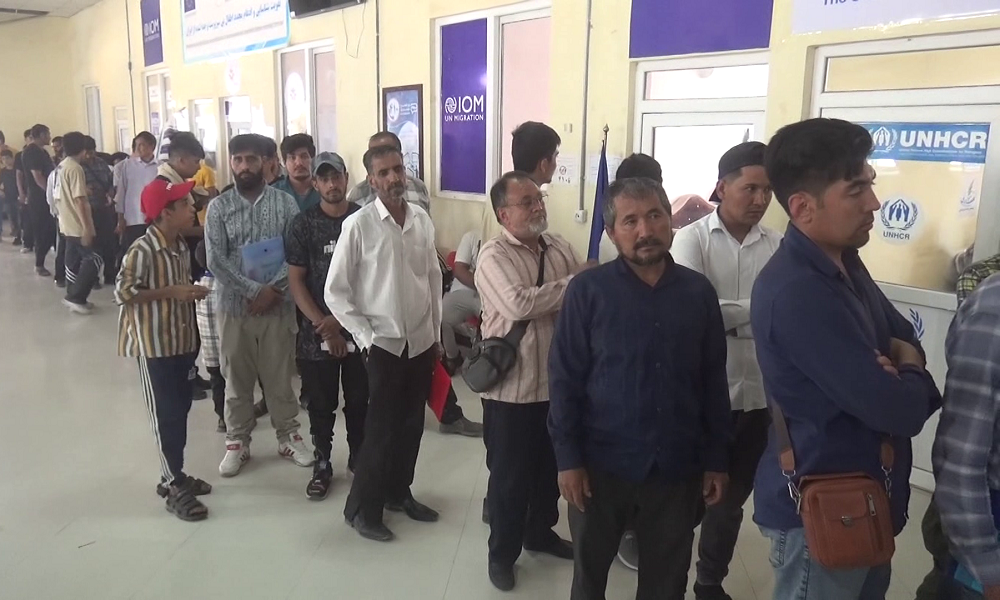
More than 800,000 Afghans have returned from Iran through the Islam Qala border crossing in western Afghanistan since January 2025, with over 137,000 arriving in June alone, according to the International Federation of Red Cross and Red Crescent Societies (IFRC).
The massive influx is placing mounting pressure on an already fragile humanitarian landscape.
Many of the returnees arrive in dire condition—exhausted, dehydrated, and lacking basic necessities. At Islam Qala, temperatures frequently soar beyond 40°C, and families often arrive with little more than the clothes on their backs.
Children show visible signs of malnutrition, and mothers express deep anxiety about what lies ahead.
“This issue hasn’t received the attention it deserves,” said Alexander Matheou, IFRC Regional Director for Asia Pacific, during a recent visit to the border. “These individuals are not just statistics—they are families returning to a country that is already burdened by conflict, economic collapse, and natural disasters. They deserve dignity and immediate support.”
The returning population includes many who have lived in Iran—or Pakistan—for years, in some cases decades.
Their decision to leave is driven by worsening economic conditions, tightening legal restrictions on migrants, and increased regional instability.
Since late 2023, over 1 million Afghans have also returned from Pakistan, intensifying the strain on local communities and public services across Afghanistan.
The Afghan Red Crescent Society (ARCS), supported by the IFRC, is spearheading emergency response operations at the Islam Qala crossing.
Volunteers are distributing food and clean water, offering medical services, and operating mobile clinics treating around 500 patients daily—many of whom are pregnant women, children, and the elderly.
Despite these efforts, medical supplies are rapidly dwindling.
“Many mothers we talk to are incredibly fatigued, with their primary focus on the well-being of their children,” said one ARCS nurse. “They’ve endured long journeys under extreme heat, and they’re stepping into uncertainty.”
Once registered, families are transported to Herat City, but challenges continue. Many younger returnees are unfamiliar with life in Afghanistan, while their families struggle to secure housing, income, and access to schools.
Women and girls, in particular, face heightened vulnerabilities in a context where access to education and healthcare remains severely limited.
In June 2025 alone, Afghan Red Crescent volunteers distributed thousands of hot meals daily and provided emergency shelter materials. Still, needs continue to outpace available resources.
“Afghanistan is already under considerable strain,” Matheou stressed. “With the numbers of returning individuals increasing daily—and even more expected soon—this is a crucial time for the global community to act.”
The IFRC is urgently appealing for increased funding and international solidarity to address the escalating crisis. Without expanded support from donors, governments, and humanitarian agencies, the prospects for returning families remain bleak.
“The Afghan Red Crescent Society and its partners are doing everything within their power,” said Matheou. “But the needs are immense. This is not just a border issue—it’s a humanitarian emergency that demands a global response.”










Kazakhstan’s Foreign Minister Mukhtar Tileuberdi has called for pragmatic and coordinated international engagement with Afghanistan, saying the country’s long-term stability is closely linked to the security and sustainable development of Central Asia.
Speaking during the general debate of the 81st session of the United Nations General Assembly in New York on Friday, Tileuberdi said humanitarian assistance to Afghanistan remains essential but alone cannot break the cycle of poverty, displacement and dependency.
He said Kazakhstan supports a “pragmatic, coordinated and step-by-step” approach to international engagement with Afghanistan, with the United Nations playing a central role.
Tileuberdi also said Kazakhstan is working with the UN to operationalize the United Nations Regional Centre for the Sustainable Development Goals for Central Asia and Afghanistan in Almaty.
He said the success of the centre should be measured by the results and assistance it delivers to the region.


Abu Muslim Farah defeat Khurasan Faryab 2-0 in ACL season six

Saar: Concerns over Pakistan’s political crisis discussed

Afghanistan Champions League: Omar Zawak Herat beat Toofan Herat 1-0

Blast in Pakistan’s Dera Ismail Khan kills 11, injures 30

Ariana Afghan Airlines increases Kabul-Delhi cargo flights

Saudi energy group signs major Afghanistan deals covering gas exploration and pipeline plans

Trump floats idea of renaming Atlantic or Pacific Ocean

US hits Egyptian bank branches with Iran sanctions as war marks six months

Nepal flood rescue mission enters critical phase as thousands remain missing

Iranian clubs to face Gulf opponents at neutral venues in Asian Champions League Elite
Saar: Concerns over Pakistan’s political crisis discussed

Exclusive interview with Abdul Latif Mansoor, Minister of MRRD

Tawsia: Overview of Afghanistan’s iron mines

Tahawol: Discussion on fresh Pakistani airstrikes on Afghanistan

Saar: Calls for international support for Afghanistan discussed
-

 World5 days ago
CNN, MS NOW and Politico sue Trump, challenging White House ban
-

 Latest News3 days ago
Ariana Afghan Airlines ranks seventh among 45 Central Asian airlines
-

 Latest News5 days ago
UN reiterates call for respect for international law after Kunar airstrikes
-

 Regional4 days ago
US and Iran hold first talks since June after Trump’s ‘annihilation’ threat
-

 Latest News3 days ago
Silk Road highway in Wakhan corridor now reaches the China border
-

 Regional3 days ago
Iran airlines cancel flights as US sanctions hit
-

 Latest News5 days ago
Afghan Official: Pakistan’s airstrikes will not go unanswered
-

 Regional5 days ago
G7 foreign ministers call on Iran to stop arming Houthis