
Business
Afghanistan approves five-year power development plan to boost domestic energy production
The strategy includes the implementation of 25 electricity generation projects that will harness Afghanistan’s domestic energy resources, including hydropower, solar, wind and coal.

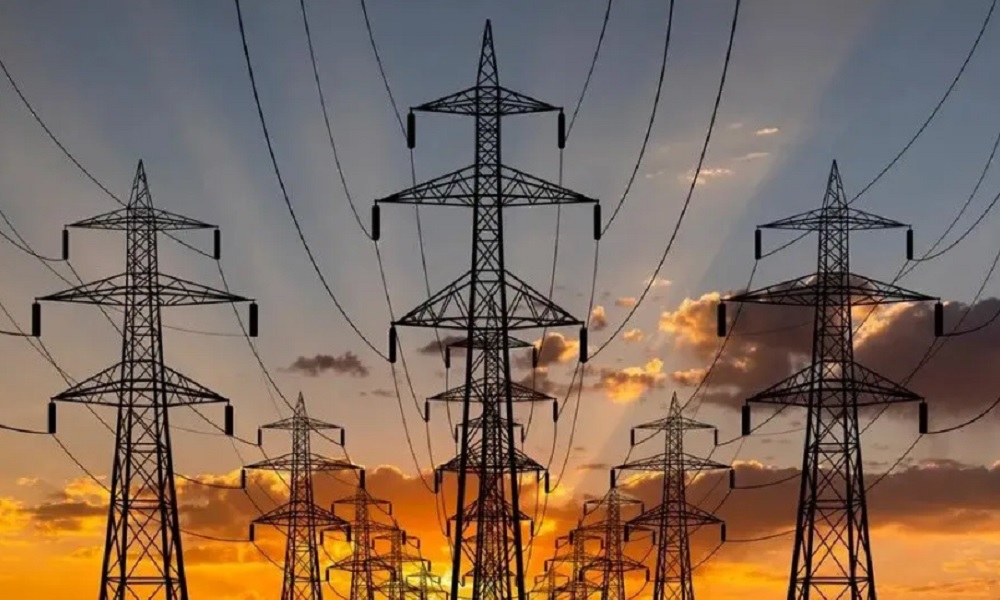
Afghanistan has approved a comprehensive five-year national power development plan aimed at expanding domestic electricity generation, strengthening the country’s transmission network and reducing its reliance on imported electricity.
The plan, which was previously endorsed by the Economic Commission chaired by Deputy Prime Minister for Economic Affairs Mullah Abdul Ghani Baradar, has now received final approval from the Supreme Leader.
The strategy includes the implementation of 25 electricity generation projects that will harness Afghanistan’s domestic energy resources, including hydropower, solar, wind and coal. It also outlines the completion of 13 ongoing and 23 new electricity transmission projects, 21 ongoing and 21 planned substation projects, and 34 electricity distribution projects across the country.
Officials said the initiative is expected to significantly expand electricity access, improve the reliability of the national power grid and strengthen Afghanistan’s energy infrastructure while reducing dependence on imported electricity.
The government said the five-year plan forms part of its broader strategy to promote economic development, support reconstruction efforts and enhance financial self-reliance through greater investment in domestic energy resources. Once completed, the projects are expected to contribute to Afghanistan’s long-term energy security and move the country closer to electricity self-sufficiency.



Business
Afghan-Austrian partnership aims to boost carpet exports to European markets
Under the MoU, the Austrian company will cooperate in carpet design, marketing and efforts to expand access to international markets, particularly in Europe.
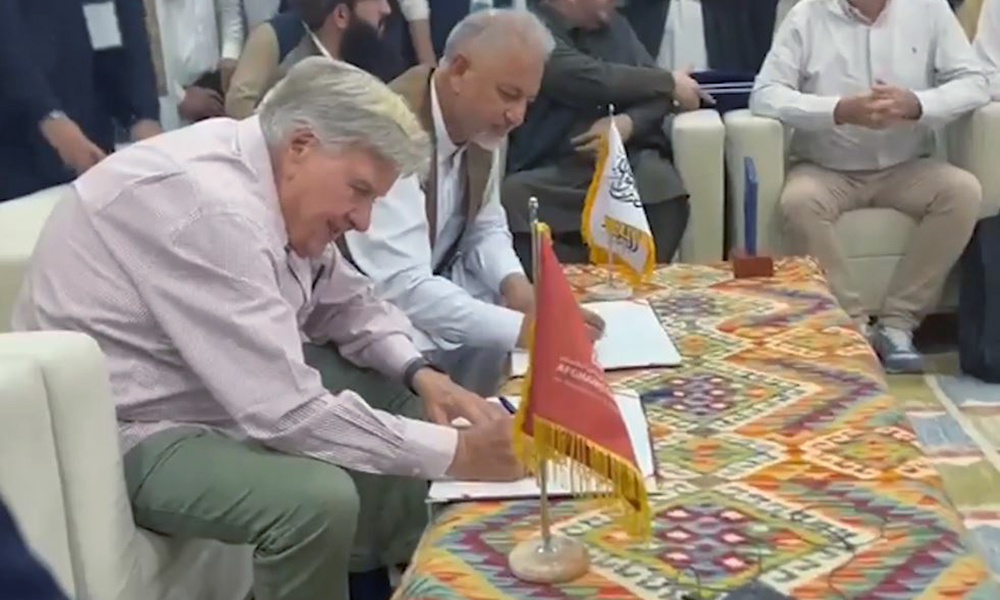
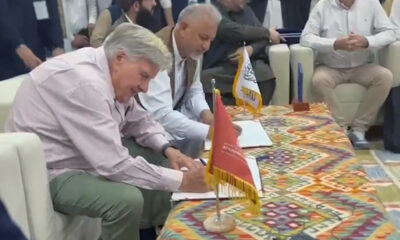
An Afghan company and an Austrian firm have signed a memorandum of understanding (MoU) aimed at facilitating the export of Afghan carpets to European markets, opening new opportunities for the country’s traditional carpet industry.
The agreement was signed on the sidelines of the 5th Imam Abu Hanifa National and International Exhibition in Kabul.
Under the MoU, the Austrian company will cooperate in carpet design, marketing and efforts to expand access to international markets, particularly in Europe.
Austrian businessman Fritz Langauer said Afghan carpets meet the requirements of European markets in terms of colours, raw materials, designs and quality.
The partnership is expected to help Afghan carpet producers reach a wider customer base, strengthen export opportunities and promote one of Afghanistan’s long-established traditional industries.
Afghan carpets are known for their distinctive designs and craftsmanship, and improved access to international markets could create new opportunities for local producers, traders and artisans.
The agreement marks a step towards strengthening commercial ties between Afghan and Austrian businesses and expanding the international presence of Afghan-made products.
Business
Iran allocates over 110 hectares in Chabahar for Afghan economic activities
The talks also covered expanding industrial cooperation, establishing a joint industrial park and increasing bilateral trade to $10 billion.
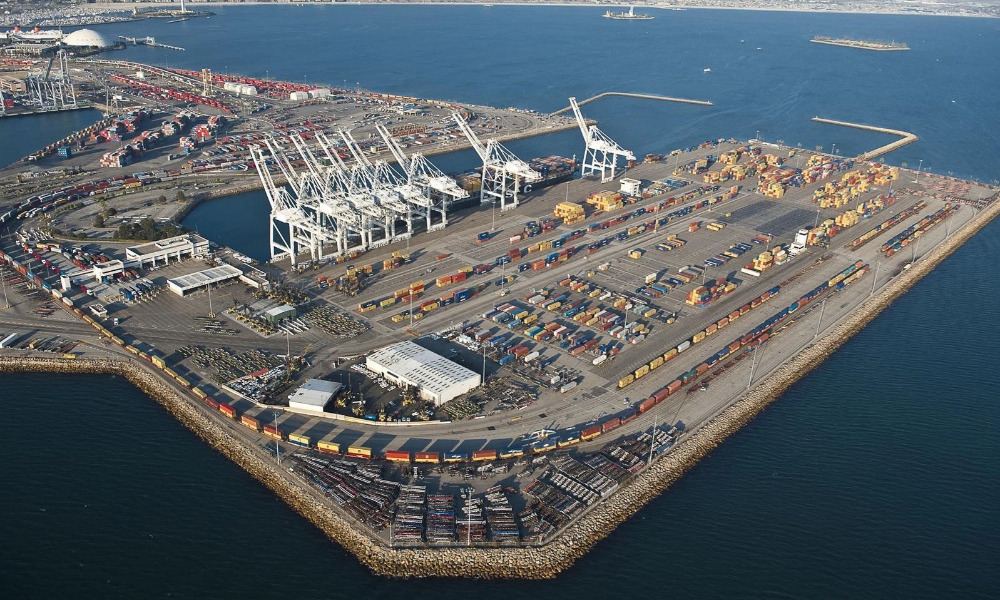
Iran has reportedly allocated more than 110 hectares of land at the strategic port of Chabahar for Afghanistan’s economic and commercial activities, in a move aimed at strengthening bilateral trade and industrial cooperation.
According to Iranian media reports, Mohsen Zanganeh, head of the Iranian Parliament’s Special Commission for Supporting Production and Supervising the Implementation of Article 44 Policies, announced the development following economic consultations between the two countries on Thursday.
Zanganeh said the proposal to set aside land for Afghanistan in the Chabahar Free Trade Zone was raised by Afghanistan’s industry minister.
“Under an agreement reached, we have agreed to allocate 10 hectares of land at Chabahar Port and approximately 100 hectares in the Free Trade Zone for Afghan investment. This arrangement will enable Afghanistan to invest in the designated area and facilitate its access to open waters.” said Zanganeh.
He added that Afghan officials had requested additional space within the port itself, but limited coastal land had made the request difficult to accommodate. The two sides reached a preliminary understanding and are expected to continue discussions.
The talks also covered expanding industrial cooperation, establishing a joint industrial park and increasing bilateral trade to $10 billion.
Located on the Gulf of Oman, Chabahar Port offers Afghanistan a potential gateway to international markets and could help diversify the country’s trade and transit routes.
The proposed arrangement could create new opportunities for Afghan businesses, strengthen regional connectivity and support the expansion of commercial ties between Kabul and Tehran.
Business
Russia-Afghanistan trade surges 150% in first seven months of 2026
Russia’s main exports to Afghanistan include natural gas, petrol, diesel, wheat, wheat flour, sunflower oil and other agricultural products.
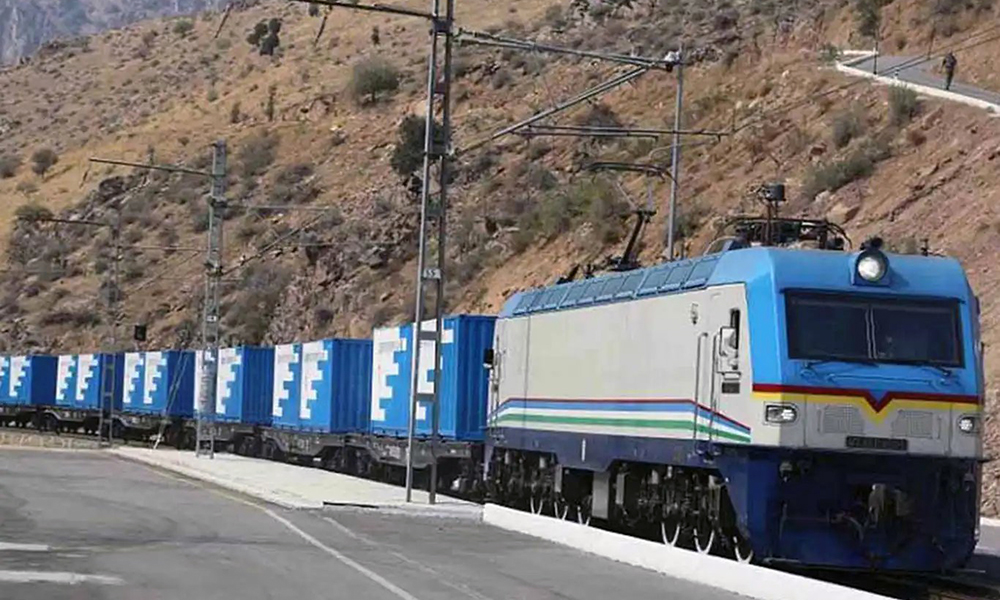
Trade between Afghanistan and Russia increased by 150 percent in the first seven months of 2026 compared with the same period last year, according to figures released on October 7.
Russian Deputy Prime Minister Alexei Overchuk and Afghanistan’s Foreign Minister Amir Khan Muttaqi discussed expanding bilateral cooperation in trade, energy, investment and transport, as well as strengthening ties between businesses in the two countries.
The talks also focused on developing the International North-South Transport Corridor, which could strengthen Afghanistan’s role as a regional transit route and improve its access to markets in Central Asia and beyond.
The proposed Trans-Afghan railway could further enhance Afghanistan’s position as a regional transit hub. Kazakhstan, Uzbekistan and the United Arab Emirates recently signed a memorandum of understanding on the project, which is estimated to cost about $5 billion and take around five years to complete.
Russian customs data shows that bilateral trade reached about $326 million in 2025, while Afghan figures put the total at approximately $590 million. Both sides, however, reported that trade had doubled compared with 2024.
Russia’s main exports to Afghanistan include natural gas, petrol, diesel, wheat, wheat flour, sunflower oil and other agricultural products.
Afghanistan’s exports to Russia remain considerably smaller, at about $4 million, and consist mainly of fresh and dried fruit, including raisins, dried apricots, pomegranates, grapes, apples and cherries. Other exports include cotton, watermelons, medicinal plants and some mineral products.
If the current growth rate continues, bilateral trade based on Russian statistics could reach approximately $815 million in 2026.
Officials say improved transport links and stronger business-to-business cooperation could further expand economic ties between Afghanistan and Russia.


Iranian lawmaker praises Afghanistan’s support, accuses Pakistan of ‘hypocrisy’

Afghan-Austrian partnership aims to boost carpet exports to European markets

Pakistan issues new directives for Afghan medical students and doctors

Pakistan rejects allegations of links to ISKP amid rising tensions with Afghanistan

US imposes sanctions on ICC amid dispute over international prosecutions

EU and FAO launch €5m programme to strengthen Afghanistan’s agrifood sector

Omar Zawak, Toofan Herat secure victories in Afghanistan Champions League

Houthi advance in Yemen puts U.S. in a new bind

Cricket Bonanza: Afghanistan set for packed international schedule

New warnings reignite debate over AI threat to humanity

Tahawol: CSTO meeting on Afghanistan reviewed

Saar: Guterres’s talks with Pakistani officials on Afghanistan discussed

Tahawol: Consequences of US war in Afghanistan reviewed

Saar: Expulsion of Afghan refugees from Pakistan discussed

Tahawol: Discussion on outcome of Moscow Format meeting
-

 Latest News4 days ago
Ariana Afghan Airlines ends 15-year control of ticketing and operational systems by Pakistani firm
-
 World4 days ago
▶️Saudi Arabia, Turkey, Pakistan activate Mecca defense pact
-

 Sport5 days ago
ACL: Abu Muslim Farah maintain momentum with 2-0 win over Arman FC
-
 Regional4 days ago
Yemeni government forces seize strategic strait from Houthis
-
 Latest News4 days ago
IEA rejects ICC arrest warrants, says Afghanistan does not recognize court
-
 Sport4 days ago
Aino Mina Kandahar defeat Istiqlal Kabul 3–2
-

 Health4 days ago
Russia investigates suspected pneumonic plague; Trump ready to ‘help’
-

 Latest News4 days ago
Thirty US states seek access to Afghan assets for 9/11 victims