
Regional
Mass grief in Iran at Khamenei funeral after US, Israel war killing
There has still been no public sighting or image released of his son, the new leader, said to have been injured in the same attack.

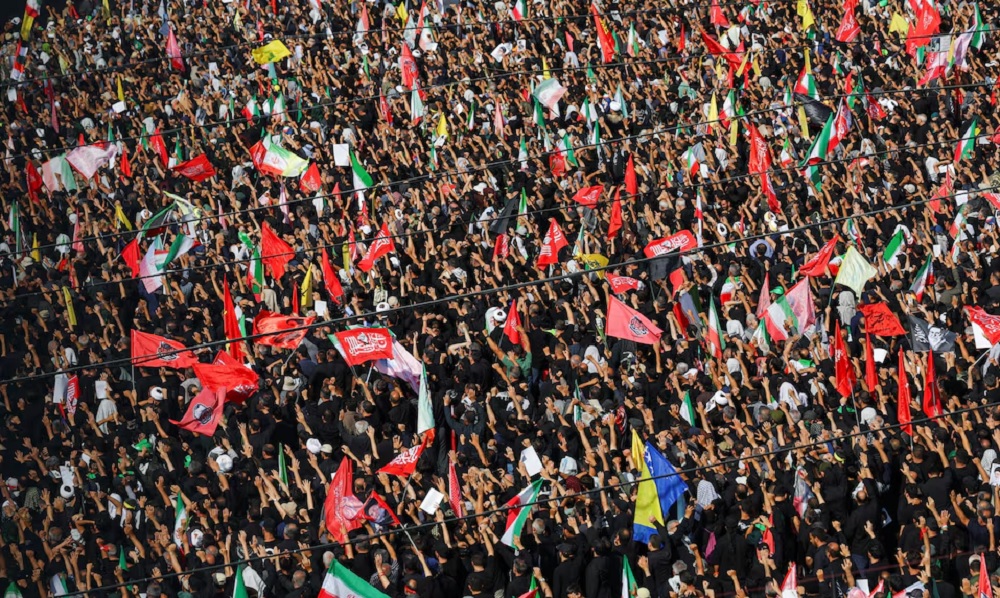
Tens of thousands of Iranians thronged a vast outdoor prayer complex in Tehran on Saturday to view the coffins of Ayatollah Ali Khamenei, the supreme leader killed at the start of the U.S.-Israeli war on Iran, and his family.
Dressed in black and draped in the red, white and green flags of the Islamic Republic of Iran, mourners held up portraits of Khamenei and his son and successor, Mojtaba, Reuters reported.
In a show of public devotion to the Islamic Republic’s theocratic state and revolutionary zeal, Iran is staging a week of mass funeral processions for the supreme leader killed in February by the opening airstrikes of the war.
After a day lying in state indoors for senior Iranian leaders and foreign officials to visit, Khamenei’s coffin was put on display under glass outdoors, along with those of his daughter, son-in-law, daughter-in-law and 14-month-old granddaughter.
There has still been no public sighting or image released of his son, the new leader, said to have been injured in the same attack.
Mourners filed into the vast courtyard of the Imam Khomeini Grand Mosalla, beating their chests, wailing and waving the banners of the Islamic Republic. Women dressed in black chadors wore white visors or held umbrellas to shield from the hot mid-morning sun.
“Let us wail!” a compere encouraged the crowds through a loudspeaker. Chants of “Death to America” echoed through the huge prayer hall.
BLOOD FEUD
“Everyone here has come to avenge the blood of their supreme leader,” Arash Rahimi, 40, told Reuters in the crowd. “As our leader has said, we have a blood feud with the United States. Our relations with the United States will never be good.”
The funeral is taking place at a critical moment for Iran, with its clerical rulers, backed by the military, buoyed from having survived the onslaught with their ruling system intact.
The war has been paused for a ceasefire under an agreement with Washington that Iran’s authorities say will ultimately bring huge economic benefits, in line with what they describe as a victory over a superpower.
The Axios news website quoted U.S. President Donald Trump as saying peace talks had been paused for a week for the events surrounding the funeral.
With Iran’s leaders all attending, Washington could take them all out with “one shot”, it quoted Trump as saying: “But we are not going to do that because then we would have nobody to negotiate with.”
Trump also told the news outlet that he was surprised to see some Iranians crying at the funeral, saying he thought people hated Khamenei. “Maybe it’s fake tears,” he said.
Iran’s embassy in Armenia reacted to Trump’s remarks in a post on X: “You don’t understand these things because you have neither civilization, nor history, nor honor.”
Within Iran, beyond the displays of solidarity with the leadership, it remains impossible to assess how deeply public loyalty runs across a country of 90 million people.
Weeks before the war, hundreds of thousands of Iranians demonstrated against the government in protests that were put down in a violent crackdown in which thousands were killed. But there has been little or no public sign of such dissent since the U.S. and Israeli attacks began.
During the war, more than 3,000 people were killed including many of Iran’s most senior politicians and military commanders. Military bases and major infrastructure projects were destroyed causing billions of dollars in damage.
But Iran successfully struck U.S. bases in the region, inflicted pain on the Gulf Arab countries that host them, and asserted its control of the Strait of Hormuz, causing a spike in global energy prices which Trump said led him to push faster for peace.
The interim deal reached last month includes the unfreezing of billions of dollars in Iranian assets held abroad, and waivers from financial sanctions that had brought Iran’s economy to its knees.
SHI’ITE MARTYRDOM
In Iran’s theocratic system, Khamenei was not only head of state and leader of a revolutionary movement, but the earthly representative for Shi’ite Islam’s last imam, a holy figure who disappeared in the ninth century.
His death in an enemy attack plays into a long tradition of martyrdom and ritual mourning, dating to the seventh-century death in battle of the Prophet Mohammad’s grandson Hussein, which divided Islam into its Shi’ite and Sunni branches.
Burials are meant to be conducted within a day of death in Islam, but because of the risks of holding a big funeral during the war it was postponed until after last month’s interim truce deal was agreed.
Khamenei’s coffin was unveiled late on Thursday. On Friday it was laid in state in the great prayer hall built to honour his predecessor, Ayatollah Ruhollah Khomeini, where it will remain until Sunday evening.
After what authorities are billing as a massive procession in central Tehran on Monday, the remains will be taken to the seminary city of Qom, the centre of Iran’s Shi’ite hierarchy, for ceremonies on Tuesday.
From there the body will be flown to Iraq for ceremonies in the two Shi’ite holy shrine cities of Najaf and Kerbala on Wednesday. The body will return to Iran on Thursday for another procession in Mashhad, to be buried near the tomb of another of the mediaeval Shi’ite imams.
Authorities plan to mobilise millions of people for big processions over the coming days, offering transport, food and lodging.





Regional
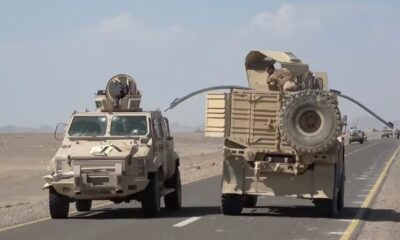
Yemeni government forces seize strategic strait from Houthis
The Yemeni forces of the internationally recognised government, backed by heavy Saudi air strikes, reached the outskirts of Mocha late on Monday and Houthi fighters were retreating into the highlands, four government sources said. The Defence Ministry said the city had fallen.
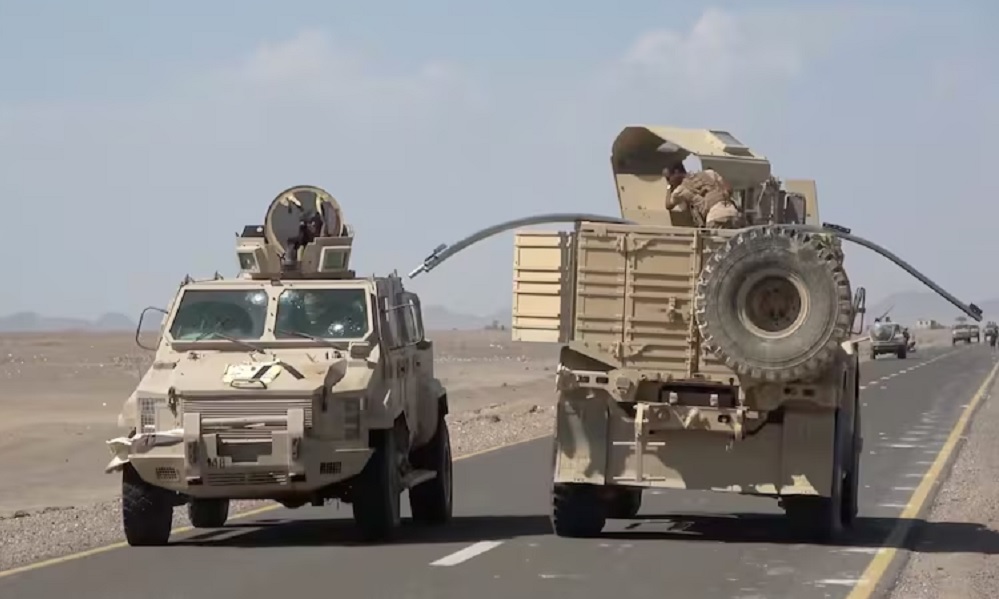
Saudi-backed Yemeni government forces staged a lightning advance on Monday to retake the coast around the Bab el-Mandeb Strait up to the city of Mocha, the government said, pushing the Iran-backed Houthis out of most of the areas they seized last month.
In response, the Houthis said they had attacked key locations in Saudi Arabia including the King Khalid International Airport in Riyadh, an Aramco refinery in Rabigh, the Abha international airport and the Khamis Mushait military base, Reuters reported.
The claims could not be immediately verified. Saudi Arabia and Aramco did not immediately respond to a request for comment.
The Yemeni forces of the internationally recognised government, backed by heavy Saudi air strikes, reached the outskirts of Mocha late on Monday and Houthi fighters were retreating into the highlands, four government sources said. The Defence Ministry said the city had fallen.
The advance, if confirmed, would loosen the Houthis’ grip on a vital Red Sea oil route already roiling energy markets alongside Iran’s closure of the Strait of Hormuz, though the group could still strike vessels with drones from other positions.
Fighting has raged along several front lines in Yemen for weeks since a dormant civil war erupted in a spillover from the US-Iran conflict, with the Houthis seeking to control the Bab el-Mandeb Strait and firing missiles and drones at Saudi cities and infrastructure.
The Saudi-led coalition fighting the Houthis also said late on Monday that naval forces carried out a military operation in Yemen’s Red Sea governorate of Hodeidah. The government forces had already taken key positions including an airstrip in the Dhubab district at the mouth of the strait whose seizure by the Houthis last month sent shock waves through energy markets.
Reuters could not independently verify the extent of the government gains. The Houthis, who have controlled many of Yemen’s more populous areas including the capital Sanaa since 2014, said the Saudi-backed government’s claims were baseless.
Meanwhile, the Houthis themselves made important advances near the third-largest city of Taiz, gaining sections of a mountain road to leave government forces besieged, according to five military sources with the Yemeni government. One government source denied the road had been cut.
The group also threatened to attack traffic in Saudi airspace.
The escalating conflict has prompted Riyadh’s allies to act. Saudi Arabia, Turkey and Pakistan agreed at an emergency meeting in Riyadh on Monday to rapidly deploy military forces and capabilities in Saudi Arabia under their Mecca defence pact, according to a joint statement.
The fighting has worsened a humanitarian crisis in Yemen, the poorest state in the Arab region. The UN migration agency said on Monday that 184,000 people had been displaced since the war resumed.
Yemen’s internationally recognised president, Rashad al-Alimi, swore on Sunday to fight “until the country is liberated from the grip of the terrorist militia”.
Saudi Arabia said on Monday it had attacked hundreds of targets to provide air cover for the Bab el-Mandeb Strait and Yemeni ground forces. The Yemeni government said it had launched attacks on several fronts including in Sanaa province.
The Houthi-run health ministry said two people had been killed and seven wounded in strikes on the province’s Sanhan and Sa’wan districts.
HEAVIEST FIGHTING IS IN SOUTHWEST YEMEN
While the war has raged on several fronts, the heaviest fighting has been in the southwest, both in the coastal area near the strait and in the hills around Taiz.
The Houthis damaged a culvert on the Taiz-Aden road, making it impassable, and on Sunday their fighters made new advances into the town of al-Turbah, five government military sources said, though another government source denied this.
A Houthi-run news agency on Monday cited a military source as saying the group had driven government forces from the al-Mawasit district of Taiz province, reaching the home of Alimi, head of Yemen’s interim presidential council.
The advances left Taiz,a city with a population of over half a million and a garrison of thousands of government fighters, surrounded by Houthi forces, the government military sources said.
In al-Mudhaffar area, just outside Taiz but within the area besieged by the Houthis, a long queue formed outside a petrol station as people waited for fuel and cooking gas canisters.
“This is the daily state in Taiz,” said Shehab Hazaa.
MECCA ALLIANCE AGREES TO DEPLOY MILITARY FORCES IN SAUDI
In a statement following their meeting, Saudi Arabia, Turkey and Pakistan accused the Houthis of attempting to target Islam’s holiest sites, Mecca and Medina.
“The Parties also condemned in the strongest terms the attempted targeting of Mecca and Medina, as well as the continuing attacks targeting cities and civilian and economic facilities in the Kingdom, reaffirming their unequivocal rejection of any attack or threat against the Kingdom’s security and territorial integrity,” the statement said.
The “Mecca Joint Defence Agreement,” signed in August, is intended to strengthen collective deterrence against any act of aggression and stipulates that an armed attack against any of the three countries would be regarded as an attack on all.
Regional
Yemeni government launches offensive to seize all areas from Iran-backed Houthis
As the Yemeni government, known as the Presidential Leadership Council, made its announcement, the Houthis said they had launched ballistic missiles and drones at Saudi Aramco sites in Riyadh and the Khurais area of Saudi Arabia.
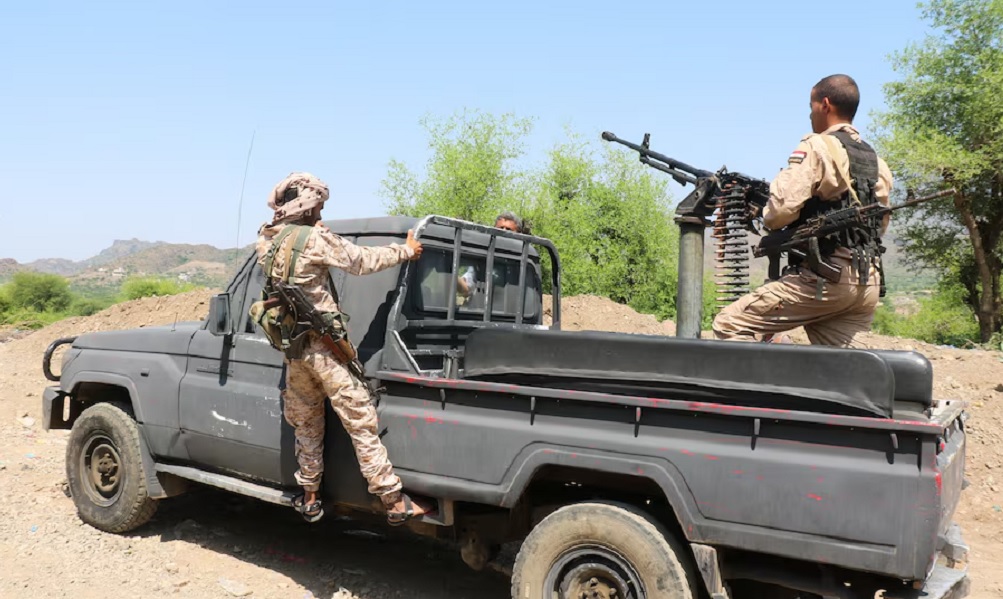
Yemen’s Saudi-backed, internationally recognised government said on Sunday it was launching a major military campaign to recapture all areas of the country controlled by the Iran-backed Houthis.
The government’s armed forces would press the offensive “until the country is liberated from the grip of the terrorist militia,” Yemeni President Rashad al-Alimi said in a televised address. A military spokesman later called on the Houthis to lay down their weapons, Reuters reported.
The Houthis, known formally as Ansar Allah, have held Yemen’s capital Sanaa and vast parts of the northwest, where most of the population live, since 2014. They have so far withstood a series of attacks over the years by Saudi Arabia, the UAE and their Western allies, and have updated their weaponry with the help of Iran.
The movement launched a surprise offensive last month which captured the strategic Bab el-Mandeb strait and some 150 km (90 miles) of coast on the Red Sea in a matter of weeks, giving the Houthis new leverage over the international shipping route.
That advance also opened a new front in the wider US-Israeli war launched in February against Iran, to which Tehran’s responses included choking oil shipping through the Strait of Hormuz to the other side of the Arabian Peninsula.
HOUTHIS SAY THEY STRUCK SAUDI ARABIA
As the Yemeni government, known as the Presidential Leadership Council, made its announcement, the Houthis said they had launched ballistic missiles and drones at Saudi Aramco sites in Riyadh and the Khurais area of Saudi Arabia.
They claimed the attacks caused major fires and were in response to what they said were 50 Saudi-led air and missile strikes in Yemen in the past 12 hours.
There was no immediate confirmation from Saudi Arabia.
Alimi said the decision to launch the counteroffensive came after all chances of de-escalating the conflict had been exhausted.
He thanked Saudi Arabia for its support and called on Yemen’s regional allies and international partners to support PLC forces and institutions.
Regional and western officials had told Reuters earlier this week that Saudi Arabia and its Yemeni allies were planning to launch an assault on the Houthis, with the Saudis leading aerial combat and Yemeni forces fighting on the ground.
NEW FRONT IN MIDEAST WAR
The US is already providing intelligence to support Riyadh’s operations in Yemen, while some regional and European nations are providing mainly defensive military aid to the kingdom, six people with knowledge of the Saudi preparations told Reuters.
The United States’ war on Iran has decimated a layer of Iranian military and political leadership, but has also entangled Washington in a new engagement in the Middle East and depleted crucial military hardware.
Yemen has been mired in conflict for years, with an array of local armed groups and factions backed by competing regional and international actors.
After a popular uprising that was part of the Arab Spring movements in 2011, the Houthis, an armed group of Zaidi Shi’ite Muslims, captured Sanaa.
The Saudi-backed PLC, which is also recognised by the United Nations, has since the Houthi takeover controlled the south and east of the country, based in the former South Yemen capital of Aden.
Saudi Arabia entered Yemen’s civil war in 2015 at the head of an Arab coalition in support of the PLC, but failed to defeat the Houthis.
A truce agreed between the warring parties in 2022 largely held until this year, when the Houthis launched missile and drone attacks on Saudi shipping and oil infrastructure in a spillover from the Iran war.
HOUTHIS ON FRONT FOOT
The Houthis have maintained the initiative on the ground since seizing control of the Bab el-Mandeb Strait in their lightning offensive last month that saw government forces collapse.
Bab el-Mandeb is the southern exit passage of the Red Sea, a key shipping route between the Mediterranean and Asia that has assumed even more importance this year as an alternative to the Strait of Hormuz.
In the last 48 hours, the Houthis have also made gains against government and local forces on strategic hilltops near Yemen’s Taiz, military sources said, advancing on the last road between the city and Aden on the southern coast.
Houthi control over the Taiz-Aden road would lead to an effective siege of the city, Yemen’s third-largest, inhabited by hundreds of thousands of civilians and where thousands of government forces are also stationed.
The city is important not just for its strategic location; Alimi is from the region, and a siege of Taiz would amplify an already-dire humanitarian situation in the country.
Three in four families in parts of Yemen are going hungry from the impact of the surge in fighting, which has displaced tens of thousands of people and disrupted supplies to millions, the World Food Programme said last week.
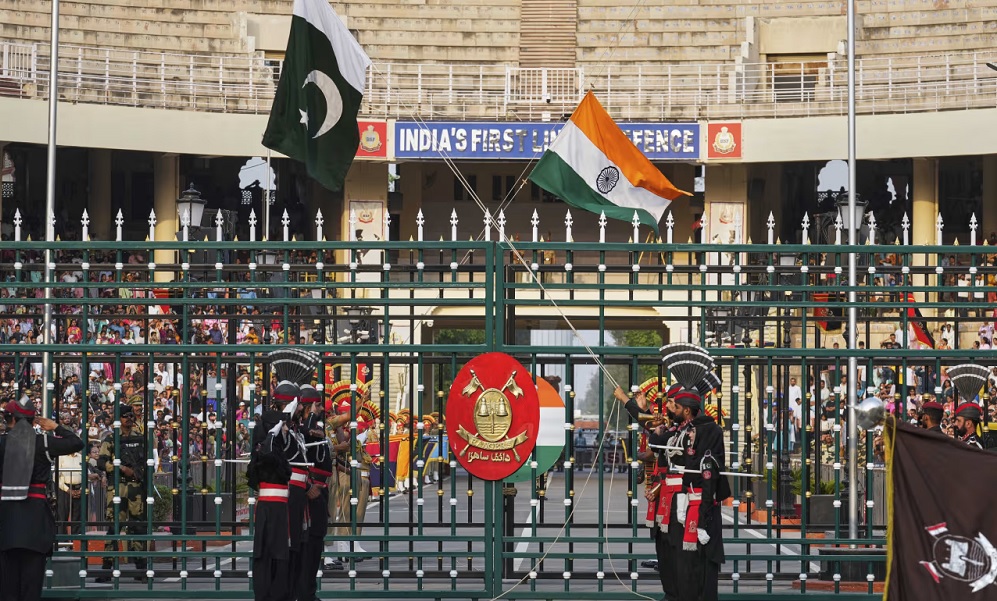
India and Pakistan summoned each other’s top diplomats on Saturday over a border incident on October 2, with New Delhi rejecting Islamabad’s allegation that Indian forces had killed two unarmed Pakistani civilians and saying those involved had crossed illegally into Indian territory.
Pakistan’s foreign ministry said earlier on Saturday that personnel from India’s Border Security Force had used “unprovoked lethal force” against two unarmed Pakistani civilians in the Bedian sector along the international border on Friday, Reuters reported.
“Pakistan categorically rejects any attempt to mischaracterize the deceased as ‘infiltrators’,” the ministry said in a statement.
Pakistan said it had summoned India’s chargé d’affaires to lodge a protest over the incident and called for an “immediate, transparent and credible investigation”.
India’s foreign ministry later rejected what it called “baseless and motivated allegations” and said it had summoned the chargé d’affaires of the Pakistan High Commission to protest at the “continued facilitation of illegal cross-border infiltration from Pakistan”.
The ministry said three people had crossed into Indian territory in the Ferozepur sector of Punjab and continued moving towards the border fence despite multiple warnings from the BSF to return to Pakistan.
“The BSF was compelled to engage them for posing an imminent security threat,” the ministry said.
India said the incident reflected “a clear pattern of repeated cross-border movement by armed narcotics syndicates operating from Pakistan” and urged Islamabad to investigate what it described as cross-border infiltration and drug-smuggling activities.
India also urged Pakistan to respect the international border, observe bilateral arrangements and ensure its forces prevented unauthorised movement from its side.
Relations between the two nuclear-armed rivals have been strained since a four-day war in 2025, the worst in decades, followed by a militant attack on tourists in Indian Kashmir that killed 26 people.
New Delhi accused Pakistan of backing the attack, which Islamabad denied.


Thirty US states seek access to Afghan assets for 9/11 victims

Yemeni government forces seize strategic strait from Houthis

Ariana Afghan Airlines ends 15-year control of ticketing and operational systems by Pakistani firm

Iran offers cooperation on Herat-Mazar railway, mining and power generation

IEA rejects ICC arrest warrants, says Afghanistan does not recognize court

Saudi energy group signs major Afghanistan deals covering gas exploration and pipeline plans

Khalilzad: Afghanistan ready to attract major investment

Messi returns to Inter Miami after Argentina retirement

Imam Abu Hanifa exhibition to draw exhibitors from more than 20 countries

Maryam Nawaz says Punjab faces greater security threats from neighbouring provinces

Tahawol: Afghanistan-Iran: shared opportunities and challenges discussed

Saar: Pakistan’s hostile policy toward Afghanistan discussed

Tahawol: Doha process seeks new cooperation opportunities

Saar: Moscow forum 8th consultative meeting on Afghanistan

Tahawol: Escalation of internal political crisis in Pakistan discussed
-
 Latest News5 days ago
Four members of one family killed in Helmand in Pakistan airstrike
-

 Sport4 days ago
ACB announces Afghanistan squads for Bangladesh, Zimbabwe series
-
 Latest News5 days ago
Moscow to host 8th meeting of Afghanistan consultations on October 5
-

 Latest News4 days ago
Russia expects to ease Afghanistan-Pakistan tensions at Moscow Format meeting
-

 Sport5 days ago
Rashid Khan, Azmatullah Omarzai maintain top spots in ICC ODI rankings
-

 International Sports4 days ago
Afghanistan to face Pakistan, India and Australia at 2027 Cricket World Cup
-
 Regional4 days ago
Saudi-led coalition says Houthis attacked power station for Prophet’s Mosque in Medina
-

 Sport21 hours ago
Cricket Bonanza: Afghanistan set for packed international schedule