
Latest News
Afghanistan excluded from COP28 as climate impacts hit home

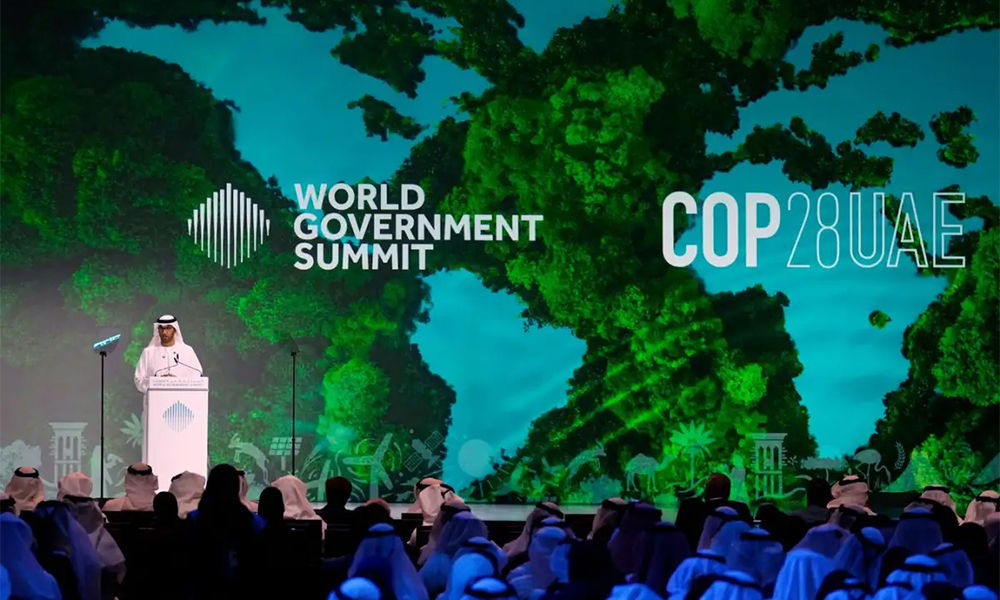
Humanitarian concerns have been raised over Afghanistan being left out of United Nations climate negotiations for a third year in a row, as the country grapples with worsening drought and floods, Reuters reported.
Dozens of people were killed in Afghanistan, one of the world’s most vulnerable countries to climate change, after heavy rains triggered flash floods that swept across drought-stricken land earlier this year.
But the country is absent from the COP28 climate summit in Dubai, having been left out of such U.N. talks since the Islamic Emirate of Afghanistan (IEA) took over Kabul in 2021.
No foreign government has formally recognised Islamic Emirate leadership, and it does not have a seat at the U.N. General Assembly.
Foreign officials have cited the IEA’s restrictions on women as the reason for current isolationist policies, particularly its barring of girls and women from high school and universities, read the report.
However, some have questioned the country’s continued exclusion. Humanitarian and international officials told Reuters they made efforts this year to allow Afghan representatives to be able to attend, coinciding with broader talks among foreign governments and multilateral institutions on how to deal with the Islamic Emirate.
Though ultimately unsuccessful, “there’s hope that maybe next year you might see engagement with Afghanistan in some capacity again,” said Qiyamud Din Ikram of the nonprofit Refugees International on the sidelines of the COP28 summit.
The U.N. Framework Convention on Climate Change (UNFCCC)’s COP Bureau, which is responsible for accrediting parties to the annual summits, decided at a November 2022 meeting to defer a decision on future Afghanistan representation.
The Islamic Emirate administration has called its COP28 exclusion “regrettable”.
“Efforts were made to have the representatives of Afghanistan participate in the 28th U.N. Climate Change Conference…but no positive response was received,” said Rouhullah Amin, head of climate adaptation at the country’s National Environmental Protection Agency (NEPA).
A senior U.N. source said U.N. and other international officials had made efforts in recent months to get NEPA officials and other Afghan representatives present at COP28, Reuters reported.
The UNFCCC did not respond to a request for comment on Afghanistan’s lack of participation at COP28.
In rural Afghanistan, women are responsible for fetching water for their families, an increasingly difficult task as the country struggles with drought.
Women make up many of the 20 million Afghans facing severe food insecurity, exacerbated by declining food aid as governments slash Afghanistan’s humanitarian funding.
Some nonprofits have said isolationist policies can further hurt women, read the report.
Payvand Seyedali, Afghanistan’s country director for nonprofit Women for Women International, said: “We don’t have the luxury of not engaging with the de facto authorities in Afghanistan.”
The Islamic Emirate say they respect women’s rights in line with their interpretation of Islamic law.
Others said Afghan women feel disengagement is appropriate until the Islamic Emirate rolls back restrictions.
“Every time they see the Taliban [IEA] being welcomed in foreign capitals, it sends a message that their (women’s) rights do not matter to the rest of the world,” said Heather Barr of Human Rights Watch.
The IEA’s takeover of government institutions has also meant that Afghanistan is unable to access key U.N. climate funds, including the Green Climate Fund (GCF), Reuters reported.
GCF spokesperson Stephanie Speck said the fund no longer had a recognized focal point in Afghanistan following the COP Bureau’s 2022 decision.
The GCF had approved nearly $18 million for a sustainable energy project in Afghanistan before the IEA’s takeover. That project has now been “put on hold to allow for a full review of current and emerging risks”, Speck said.
Other proposals that the previous Afghan government had been working on sought more than $750 million, including for projects to improve irrigation and deploy rooftop solar panels in Kabul. They, too, have been postponed, according to a NEPA document seen by Reuters.
Some have questioned the isolationist approach to the Islamic Emirate. A report on Islamic Emirate engagement, commissioned by the U.N. Security Council, concluded last month that “the status quo of international engagement is not working”.
It recommended expanding international cooperation on climate adaptation and response.
“Conversations with the Taliban [IEA] on climate change adaptation could potentially be a confidence building measure,” said Paul Klouman Bekken, Norway’s charge d’affaires for Afghanistan who regularly meets IEA officials in Kabul.
Roza Otunbayeva, who heads the U.N. mission in Afghanistan, called the situation “unsustainable.”
“It is time to think creatively, to ensure that in one year’s time we are not approaching COP29 with yet another statement on Afghanistan’s absence.”












Kazakhstan’s Foreign Minister Mukhtar Tileuberdi has called for pragmatic and coordinated international engagement with Afghanistan, saying the country’s long-term stability is closely linked to the security and sustainable development of Central Asia.
Speaking during the general debate of the 81st session of the United Nations General Assembly in New York on Friday, Tileuberdi said humanitarian assistance to Afghanistan remains essential but alone cannot break the cycle of poverty, displacement and dependency.
He said Kazakhstan supports a “pragmatic, coordinated and step-by-step” approach to international engagement with Afghanistan, with the United Nations playing a central role.
Tileuberdi also said Kazakhstan is working with the UN to operationalize the United Nations Regional Centre for the Sustainable Development Goals for Central Asia and Afghanistan in Almaty.
He said the success of the centre should be measured by the results and assistance it delivers to the region.


Abu Muslim Farah defeat Khurasan Faryab 2-0 in ACL season six

Saar: Concerns over Pakistan’s political crisis discussed

Afghanistan Champions League: Omar Zawak Herat beat Toofan Herat 1-0

Blast in Pakistan’s Dera Ismail Khan kills 11, injures 30

Ariana Afghan Airlines increases Kabul-Delhi cargo flights

Saudi energy group signs major Afghanistan deals covering gas exploration and pipeline plans

Trump floats idea of renaming Atlantic or Pacific Ocean

US hits Egyptian bank branches with Iran sanctions as war marks six months

Nepal flood rescue mission enters critical phase as thousands remain missing

Iranian clubs to face Gulf opponents at neutral venues in Asian Champions League Elite
Saar: Concerns over Pakistan’s political crisis discussed

Exclusive interview with Abdul Latif Mansoor, Minister of MRRD

Tawsia: Overview of Afghanistan’s iron mines

Tahawol: Discussion on fresh Pakistani airstrikes on Afghanistan

Saar: Calls for international support for Afghanistan discussed
-

 World5 days ago
CNN, MS NOW and Politico sue Trump, challenging White House ban
-

 Latest News3 days ago
Ariana Afghan Airlines ranks seventh among 45 Central Asian airlines
-

 Latest News4 days ago
UN reiterates call for respect for international law after Kunar airstrikes
-

 Regional3 days ago
US and Iran hold first talks since June after Trump’s ‘annihilation’ threat
-

 Latest News3 days ago
Silk Road highway in Wakhan corridor now reaches the China border
-

 Latest News4 days ago
Afghan Official: Pakistan’s airstrikes will not go unanswered
-

 Sport4 days ago
Afghan boxing referee heads to China for international festival
-
 Regional5 days ago
G7 foreign ministers call on Iran to stop arming Houthis