
Business
Afghanistan’s exports drop sharply in December 2025: World Bank
The decline was largely caused by Pakistan’s crossing closure, which disrupted traditional trade routes and led to delays as exporters attempted to reroute shipments to India and Central Asia.

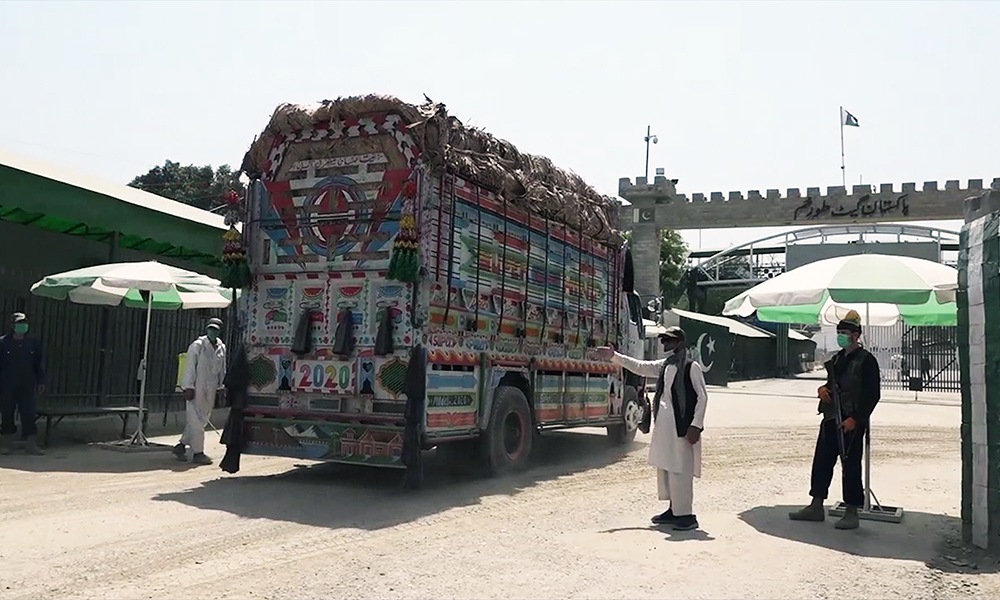
Afghanistan’s exports declined significantly in December 2025, falling by 25 percent month-on-month and 15 percent year-on-year to $162 million, according to a World Bank report.
The decline was largely caused by Pakistan’s crossing closure, which disrupted traditional trade routes and led to delays as exporters attempted to reroute shipments to India and Central Asia.
India emerged Afghanistan’s largest export destination, accounting for 61.2 percent of exports in December.
Afghanistan’s imports remained robust at $1.2 billion, increasing by 5 percent month-on-month.
On a year-on-year basis also, imports grew by 5 percent, reflecting sustained domestic demand linked to the influx of returnees.
According to the report, in December 2025, the afghani (AFN) appreciated modestly by 0.4 percent month-on-month against the US dollar. On a year-on-year basis, the afghani recorded a solid appreciation of 5.8 percent reflecting continued market stability.
Afghanistan’s domestic revenue collection reached AFN 24.1 billion (approximately $363.1 million) in December, representing a 2.9 percent month-on-month increase and an 18 percent rise year-on-year.





Business
Afghanistan, Uzbekistan discuss expanding economic, trade and investment cooperation
For his part, Khojayev said Uzbekistan is prepared to invest in Afghanistan’s mining sector and increase imports of Afghan meat and cotton.
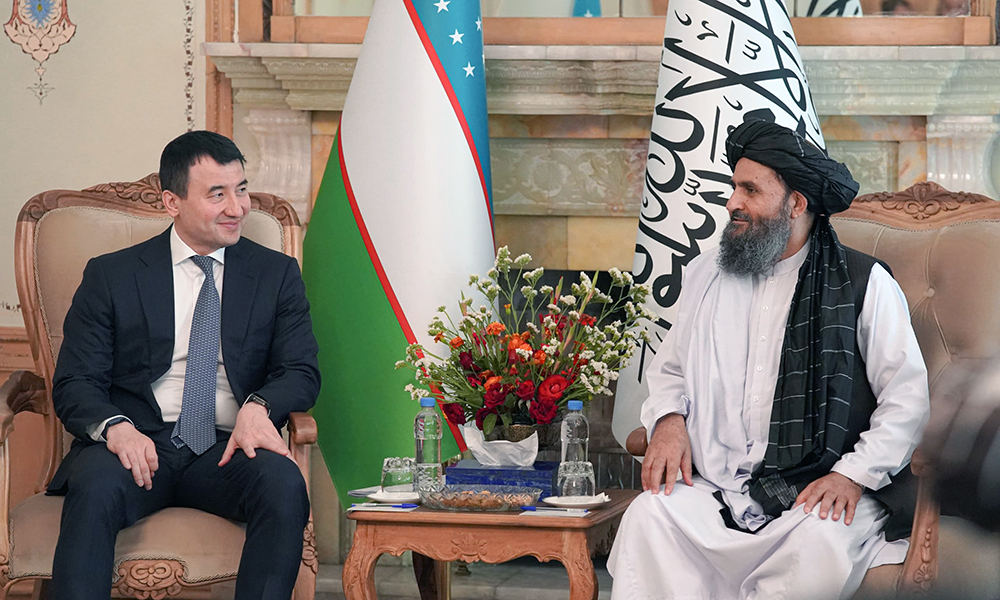
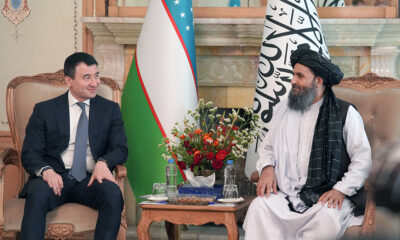
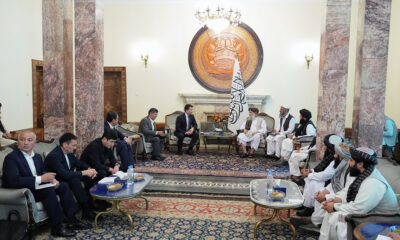
Afghanistan’s Deputy Prime Minister for Economic Affairs, Mullah Abdul Ghani Baradar, met on Sunday with Uzbekistan’s Deputy Prime Minister, Jamshid Khojayev, and his accompanying delegation at the Chahar Chinar Palace in the Arg to discuss expanding bilateral economic cooperation.
The two sides held talks on strengthening economic, trade, investment, and transit cooperation between Afghanistan and Uzbekistan.
Baradar said stronger and more stable relations between Kabul and Tashkent would not only serve the economic interests of both countries but also contribute to regional stability. He added that the Islamic Emirate is ready to use all available capacities to further strengthen and expand bilateral ties.
He emphasized the effective implementation of the joint action plan between the two countries, describing it as an important step toward boosting economic growth.
Baradar also identified several priority areas for cooperation, including removing obstacles to the movement of Afghan export vehicles to Uzbekistan, granting exemptions for Afghan transit goods arriving from China, Central Asia, and Russia, facilitating exports of Afghanistan’s agricultural products, fresh and dried fruits, food products, and valuable minerals to the markets of Central Asia, Russia, and China, increasing the capacity of transit infrastructure, expanding customs facilities, easing the issuance of visas for Afghan citizens, and enhancing cooperation in the energy sector and joint infrastructure projects.
He said broader cooperation between Afghanistan and Uzbekistan would not only elevate bilateral economic relations but could also serve as a model of good neighborly relations for other countries in the region.
For his part, Khojayev said Uzbekistan is prepared to invest in Afghanistan’s mining sector and increase imports of Afghan meat and cotton.
He also announced Uzbekistan’s readiness to build a $50 million zinc processing plant in Hairatan.
Khojayev added that the Uzbek delegation would work with relevant institutions of the Islamic Emirate in the areas of transport, energy, agricultural development, banking, trade, economic cooperation, and capacity-building for Afghan citizens.
Business
Pakistan’s trade deficit with neighbours surges to nearly $16 billion as exports to Afghanistan plunge
The decline in exports was largely attributed to reduced shipments to Afghanistan, Bangladesh and Sri Lanka.
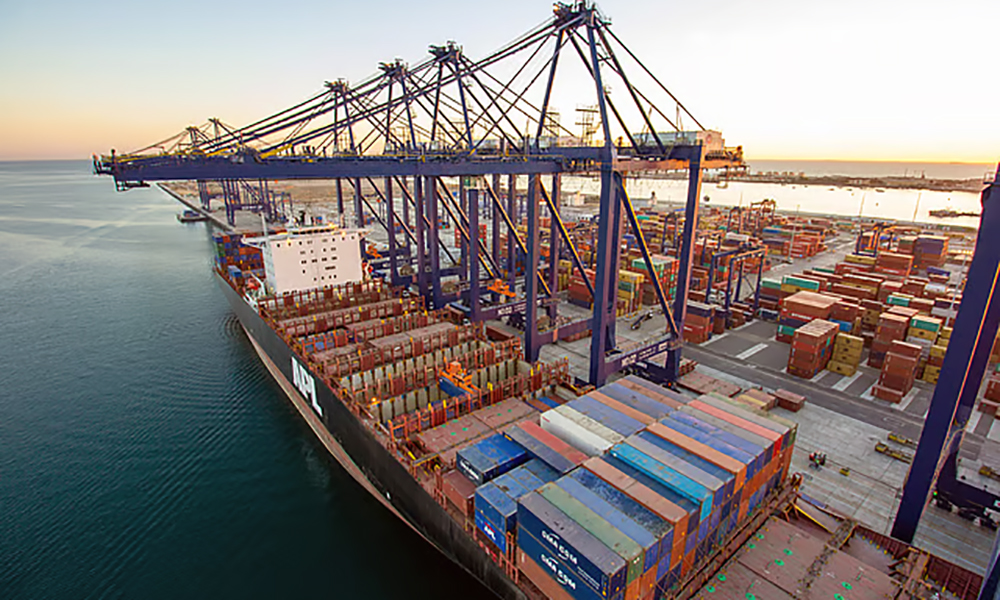
Pakistan’s trade deficit with nine neighbouring countries widened by 30 percent in the 2025–26 fiscal year, reaching $15.93 billion, driven by declining exports to regional markets and rising imports, particularly from China.
According to the latest data released by the State Bank of Pakistan, the country’s trade gap with Afghanistan, China, Bangladesh, Sri Lanka, India, Iran, Nepal, Bhutan and the Maldives increased from $12.26 billion in the previous fiscal year to $15.93 billion.
Pakistan’s total exports to the nine neighbouring countries fell by 11 percent to $3.95 billion, while imports from the region rose by 19.1 percent to $19.89 billion, highlighting a growing trade imbalance.
The decline in exports was largely attributed to reduced shipments to Afghanistan, Bangladesh and Sri Lanka. Trade with Afghanistan, including exports, has remained suspended since October 10, 2025, significantly affecting Pakistan’s regional export performance.
Exports to Afghanistan dropped by 68.9 percent to $243.69 million, down from $783.95 million in the previous fiscal year. Imports from Afghanistan also declined sharply by 74.9 percent, falling to $6.5 million.
China remained Pakistan’s largest regional trading partner. Exports to China increased by 8.4 percent to $2.68 billion, accounting for 68 percent of Pakistan’s exports to neighbouring countries. However, imports from China climbed 19.8 percent to $19.54 billion, representing 98 percent of Pakistan’s regional imports.
Trade with India remained limited despite a percentage increase in exports. Pakistan’s exports to India rose to $2.93 million, while imports from India declined 7.6 percent to $168.73 million.
Exports to Bangladesh fell 9.3 percent to $715.59 million, while exports to Sri Lanka declined 22.8 percent to $293.38 million during the fiscal year.
The latest figures underscore Pakistan’s growing dependence on imports, particularly from China, while declining exports to regional markets continue to widen the country’s trade deficit.


Tahawol: Trump halting major Iran escalation

Saar: Afghanistan-Uzbekistan economic ties

Afghan team arrives in England for training camp ahead of Ireland ODI series

Afghanistan can link South and Central Asia through data transit: Baradar

Afghanistan, Uzbekistan discuss expanding economic, trade and investment cooperation

India offers 1,000 online scholarships for Afghan students for 2026-27 academic year

Afghanistan eyes direct Basmati rice imports from India amid tensions with Pakistan

Cricket world pays tribute to Afghanistan fast bowler Shapoor Zadran

Turkey spent over $120 million to prepare airport for Qatar-donated U.S. presidential aircraft

Afghanistan, Uzbekistan set for friendly cricket clash in Khost
Tahawol: Trump halting major Iran escalation
Saar: Afghanistan-Uzbekistan economic ties

Tahawol: New developments ahead in the Middle East discussed

Saar: Rising tensions between Kabul and Islamabad discussed

Tawsia: Factors behind rising fuel prices in Afghanistan discussed
-

 Latest News4 days ago
Germany defends Afghan deportation policy after fatal Trier knife attack
-

 Sport5 days ago
FIFA updates world rankings; Spain climbs to No. 1, Afghanistan ranked 171st
-
 Latest News4 days ago
Afghanistan and Uzbekistan advance railway cooperation, discuss Trans-Afghan project
-

 World5 days ago
War in Iran has cost the US $37.5 billion so far, Pentagon says
-

 Latest News5 days ago
Amnesty International calls for probe into Pakistan airstrike on Kabul rehabilitation centre
-
 Business4 days ago
Pakistan’s trade deficit with neighbours surges to nearly $16 billion as exports to Afghanistan plunge
-

 Sport4 days ago
Rahmat Shah Zurmati appointed Afghanistan’s new Test and ODI captain
-
 Latest News2 days ago
Five armed men killed while attempting to cross Durand Line into Badakhshan