
Latest News
Afghans overwhelmingly support girls’ education despite ongoing ban: UN Women

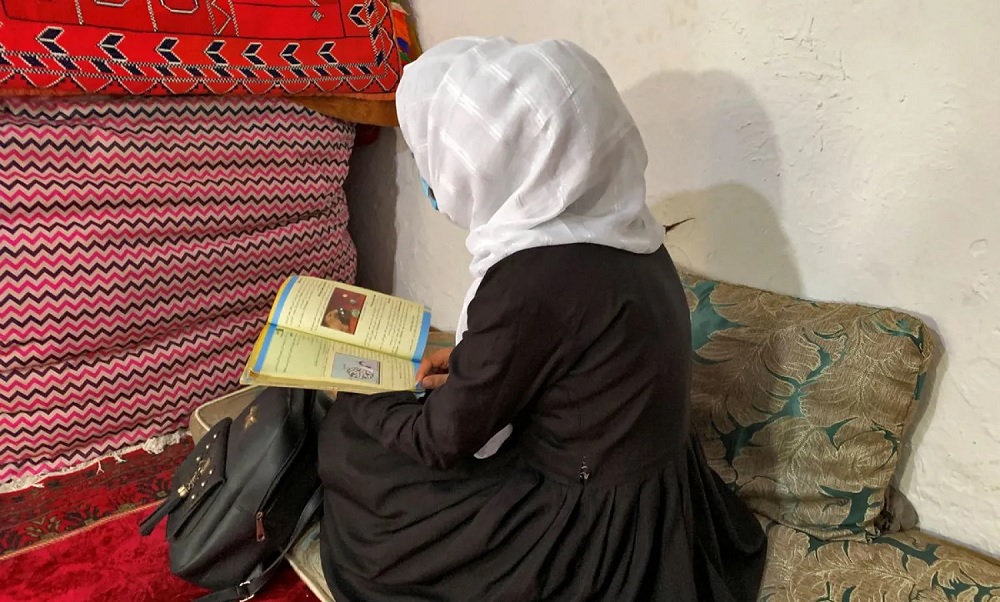
Despite the Islamic Emirate’s continuing ban on secondary education for girls, the vast majority of Afghans across all demographics believe girls should have the right to learn, according to a new report by UN Women.
The latest Gender Alert, released this week, draws on a nationwide door-to-door survey of over 2,000 people and reveals that 92 percent of respondents consider girls’ education important. Support was consistent across urban and rural areas. In cities, 95 percent of both men and women expressed support, while in rural areas, 95 percent of women and 87 percent of men did the same.
“This is almost always the first thing girls tell us – they are desperate to learn and just want the chance to gain an education,” said Susan Ferguson, UN Women’s Special Representative in Afghanistan. “Families also say they want their daughters to have that dream. They know that literacy and learning can change the trajectory of a girl’s life, in a country where half the population is living in poverty.”
The report also highlights the broader social and economic impact of increasing restrictions on women’s rights since the Islamic Emirate regained control in 2021. In areas where the ban on women working with NGOs is being enforced, a separate UN Women survey from July and August 2025 found that 97 percent of women said the restrictions have negatively affected their daily lives. Over half of NGOs operating in Afghanistan now report being unable to effectively reach women and girls with essential services.
Based on the report, 40 percent of Afghan women surveyed said they still envision a future where change and gender equality are possible. However, nearly three-quarters of women rated their mental health as “bad” or “very bad.”
Women also reported significant lack of agency in decision-making. Seventy-five percent said they have no influence in their communities, half felt excluded from decisions in their extended families, and one in four said they had no influence even within their own households.
The Islamic Emirate has previously said that the issue of girls’ education is an internal issue in Afghanistan and efforts are being made to resolve it.












Kazakhstan’s Foreign Minister Mukhtar Tileuberdi has called for pragmatic and coordinated international engagement with Afghanistan, saying the country’s long-term stability is closely linked to the security and sustainable development of Central Asia.
Speaking during the general debate of the 81st session of the United Nations General Assembly in New York on Friday, Tileuberdi said humanitarian assistance to Afghanistan remains essential but alone cannot break the cycle of poverty, displacement and dependency.
He said Kazakhstan supports a “pragmatic, coordinated and step-by-step” approach to international engagement with Afghanistan, with the United Nations playing a central role.
Tileuberdi also said Kazakhstan is working with the UN to operationalize the United Nations Regional Centre for the Sustainable Development Goals for Central Asia and Afghanistan in Almaty.
He said the success of the centre should be measured by the results and assistance it delivers to the region.


Trump rejects Iranian proposal to open Hormuz and end fighting

Abu Muslim Farah defeat Khurasan Faryab 2-0 in ACL season six

Saar: Concerns over Pakistan’s political crisis discussed

Afghanistan Champions League: Omar Zawak Herat beat Toofan Herat 1-0

Blast in Pakistan’s Dera Ismail Khan kills 11, injures 30

Saudi energy group signs major Afghanistan deals covering gas exploration and pipeline plans

Trump floats idea of renaming Atlantic or Pacific Ocean

US hits Egyptian bank branches with Iran sanctions as war marks six months

Nepal flood rescue mission enters critical phase as thousands remain missing

Iranian clubs to face Gulf opponents at neutral venues in Asian Champions League Elite
Saar: Concerns over Pakistan’s political crisis discussed

Exclusive interview with Abdul Latif Mansoor, Minister of MRRD

Tawsia: Overview of Afghanistan’s iron mines

Tahawol: Discussion on fresh Pakistani airstrikes on Afghanistan

Saar: Calls for international support for Afghanistan discussed
-

 Latest News4 days ago
Ariana Afghan Airlines ranks seventh among 45 Central Asian airlines
-

 Latest News5 days ago
UN reiterates call for respect for international law after Kunar airstrikes
-

 Regional4 days ago
US and Iran hold first talks since June after Trump’s ‘annihilation’ threat
-

 Latest News4 days ago
Silk Road highway in Wakhan corridor now reaches the China border
-

 Regional3 days ago
Iran airlines cancel flights as US sanctions hit
-

 Latest News5 days ago
Afghan Official: Pakistan’s airstrikes will not go unanswered
-

 Regional5 days ago
G7 foreign ministers call on Iran to stop arming Houthis
-

 Sport5 days ago
Afghan boxing referee heads to China for international festival