
Regional
Ayatollah’s wife dies from injuries sustained in airstrike on Tehran residence
Bagherzadeh, believed to have been in her late seventies, largely remained out of public view throughout her husband’s decades in power.

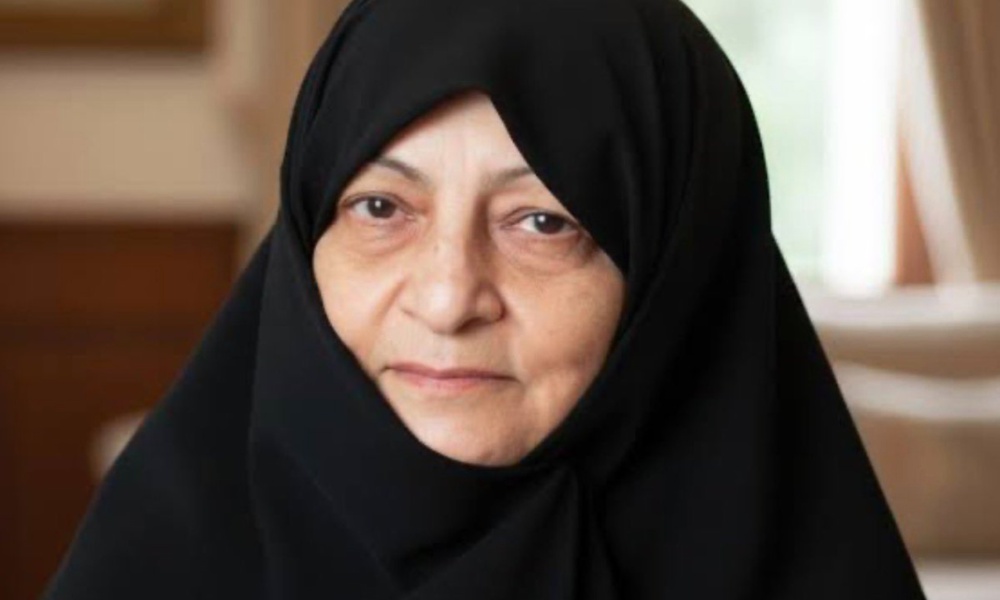
Mansoureh Khojasteh Bagherzadeh, the wife of Iran’s late supreme leader Ali Khamenei, has died after succumbing to injuries sustained in a recent airstrike on their residence in central Tehran, Iranian state media reported on Monday.
According to Iranian news outlets, including the semi-official Tasnim News Agency, Bagherzadeh had been in a coma since the strike, which took place two days ago. The attack, described by US officials as part of “Operation Epic Fury,” was reportedly carried out by the United States and Israel amid escalating hostilities with Iran.
Iranian authorities confirmed over the weekend that Khamenei was killed in the same strike, along with several members of his family and senior leaders who were present at the compound. State media characterized the attack as a major escalation and a severe blow to the country’s leadership structure.
Khamenei, 86, had served as Iran’s Supreme Leader since 1989, holding ultimate authority over the state, armed forces, and key institutions including the Islamic Revolutionary Guard Corps (IRGC).
His death marks one of the most consequential developments in the ongoing conflict and raises significant questions about Iran’s political succession and regional posture.
Bagherzadeh, believed to have been in her late seventies, largely remained out of public view throughout her husband’s decades in power. Married in the mid-1960s, the couple had six children. Despite her proximity to one of the region’s most powerful figures, she maintained a private life and held no official political role.
In a rare interview with Iranian state media in 2011, she described her role as creating a calm home environment to support her husband’s political responsibilities. She also recounted visiting him during his imprisonment under the Shah’s rule and assisting with revolutionary activities prior to 1979.
The killing of Khamenei and members of his family represents a dramatic turning point in the crisis, with regional and international observers warning of heightened instability in an already volatile security landscape.





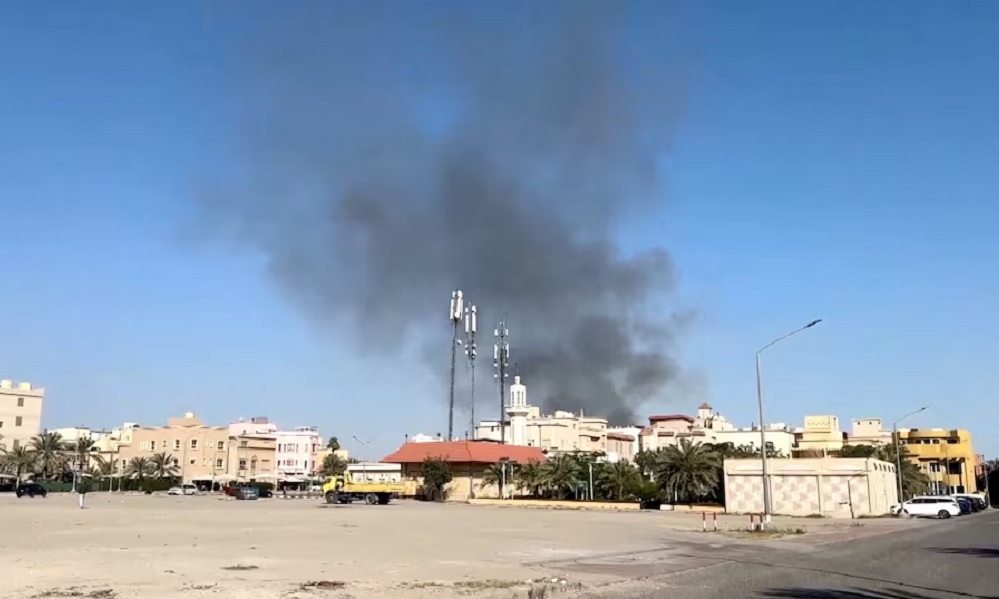
A coalition of regional and international partners has issued a joint statement strongly condemning what they described as indiscriminate and reckless missile and drone attacks carried out by Iran across multiple countries in the Middle East.
In the statement released Monday, Qatar, Saudi Arabia, Bahrain, Jordan, Kuwait, the United Arab Emirates, and the United States denounced the strikes as a serious violation of sovereignty and a threat to regional stability.
The countries said the attacks targeted sovereign territories across the region, including Bahrain, Iraq — including the Kurdistan Region — Jordan, Kuwait, Oman, Qatar, Saudi Arabia, and the United Arab Emirates. According to the statement, the strikes endangered civilian populations and caused damage to civilian infrastructure.
Describing the actions as a “dangerous escalation,” the joint statement emphasized that targeting civilians and states not directly engaged in hostilities constitutes reckless and destabilizing behavior.
The signatories reaffirmed their commitment to defending their citizens, sovereignty, and territorial integrity, underscoring what they described as their right to self-defense in response to the attacks.
They also highlighted the role of coordinated air and missile defense systems, crediting joint defense cooperation with preventing more extensive casualties and destruction.
The statement reflects growing regional concern over rising tensions and the potential for further escalation in an already volatile security environment.
Regional
Middle East conflict intensifies; UK base in Cyprus targeted
The Cyprus attack came amid a broader wave of Iranian retaliatory strikes targeting U.S. and allied military assets following joint U.S.–Israeli operations against Iranian strategic sites.
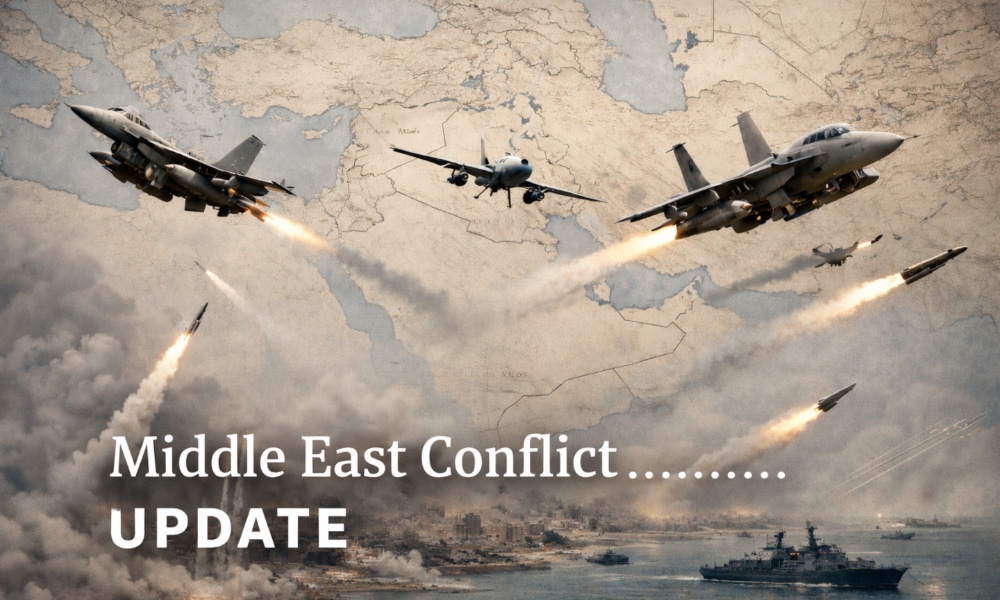
The Middle East conflict sharply intensified Monday as hostilities between the United States, Israel and Iran expanded across the region, drawing in Gulf states and disrupting civil aviation networks from Qatar to Cyprus.
Drone strike hits UK base in Cyprus
A suspected Iranian-made drone struck the British Royal Air Force base at Akrotiri, Cyprus, overnight, causing limited damage to a runway but no reported casualties. The incident — the first attack on the base in decades — alarmed both British and Cypriot authorities, prompting heightened security measures.
Officials stressed that Cyprus is not a direct combatant in the conflict, but the strike underscores how far the fighting has spread beyond its original flashpoints.
The attack came amid a broader wave of Iranian retaliatory strikes targeting U.S. and allied military assets following joint U.S.–Israeli operations against Iranian strategic sites.
U.S. aircraft downed in Kuwait
In Kuwait, multiple U.S. military aircraft were reported downed during continued Iranian missile and drone attacks. Kuwaiti authorities confirmed crashes within their territory and said all crew members were rescued and are in stable condition.
Air defense systems across Kuwait remained active for a third consecutive day as missiles and drones were intercepted over key military and diplomatic areas. Emergency services responded to debris impacts, with minor injuries reported.
The incidents mark one of the most dangerous escalations in U.S.–Iran tensions in decades, with both sides engaging in sustained operations.
Doha Airport disrupted
The conflict has also thrown regional air travel into chaos. Hamad International Airport in Doha — one of the world’s busiest transit hubs — was forced to suspend operations temporarily after missile alerts and security threats were reported over Qatari airspace.
Qatar closed its airspace as a precautionary measure, and major carriers suspended or rerouted flights. Thousands of passengers have been stranded as airlines scramble to adjust schedules amid rapidly changing security conditions.
Airspace across parts of the Gulf region has thinned dramatically, with commercial traffic diverted away from potential conflict zones.
Dubai targeted
In the United Arab Emirates, particularly in Dubai, the impact of the widening regional conflict has become increasingly visible.
Missile interception activity has been reported in the skies, with loud explosions heard across parts of the city as air defense systems responded to incoming threats. Authorities temporarily closed national airspace as a precaution, leading to significant disruption at Dubai International Airport and other major transit hubs.
Several commercial flights were suspended or diverted, leaving thousands of passengers stranded while emergency services responded to falling debris in some areas. Officials confirmed casualties following recent strikes. The government has urged residents to remain calm while security forces continue defensive operations to protect key infrastructure and population centers.
Iran: Retaliation and heightened military mobilization
Inside Iran, the country remains on high alert following large-scale strikes on strategic and military sites. Explosions have been reported in and around major cities, including Tehran, as air defenses remain active amid continued military operations.
Iran’s leadership has vowed strong retaliation, launching waves of missile and drone attacks targeting U.S. and allied military positions across the region.
Military mobilization has intensified, with Revolutionary Guard units placed on maximum readiness. The domestic atmosphere is tense, with state media framing the conflict as a decisive confrontation while authorities work to maintain internal stability.
Israel: State of emergency and continued strikes
In Israel, a nationwide state of emergency remains in effect as the military carries out sustained operations against Iranian-linked targets. Air raid sirens have sounded in multiple cities as missile and drone threats persist, with Israel’s air defense systems intercepting incoming projectiles.
The Israeli military has mobilized reservists and expanded strikes beyond immediate border areas, signaling preparations for a prolonged confrontation.
Officials have warned that operations will continue until security threats are neutralized, raising concerns about further escalation.
Lebanon: Hezbollah engagement and border escalation
On the Lebanon front, tensions have escalated sharply as Hezbollah launched rocket and missile fire toward northern Israel. The attacks mark a significant intensification along the border.
In response, Israeli forces conducted airstrikes in southern Lebanon and areas near Beirut, targeting what they describe as militant infrastructure.
Casualties have been reported, and fears are growing that Lebanon could be drawn deeper into the regional war. Political leaders in Beirut have called for restraint, but cross-border exchanges continue, keeping the frontier on edge.
Wider regional impact
The latest escalation follows coordinated U.S. and Israeli strikes on Iranian targets, triggering this multi-front Iranian response that has extended across the Gulf and into the eastern Mediterranean.
The widening confrontation has raised fears of a prolonged regional war with significant economic and humanitarian consequences.
Global markets meanwhile have reacted nervously, while governments continue urgent diplomatic efforts aimed at preventing further escalation.
Regional
Israel strikes Lebanon following Hezbollah attacks, widening Iran conflict
Israel and Lebanon had agreed to a U.S.-brokered ceasefire in 2024 after more than a year of fighting that left Hezbollah severely weakened.
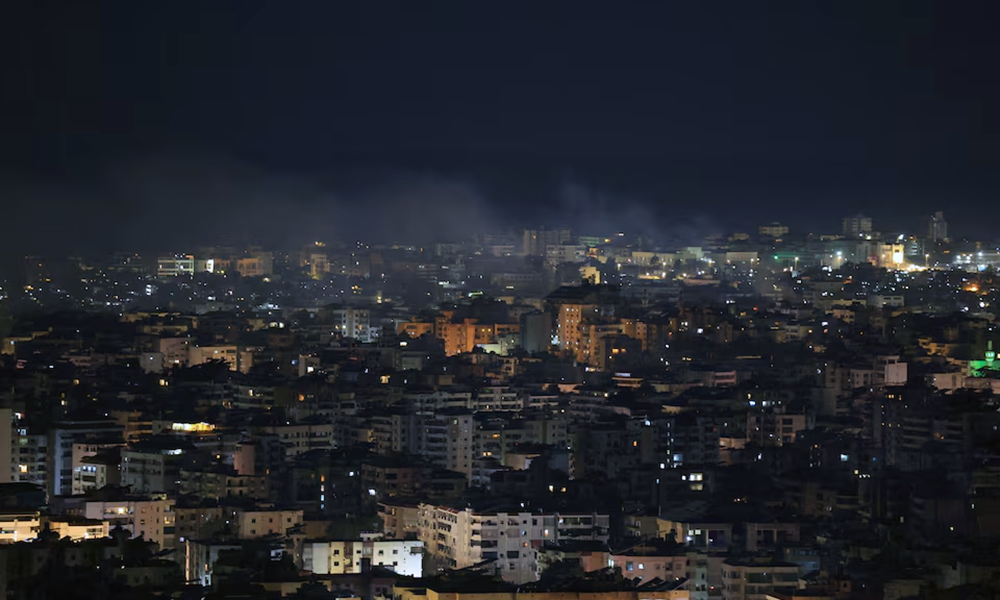
Israel launched new air strikes targeting Tehran and expanded its military campaign to include attacks on Iran-backed Hezbollah militants in Lebanon on Monday, as U.S. President Donald Trump signaled the U.S.-Israeli military assault on Iranian targets could continue for weeks, Reuters reported.
Israel said it was attacking sites connected to Lebanon’s Shi’ite Muslim armed group Hezbollah, one of Tehran’s principal allies in the Middle East, after Hezbollah acknowledged launching missiles and drones toward Israel in retaliation for the killing of Iran’s Supreme Leader Ali Khamenei.
The Israeli military said it intercepted a projectile launched from Lebanon, while others landed in open areas of the country.
Israel carried out air strikes on the Hezbollah-controlled southern suburbs of Beirut on Monday, with more than a dozen explosions rocking the Lebanese capital. Israel said it also struck senior Hezbollah militants near Beirut.
People fled on foot and by car in Beirut, clogging the roads, after the series of strikes began around 2:40 a.m. (0040 GMT).
Israel and Lebanon had agreed to a U.S.-brokered ceasefire in 2024 after more than a year of fighting that left Hezbollah severely weakened.
The Hezbollah and Israel tit-for-tat attacks widen the conflict that has spread through the Middle East since the United States and Israel attacked Iran on Saturday, sending oil prices soaring and snarling air travel.
Lebanon’s presidency said on Saturday it had been told by the U.S. ambassador that Israel would not escalate against Lebanon as long as there are no hostile acts from the Lebanese side.
The Israeli military said Hezbollah was “fully responsible for any escalation” and warned residents of dozens of villages in southern and eastern Lebanon to evacuate.
The Israeli military said late on Sunday that its air force had established aerial superiority over Tehran, and that a wave of strikes across the capital had targeted intelligence, security, and military command centers, read the report.
In Iran, President Masoud Pezeshkian said a leadership council composed of himself, the judiciary head and a member of the powerful Guardian Council had temporarily assumed the duties of Supreme Leader.
Air raid sirens sounded across Israel late on Sunday, including in Tel Aviv where projectiles were seen streaking across the night sky as Iran fired new barrages of missiles.
The first U.S. casualties of the campaign, including the deaths of three service personnel were confirmed on Sunday. Two U.S. officials, speaking on condition of anonymity, told Reuters the U.S. service members were killed on a base in Kuwait.
Trump paid tribute to the three killed as “true American patriots” but warned that there will likely be more casualties. “That’s the way it is,” he said.
An extended military campaign could pose a major political risk for Trump’s Republican party ahead of U.S. midterm elections that could decide the fate of Congress. Only around one in four Americans approve of the operation, according to a Reuters/Ipsos poll on Sunday.
But in a video posted on Sunday, Trump vowed military strikes on Iran will continue until “all our objectives are achieved” without providing specifics. He said the assault had so far wiped out Iran’s military command and destroyed nine Iranian navy ships and a naval building.
American aircraft and warships have struck more than 1,000 Iranian targets since the start of major combat operations on Saturday, the U.S. military said.
Trump called on Iran’s military and police, including the powerful Islamic Revolutionary Guards Corps (IRGC), to stop fighting, promising immunity for those who surrender and threatening “certain death” for those who resist. He reiterated calls for the Iranian people to revolt against the government.
“I call upon all Iranian patriots who yearn for freedom to seize this moment, to be brave, be bold, be heroic and take back your country,” Trump said in the pre-recorded video. “America is with you.”
In interviews with multiple news outlets, Trump said the military campaign against Iran could continue for at least four weeks. Top Trump administration officials were set to brief the full membership of the U.S. Senate and House of Representatives on Tuesday, a White House spokesperson said.
Following the death of Khamenei, Iran faces a power vacuum that could leave it in chaos, but the Trump administration has not outlined longer-term aims for the country.
Departing from what had become his usual practice while staying at his Mar-a-Lago resort in Florida, Trump did not speak with the pool of reporters that travel with him. No administration officials appeared on Sunday political talk shows in the U.S.
The Trump administration wants to avoid sending mixed signals as officials continue to debate policy details internally, a person familiar with the discussions told Reuters.
Iran’s Revolutionary Guards said on Sunday they had hit three U.S. and UK oil tankers in the Gulf and the Strait of Hormuz, and attacked military bases in Kuwait and Bahrain with drones and missiles. Shipping data showed hundreds of vessels including oil and gas tankers dropping anchor in nearby waters with traders expecting sharp jumps in crude oil prices on Monday, Reuters reported.
Global air travel was also heavily disrupted as continued air strikes kept major Middle Eastern airports closed, including Dubai — the world’s busiest international hub — in one of the biggest aviation interruptions in recent years.
Oman’s foreign ministry said Iranian Foreign Minister Abbas Araqchi had indicated Tehran was open to de-escalation. But in a post on X, Araqchi suggested Iran was ready to keep fighting.
It remained unclear what the longer-term prospects were for Iran to rebuild its leadership and replace 86-year-old Khamenei, who had held power since the death of the founder of the Islamic Republic, Ayatollah Ruhollah Khomeini in 1989.
Experts said that while his death and those of other Iranian leaders would deal Iran a major blow, it would not necessarily spell the end of Iran’s entrenched clerical rule or the sway of the elite Revolutionary Guards over the population.
Still, it was too early to say how the Iranian people would respond to the changes. A new analysis of Iranian social media from Redpoint Advisors, a global intelligence firm, suggests the public is already looking beyond Khamenei for his replacement.


AFC postpones Champions League matches amid escalating Middle East tensions

Ayatollah’s wife dies from injuries sustained in airstrike on Tehran residence

Bayat Foundation assists needy families in Kabul amid ongoing humanitarian crisis

Needy families in Herat receive much-needed Ramadan aid from Bayat Foundation

Muttaqi, Araghchi emphasize need for de-escalation and diplomacy in phone talks

Pakistani military jet downed in Afghanistan’s Jalalabad, pilot captured alive

IEA releases three Pakistani soldiers to mark Ramadan

AFC Futsal Asian Cup: Afghanistan to face Iran in crucial Group D clash

Afghan Air Force conducts airstrikes in Islamabad, other cities

Afghanistan’s Chief of Armed Forces underscores readiness and equipment for national defense

Tahawol: Afghanistan and the Region Under the Shadow of Rising Tensions

Tahawol: Joint Israeli-US attacks on Iran discussed

Saar: Afghan retaliatory operations against Pakistan discussed

Tahawol: Carrying out retaliatory operations against Pakistan discussed

Saar: Resumption of retaliatory operations against Pakistan discussed
-
 Latest News2 days ago
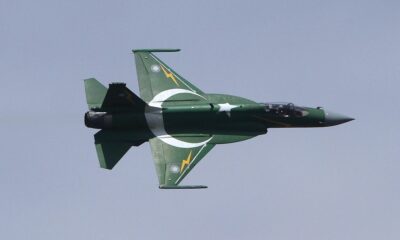
Pakistani military jet downed in Afghanistan’s Jalalabad, pilot captured alive
-
 Latest News3 days ago
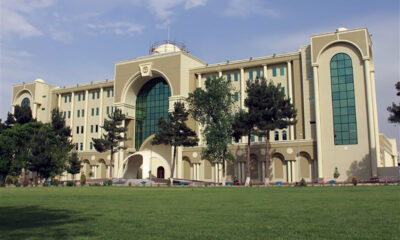
Afghan Air Force conducts airstrikes in Islamabad, other cities
-
 Latest News3 days ago
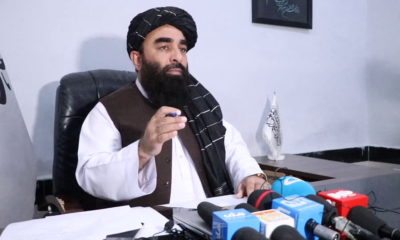
IEA: Special circle in Pakistan has launched mission to destabilize region
-

 World4 days ago
India’s Modi backs Israel in address at Israeli parliament
-
 Latest News3 days ago
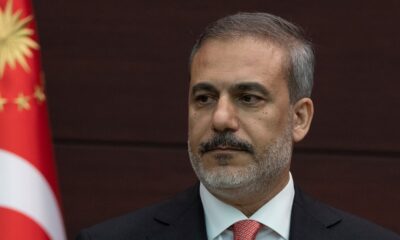
Turkey launches initiative to diffuse Afghanistan-Pakistan tension
-

 Regional4 days ago
Narendra Modi holds high-level talks after historic address to Knesset
-

 Latest News3 days ago
Afghans say they are united against Pakistan aggression
-
 Latest News4 days ago
Pakistan carries out airstrikes after Afghanistan launches retaliatory attacks