
Business
Afghanistan records 33% rise in railway cargo transport
The bulk of cargo passed through the key rail links at Hairatan, Aqina, Torghundi, and the Khawaf–Herat railway connecting Afghanistan with Iran.

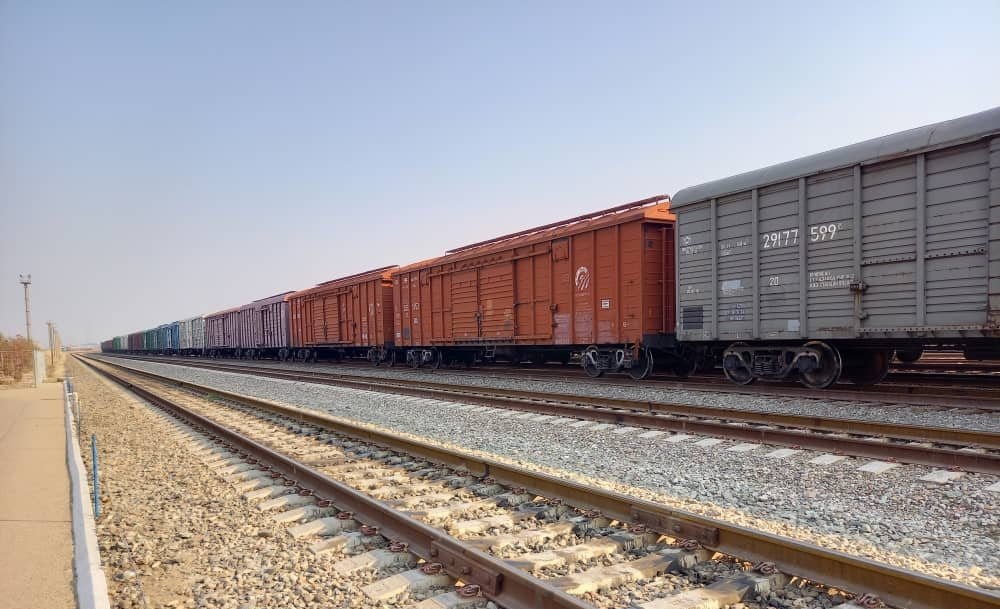
Afghanistan has recorded a sharp increase in rail freight activity, with cargo transported through the country’s railway network rising by more than 33 percent in the first 11 months of the current year compared to the same period last year, officials said.
Mohammad Ashraf Haqshenas, spokesperson for the Ministry of Public Works, said more than five million metric tons of goods were moved through four major railway ports during the reporting period.
According to Haqshenas, shipments included fuel, non-oil commercial goods and other materials entering and transiting the country via the northern and western corridors.
The bulk of cargo passed through the key rail links at Hairatan, Aqina, Torghundi, and the Khawaf–Herat railway connecting Afghanistan with Iran.
The rail network plays a critical role in Afghanistan’s trade infrastructure, offering a cost-effective alternative to road transport for bulk imports such as petroleum, construction materials and food supplies.
As a landlocked country, Afghanistan relies heavily on transit routes through neighboring states to sustain its economy.
Haqshenas said that since the return to power of the Islamic Emirate of Afghanistan, several railway development and expansion projects have been initiated to improve connectivity and increase freight capacity. Some projects have been completed, while others remain under construction.
Officials say the growth in rail cargo reflects gradual improvements in transit coordination with regional partners, including Uzbekistan, Turkmenistan and Iran.
The government views railway expansion as central to its broader strategy of turning Afghanistan into a regional trade and transit hub linking Central Asia to South Asia and the Middle East.
The ministry added that continued investment in rail infrastructure is expected to strengthen economic activity, generate revenue and facilitate greater regional integration in the years ahead.








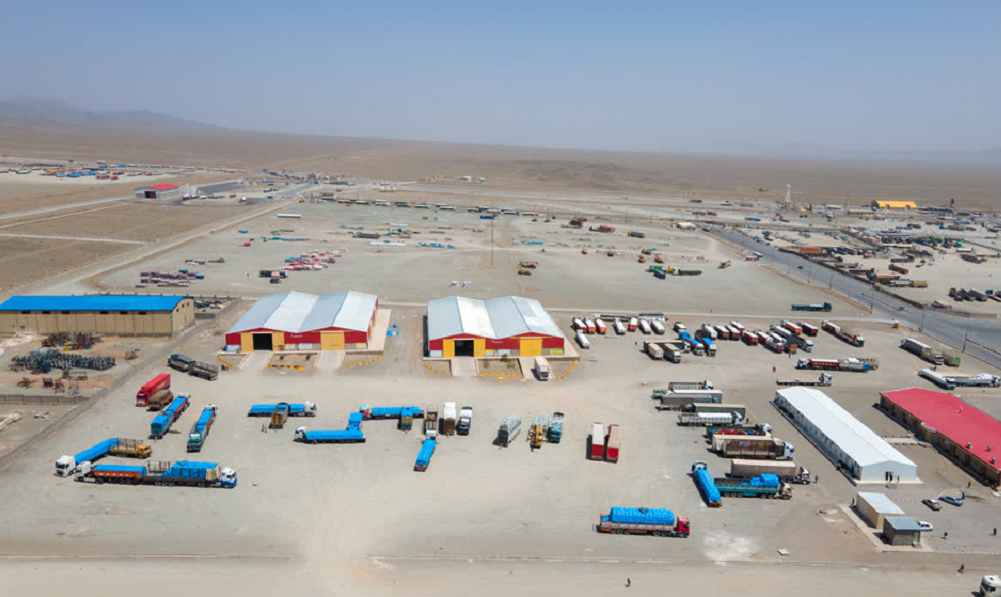
The transit of Afghan traders’ goods through the Sheikh Abu Nasr Farahi border crossing doubled in the first six months of the solar year 1405, reaching 805,000 tonnes, according to Iranian media.
Iran’s IRNA news agency quoted Mohammad Kuhgard, Director General of Customs in Iran’s South Khorasan Province, as saying transit volumes increased by 100 percent compared with the same period last year, strengthening the crossing’s role in regional trade.
Kuhgard also reported a sharp rise in goods handled under the “transit from origin” procedure at Mahirud Customs. Some 85,000 tonnes of goods passed through the facility during the period, an increase of more than 1,300 percent year-on-year.
Under this procedure, customs formalities for Afghan traders’ goods are completed at Mahirud before the shipments are transported to their intended destination countries.
Kuhgard said more than 65 kilometres of the road connecting Mahirud in Iran to Farah Province in Afghanistan have been asphalted. Completion of the route could help reduce transit times and transportation costs between the two countries.
The head of Iran’s Birjand Chamber of Commerce described Afghanistan as South Khorasan’s main export market and trading partner, saying stronger commercial ties, easier imports and the removal of customs barriers could further expand bilateral trade.
Business
Iran calls for extending Herat railway to Uzbekistan border
Meanwhile, Afghanistan’s Ministry of Public Works said the country has significant potential to serve as a regional connectivity hub.
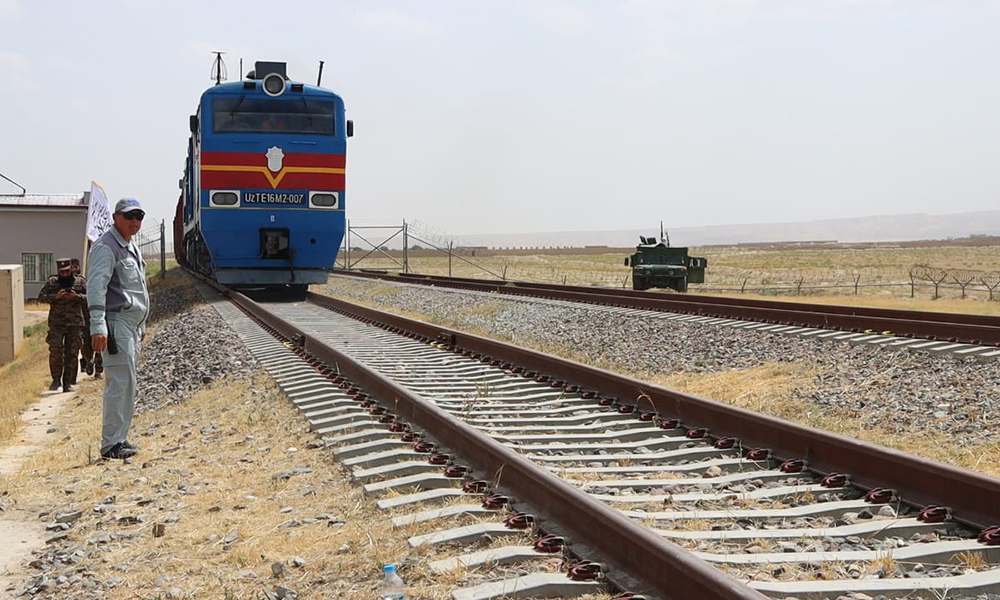
Iran’s Minister of Roads and Urban Development, Farzana Sadeq, has called for extending Afghanistan’s railway network from Herat to the Termez border area in Uzbekistan to strengthen regional trade and transport links.
Farzana made the proposal during a specialised meeting on the Trans-Afghan Corridor in Astana, Kazakhstan, saying Iran is exploring ways to expand railway connectivity with Afghanistan and Uzbekistan.
She said the proposed route could create new opportunities for freight transportation and improve regional countries’ access to open waters. She added that the railway connection should eventually link with the wider railway networks of Central Asia and China.
The Iranian minister also proposed that countries along the Iran–Afghanistan–Tajikistan–Kyrgyzstan–China corridor hold a meeting under the Economic Cooperation Organization (ECO) to identify practical mechanisms for implementing the plan.
Referring to the Chabahar transit agreement between Iran, Afghanistan and India, Farzana said the port has the potential to facilitate the movement of goods from Afghanistan and Central Asian countries to international markets.
She also identified potential railway connections linking Afghanistan with Türkiye and Europe through Sarakhs and Razi, as well as access to the Caucasus and the Black Sea through Sarakhs and Jolfa, as projects worth pursuing within the regional transport network.
Meanwhile, Afghanistan’s Ministry of Public Works said the country has significant potential to serve as a regional connectivity hub. The ministry said Afghanistan welcomes investment from all countries, including Iran, in railway development and transit infrastructure and is ready to cooperate on such projects.
Transport ministers from Iran, Uzbekistan, Pakistan and Kazakhstan, along with the head of the Islamic Emirate of Afghanistan’s railway authority, attended the Trans-Afghan Corridor meeting in Astana.
Business
Dogharoun border handling 70% of Iran’s exports to Afghanistan
Dogharoun also accounted for 34 percent of the province’s imports and 20 percent of inbound transit goods from Afghanistan to Iran during the same period.
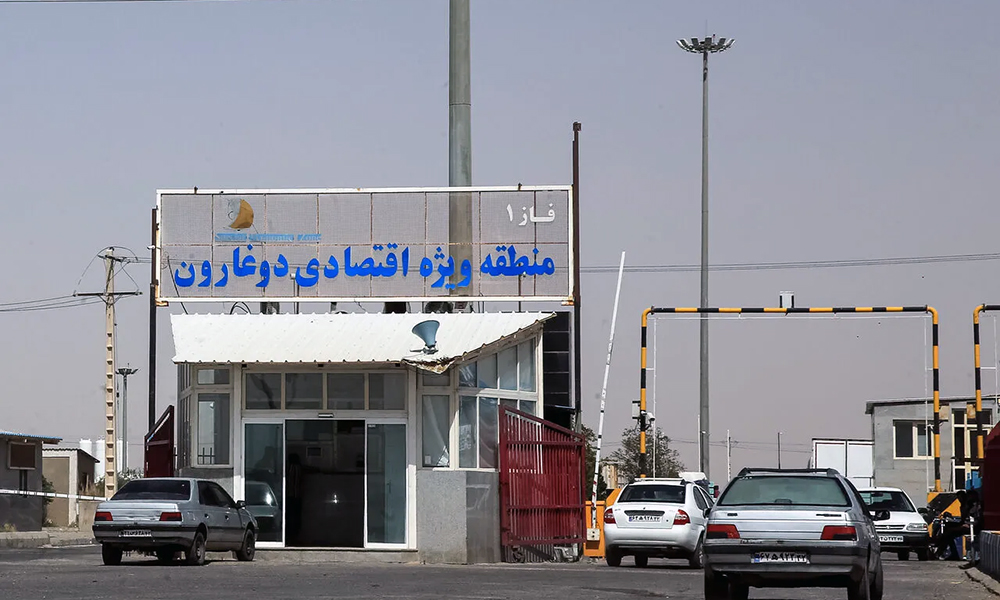
Mohsen Rokni, head of the Dogharoun border terminal, says the crossing accounted for 70 percent of Iran’s exports to Afghanistan during the first half of the current solar year, making it the leading export gateway among border crossings in Iran’s Razavi Khorasan Province.
According to Rokni, Dogharoun also accounted for 34 percent of the province’s imports and 20 percent of inbound transit goods from Afghanistan to Iran during the same period.
He said major Iranian exports through the crossing include construction materials, steel products, food items, fruits and vegetables, and petroleum products.
Located near the Iranian city of Taybad along the Afghan border, Dogharoun remains a key trade and transit route between the two countries.


Tahawol: Doha meeting and Afghanistan’s political and economic future discussed

Saar: Concerns over expansion of conflict between Iran and US discussed

Afghanistan, world and Asian canoeing federations hold online meeting

Uzbekistan, Norway discuss Afghanistan and regional security in Oslo

Governments warn citizens over security risks in France after riots

Cricket Bonanza: Afghanistan set for packed international schedule

Afghanistan says 28 killed, 32 captured in Nuristan operation

Silk Road highway in Wakhan corridor now reaches the China border

CNN, MS NOW and Politico sue Trump, challenging White House ban

Afghanistan on climate front line as Kabul faces groundwater warning
Tahawol: Doha meeting and Afghanistan’s political and economic future discussed
Saar: Concerns over expansion of conflict between Iran and US discussed
Governments warn citizens over security risks in France after riots

Tahawol: Iran’s reaction to Pakistan’s mediation discussed

Saar: Review of SCO meeting in Tajikistan
-

 Sport4 days ago
Afghanistan reach Brazil futsal tournament final after beating Cape Verde 4-2
-

 Regional5 days ago
Trump says US may strike Iran’s ‘Pickaxe Mountain’ nuclear facility
-

 World2 days ago
Violent protests spread across Europe as Albanian PM blames ‘foreign hand’
-
 Latest News5 days ago
Afghanistan’s hunger crisis deepens as 16 million face food insecurity ahead of winter
-

 Sport3 days ago
Afghanistan finish runners-up after 6-0 defeat to Brazil in futsal final
-

 Latest News4 days ago
Hegseth says only a few NATO allies were involved in fighting in Afghanistan
-

 World3 days ago
France rocked by nationwide clashes, looting and fires
-

 Latest News4 days ago
Russian deputy prime minister to visit Afghanistan soon for trade and economic talks