
Business
Bayat Power’s CEO in talks with DABS on collaboration opportunities
Bayat Power is Afghanistan’s largest private Electric Power Production and Development Company


Senior officials from Afghanistan’s power utility company Da Afghanistan Breshna Sherkat (DABS) met Wednesday with directors of Bayat Power to discuss enhanced cooperation in generating electricity for the country.
According to a statement issued by DABS, their CEO Abdul Bari Omar met with Ali Kasemi, Bayat Power’s CEO, in Kabul. Omar expressed gratitude for the company’s contributions as a national investor.
Bayat Power is Afghanistan’s largest private Electric Power Production and Development Company.
The company owns and operates Bayat Power-1, the first in a new generation of Gas to Electricity power generation plants that provide affordable, reliable and environmentally sustainable electric power to homes and businesses in Afghanistan.
During the meeting, Omar highlighted the growing interest from investors in power generation while Kasemi “affirmed his commitment to cooperate with DABS and indicated his intention to expand production capacity.”
DABS said this move was welcomed by Omar, who said in turn that Bayat Power’s services had a positive impact on the Afghan people.
Omar also outlined various opportunities within Afghanistan’s power generation sector and encouraged Bayat Power to pursue further investments as a national investor.
“The meeting underscored a shared commitment to enhancing electricity services and growth in energy sector,” DABS said in its statement.
Phase 2 of Bayat Power-1 on the cards
In August, Bayat Power officials said they are hoping to start work soon on Phase 2 of Bayat Power-1 in northern Jawzjan province in order to increase electricity production output for Afghanistan.
Company officials said at the time they were in discussions with relevant government departments to start the project.
Mohammad Shoaib Sahibzada, the technical head of Bayat Power, said that once Phase 2 is complete, electricity production will increase from 40 to 100 megawatts.
Sahibzada said Bayat Power’s natural gas to electricity generation project will eventually produce up to 250 megawatts of electricity once Phase 3 is complete.
“Currently, it has a production of 40 megawatts, and in the second phase, it will produce 100 megawatts. Bayat Power is in contact with the relevant officials regarding the start of the second phase, the discussions are ongoing,” said Sahibzada.
Bayat Power has produced over one billion kilowatt hours of electricity in just under five years after starting commercial operations in late 2019.
Sahibzada said that over the past five years, the company has also worked on capacity building of its technical employees.

Leading the way
After 40 years, Bayat Power is the first private company to produce electricity from natural gas in the country and the multi-million dollar plant uses Siemens Energy’s SGT-A45 mobile gas turbine for its economic efficiency, flexible deployment, and power density.
Currently providing electricity to hundreds of thousands of end-users and generating more than 300 million kWh annually, the project was structured as an innovative public-private partnership between Bayat Power, Siemens Energy, and Afghanistan government entities such as the Ministry of Mines and Petroleum, the Ministry of Energy and Water, and the General Directorate of Afghan Gas Corporation Company, Da Afghanistan Breshna Sherkat (DABS), and international partners.
The Bayat Group is the largest private investor in Afghanistan and Bayat Power is currently the only gas-powered plant in the country. The Siemens Energy’s SGT-A45 mobile gas turbine used by the company is the only one in operation in the world.







Business
Uzbekistan delivers over 290 tons of aid to Afghanistan
The assistance, provided ahead of Eid al-Fitr, is intended to support vulnerable communities while reinforcing ties between the neighboring countries.
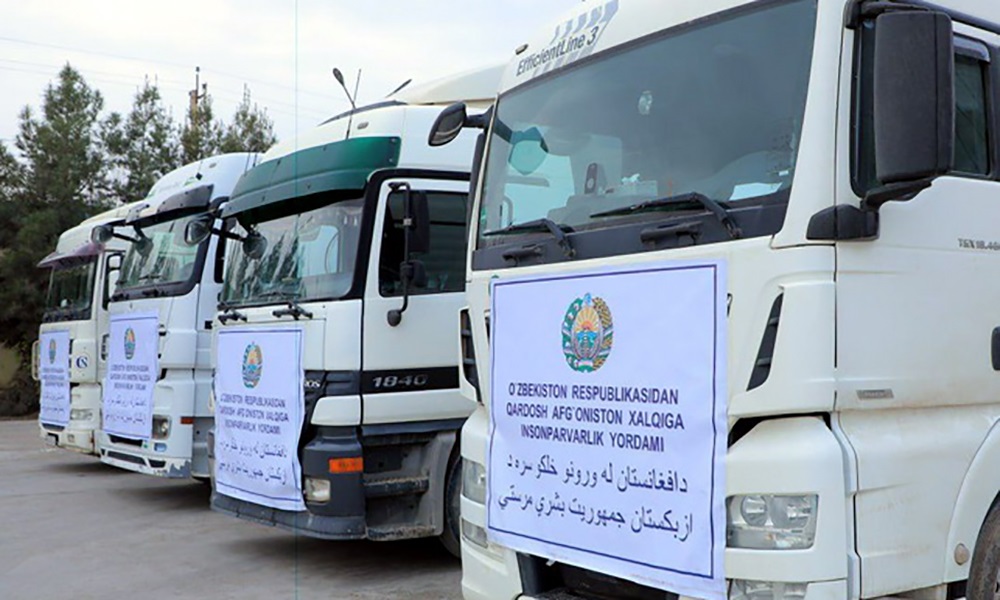
Uzbekistan has delivered more than 290 tons of humanitarian aid to Afghanistan, according to the country’s Ministry of Foreign Affairs.
The assistance, provided ahead of Eid al-Fitr, is intended to support vulnerable communities while reinforcing ties between the neighboring countries.
The shipment includes essential food supplies such as flour, rice, wheat, vegetable oil, instant meals, pasta, and confectionery. An official handover ceremony was held in the border town of Hairatan.
Local officials, including Balkh province representatives and authorities from Hairatan, expressed appreciation for the continued support, acknowledging Uzbekistan’s efforts to assist the Afghan people.
Among those present at the ceremony were Uzbekistan’s Ambassador to Afghanistan, Oybek Usmanov, and Surkhandarya regional governor Ulugbek Kosimov.
The aid delivery underscores Uzbekistan’s ongoing humanitarian engagement and its broader efforts to promote regional cooperation and stability.
Business
Turkmenistan, Afghanistan discuss steps to speed up land acquisition for TAPI pipeline
By the end of the year, the vessels are expected to deliver about 11,700 pipes as part of preparations for construction of the TAPI pipeline.

Officials from Turkmenistan and Afghanistan have held talks aimed at accelerating land acquisition for the long-planned Turkmenistan-Afghanistan-Pakistan-India (TAPI) pipeline, according to Afghanistan’s Ministry of Agriculture, Irrigation, and Livestock.
The issue was discussed during a meeting between TAPI project head Murad Amanov, Afghanistan’s acting Minister of Agriculture, Irrigation, and Livestock Mullah Attaullah Omari, and Turkmenistan’s ambassador to Afghanistan Hoja Ovezov.
Amanov briefed Afghan officials on recent progress and emphasized the need to accelerate procedures related to land acquisition and the determination of land prices in line with the framework agreement signed by the four participating countries.
Meanwhile, vessels operated by the Azerbaijan Caspian Shipping Company (ASCO), part of AZCON Holding, have begun transporting pipes for the project. The shipments are being carried from the Port of Baku to the Turkmenbashi International Seaport.
By the end of the year, the vessels are expected to deliver about 11,700 pipes as part of preparations for construction of the TAPI pipeline.
Business
Afghanistan expands exports through Lapis Lazuli Corridor
A transport company is scheduled to move the shipments on Sunday, March 15, along the route that links Afghanistan with Turkmenistan, Azerbaijan, and Georgia before reaching Turkey.

Afghanistan’s Ministry of Transport and Civil Aviation has announced the dispatch of eight export shipments through Torghundi port via the Lapis Lazuli Corridor to international markets.
In a statement, the ministry said the move is part of ongoing efforts to facilitate transit and strengthen the country’s export sector. Officials confirmed that coordination has been completed for eight commercial consignments to be transported along the corridor.
According to the ministry, a transport company is scheduled to move the shipments on Sunday, March 15, along the route that links Afghanistan with Turkmenistan, Azerbaijan, and Georgia before reaching Turkey.
The consignments include dried fruits, jam, pressure cookers and energy drinks. After arriving in Turkey, the goods are expected to be re-exported to markets in Saudi Arabia, the United States, Australia and the Netherlands.
The Lapis Lazuli Corridor is a regional trade and transit route launched in 2018 to connect Afghanistan with European markets through the Caucasus and Turkey, providing an alternative pathway for Afghan exports beyond traditional routes.
The Ministry of Transport and Civil Aviation said expanding transit corridors, supporting export and import growth, and facilitating international transport operations remain among its key priorities.
Officials added that practical steps are being taken to strengthen Afghanistan’s role in regional trade and connectivity.


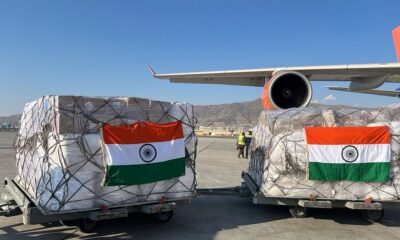
India sends 2.5-ton medical shipment to Afghanistan

Trump compares Iran strikes to Pearl Harbor in meeting with Japan’s leader

Afghanistan national buzkashi falls short in Kokpar World Championship semifinals

Mahdi Ansary, local journalist, released from prison

Pakistan’s rocket attacks still ongoing on Nari district, Kunar

Pakistani military jet downed in Afghanistan’s Jalalabad, pilot captured alive

Afghan Air Force conducts airstrikes in Islamabad, other cities

Afghanistan welcomes investment and technology partnerships with India

Prominent Muslim scholar issues fatwa calling for Afghanistan-Pakistan ceasefire

Afghan air force strikes key Pakistani military installations in retaliatory operation

Tahawol: Temporary ceasefire draws broad support

Saar: Emphasis on resolving conflicts through diplomacy

Tahawol: Global reactions to Pakistan’s recent attacks discussed

Saar: Consequences of Pakistani airstrikes on Afghans discussed

Tahawol: Pakistan’s new attacks on Kabul hospital discussed
-

 Latest News4 days ago
IEA Supreme Leader issues Eid-ul-Fitr message urging unity and support for Islamic system
-

 Business4 days ago
Turkmenistan, Afghanistan discuss steps to speed up land acquisition for TAPI pipeline
-
 Latest News2 days ago
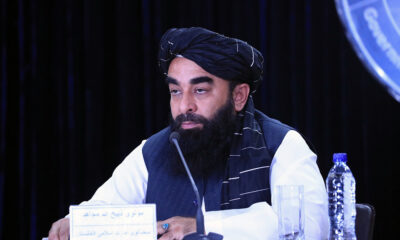
IEA announces temporary pause in defensive operations against Pakistan for Eid
-

 Latest News2 days ago
Pakistan opposes normal Afghanistan–India relations: Shaheen
-
 Sport3 days ago
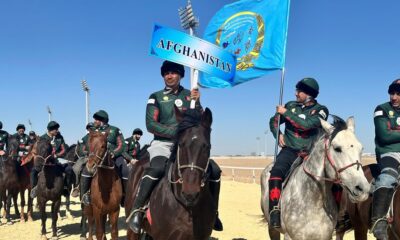
Afghanistan national buzkashi team defeats Hungary 14–0
-

 Latest News4 days ago
CAIR-Texas calls for probe after Afghan refugee dies in ICE custody
-

 Latest News4 days ago
IEA condemns alleged airstrike by Pakistan on drug treatment hospital in Kabul
-

 Latest News3 days ago
Afghanistan warns Pakistan of ‘teeth-breaking’ response after deadly Kabul bombing