
Latest News
Biden Afghanistan report mostly blames Trump for chaotic US withdrawal

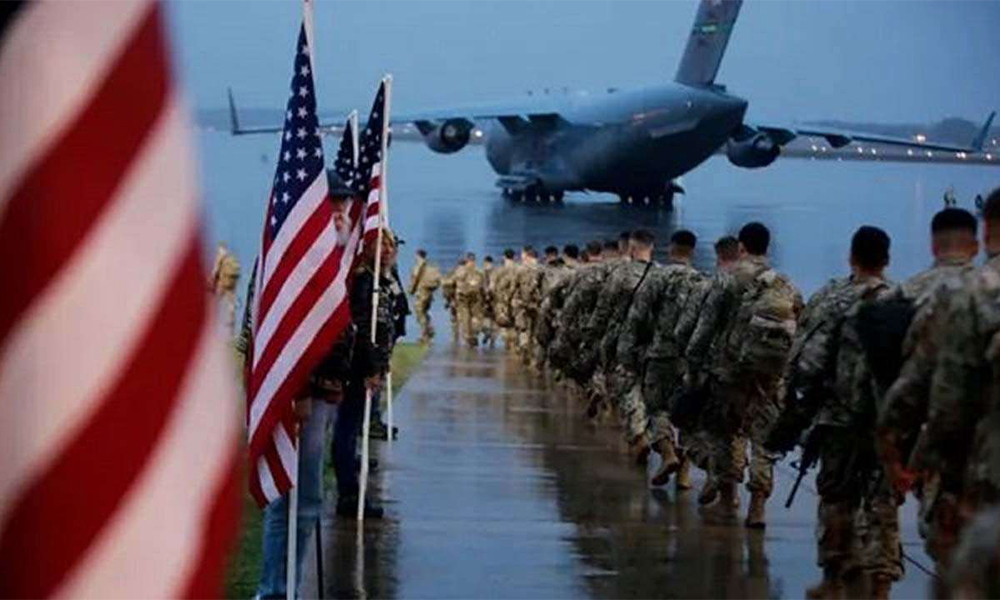
President Joe Biden’s administration on Thursday released a summary of classified reports that mostly blamed the chaotic August 2021 US pullout from Afghanistan on his predecessor, Donald Trump, for failing to plan for the withdrawal he had agreed on with the Islamic Emirate of Afghanistan (IEA).
The Democratic administration’s summary, drawn from top-secret State Department and Pentagon reviews sent to Congress, ignited angry reactions from Republican lawmakers who have demanded the documents for their own investigation of the pullout, Reuters reported.
Michael McCaul, the Republican chairman of the US House of Representatives Foreign Relations Committee, strongly criticized the administration. Biden ordered the pullout and was “responsible for the massive failures in planning and execution,” McCaul said in a statement.
McCaul, who is overseeing the Republican probe, charged that his multiple threats to subpoena the State Department and Pentagon reviews, which were completed last year, finally compelled the administration to send them to Congress.
“President Biden’s choices for how to execute a withdrawal from Afghanistan were severely constrained by conditions created by his predecessor,” said the summary of the reviews. “The outgoing administration provided no plans for how to conduct the final withdrawal or to evacuate Americans or Afghan allies.”
The document acknowledged that the administration learned lessons from the withdrawal, and now errs on the side of “aggressive communication” about risks in a destabilized security environment, read the report.
The withdrawal that ended America’s longest war saw tens of thousands of Afghans desperate to flee a return of Islamic Emirate of Afghanistan (IEA) rule besiege Kabul’s international airport, some handing babies to US troops or breaking in and hanging onto departing aircraft, Reuters reported.
The Trump administration also “gutted” refugee support services and virtually halted the processing of Special Immigration Visas for thousands of Afghans seeking evacuation because they worked for the US government, leaving a massive backlog, the summary said.
“Transitions matter. That’s the first lesson learned here. And the incoming administration wasn’t afforded much of one,” National Security Council spokesman John Kirby told a White House briefing.
The 12-page summary placed some responsibility for the chaos of the pullout and evacuation operation on flawed US intelligence and military assessments that failed to foresee the speed of the IEA takeover and predicted that Afghan security forces would hold Kabul, read the report.
“As late as May 2021, the assessment was still that Kabul would probably not come under serious pressure until late 2021 after US troops departed,” the summary said.
Pressed on whether Biden bore any responsibility for the Kabul airport disorder, Kirby replied, “Just by dint as the commander in chief, he assumed responsibility for the orders he gives.”
The 20-year war in Afghanistan, the longest conflict involving US troops, was started under President George W. Bush and furthered under President Barack Obama. Over 100,000 people were killed and about 3 million displaced, according to data from the nonpartisan Costs of War project at Brown University.
Biden pledged during his 2020 campaign to end “forever wars” and withdraw from Afghanistan, although he postponed the pullout to which Trump had agreed by three months until the end of August 2021. The US-backed Kabul government collapsed on Aug. 15 as the IEA were entering the city.
The disorganization and chaos as the US left raised questions about Biden’s leadership, the quality of US intelligence and America’s commitment to human rights and thousands of Afghan citizens it had relied on, read the report.
A Daesh suicide bomber on Aug. 26, 2021, killed 13 US service members and 170 Afghans as they clustered outside a gate of the airport.
Thousands of American citizens, greencard holders, and Afghans who had applied for Special Immigration Visas were unable to leave on the largest US airlift on record.
Altogether, some 100,000 Americans, greencard holders and Afghans – many of whom were not vetted – were flown out before the US withdrawal ended just shy of the 20th anniversary of the US-led invasion of Afghanistan, Reuters reported.
The Trump administration agreed in a February 2020 accord with the Islamic Emirate of Afghanistan (IEA), on the pullout of all US-led international forces by May 2021. The IEA agreed to stop attacking American troops and hold peace talks with the Western-backed Kabul government.
In laying out the withdrawal chronology, the summary said that successive troop reductions ordered by Trump had left 2,500 US troops in Afghanistan when Biden took office in January 2021. The result was that the IEA controlled or contested half the country, the summary said.
Faced with the choice of delaying the pullout or increasing the number of US forces and facing renewed IEA attacks, Biden chose the former and ordered planning for the withdrawal and evacuation operation, the summary said.

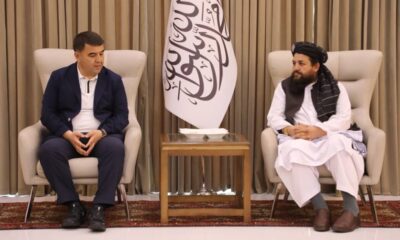


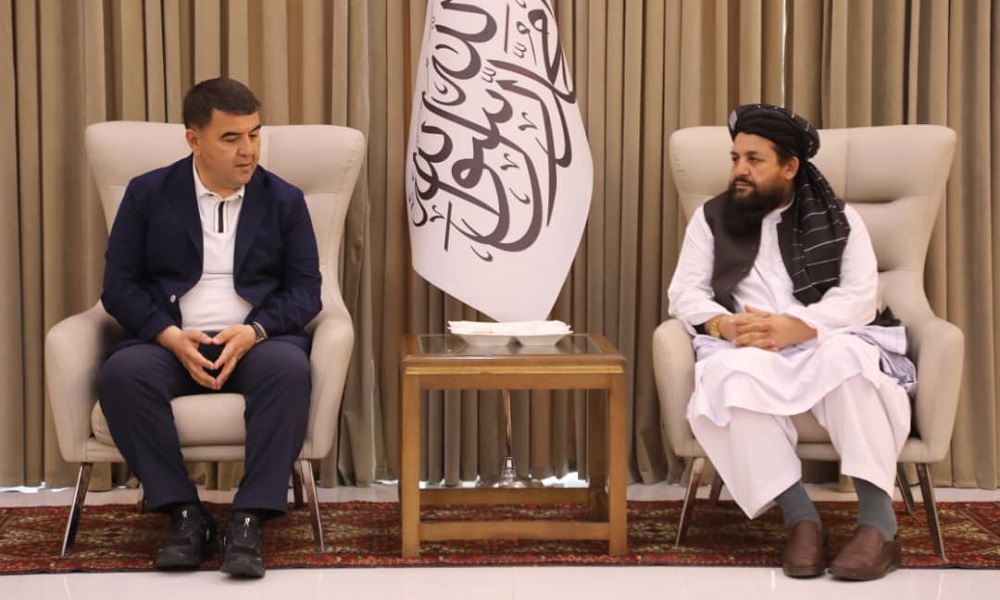
A high-level government–private sector delegation from Uzbekistan, led by Shukhrat Abdullazakov, Governor of Namangan Province, arrived in Kabul to enhance trade between the two countries and promote investment in Afghanistan.
According to a press release from the Ministry of Industry, the delegation, which includes deputy governors and more than 30 of Uzbekistan’s top businesspeople and investors, will meet with officials of the Islamic Emirate of Afghanistan and participate in conferences and trade meetings.
The delegation will also travel to Balkh, meet with local officials, and hold business meetings with members of the private sector.
Additionally, the delegation will inaugurate an exhibition of Uzbek products and goods in Mazar-i-Sharif.
This visit follows the trip of Erkinjon Turdimov, Governor of Uzbekistan’s Syrdarya Province, and his accompanying delegation, and is based on meetings between Nuruddin Azizi, Minister of Industry and Trade of the Islamic Emirate, and senior Uzbek officials.
Other governors from Uzbekistan are also expected to visit Afghanistan to further expand bilateral trade and economic relations.
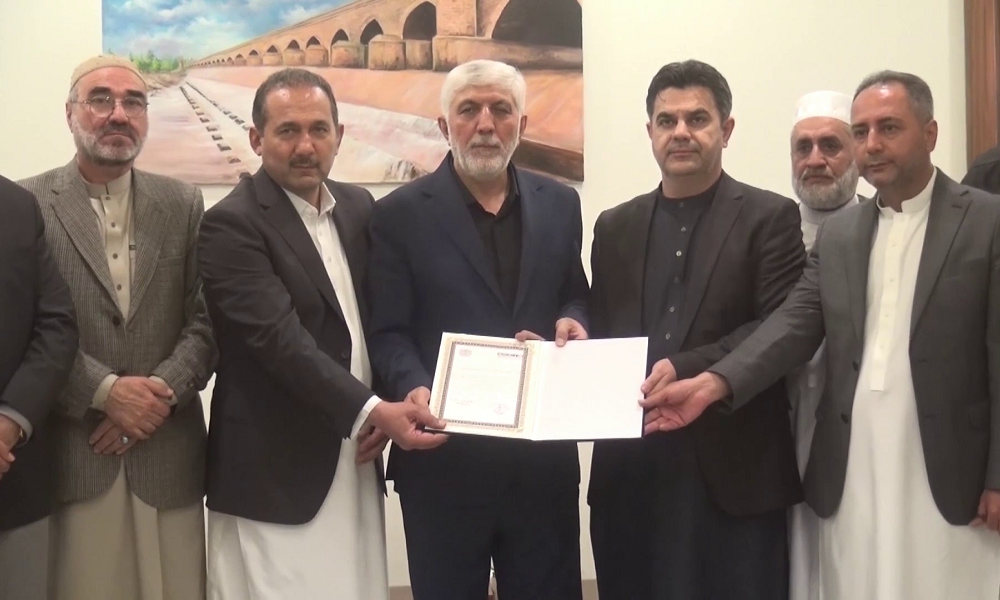
The Herat Chamber of Commerce and Investment announced on Saturday that national traders, jointly through the chamber, have provided approximately 15 million AFN in aid to the people of Iran.
The chamber stated that this aid package was delivered to the Iranian Consulate in Herat. It added that the assistance was intended to express solidarity with families affected by the war.
Mohammad Younes Qazizadeh, head of the Herat Chamber of Commerce and Investment, said: “Today we have presented 15 million AFN to the dear people of Iran through the Herat provincial authorities and the Iranian Consulate, and this aid will continue.”
Meanwhile, officials at the Iranian Consulate in Herat emphasized that Afghanistan and Iran always stand together and fully understand each other’s difficulties.
The Herat Chamber of Commerce and Investment also highlighted that the people of Iran have consistently supported the people of Afghanistan during various crises, and their cooperation in different sectors has reached families affected in the country.
Officials of the Herat Chamber of Commerce and Investment stressed that the process of private-sector humanitarian aid to the affected people of Iran will continue.
Following attacks by the United States and Israel on Iran, many people in the country have been affected and harmed.
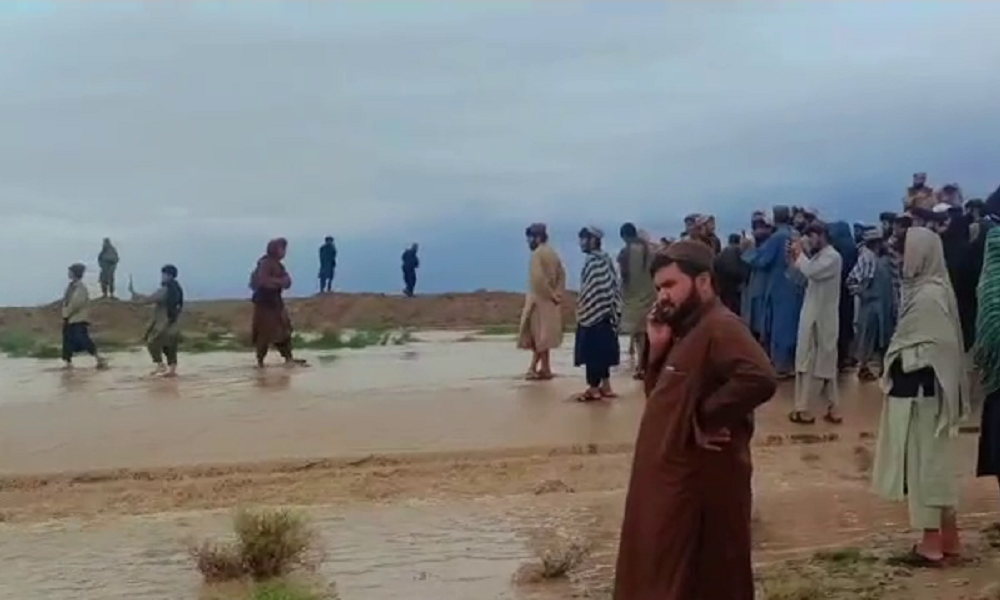
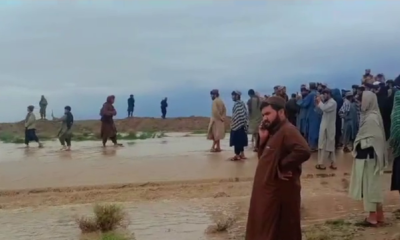
Local officials in Badghis have reported that heavy rainfall from midnight until Saturday morning claimed the lives of five people in the province.
According to officials, three people died in Qadis district, while two others, including a three-year-old child, lost their lives in Dara-e-Bum district.
The Badghis Department for Disaster Management stated that the floods not only caused fatalities but also inflicted significant financial losses on local residents and destroyed agricultural land.
However, complete information on the extent of damage and casualties is not yet available. Staff from various government departments have been dispatched to affected areas to conduct preliminary surveys.
Meanwhile, heavy rains and floods in western Afghanistan temporarily blocked the Herat–Kandahar Highway.
According to Mohammad Israil Sayar, head of the Disaster Management Department in Farah province, recent rainfall has caused the Farah River to swell significantly. He added that the situation has now returned to normal, and traffic along the highway has resumed.


High-level Uzbek delegation arrives in Kabul to boost bilateral trade

Herat Chamber of Commerce donates 15 million AFN to the people of Iran

Severe floods in Badghis leave five dead

13 mountaineers in Balkh summit Alborz at 1,650 meters

Fazlur Rehman urges policy review on Afghanistan, warns of Pakistan’s regional isolation

Pakistani military jet downed in Afghanistan’s Jalalabad, pilot captured alive

Afghan Air Force conducts airstrikes in Islamabad, other cities

Prominent Muslim scholar issues fatwa calling for Afghanistan-Pakistan ceasefire

Afghan air force strikes key Pakistani military installations in retaliatory operation

IEA: Special circle in Pakistan has launched mission to destabilize region

Exclusive interview with Indrika Ratwatte, Deputy UN Special Representative for Afghanistan

Tawsia: Efforts to boost Afghanistan’s domestic production and economic diplomacy

Tahawol: Discussion on day 27 of Iran–US war

Saar: Islamic Emirate confident of Durand Line control

Tahawol: Efforts to release Mohammad Rahim from Guantanamo Bay Detention Camp
-
 Latest News2 days ago
Tajikistan shifts stance on Afghanistan amid rising border tensions
-
 Latest News4 days ago
Around 2.3 million tourists visited Afghanistan’s recreational areas during Eid: Ghufran
-

 Sport4 days ago
Afghanistan squad hit by withdrawals ahead of AFC Asian Cup Qualifiers
-
 Latest News4 days ago
Islamic Emirate releases American prisoner Dennis Coyle
-
 Latest News3 days ago
Two civilians killed, eight injured in fresh shelling by Pakistan in Kunar
-
 Regional4 days ago
US allies in Middle East ‘edging closer’ to joining conflict
-
 Regional4 days ago
Tehran rejects Trump’s claims of talks, accuses US of spreading ‘fake news’
-

 Sport3 days ago
IPL 2026: RCB sold for $1.78 billion in landmark deal