
Business
Businesses resume normal operations in Kabul amid lingering uncertainty, disruptions

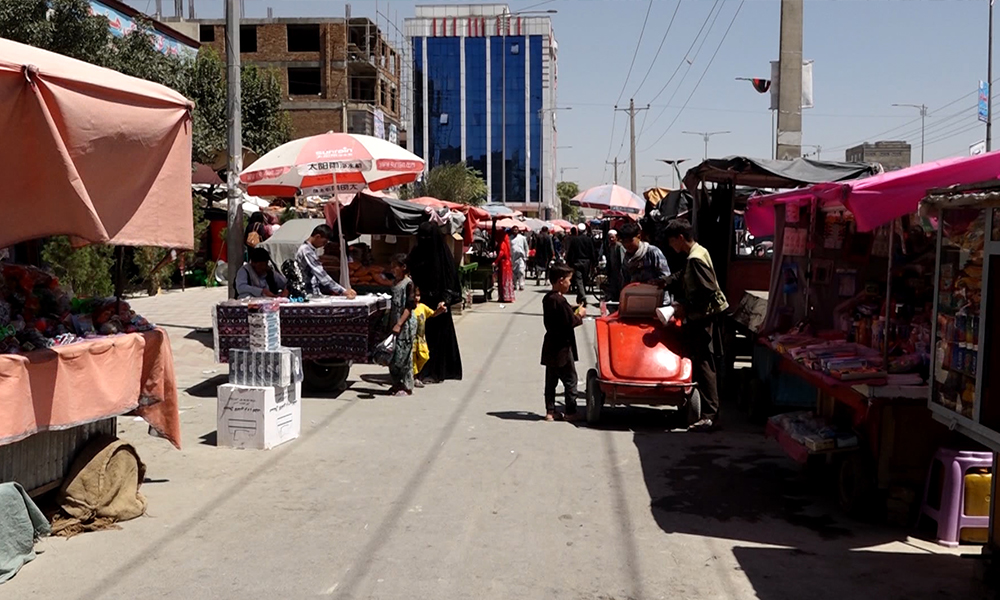
Businesses have resumed normal operations in Kabul despite the lingering uncertainties and disruptions brought by economic and humanitarian crises.
Stores, restaurants and peddlers open their businesses early in the morning. A growing numbers of vehicles and pedestrians have been seen on the street days following the Islamic Emirate of Afghanistan (IEA)’s removal of roadside blast walls and concrete barricades which had been erected across the city for years due to security concerns.
While some Kabul residents are hopeful for better lives, many store owners are still concerned about their businesses.
“The sale is not good because our business largely depends on foreigners. There used to be foreign companies and embassies in Afghanistan, but now they have left,” said Naser, the owner of a wool fabric shop in Kabul.
Naser said local people’s abilities to consume crafts is relatively low as most of them are still worried about food and clothing.
“The current sales volume is about half of what it used to be. I hope the business will grow better in the future as peaceful life arrives and security situation improves,” said Khalid, the owner of a local lapis lazuli jewelry store.
After the IEA’s takeover in mid-August, the Afghan economy has suffered from the U.S. freezing of over nine billion dollars in assets belonging to the Afghan central bank as well as a halt in funds by the World Bank and the International Monetary Fund.
In his open letter to urge the U.S. to unfreeze the assets, acting Foreign Minister Amir Khan Muttaqi said Afghans will face greater difficulties and the country will become a source of mass migration in the region and the world if there’s no change in the current situation.




Business
Afghanistan, Belarus discuss expanding industrial and trade cooperation
Particular attention was given to companies producing tractors, industrial machinery, and equipment and vehicles used in the mining sector.
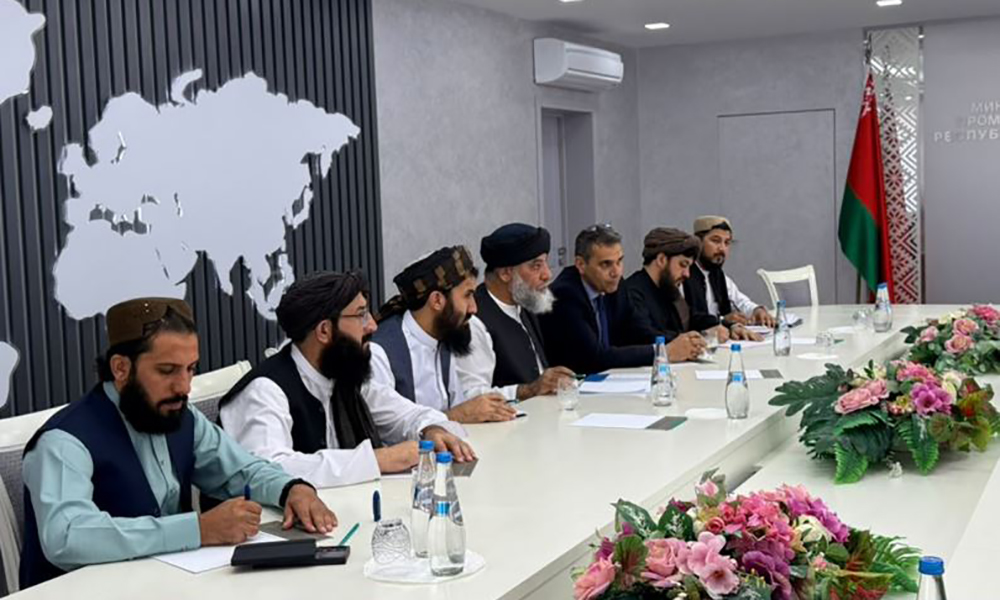
Afghanistan’s Minister of Industry and Commerce, Nooruddin Azizi, met with Belarus’ Minister of Industry during an official visit to the country.
The two sides discussed the establishment of manufacturing plants in Afghanistan, the regular organization of the Afghanistan-Belarus Business Forum, and follow-up on issues raised through the countries’ economic commission.
Belarusian officials expressed appreciation for Afghanistan’s participation in the country’s international industrial exhibition and voiced interest in expanding the presence of Belarusian manufacturing companies in Afghanistan.
Particular attention was given to companies producing tractors, industrial machinery, and equipment and vehicles used in the mining sector.
The second International Industrial Exhibition of Belarus is being held with the participation of around 500 companies from different countries. The exhibition has also attracted visitors from European and Asian countries.
Business
Afghanistan, Tajikistan seek stronger trade and investment ties
The two sides discussed increasing trade exchanges, establishing direct links between traders and investors, and organizing joint economic programs.
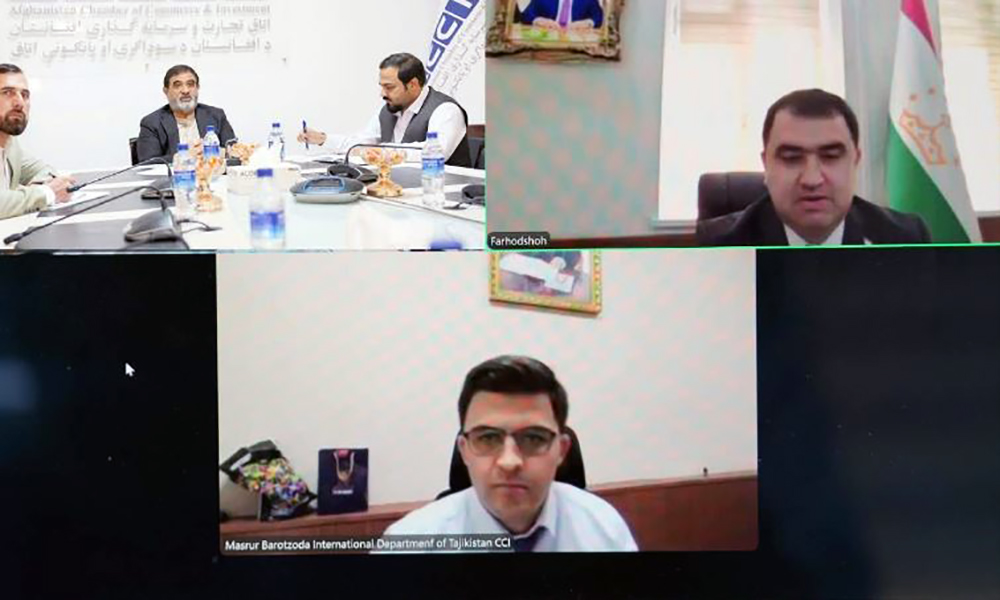
The heads of the chambers of commerce and industry of Afghanistan and Tajikistan have agreed to strengthen bilateral trade, promote investment and expand cooperation between the private sectors of the two countries.
Sayed Karim Hashemi, head of the Afghanistan Chamber of Commerce and Investment (ACCI), held an online meeting with Farhad Shah Rahman Alizoda, head of the Chamber of Commerce and Industry of Tajikistan, to discuss ways to expand economic ties.
The two sides discussed increasing trade exchanges, establishing direct links between traders and investors, and organizing joint economic programs.
Hashemi invited Tajik traders and investors to participate in the fifth Imam Abu Hanifa International Exhibition in Kabul.
Alizoda, meanwhile, invited an Afghan business delegation to attend a major trade and industrial exhibition in Dushanbe.
The two sides also stressed the importance of exchanging business delegations and developing long-term cooperation between the private sectors of Afghanistan and Tajikistan.
Business
Kazakhstan grain shipments to Afghanistan rise over 4-fold
Of the total, 7.2 million tons were transported for export, while 2.1 million tons were supplied to the domestic market.
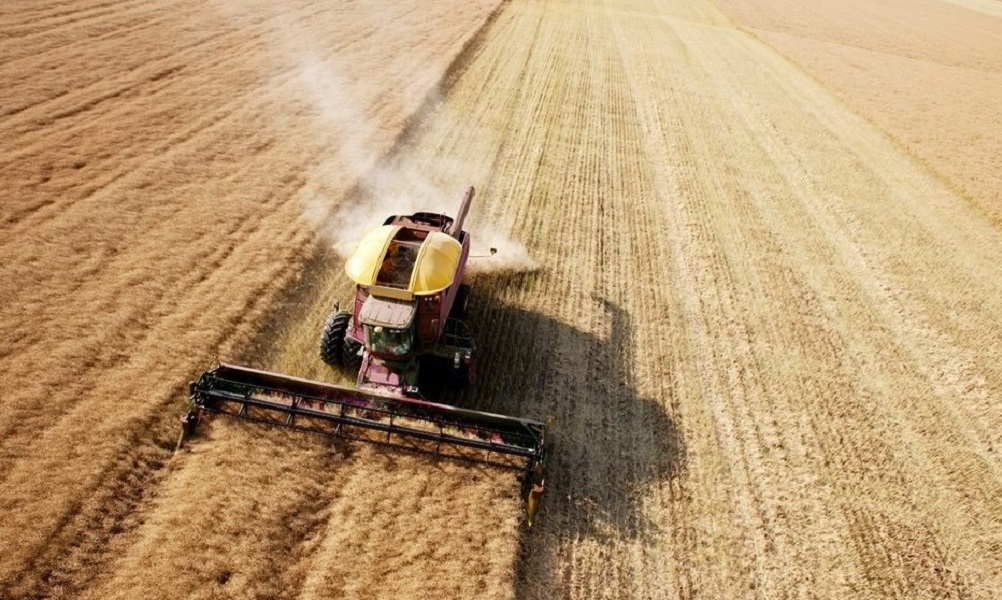
Grain shipments from Kazakhstan to Afghanistan increased 4.4 times in the first eight months of the year, reaching 655,000 tons, according to Kazakhstan’s Transport Vice Minister Zhanibek Taizhanov.
Speaking at a government meeting, Taizhanov said Kazakhstan transported 9.3 million tons of grain by rail during the period, a 13% increase compared with the same period in 2025.
Of the total, 7.2 million tons were transported for export, while 2.1 million tons were supplied to the domestic market.
Taizhanov said grain shipments to Central Asia increased by 37%, while shipments to China rose by 34%. Grain exports through Russian ports also increased by 9%.
Meanwhile, combined fodder exports rose by 38% to 2.6 million tons.
Earlier, Kazakhstan’s Vice Minister of Agriculture Azat Sultanov said the country plans to commission 15 additional vegetable storage facilities by the end of 2026, with a combined capacity of 129,000 tons.


Muttaqi, Russian deputy PM discuss expanding economic ties

Russia investigates suspected pneumonic plague; Trump ready to ‘help’

▶️Saudi Arabia, Turkey, Pakistan activate Mecca defense pact

Thirty US states seek access to Afghan assets for 9/11 victims

Yemeni government forces seize strategic strait from Houthis

Saudi energy group signs major Afghanistan deals covering gas exploration and pipeline plans

Khalilzad: Afghanistan ready to attract major investment

Imam Abu Hanifa exhibition to draw exhibitors from more than 20 countries

UAE firm eyes investment in Salang’s second tunnel and pharmaceutical factories

US envoys make first Kyiv visit amid Ukraine war peace push

Tahawol: Afghanistan-Iran: shared opportunities and challenges discussed

Saar: Pakistan’s hostile policy toward Afghanistan discussed

Tahawol: Doha process seeks new cooperation opportunities

Saar: Moscow forum 8th consultative meeting on Afghanistan

Tahawol: Escalation of internal political crisis in Pakistan discussed
-
 Latest News5 days ago
Four members of one family killed in Helmand in Pakistan airstrike
-
 Sport4 days ago
ACB announces Afghanistan squads for Bangladesh, Zimbabwe series
-
 Latest News4 days ago
Russia expects to ease Afghanistan-Pakistan tensions at Moscow Format meeting
-

 Sport24 hours ago
Cricket Bonanza: Afghanistan set for packed international schedule
-

 International Sports4 days ago
Afghanistan to face Pakistan, India and Australia at 2027 Cricket World Cup
-
 Regional4 days ago
Saudi-led coalition says Houthis attacked power station for Prophet’s Mosque in Medina
-
 Regional4 days ago
Cargo stacks up as Pakistan seizes containers to block capital routes
-
 Latest News3 days ago
Kazakhstan, Uzbekistan and UAE sign MoU on CASA railway project via Afghanistan