
Latest News
China, Russia to discuss on IS presence in Afghanistan at Eurasian security summit

![POTINE _06_07_2015_DARI_SOT.avi_snapshot_00.34_[2015.07.06_16.41.59]](https://ariananews.af/wp-content/uploads/2015/07/POTINE-_06_07_2015_DARI_SOT.avi_snapshot_00.34_2015.07.06_16.41.59.jpg)
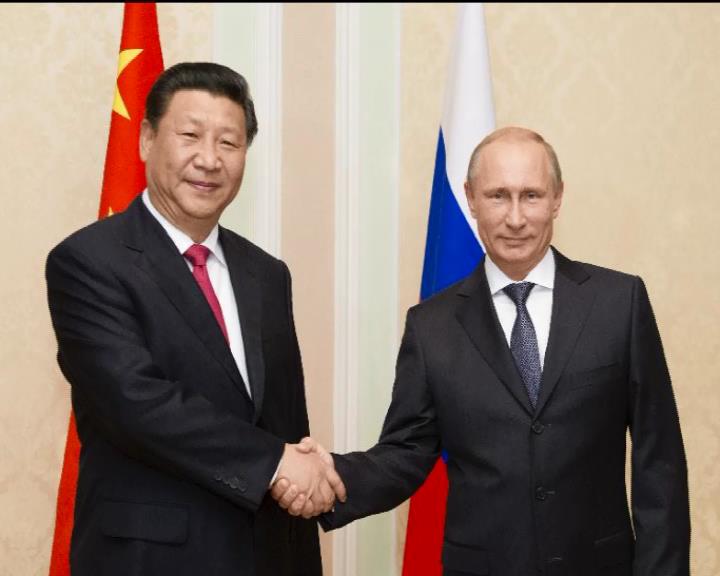
Russian President Vladimir Putin and Chinese President Xi Jinping and other leaders will discuss the threat the Islamic State group poses in Afghanistan at a Eurasian security summit in Russia this week.
Xi travels to the Russian city of Ufa for a summit on Thursday and Friday of leaders of the Shanghai Cooperation Organisation (SCO), which groups China, Russia, Kazakhstan, Kyrgyzstan, Tajikistan and Uzbekistan, according to (AFP).
(AFP) reported that it will be preceded by a meeting of leaders of the BRICS group of emerging economies — Brazil, Russia, India, China and South Africa.
“Due to the spillover effect of the Islamic State terrorist activities, Afghanistan now faces a grim security situation,” Chinese vice foreign minister Cheng Guoping told reporters.
SCO leaders “will certainly have in-depth discussions on the Afghan issue”, he added. “And they will talk further about how to respond to the security situation there.”
China is seeking business interests in Afghanistan and is sensitive to any spillover of Islamic-inspired extremism from the country, which has a short border with its mostly Muslim western region of Xinjiang.
Afghanistan’s militant Taliban are seeking to halt defections to IS after some insurgents adopted its flag to rebrand themselves as a more lethal force as NATO troops depart the country.
Last month the Taliban warned the leader of IS group against waging a parallel insurgency in Afghanistan, after reported clashes between militants loyal to the two groups.
Afghanistan has “observer” status in the SCO, along with India, Iran, Mongolia and Pakistan, according to the group’s website.
The summit will begin procedures for India and Pakistan to join the group as full members after their candidatures were approved last year, Cheng said.
The acceptance of the nuclear-armed rivals — which have fought three wars since independence from Britain in 1947 and jockey for influence in Afghanistan — would mark the SCO’s first expansion since its inception in 2001.
Cheng shrugged off any concerns over their tense relations, saying membership “will not only help the organisation become better but will also play a productive role in promoting friendly relations between the two countries”.
He also said that China remained on guard against the East Turkestan Islamic Movement (ETIM) it says foments unrest in Xinjiang among the region’s ethnic Uighurs, though many analysts outside China have questioned whether any large scale organisation of the kind exists.
“It has participated in some terrorist activities of the IS,” he said of ETIM. “China is concerned about that and we will also maintain security cooperation with relevant countries.”
Besides the group summits, Xi will hold bilateral talks with Putin in their eighth such meeting since Xi became president in 2013. Xi visited Russia in May to witness a vast military parade at Red Square to commemorate the defeat of Nazi Germany in 1945.
“The Chinese and Russian leaders have established a very good working relationship and personal friendship,” Cheng said, adding: “As permanent members of the (UN) Security Council a sound relationship between these two countries plays an important role in promoting world peace”.
He said they will discuss bilateral relations, including economic cooperation and “specific cooperation projects”, without elaborating.
Russia — which invaded Afghanistan in 1979 and occupied it for a decade — has strengthened ties and trade with China since coming under Western sanctions for its actions in Ukraine.
Russia became China’s top crude supplier in May for the first time in a decade, Bloomberg News reported last month, as Moscow seeks new markets for its oil.

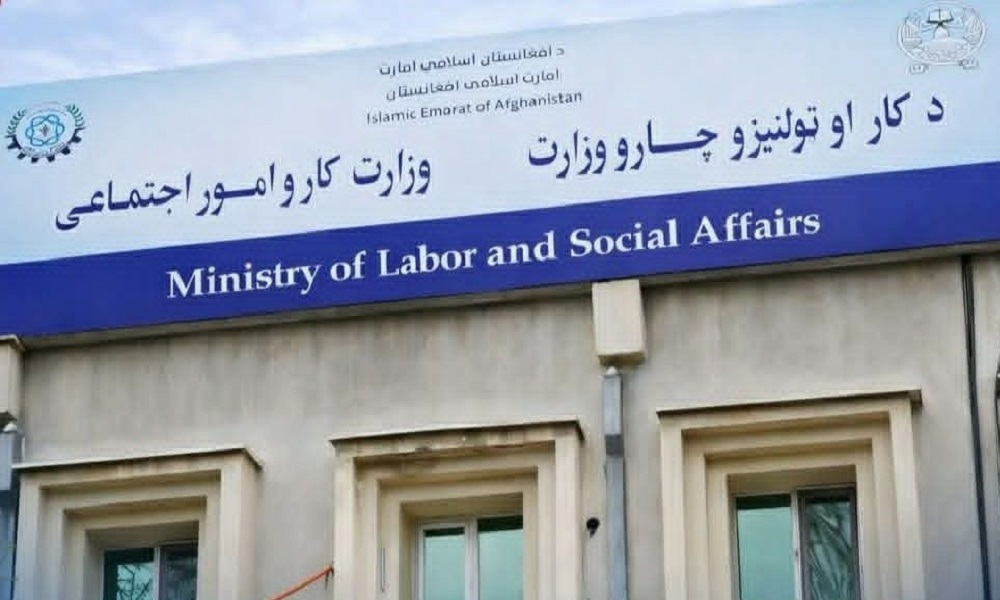
The Directorate of Child Protection at the Ministry of Labor and Social Affairs announced on Saturday that in the solar year 1404, through the implementation of extensive support programs and the handling of thousands of protective cases, it has achieved significant accomplishments in securing rights, raising awareness, and improving the situation of children across Afghanistan.
According to the directorate, the registered cases have been organized into 23 different categories, allowing for targeted and specialized handling of each type of case. In the area of awareness-raising, extensive programs have also been implemented to improve the general knowledge of children and their families, resulting in 404,207 children and family members being informed about child rights, explosive hazards, environmental protection, and other important topics.
To strengthen local structures and accelerate case management, the Directorate of Child Protection, within the framework of its 1404 work plan, established 20 new committees at the district level in provincial centers. These committees play a key role in coordinating between government offices, rapidly identifying cases, and providing support services. Currently, child protection committees are active in 204 districts and regularly review and resolve children’s issues.
Latest News
Severe rainfall and natural disasters cause heavy casualties across Afghanistan
At least 61 people have been confirmed dead, with 116 others injured. Four individuals remain unaccounted for as search and rescue operations are underway.
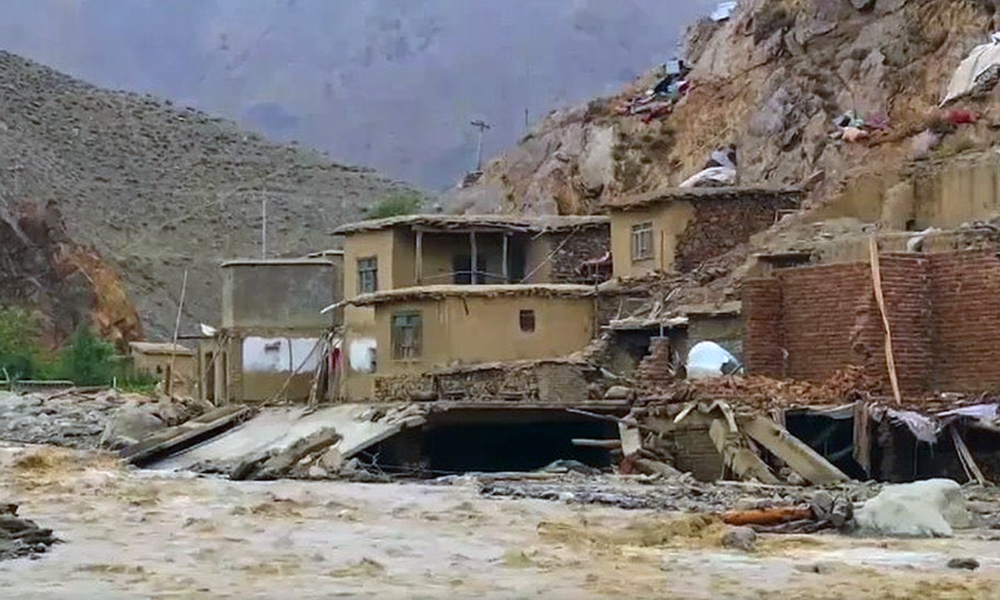
The Spokesperson for the Islamic Emirate of Afghanistan, Zabihullah Mujahid, has confirmed widespread devastation across the country following a series of natural disasters and heavy rainfall. The toll continues to rise as authorities assess the damage.
At least 61 people have been confirmed dead, with 116 others injured. Four individuals remain unaccounted for as search and rescue operations are underway. The disaster has also led to the destruction of 2,448 homes, leaving thousands displaced, while 26,841 acres of agricultural land have been severely damaged. In addition, the storm claimed the lives of 1,045 livestock animals, further exacerbating the already dire situation for rural communities.
In a statement, Mujahid emphasized the ongoing relief efforts. The Islamic Emirate is mobilizing all available resources to assist the hardest-hit regions and ensure the swift recovery of affected communities. The focus remains on providing immediate aid, including shelter, medical supplies, and food, while also beginning the long-term process of reconstruction and recovery.
Authorities have urged citizens in vulnerable areas to remain vigilant as more rain is forecast, adding to the urgency of the ongoing relief operations.
Latest News
Afghan citizens reported among casualties in US, Israeli attacks, Iran says
As of now, authorities of the Islamic Emirate of Afghanistan have not issued an official response to the claims.
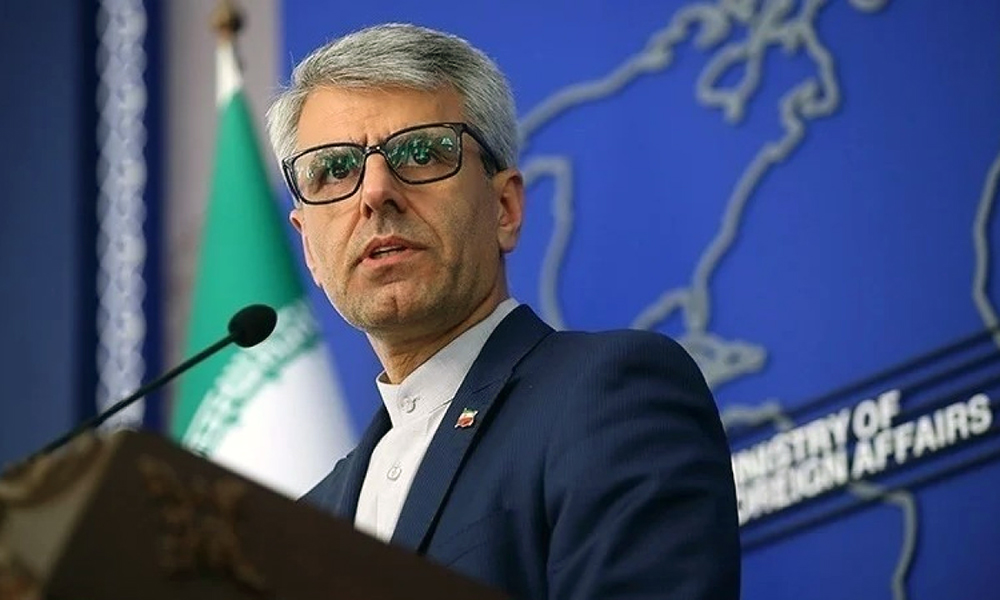
Iran’s Embassy in Kabul, citing Foreign Ministry spokesperson Esmaeil Baghaei, has stated that a number of Afghan citizens were killed or injured during what Tehran described as a 35-day military campaign carried out by the United States and Israel.
According to the statement, the Afghan nationals were living in Iran at the time of the attacks. Baghaei referred to them as “honored guests” of the country, adding that some lost their lives while others sustained injuries during the reported strikes.
He did not provide specific figures regarding the number of Afghan casualties or further details about the incidents.
As of now, authorities of the Islamic Emirate of Afghanistan have not issued an official response to the claims.


Saar: Ongoing Kabul-Islamabad talks in China discussed

Around 15,000 cases of vulnerable Afghan children addressed over past year

Severe rainfall and natural disasters cause heavy casualties across Afghanistan

Kazakhstan eyes rare metals mining projects in Afghanistan and Rwanda

Afghan citizens reported among casualties in US, Israeli attacks, Iran says

Prominent Muslim scholar issues fatwa calling for Afghanistan-Pakistan ceasefire

IEA Supreme Leader issues Eid-ul-Fitr message urging unity and support for Islamic system

14 Pakistani soldiers killed after military post falls along Durand line: MoD

Afghanistan steps in to replace Iran in supplying fruits and vegetables to Russia

Afghan airstrikes target Pakistani military sites in retaliation for air attacks
Saar: Ongoing Kabul-Islamabad talks in China discussed

Tawsia: This week’s key economic developments in Afghanistan discussed

Tahawol: Start of talks between Kabul-Islamabad in China discussed

Saar: Ongoing US and Israeli attacks on Iran discussed

Tahawol: Ongoing US–Israeli war with Iran discussed
-
 Latest News3 days ago
Baradar approves 17 projects worth over one billion AFN
-
 Business4 days ago
Russia backs Uzbekistan–Afghanistan trade hub, praises regional economic cooperation
-
 Sport4 days ago
ATN secures broadcast rights for inaugural Afghanistan Wrestling Premier League
-

 Sport4 days ago
ATN to broadcast second season of Ariana Snooker Championship
-
 Regional5 days ago
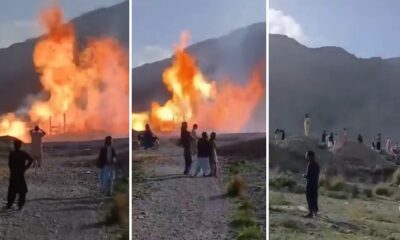
Gas pipeline blown up in southern Pakistan, says official
-

 Sport4 days ago
Rajasthan Royals outclass Chennai Super Kings as IPL action continues
-
 Latest News5 days ago
Islamic Relief Worldwide urges Afghanistan–Pakistan de-escalation, calls for aid to displaced
-
 Latest News3 days ago
Afghan delegation heads to China for talks with Pakistan