
Latest News
Cuban Revolutionary Fidel Castro Dies at 90

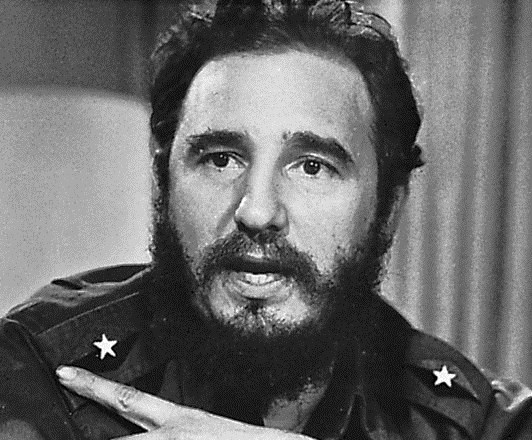
 Guerrilla revolutionary and communist idol, Fidel Castro was a holdout against history who turned tiny Cuba into a thorn in the paw of the mighty capitalist United States.
The former Cuban president, who died aged 90 on Friday, said he would never retire from politics.
But emergency intestinal surgery in July 2006 drove him to hand power to Raul Castro, who ended his brother’s antagonistic approach to Washington, shocking the world in December 2014 in announcing a rapprochement with US President Barack Obama.
Famed for his rumpled olive fatigues, straggly beard and the cigars he reluctantly gave up for health reasons, Fidel Castro kept a tight clamp on dissent at home while defining himself abroad with his defiance of Washington.
In the end, he essentially won the political staring game, even if the Cuban people do continue to live in poverty and the once-touted revolution he led has lost its shine.
As he renewed diplomatic ties, Obama acknowledged that decades of US sanctions had failed to bring down the regime — a drive designed to introduce democracy and foster western-style economic reforms — and it was time to try another way to help the Cuban people.
A great survivor and a firebrand, if windy orator, Castro dodged all his enemies could throw at him in nearly half a century in power, including assassination plots, a US-backed invasion bid, and tough US economic sanctions.
Born August 13, 1926 to a prosperous Spanish immigrant landowner and a Cuban mother who was the family housekeeper, young Castro was a quick study and a baseball fanatic who dreamed of a golden future playing in the US big leagues.
But his young man’s dreams evolved not in sports but politics. He went on to form the guerrilla opposition to the US-backed government of Fulgencio Batista, who seized power in a 1952 coup.
That involvement netted the young Fidel Castro two years in jail, and he subsequently went into exile to sow the seeds of a revolt, launched in earnest on December 2, 1956 when he and his band of followers landed in southeastern Cuba on the ship Granma.
Twenty-five months later, against great odds, they ousted Batista and Castro was named prime minister.
-Lawyer turned fighter-
Once in undisputed power, Castro, a Jesuit-schooled lawyer, aligned himself with the Soviet Union. And the Cold War Eastern Bloc bankrolled his tropi-communism until the Soviet bloc’s own collapse in 1989.
Fidel Castro held onto power as 11 US presidents took office and each after the other sought to pressure his regime over the decades following his 1959 revolution, which closed a long era of Washington’s dominance over Cuba dating to the 1989 Spanish-American War.
And Castro’s dangerous liaison with the Soviet Union took the world to the nerve-jarring edge of nuclear war in the 1962 Cuban Missile Crisis. It was sparked when Moscow sought to position nuclear-tipped missiles on the island just 144 kilometers (90 miles) off the US state of Florida.
After a tense standoff between the rival superpowers, the world pulled back from the abyss as Moscow agreed to keep the missiles off Cuban soil.
Castro strode the world stage as a communist icon when the Cold War was at its height.
He sent 15,000 soldiers to help Soviet-backed troops in Angola in 1975 and dispatched forces to Ethiopia in 1977.
The United States has variously been infuriated, embarrassed and alarmed at Castro’s defiance, and intensely frustrated by his survival in power despite the economic embargo Washington hoped in vain would spark rebellion.
The tempestuous Cuban president himself repeatedly pinned the blame for Cubans’ economic hardship on the embargo. The United States had invaded the island nation before, he reminded his 11 million people constantly, and could do so again at any time.
After a cutoff of Soviet bloc aid in 1989 nearly collapsed the economy, Castro allowed more international tourism and slight economic reform on the Caribbean’s largest island.
But as even China loosened economic reins, Havana backtracked and held tight to the centralized economic model. Instead, a new ally, Hugo Chavez, president of oil-rich Venezuela and also a foe of Washington, began bankrolling Castro’s regime.
– They called him ‘Fidel’-
Known widely among Cubans as simply “Fidel” or “El Comandante,” Castro broke off diplomatic ties with the United States in 1961 and expropriated US companies’ assets totaling more than one billion dollars.
In April 1961 he weathered an invasion attempt by some 1,300 CIA-trained Cuban exiles at the Bay of Pigs.
But the island suffered from an exodus of people and capital abroad, mainly to Florida where a large anti-Castro movement thrived.
Castro kept his private life largely private, but in recent years, more details became public.
In 1948, he married Mirta Diaz-Balart, who gave birth to their first son, Fidelito. The couple later divorced.
In 1952, Castro met Naty Revuelta, a socialite married to a doctor, and they had a daughter, Alina, in 1956.
He met Celia Sanchez, said to have been his main life partner, in 1957 and remained with her until her death in 1980.
In the 1980s, Castro reportedly married Dalia Soto del Valle, with whom he had five children: Angel, Antonio, Alejandro, Alexis and Alex.
After stepping aside in 2006, Fidel Castro recovered slowly from surgery and kept rallying on the sidelines to push his Revolution into the 21st century. It made it, in decidedly rough shape.
President Raul Castro, the former defense chief who is now (born June 3, 1931) himself, in the past few years kept dissent largely in check and economic reform limited, with the island’s economy in very dire straits.
Written by: AFP


The Supreme Leader of the Islamic Emirate of Afghanistan (IEA), Sheikh Hibatullah Akhundzada, has said that the general amnesty announced following the Islamic Emirate’s return to power in 2021 was aimed at preventing revenge and helping restore security and stability across the country.
According to IEA deputy spokesman Hamdullah Fitrat, Akhundzada made the remarks during a meeting in Kandahar with governors, heads of Ulema councils, appellate court chiefs, tribal elders, and religious scholars from nine provinces in northeastern and northwestern Afghanistan.
Addressing the gathering, Akhundzada said the Islamic Emirate had instructed its fighters not to seek retribution against former government officials, security personnel, or others associated with the previous administration.
“We prevented the Mujahideen from taking revenge and prohibited them from doing so,” he said. “We told them to lay down their weapons; we would not kill them and would not hold them accountable. They laid down their weapons, and we granted them amnesty.”
The general amnesty was announced shortly after the Islamic Emirate took control of Afghanistan in August 2021, ending two decades of conflict between the former Western-backed government and the IEA. The move was widely presented by the authorities as an effort to encourage reconciliation and prevent further bloodshed during the transition of power.
Akhundzada said that after years of war and suffering, Afghans should be encouraged to forgive one another and move beyond longstanding grievances. He urged religious leaders and community elders to promote reconciliation and help prevent old disputes from being passed on to future generations.
He added that lasting peace requires communities to reject cycles of revenge and hostility, warning that unresolved conflicts could continue to fuel divisions if left unaddressed.
The meeting was also attended by officials from the Kandahar Ulema Council, the Supreme Court, the Central Darul Ifta, the Religious Publications Evaluation Department, and a number of teachers and madrasa administrators.
Latest News
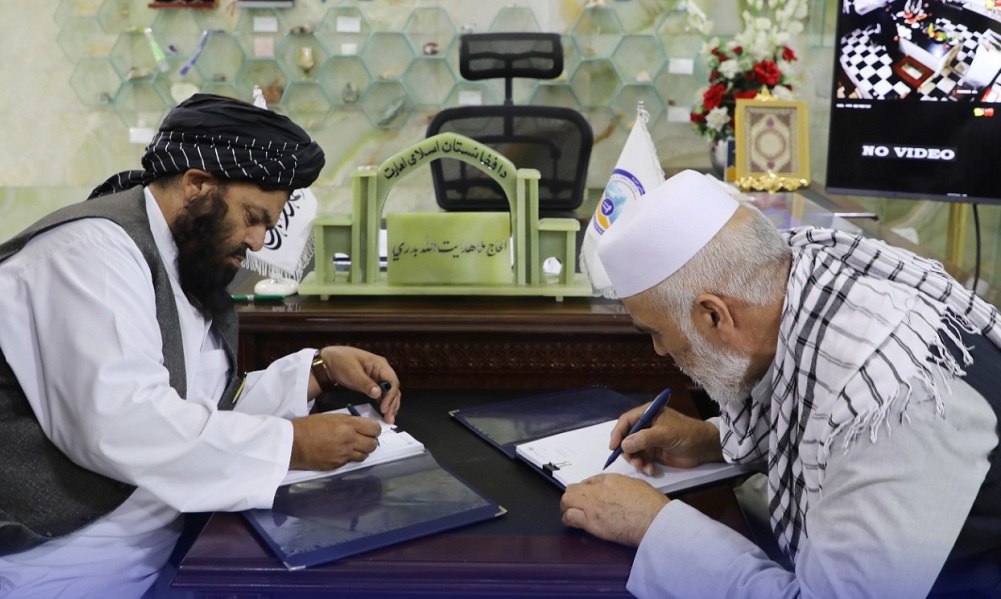
Afghanistan signs $20 million contract for salt mining in Herat
According to the ministry, the project covers an area of 9.7 square kilometers and involves an investment of approximately $20.045 million. The contract has been awarded for a period of 15 years.
Latest News
Belarusian defense minister warns Afghanistan-Pakistan tensions could fuel extremism in CSTO states
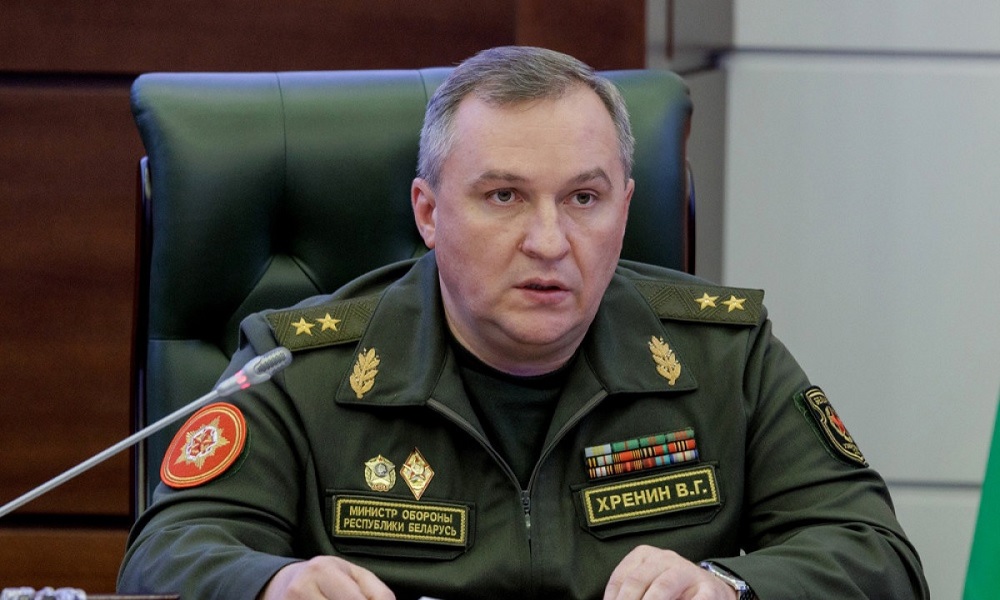
Belarusian Defense Minister Viktor Khrenin has warned that the conflict between Afghanistan and Pakistan could trigger a humanitarian crisis and create conditions for the spread of extremist ideologies and terrorist groups into member states of the Collective Security Treaty Organization (CSTO).
Speaking at a meeting of the CSTO Defence Ministers Council in Moscow, Khrenin said the security situation within the organization’s area of responsibility had not improved since last year, citing emerging threats in Central Asia and developments in Iran.
Khrenin called on CSTO countries to increase participation in joint military training activities and expand cooperation with other states and organizations that share the bloc’s security principles.
The Collective Security Treaty Organization (CSTO) is a Russia-led military alliance established in 2002 that brings together Russia, Belarus, Kazakhstan, Kyrgyzstan, Tajikistan and Armenia.
Regional countries including Russia have repeatedly raised concerns about security threat from Afghanistan.
The Islamic Emirate, however, has dismissed the concern reiterating that it will not allow Afghanistan’s soil to be used against other countries.


Tahawol: Discussion on fear of internal disputes in Iran

IEA leader says General Amnesty helped bring security and stability to Afghanistan

Afghanistan highlights strategic connectivity role at Termez Dialogue

Afghanistan signs $20 million contract for salt mining in Herat

Kohli ruled out of Afghanistan ODI series with hamstring injury

New Afghanistan-China transport corridor launched via Turkmenistan

Afghanistan signs $46 million deal to develop standard laboratory complexes

Large blast near Beit Shemesh part of pre-planned test: Israeli defense firm

Trump returns from China with stability but little progress

Afghanistan announce squad for India series
Tahawol: Discussion on fear of internal disputes in Iran

Tahawol: Welcoming Qatar’s cooperation with Afghanistan discussed

Saar: Former President’s strong criticism of Pakistan’s policies discussed

Tahawol: China’s efforts to host next round of Urumqi talks

Saar: Upcoming UNSC meeting on Afghanistan situation discussed
-
 Sport4 days ago
Afghanistan to play in Diamond Jubilee Tournament opener against Maldives
-
 Latest News3 days ago
Russian business official proposes visa-free travel between Russia and Afghanistan
-

 International Sports3 days ago
EMF EURO 2026 heads toward decisive group-stage finale in Bratislava
-

 Sport4 days ago
All eyes on Ahmedabad as RCB face Gujarat Titans in IPL Final
-
 Business5 days ago
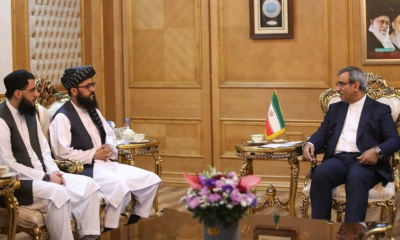
Iran’s Khorasan Razavi governor calls for greater economic cooperation with Afghanistan
-
 Sport3 days ago
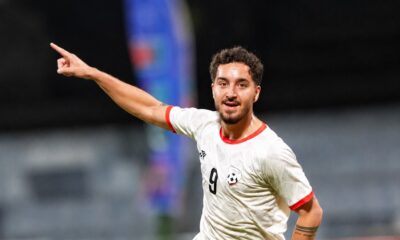
Afghanistan edge Maldives 1-0 in four-nation tournament opener
-
 Sport2 days ago
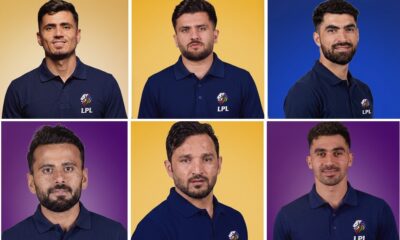
Six Afghan cricketers selected for 2026 Lanka Premier League
-
 Latest News3 days ago
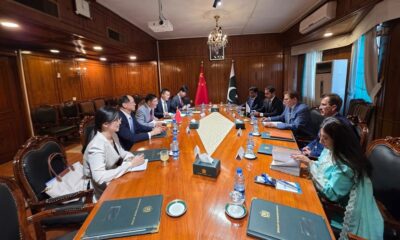
China and Pakistan’s special envoys for Afghanistan discuss Urumqi Process