
Latest News
EU seeks to deport 80,000 Afghan refugees

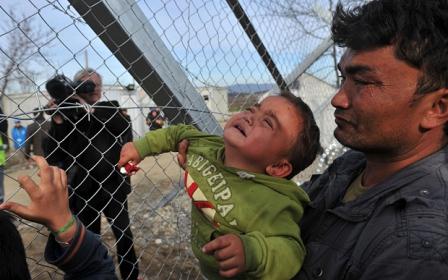

More than 80,000 Afghans will need to be deported from Europe “in the near future” under a secret EU plan, amid warnings of a new influx as parts of the country fall back under Taliban control.
The European Commission should threaten to reduce aid that provides 40 per cent of Afghanistan’s GDP unless the “difficult” Kabul government agrees to the mass removal of tens of thousands of failed asylum migrants, a leaked document suggests. It admits the threat, if carried through, could result in the collapse of the fragile state.
The Afghan elite will be rewarded with university places in Europe, under a new EU strategy to use aid and trade as “incentives” to secure deportation agreements for economic migrants from “safe” areas of Afghanistan.
The plan is revealed in a joint “non-paper” discussion document, marked EU Restricted, which was prepared by the European Commission and its foreign policy arm, the External Action Service, and sent to national ambassadors on March 3.
Record violence amid a Taliban insurgency, with 11,000 civilian casualties last year, and economic failure means there is a “high risk of further migratory flows to Europe,” it warns. There are 1.1 million internally displaced Afghans and 5.4 million sheltering in Pakistan and Iran, whose situation is “precarious without reliable long-term perspectives.”
In October, the European Union is hosting an international donor summit for Afghanistan, with the intention of raising enough aid for the period 2017-20 to keep flows at their current levels.
Jean-Claude Juncker’s officials propose using the summit as “leverage” to secure a deportation deal, noting that the EU has pledged more to Afghanistan than any other country with €1.4 billion earmarked until 2020.
“The EU should stress that to reach the objective of the Brussels Conference to raise financial commitments ‘at or near current levels’ it is critical that substantial progress has been made in the negotiations with the Afghan Government on migration by early summer, giving the member states and other donors the confidence that Afghanistan is a reliable partner able to deliver,” it says.
Under a section entitled “Afghan interests,” it says President Ghani’s government is “highly aid dependent”. “Without the continued high levels of international transfers… [it] is unlikely to prevail, as it is being faced by multiple security, economic and political challenges”.
Some 176,000 Afghans claimed asylum in the EU last year, with around six in ten eligible, a rate that has risen as the security situation deteriorates. They make up a quarter of refugees landing in Greece.
The paper, which was obtained by the Statewatch civil liberties website, says the EU’s co-operation with Afghanistan so far has been “difficult and uneven”. Despite President Ghani’s public statements, “other members of the Government do not appear to facilitate the return of irregular migrants, while attempting to re-negotiate conditions to restrict the acceptance of returnees.”
In exchange for accepting “forced returns” of economic migrants from designated “safe areas” of the country, European universities could offer places to Afghan students and researchers under the Erasmus+ scholarship scheme, the paper says, under a section entitled: “Possible components of EU incentives package”.
The document cautions, however, that “the risk that those students apply for asylum once in the EU and make their outmost not to return is however very high, as demonstrated by several cases recently.”
The CAPD development deal, which commits the EU to help in rural development, health, education and counter-drugs programs for a decade, could also be used as a bargaining chip to get a deportation agreement, the document says.
The EU will also provide training and healthcare to those who are deported.
It admits that identifying the safe areas of Afghanistan when processing asylum claims is “not obvious, given the rising insecurity in many provinces”.
The plan also suggests using the laissez passer, a legally controversial deporting document issued by the EU to migrants who have lost or destroyed their own papers.
The EU has publicly embraced a strategy of chequebook diplomacy as it struggles to contain the biggest migrant crisis since 1945.
The proposed deal appears similar to a gambit rejected by African leaders in Malta last year, in which the EU offered €1.8 billion in aid , university places and looser conditions for holders of diplomatic passports in exchange for accepting the forcible deportation of hundreds of thousands of African economic migrants. In the end, leaders settled on a voluntary scheme of returns.
It follows a controversial deal on Friday with Turkey, which was awarded €6 billion and visa liberalisation in exchange for the near-automatic return of all asylum seekers reaching the Greek islands.
Earlier this month Theresa May won a Court of Appeal case to resume deportations to Afghanistan under a separate arrangement. Judges ruled that while several provinces are dangerous, Kabul is safe enough for returns.
Germany, a major destination for Afghan migrants, is pushing hard for its own deportation agreement.
Source: Telegraph

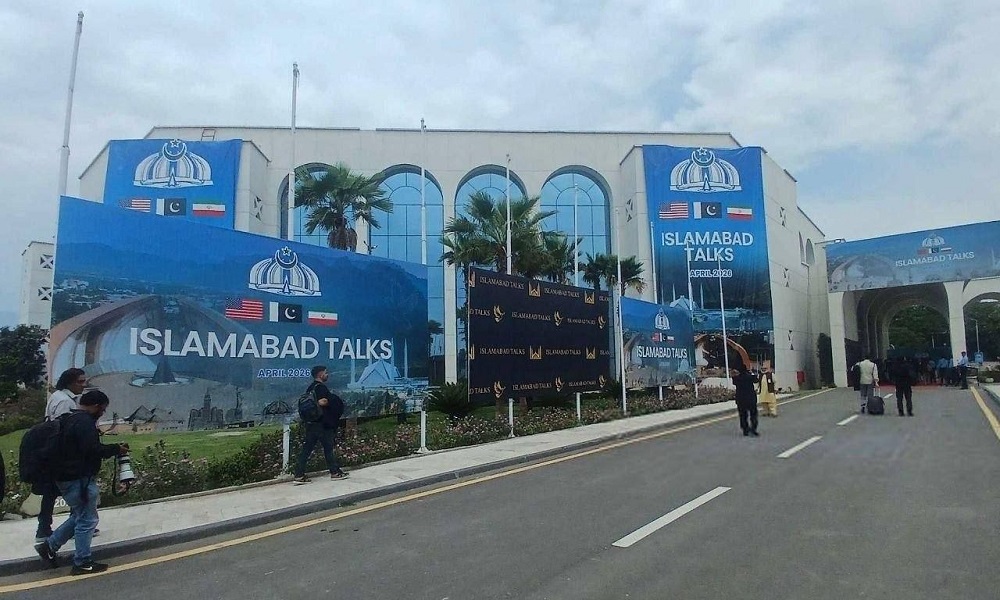
As Iranian and US delegations are present in Islamabad, Iranian media report that talks between the two sides have begun.
The negotiations are being conducted indirectly, with Pakistan acting as a mediator.
According to reports, Iran had set conditions for the start of the talks, including a halt to the war in Lebanon and the release of its frozen assets.
An IRIB correspondent in Islamabad reported that the US has agreed to release Iranian assets, and that the conflict in Lebanon has been limited to the southern part of the country.
However, US officials have not yet confirmed any agreement on the release of Iran’s frozen assets.
The talks come after 40 days of conflict between the United States, Israel, and Iran.
Latest News
Death toll rises in armed attack in Herat; 11 killed, 8 injured
Authorities have confirmed that one suspect has been arrested in connection with the attack.
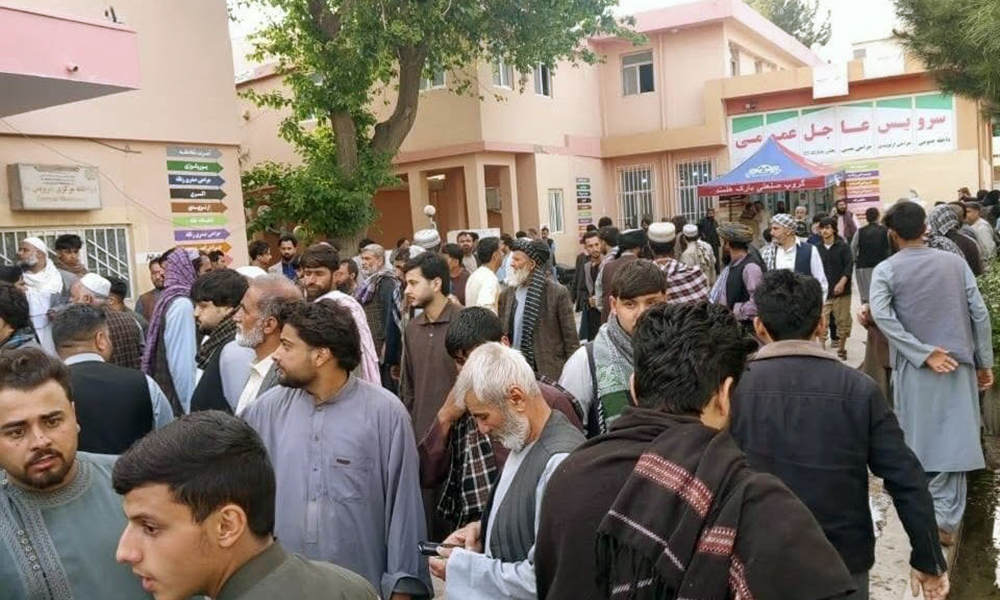
The death toll from a brutal armed attack in the Injil district of Herat province has increased, with local authorities confirming that at least 11 people were killed and 8 others injured.
Ahmadullah Muttaqi, Director of Information and Culture for Herat, reported that the attack occurred around 3:00 PM on Friday when unidentified gunmen opened fire on a group of families who had gathered for a picnic in the village of “Dah Mehre,” located in the Injil district.
Initial reports indicated that four people were killed and 15 others injured. However, as the severity of the injuries became clearer, seven more of the wounded tragically succumbed to their injuries overnight. The latest update puts the death toll at 11, with 8 survivors, two of whom are said to be in critical condition.
Authorities have confirmed that one suspect has been arrested in connection with the attack. Security forces are continuing to investigate the incident, with efforts underway to identify and apprehend additional perpetrators.
The attack has sent shockwaves through the region, with local authorities and communities expressing outrage and concern over the rising violence in the area.
Latest News
UN warns of deepening humanitarian crisis in Afghanistan, calls for urgent aid
Dujarric also highlighted a 5.9-magnitude earthquake that struck the Hindu Kush region on Sunday, causing additional casualties and damage, including in Kabul and nearby areas.
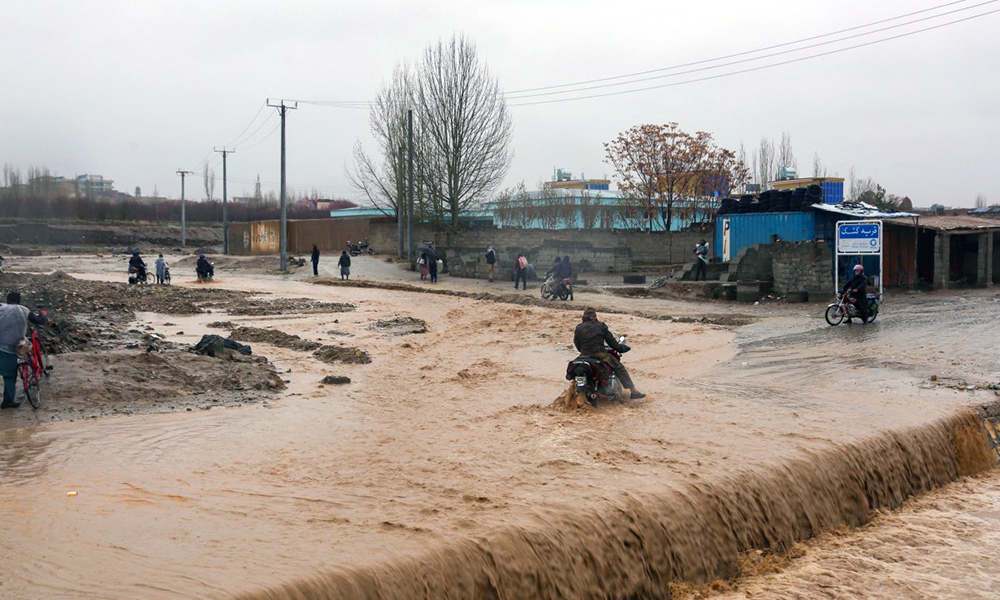
The United Nations has raised alarm over a worsening humanitarian crisis in Afghanistan, citing the combined impact of ongoing conflict and severe weather conditions, and urging the international community to step up assistance.
Speaking at a daily press briefing, UN Secretary-General spokesperson Stéphane Dujarric said that recent heavy rains and flooding have led to significant casualties and widespread destruction across the country.
“Nearly 100 people have reportedly been killed, more than 180 injured, and several others remain missing. Thousands of homes have been severely damaged or completely destroyed, along with critical infrastructure and large areas of agricultural land,” Dujarric said.
He noted that Nangarhar Province in eastern Afghanistan has been among the hardest hit regions, already recovering from a devastating earthquake in September last year.
Dujarric also highlighted a 5.9-magnitude earthquake that struck the Hindu Kush region on Sunday, causing additional casualties and damage, including in Kabul and nearby areas.
“We and our humanitarian partners have so far reached more than 8,000 people with assistance, including food, cash aid, health services, emergency shelter, and other life-saving support,” he added.
The UN said assessments are ongoing to ensure aid reaches the most vulnerable populations, as Afghanistan faces mounting humanitarian challenges amid overlapping crises.


Tahawol: Historic US-Iran talks in Pakistan discussed

Saar: Talks between Iran and US in Pakistan discussed

Iran–US talks kick off in Islamabad

Afghanistan U-17 football team ends CAFA campaign with 3–2 loss to Tajikistan

Iran’s new supreme leader has severe and disfiguring wounds

IEA Supreme Leader issues Eid-ul-Fitr message urging unity and support for Islamic system

IEA supreme leader orders replacement of foreign terminology in official documents

14 Pakistani soldiers killed after military post falls along Durand line: MoD

Afghan airstrikes target Pakistani military sites in retaliation for air attacks

Turkmenistan, Afghanistan discuss steps to speed up land acquisition for TAPI pipeline
Tahawol: Historic US-Iran talks in Pakistan discussed
Saar: Talks between Iran and US in Pakistan discussed

Tawsia: New transit route with Tatarstan, MoU with Uzbekistan discussed

Tahawol: China to host 2nd round of Kabul–Islamabad talks discussed

Saar: Fragile ceasefire in the Middle East reviewed
-
 Latest News4 days ago
China seeking to build trust between Afghanistan and Pakistan
-
 Business4 days ago
Afghanistan, Uzbekistan sign $400 million trade deals in push to deepen ties
-
 International Sports4 days ago
IPL 2026: Rain scuppers KKR vs PBKS match
-
 Latest News4 days ago
Heavy rains in Nangarhar leave 16 dead and injured
-
 Latest News4 days ago
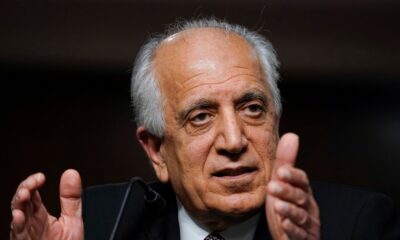
Fragile progress as US–Iran tensions shift toward negotiations, says Khalilzad
-
 Sport4 days ago
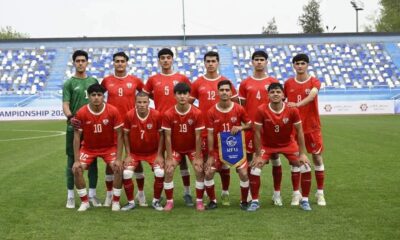
Afghanistan U-17s draw 0-0 against Turkmenistan in CAFA campaign
-
 Latest News4 days ago
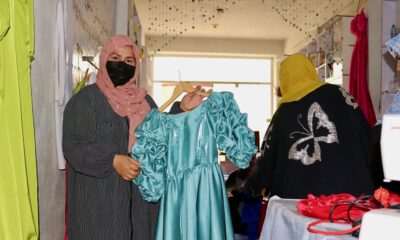
Japan and UNDP launch $2.35 million livelihoods initiative in Afghanistan
-
 Regional3 days ago
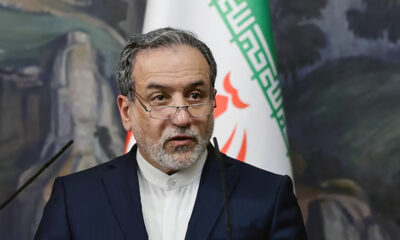
Iran agrees to temporary ceasefire as US pauses attacks