
Latest News
Full Transcript: Khalilzad’s Exclusive Interview After UAE Meeting

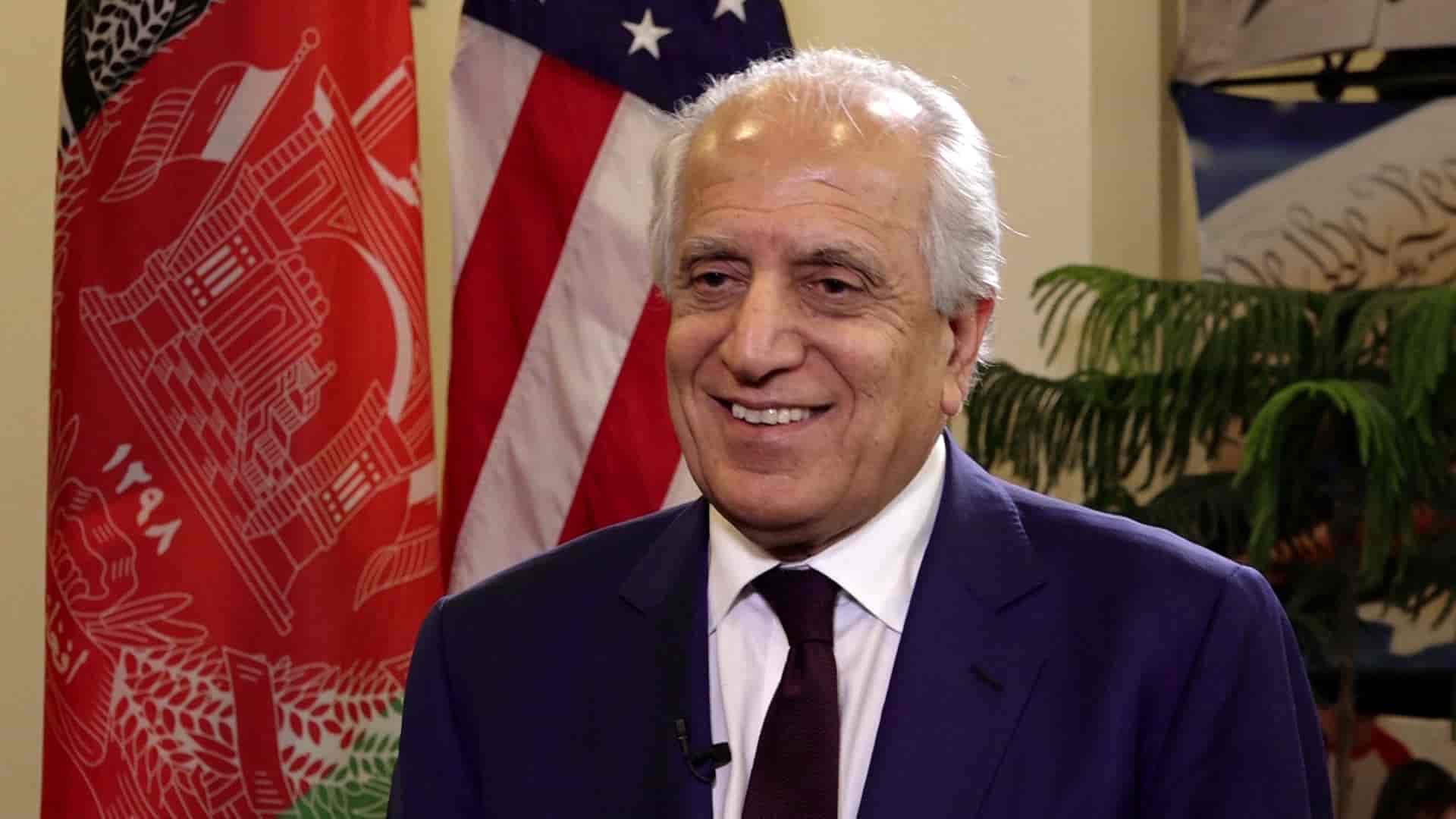
 The U.S. special envoy for Afghanistan Reconciliation Zalmay Khalilzad has told Ariana News’ Sharif Hassanyar that they have talked about a three-month ceasefire for addressing the issues through joint intra-Afghans dialogues in the meeting with Taliban officials in UAE.
He said the ceasefire proposal was suggested by Saudi Arabia and UAE officials at Abu Dhabi meeting.
Here is the full transcript of the exclusive interview:
Q: Thank you! For the first question, could you please tell us the latest details on your Abu Dhabi visit and peace talks?
ZK: Well, the meeting in Abu Dhabi was a good meeting. Pakistan, the UAE, and Saudi Arabia in cooperation with each other are trying to bring the Taliban and the Afghan government to the negotiating table, and to agree among themselves on the next steps needed for peace. Separate talks took place between these countries and the Afghan government delegation, and these countries and the Taliban. Unfortunately, the Taliban did not agree to meet with the Afghan government delegation, which I think was a mistake on their part, and left a negative impression on the participating countries, including the United States.
Q: You had some meetings with the Taliban. What were their red-lines at the meetings?
ZK: The Taliban have red-lines. They want to reach an agreement on the existence of foreign forces in Afghanistan.
Q: What was your answer and what is the red-line for the U.S.?
ZK: The United States’ red-line is that international terrorists like Al-Qaida and ISIS must not be able to use Afghan territory against the U.S. and the international community. To reach this goal, it is necessary to reach an intra-Afghan peace agreement.
Q: If your meetings with the Taliban achieve a positive result, what type of government will the people of Afghanistan get? An Islamic Emirate or an Islamic Republic?
ZK: The formation of the future government system is a decision for Afghans, which they must make for themselves. We are not in favor of an Islamic Emirate in Afghanistan and the Taliban said that they do not want to go back to the situation before 9/11. They said that they want to meet their fellow Afghans and reach an agreement on the political situation of Afghanistan. They prefer to discuss and solve security issues first. Our position is that if they really want peace… if they intend to solve the problem through political negotiation, and do not want a return to the past forty year history of Afghanistan when one group forced others to accept their political will, that was a failed policy and caused the war to continue. The solution is that they should sit together and reach an agreement on the future political situation with mutual respect and acceptance.
Q: During your negotiations with the Taliban, did you discuss an interim government or postponing the elections?
ZK: No. I understand there are many discussions going on about this issue in the media, but a plan for the political future of Afghanistan is an issue Afghans must decide together. We did not talk about an interim government or postponement of the elections, not even a single sentence or two. Some want to create tension between the U.S. and Afghanistan. Nothing was said on these topics.
Q: Were a ceasefire and prisoner release discussed in the two-day meetings in Abu Dhabi?
ZK: We talked about a ceasefire.
Q: Was it yours or the Taliban’s demand?
ZK: It was the UAE and Saudi Arabia’s suggestion. They proposed that a three-month ceasefire would provide an opportunity so that all issues could be addressed through joint intra-Afghans dialogues. The Taliban replied that they are not able to decide or agree with the complete proposal and asked for more time to go back and consult with their leadership. We will see what the result will be. We told them, if they want peace or if they are serious about peace, they should sit with the Afghans and respond as soon as possible to the Emirati and Saudi suggestion. If they want to fight or continue fighting, we assured them that the United States will stand with the government and the people of Afghanistan.
Q: You had meetings with GNU leaders last night. What were the details of the meeting and what was the demand of the Afghan government?
ZK: My aim was to update them on my recent trips after I was in Afghanistan, including Russia, Central Asia, Brussels, and the meetings I had in Pakistan and Abu Dhabi. It was a good meeting. Dr. Ghani and Dr. Abdullah were both present in the meeting and it was a good meeting.
Q: To compare both sides, the Afghan government and the Taliban, which side places more emphasis on and is being more honest about the peace process?
ZK: Well, I do not have doubts about the government, as I know Dr. Ghani and Dr. Abdullah. The people of Afghanistan, first of all, want peace. The war lasted for forty years; people have the right, anywhere in the world, to have peace, but in Afghanistan, especially… this war has endured for forty years there. The leadership of Afghanistan is in close contact with the people and they have experienced their own problems with their own people, and believe that they want peace. It does not mean peace is an easy task, there are no problems, there are no challenges…there are other issues, elections, for example. But I do not doubt that the people of Afghanistan are demanding peace as a whole. Regarding the Taliban, I have one question. Are they serious or not? They claim that they are serious, so let’s see what steps they take in practice, such as meeting with other Afghans, accepting and tolerating each other, mutual respect… This is still questionable… their disagreement in Abu Dhabi, which I think was a mistake… that will end against their favor. There is one question, how serious they are about peace.
Q: Do you think we will reach a peace agreement before the presidential elections, or if elections are held, will Afghanistan experience more five years of war? Or will there be a possibility for a peace agreement after elections?
ZK: I think it would be great if we could reach a peace deal before the elections. But it doesn’t only depend on Afghanistan’s government. It depends on the Taliban too. The Taliban can get ready for peace and elections at the same time. It would be great if a peace deal occurs before the elections.
Q: Do you think it will happen before the elections?
ZK: Yes, why not? I already mentioned the Emirati and Saudi proposal for a three-month ceasefire before the elections. The Afghan government, the Taliban, and other parties shared their opinions on a ceasefire and it will be good if they work and implement it. If this war ends, the sooner the better, as well as ending the killing. We know there are many complexities and challenges, and this war has deep roots. There are not only domestic factors but regional factors as well. That is why, when I say that efforts should be made, it does not mean it will happen immediately. But my personal effort and the United States’ efforts are aimed at bringing peace as soon as possible.
Q: After your meeting with the President and CEO, the National Security Advisor wrote on his Twitter account that no country can form a government system for Afghanistan and that the Afghan government is based on the constitution. Apparently, his tweet indicated his concern after your meetings. What do you say in response?
ZK: Well, I understand that there are some concerned people and that there are some concerns. Some concerns are right, and some others are due to lack of correct and sufficient information…
Q: Didn’t you meet last night with president Ghani and CEO Abdullah?
ZK: …I don’t know, based on my conversation with Dr. Ghani and Dr. Abdullah, they didn’t think that we want to form a different system for Afghanistan. The time for that is already past and Afghanistan is in a different place compared to the past. As I mentioned earlier, there was no discussion of any political issues, including elections, the Afghan government system, or changes in the constitution. We did not talk about these issues. Those who do not have information may have concerns, and sometimes there are some comments, but those who have information and are involved have no reason for concerns that the U.S government wants to represent Afghanistan… First, I am not a representative of Afghanistan. I am representative of the United States government and the United States does not want, it is not its program, it is not its policy, to replace Afghans in the internal affairs that belong to them.
Q: To what extent do you think that the Taliban negotiators are able to make independent decisions in peace talks? In the past, the Taliban could not decide about peace without Pakistan.
ZK: Well, let’s see what happens. During the last few months, I started a direct effort with Pakistan and regional partners to encourage Pakistan to cooperate in the Afghan peace process, to support the negotiations between the Afghan government and Taliban, and to take practical steps in this regard. I can say that in the Abu Dhabi meetings, Pakistan’s stance was that the Taliban should meet with the Afghan government and talk about their issues. Like the U.S., Saudi Arabia, and UAE, Pakistan can also play a role in peace talks with the Afghan government while the war continues. Let’s see what practical steps Pakistan takes in the coming days and weeks.
Q: For my last question, in your meetings with the Taliban, to what extent were issues such as the field I am working in, freedom of press, and also women’s rights and human rights, considered? Are these issues a red-line for the United States?
ZK: Well, we did not talk about these issues with the Taliban because they are Afghanistan’s internal issues. We discussed security and they wanted to talk about terrorism, and the presence of foreign forces in Afghanistan. I would like to assure the people of Afghanistan that as far as the United States is concerned, the United States is in favor of a democratic system where every Afghan’s rights are respected, where everyone has equal rights and responsibilities under the law. Countries are successful when there is respect for freedom of speech and press, and these are the essential elements for a successful Afghanistan. Without a doubt, the United States supports these issues.
Sharif Hassanyar: Thank you very much for your time and this opportunity.
Zalmay Khalilzad: Thank you too. Stay safe!

International Sports
FIFA appoints record number of match officials for 2026 World Cup
A total of 52 referees, 88 assistant referees and 30 video match officials have been selected from across all six confederations and 50 member associations.
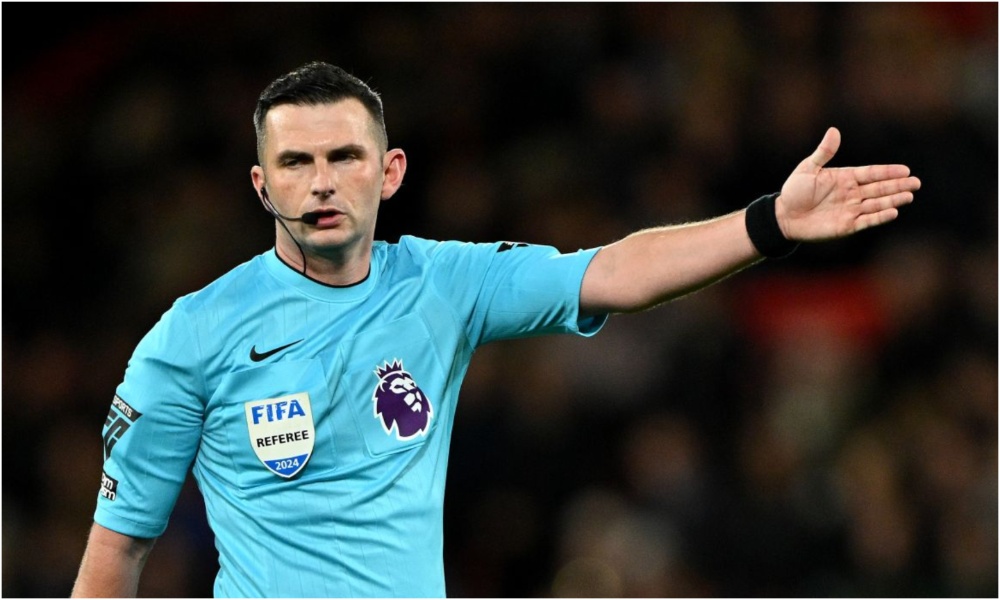
FIFA has announced the full list of match officials for the upcoming FIFA World Cup 2026, confirming what will be the largest refereeing team in the tournament’s history.
A total of 52 referees, 88 assistant referees and 30 video match officials have been selected from across all six confederations and 50 member associations, following a rigorous evaluation process that spanned more than three years.
The selection was based on FIFA’s “quality first” principle, with officials assessed on their consistency and performances in domestic leagues, international competitions and previous FIFA tournaments.
Pierluigi Collina said the chosen officials represent the highest standard in global football officiating. He noted that candidates were closely monitored over several years, taking part in seminars and major tournaments while undergoing regular performance reviews.
“This will be the biggest World Cup in history,” Collina said, referring to the expanded 48-team format and 104 matches set to be played across three host countries. He added that the officiating team has grown significantly compared to the 2022 tournament in Qatar, reflecting the increased scale of the competition.
Collina also highlighted the continued inclusion of women referees, with six female match officials selected, building on progress made during the previous World Cup.
Officials will undergo final preparations at a training camp in Miami starting on May 31, where they will receive support from fitness coaches, medical staff and match analysts to ensure they are in peak physical and mental condition ahead of the tournament.
Massimo Busacca said preparations began immediately after the conclusion of the 2022 World Cup, with a structured programme of workshops, monitoring and technical development designed to maintain the highest standards.
During the tournament, referees will continue daily training sessions, supported by detailed match analysis and on-field simulations involving local players.
Technology is also set to play a central role, with FIFA confirming the use of goal-line technology, an enhanced version of semi-automated offside systems and connected ball technology.
In a first for the World Cup, fans will also be able to view matches from the referee’s perspective using newly introduced body cameras, enhanced by artificial intelligence to improve video quality.
Following the Miami training camp, video match officials will relocate to Dallas, home of the International Broadcast Centre, while referees and assistant referees will remain in Miami for the duration of the tournament.
FIFA said additional measures aimed at increasing match tempo and reducing time-wasting—approved earlier this year by the International Football Association Board—will also be implemented.
With preparations now entering the final phase, FIFA says it is confident that “Team One” will be ready to meet the demands of what is expected to be a historic and groundbreaking World Cup.
Click here for full list of appointed match officials for the FIFA World Cup 2026.
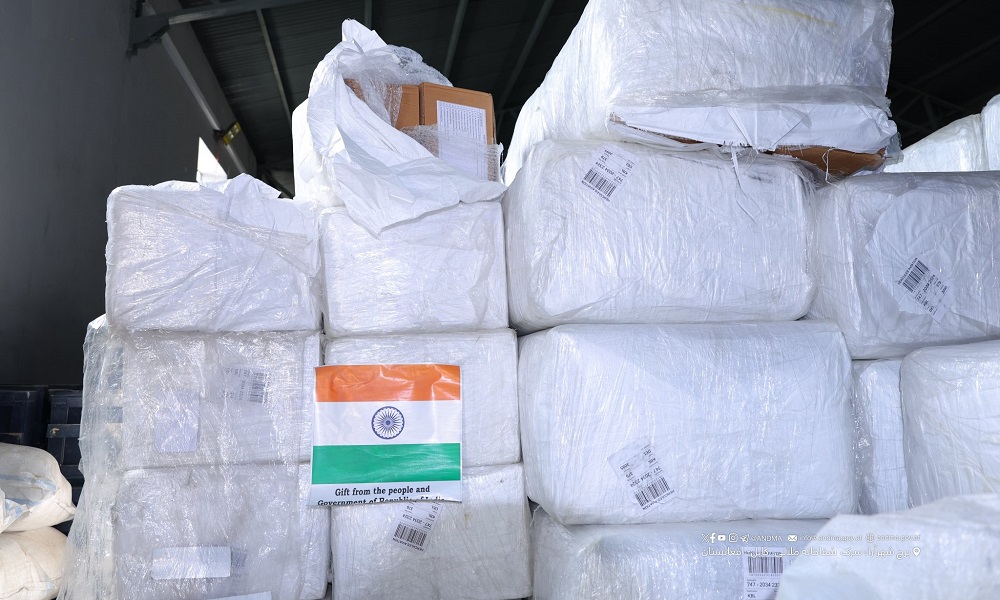
India has delivered three tons of humanitarian assistance to Afghanistan to support families impacted by recent flooding, the Afghanistan National Disaster Management Authority (ANDMA) said on Thursday.
Officials confirmed the aid shipment was received the same day and includes essential relief items such as 300 medical kits, 50 kitchen sets, 495 blankets, and 165 tarpaulins.
ANDMA expressed appreciation for India’s continued humanitarian support, noting that the assistance will help address urgent needs in flood-affected areas.
The authority added that a formal assessment is underway and that the aid will be distributed in a transparent and equitable manner to the most affected and vulnerable families.
Flooding has repeatedly affected several regions of Afghanistan, leaving communities in need of immediate relief and longer-term recovery support.
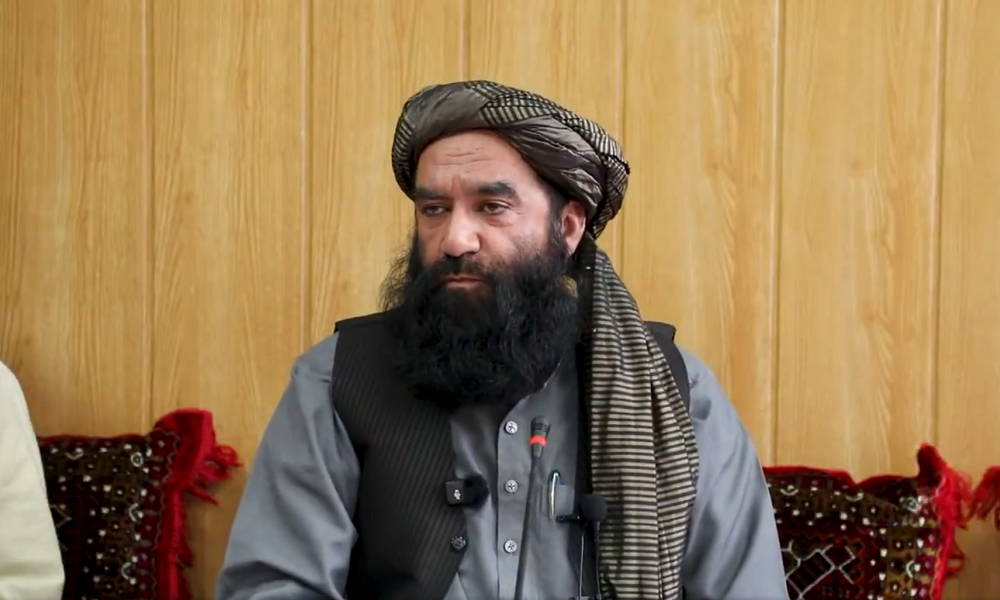
Noorullah Noori, Afghanistan’s Minister of Borders, Ethnic Affairs and Tribes, says the barbed-wire fencing along the disputed Durand Line is viewed by Afghans as a wire placed on the chest of the nation, stressing that Afghans will never accept a foreign barrier imposed on their land.
Noori made the remarks during a meeting with a number of political analysts, tribal elders and university professors at his office, where he emphasized that Afghanistan does not recognize an official border with Pakistan and that this position has been clearly communicated on multiple occasions.
Speaking at the gathering, the minister said the current governing system has emerged from among the people and that public cooperation and support have played a key role in reaching this stage.
He added that the system belongs to all Afghans and that all citizens of the country are treated equally. According to him, since the Islamic Emirate came to power, thousands of tribal and local disputes across the country have been resolved, and serious measures have been taken to safeguard the country’s borders.
Meanwhile, Mohammad Ali Jan Ahmad, Deputy Minister for Jirgas and Tribal Coordination at the ministry, said one of the most important factors behind the success of any society and political system is intellectual and ideological unity among the people.
He noted that such unity exists among the Afghan nation.
During the meeting, political analysts and tribal elders also emphasized the importance of unity and solidarity with the current system, stating that the people of Afghanistan will stand alongside the country’s security and defense forces to protect the nation and its territorial integrity.


ATN seals Ariana Snooker Championship deal for five seasons

Tahawol: China to host 2nd round of Kabul–Islamabad talks discussed

Saar: Fragile ceasefire in the Middle East reviewed

FIFA appoints record number of match officials for 2026 World Cup

Afghanistan U-17s fall to Uzbekistan as CAFA campaign nears conclusion

IEA Supreme Leader issues Eid-ul-Fitr message urging unity and support for Islamic system

14 Pakistani soldiers killed after military post falls along Durand line: MoD

IEA supreme leader orders replacement of foreign terminology in official documents

Afghan airstrikes target Pakistani military sites in retaliation for air attacks

Turkmenistan, Afghanistan discuss steps to speed up land acquisition for TAPI pipeline
Tahawol: China to host 2nd round of Kabul–Islamabad talks discussed
Saar: Fragile ceasefire in the Middle East reviewed

Tahawol: Two‑week truce agreement between Iran-US reviewed

Saar: US–Iran two-week ceasefire agreement discussed

Tahawol: Ongoing negotiations between Kabul-Islamabad discussed
-
 Latest News4 days ago
IEA supreme leader orders replacement of foreign terminology in official documents
-
 Latest News4 days ago
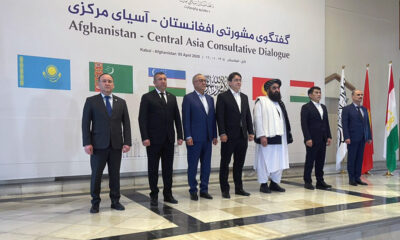
Afghanistan hosts inaugural Afghanistan–Central Asia Consultative Dialogue to strengthen regional cooperation
-
 Latest News5 days ago
IEA accuses Pakistan of war crimes amid heavy civilian losses
-

 World5 days ago
US rescues 2nd F-15 pilot hit above Iran: Trump
-
 Latest News2 days ago
China seeking to build trust between Afghanistan and Pakistan
-
 Regional4 days ago
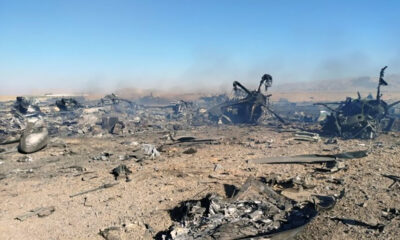
Iran claims it shot down US C-130 support aircraft in Isfahan
-

 International Sports4 days ago
IPL 2026: Lucknow hold nerve in final over to defeat Sunrisers
-
 Latest News4 days ago
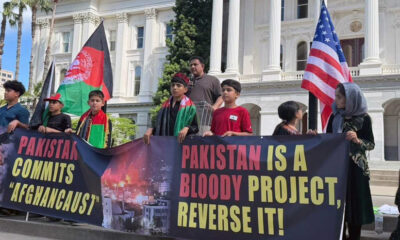
Afghan community in California condemns Pakistani strikes amid growing global protests