
Regional
Gov’t Had Information About Fall of Kunduz: Governor

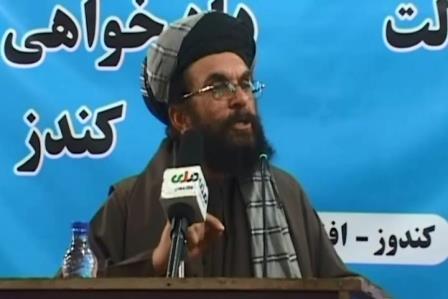
 The governor of Kunduz province has claimed that the Presidential Palace and Security Council were aware of the fall of Kunduz.
“I have informed the security council about all threats before the fall of Kunduz,” said Asadullah Omar Khail, Kunduz governor.
But the Presidential Palace says that they have not received any report about the fall of Kunduz.
“We have not received any report about the threats before the fall Kunduz,” said Dawa Khan Mina Pal.
The Security Council has not commented regarding the issue so far.
More than 15 days passed since the beginning of war in Kunduz and Afghan security forces are fighting against the Taliban to wipe them out from the province.
Taliban fighters launched an assault on Kunduz about two weeks ago but the city center had been cleared of militants.
This comes as Up to 24,000 residents flee Kunduz over ongoing clashes.
Kunduz is now officially under the control of the Afghan government, but the Internally displaced People (IDP) are still reluctant to go back to their city. They say they don’t feel safe there due to a persistent Taliban threat and an ongoing fighting in the areas close to the city.

Regional
Israel prepares for long conflict despite US–Iran ceasefire efforts
While Israel has reportedly halted direct strikes on Iran, it continues operations against Iran-aligned groups in neighbouring areas.
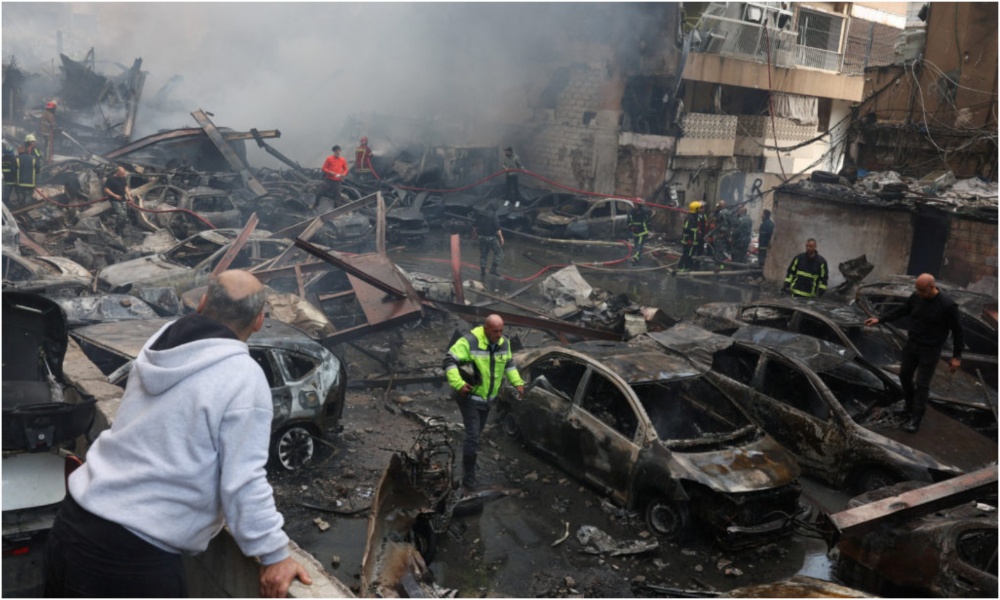
As the United States and Iran move toward cementing a ceasefire, Israeli military strategy appears increasingly focused on preparing for a prolonged and evolving regional conflict.
According to Israeli officials and analysts, the country has intensified efforts to establish and maintain “buffer zones” across multiple areas, including the Gaza Strip, southern Lebanon, and parts of Syria.
The approach reflects a shift in doctrine following the October 7 attacks, with an emphasis on containing threats rather than fully eliminating them.
Reuters reported that Israeli officials say the aim of these zones is to push potential threats further from border communities and reduce the risk of attacks. Military sources indicate that areas extending several kilometres beyond Israel’s borders are being cleared or monitored to limit the reach of armed groups such as Hezbollah and Hamas.
The developments come as Washington and Tehran agreed to a temporary pause in hostilities while negotiating a broader settlement following the latest escalation, which began in late February.
While Israel has reportedly halted direct strikes on Iran, it continues operations against Iran-aligned groups in neighbouring areas.
In southern Lebanon, Israeli forces have advanced into areas near the Litani River, with military officials describing efforts to establish a security belt aimed at preventing cross-border fire. The operation has reportedly involved evacuations and the destruction of structures suspected of being used for military purposes.
Israeli leaders have framed the strategy as necessary for long-term security.
In recent remarks, Benjamin Netanyahu said Israel has created defensive belts extending beyond its borders in multiple areas, including Gaza and Syria.
However, the approach has raised concerns among analysts and legal experts. Some warn that widespread destruction of civilian infrastructure may violate international law unless clearly justified by military necessity. Others caution that maintaining multiple fronts could place significant strain on Israeli forces over time.
The strategy also reflects deep scepticism within Israel about the prospects for lasting peace agreements. Surveys in recent years suggest limited public confidence in long-term stability with Palestinians or neighbouring states, reinforcing support for security-driven policies.
At the same time, statements from some members of Israel’s government have fuelled concern about possible territorial ambitions, particularly in Gaza and southern Lebanon. Still, military officials have indicated that buffer zones are intended as flexible security measures rather than permanent borders.
As diplomatic efforts continue, the contrast between ceasefire negotiations and military preparations highlights the uncertainty surrounding the region’s trajectory—raising the possibility that even if fighting subsides in the short term, a longer period of instability may lie ahead.
Regional
Pakistan PM holds 45-minute call with Iranian President
The call, described as “warm and cordial” and lasting more than 45 minutes, highlighted Pakistan’s role in helping secure a temporary ceasefire between the United States and Iran.
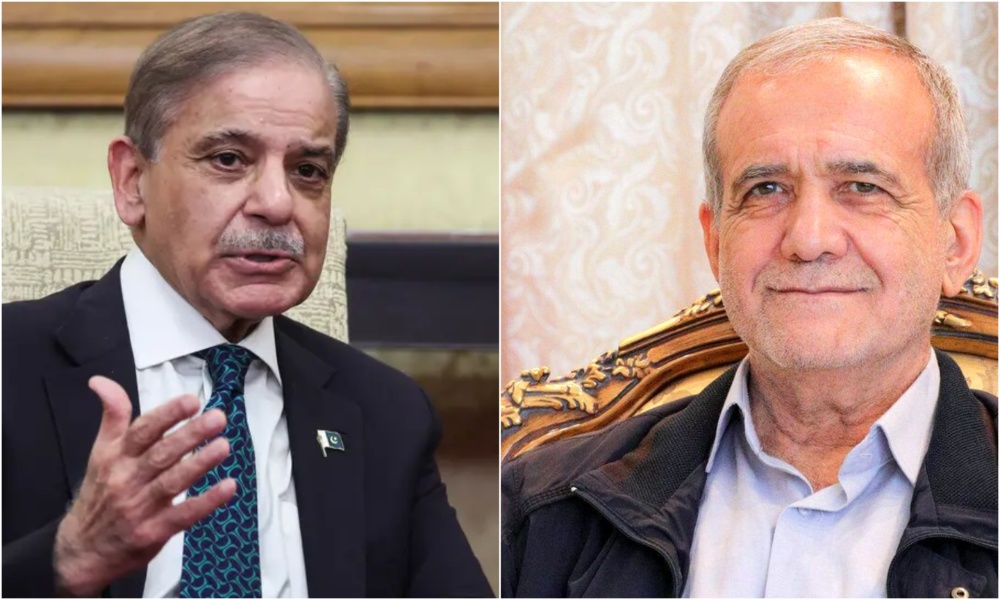
In a significant diplomatic development, Pakistan’s Prime Minister Shehbaz Sharif held a telephone conversation on Wednesday afternoon with Masoud Pezeshkian, the president of Iran, ahead of scheduled negotiations between Tehran and Washington in Islamabad later this week.
The call, described as “warm and cordial” and lasting more than 45 minutes, highlighted Pakistan’s role in helping secure a temporary ceasefire between the United States and Iran, following weeks of rising regional tensions.
During the conversation, Sharif expressed deep appreciation for the Iranian leadership’s wisdom in agreeing to the ceasefire and thanked Pezeshkian for accepting Pakistan’s offer to host the negotiations. He also conveyed his respects to Supreme Leader Mojtaba Khamenei.
Pezeshkian, in turn, thanked Sharif and praised Pakistan’s efforts in mediating the ceasefire. He confirmed that Iran would participate in the upcoming talks and sent best wishes to the people of Pakistan. Both leaders agreed to remain in close contact.
The Islamabad-hosted negotiations follow a two-week ceasefire agreement between the United States and Iran, aimed at preventing further escalation and stabilizing the region.
Pakistan has actively called for an end to hostilities, citing economic disruptions and security concerns. Tehran has agreed to ensure safe passage through the Strait of Hormuz for commercial shipping during the ceasefire.
International observers see the Islamabad talks as a critical opportunity to transform a temporary pause into a lasting settlement.
While global leaders have cautiously welcomed the ceasefire, they stress that sustained diplomacy will be necessary to achieve long-term peace. Analysts note that significant hurdles remain, and the outcome of the talks will have broad implications for regional stability and global markets.
Regional
Iran agrees to temporary ceasefire as US pauses attacks
Pakistan’s Prime Minister Shehbaz Sharif confirmed that the ceasefire would take effect immediately, raising hopes for a broader diplomatic breakthrough.
Iran has agreed to a two-week ceasefire with the United States, in a move aimed at easing rising tensions and preventing further escalation in the region.
The agreement comes after U.S. President Donald Trump said in a social media post that Washington would hold off on threatened attacks against Iranian infrastructure if Tehran agreed to reopen the Strait of Hormuz.
“I have agreed to back off attacks for two weeks, subject to Iran reopening the Strait,” Trump said, stepping back from earlier warnings that “a whole civilization will die tonight.”
The temporary truce was brokered by Pakistan, which has been acting as a key mediator between the two sides. Pakistan’s Prime Minister Shehbaz Sharif confirmed that the ceasefire would take effect immediately, raising hopes for a broader diplomatic breakthrough.
Iran’s Supreme National Security Council confirmed that Tehran had accepted the ceasefire proposal, signaling a willingness to move toward de-escalation after weeks of conflict.
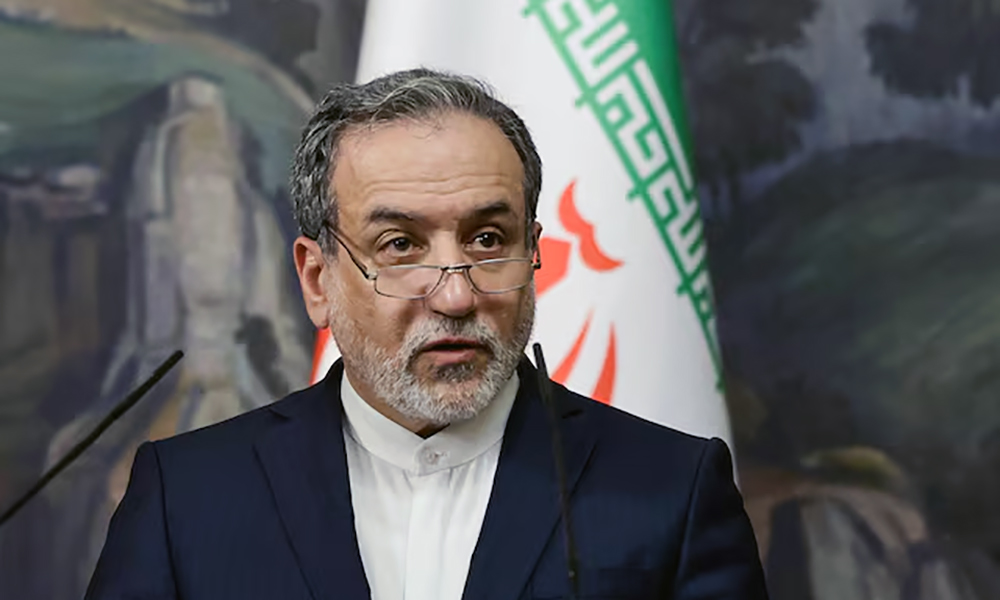
Iranian Foreign Minister Abbas Araghchi said the country’s armed forces would facilitate safe passage through the Strait of Hormuz during the two-week period, provided attacks against Iran are halted.
“If aggression stops, our forces will ensure secure transit,” he said, referring to the vital shipping route through which around one-fifth of the world’s oil passes.
The Strait of Hormuz had been closed by Iran in response to the conflict, triggering global concern over energy supplies and maritime security. Its reopening, even temporarily, is expected to ease pressure on international markets and reduce the risk of wider economic disruption.
The conflict, which escalated sharply in late February, has involved sustained strikes and heightened tensions across the Middle East. While the ceasefire marks a significant pause in hostilities, key issues remain unresolved, including sanctions, regional security arrangements, and the presence of U.S. forces.
Talks between Iran and the United States are expected to begin in the coming days, with Pakistan continuing to play a facilitation role. Analysts say the negotiations will be crucial in determining whether the temporary truce can evolve into a longer-term agreement.
Despite the breakthrough, observers caution that the situation remains fragile, and any renewed escalation could quickly undo the progress achieved through the ceasefire.


ATN seals Ariana Snooker Championship deal for five seasons

Tahawol: China to host 2nd round of Kabul–Islamabad talks discussed

Saar: Fragile ceasefire in the Middle East reviewed

FIFA appoints record number of match officials for 2026 World Cup

Afghanistan U-17s fall to Uzbekistan as CAFA campaign nears conclusion

IEA Supreme Leader issues Eid-ul-Fitr message urging unity and support for Islamic system

14 Pakistani soldiers killed after military post falls along Durand line: MoD

IEA supreme leader orders replacement of foreign terminology in official documents

Afghan airstrikes target Pakistani military sites in retaliation for air attacks

Turkmenistan, Afghanistan discuss steps to speed up land acquisition for TAPI pipeline
Tahawol: China to host 2nd round of Kabul–Islamabad talks discussed
Saar: Fragile ceasefire in the Middle East reviewed

Tahawol: Two‑week truce agreement between Iran-US reviewed

Saar: US–Iran two-week ceasefire agreement discussed

Tahawol: Ongoing negotiations between Kabul-Islamabad discussed
-
 Latest News4 days ago
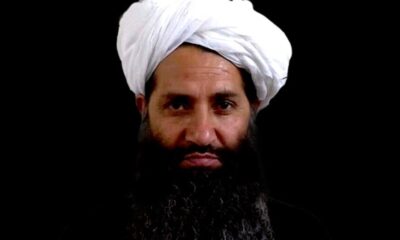
IEA supreme leader orders replacement of foreign terminology in official documents
-
 Latest News4 days ago
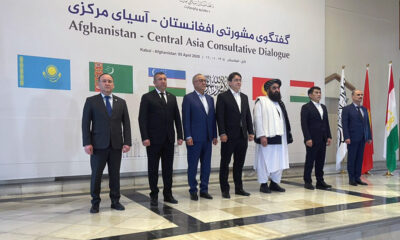
Afghanistan hosts inaugural Afghanistan–Central Asia Consultative Dialogue to strengthen regional cooperation
-
 Latest News5 days ago
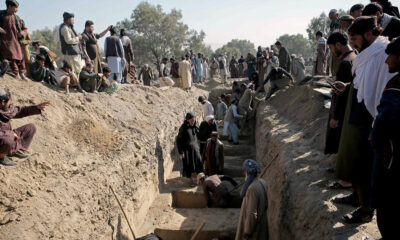
IEA accuses Pakistan of war crimes amid heavy civilian losses
-

 World5 days ago
US rescues 2nd F-15 pilot hit above Iran: Trump
-
 Latest News2 days ago
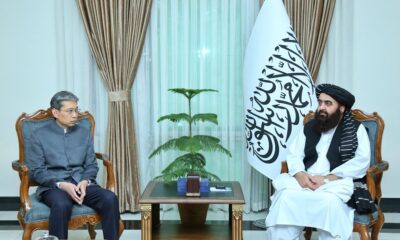
China seeking to build trust between Afghanistan and Pakistan
-

 International Sports4 days ago
IPL 2026: Lucknow hold nerve in final over to defeat Sunrisers
-
 Regional4 days ago
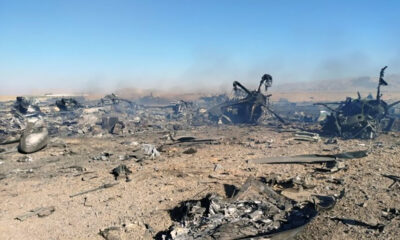
Iran claims it shot down US C-130 support aircraft in Isfahan
-
 Latest News4 days ago
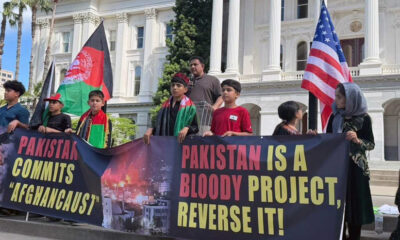
Afghan community in California condemns Pakistani strikes amid growing global protests