
Regional
Iran may pause enrichment for US nod on nuclear rights, release of frozen funds, Iranian sources say
Iranian Foreign Ministry spokesman Esmaeil Baghaei denied Reuters report and said “enrichment in Iran is a non-negotiable principle.”

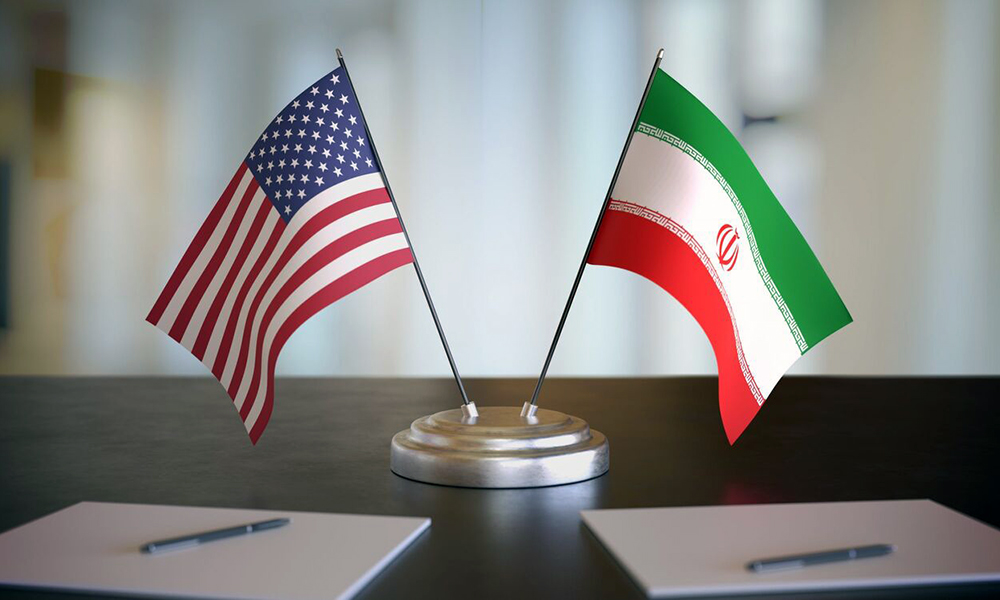
Iran may pause uranium enrichment if the U.S. releases frozen Iranian funds and recognises Tehran’s right to refine uranium for civilian use under a “political deal” that could lead to a broader nuclear accord, two Iranian official sources said.
The sources, close to the negotiating team, said on Wednesday a “political understanding with the United States could be reached soon” if Washington accepted Tehran’s conditions. One of the sources said the matter “has not been discussed yet” during the talks with the United States, Reuters reported.
The sources told Reuters that under this arrangement, Tehran would halt uranium enrichment for a year, ship part of its highly enriched stock abroad or convert it into fuel plates for civilian nuclear purposes.
A temporary pause to enrichment would be a way to overcome an impasse over clashing red lines after five rounds of talks between Iranian Foreign Minister Abbas Araqchi and Trump’s Middle East envoy Steve Witkoff to resolve a decades-long dispute over Tehran’s nuclear programme.
U.S. officials have repeatedly said that any new nuclear deal with Iran – to replace a failed 2015 accord between Tehran and six world powers – must include a commitment to scrap enrichment, viewed as a potential pathway to developing nuclear bombs.
The Islamic Republic has repeatedly denied such intentions, saying it wants nuclear energy only for civilian purposes, and has publicly rejected Washington’s demand to scrap enrichment as an attack on its national sovereignty.
In Washington, a U.S. official told Reuters the proposal aired by the Iranian sources had not been brought to the negotiating table to date. The U.S. State Department did not immediately respond to requests for comment on this article.
Iran’s semi-official Fars news agency said Iranian Foreign Ministry spokesman Esmaeil Baghaei denied Reuters report and said “enrichment in Iran is a non-negotiable principle.”
The Iranian sources said Tehran would not agree to dismantling of its nuclear programme or infrastructure or sealing of its nuclear installations as demanded by U.S. President Donald Trump’s administration, read the report.
Instead, they said, Trump must publicly recognise Iran’s sovereign right to enrichment as a member of the nuclear Non-Proliferation Treaty and authorise a release of Iranian oil revenues frozen by sanctions, including $6 billion in Qatar.
Iran has not yet been able to access the $6 billion parked in a Qatar bank that was unfrozen under a U.S.-Iranian prisoner swap in 2023, during U.S. President Joe Biden’s administration.
“Tehran wants its funds to be transferred to Iran with no conditions or limitations. If that means lifting some sanctions, then it should be done too,” the second source said.
The sources said the political agreement would give the current nuclear diplomacy a greater chance to yield results by providing more time to hammer out a consensus on hard-to-bridge issues needed for a permanent treaty.
“The idea is not to reach an interim deal, it would (rather) be a political agreement to show both sides are seeking to defuse tensions,” said the second Iranian source.
Western diplomats are sceptical of chances for U.S.-Iranian reconciliation on enrichment. They warn that a temporary political agreement would face resistance from European powers unless Iran displayed a serious commitment to scaling back its nuclear activity with verification by the U.N. nuclear watchdog.
Even if gaps over enrichment narrow, lifting sanctions quickly would remain difficult. The U.S. favours phasing out nuclear-related sanctions while Iran demands immediate removal of all U.S.-imposed curbs that impair its oil-based economy.
Asked whether critical U.S. sanctions, reimposed since 2018 when Trump withdrew Washington from the 2015 pact, could be rescinded during an enrichment pause, the first source said: “There have been discussions over how to lift the sanctions during the five rounds of talks.”
Dozens of Iranian institutions vital to Iran’s economy, including its central bank and national oil company, have been sanctioned since 2018 for, according to Washington, “supporting terrorism or weapons proliferation”.
Iran’s clerical establishment is grappling with mounting crises – energy and water shortages, a plunge in the value of its currency, losses among regional militia proxies in wars with Israel, and growing fears of an Israeli strike on its nuclear sites – all exacerbated by Trump’s hardline stance, Reuters reported.
Trump’s revival of a “maximum pressure” campaign against Tehran since he re-entered the White House in January has included tightened sanctions and threats to bomb Iran if current negotiations yield no deal.
Iranian officials told Reuters last week that Tehran’s leadership “has no better option” than a new deal to avert economic chaos at home that could jeopardise clerical rule.
Nationwide protests over social repression and economic hardship in recent years met with harsh crackdowns but exposed the Islamic Republic’s vulnerability to public discontent and drew more Western sanctions over human rights violations.





Regional
Pakistan among top nuclear threats to America, US intelligence chief tells senate
Speaking before a Senate panel, Gabbard said the U.S. intelligence community is increasingly concerned about the growing missile capabilities of several countries, including Pakistan and Iran.
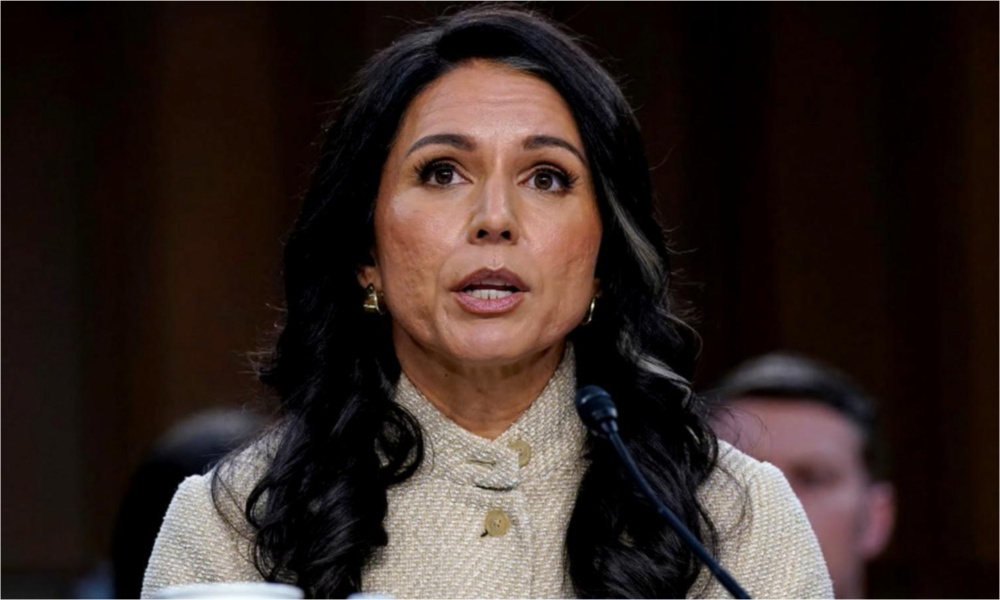
U.S. Director of National Intelligence Tulsi Gabbard told lawmakers that Pakistan ranks among the most significant nuclear threats to the United States, placing it alongside Russia, China and North Korea.
Speaking before a Senate panel, Gabbard said the U.S. intelligence community is increasingly concerned about the growing missile capabilities of several countries, including Pakistan and Iran.
“The intelligence community assesses that Russia, China, North Korea, Iran and Pakistan have been developing a range of advanced and traditional missile systems capable of carrying nuclear or conventional payloads that could reach the U.S. homeland,” she said.
Gabbard warned that the number of missiles capable of striking the United States is expected to rise sharply in the coming years, projecting an increase from roughly 3,000 today to more than 16,000 by 2035.
In her testimony, she also highlighted deepening ties between North Korea, Russia and China, suggesting growing strategic coordination among U.S. adversaries that could further complicate global security dynamics.
Addressing the ongoing conflict with Iran, Gabbard said U.S. military operations have significantly weakened Tehran’s capabilities. While the Iranian government remains in place, she described its military infrastructure as “largely degraded,” noting that it could take years for Iran to rebuild its missile and drone programs if the current leadership endures.
She added that Iran’s nuclear enrichment program had been “obliterated” by U.S. strikes in 2025, though she cautioned that Tehran may gradually attempt to restore its military strength over time.
Beyond state actors, Gabbard identified extremist groups such as Al-Qaeda and ISIS as the most significant threats to U.S. interests overseas, particularly in parts of Africa, the Middle East and South Asia.
The assessment comes amid heightened geopolitical tensions and follows the recent resignation of a senior U.S. security official linked to the ongoing Iran conflict. The White House reaffirmed its support for Gabbard, with press secretary Karoline Leavitt stating that President Donald Trump retains “full confidence” in the intelligence chief.
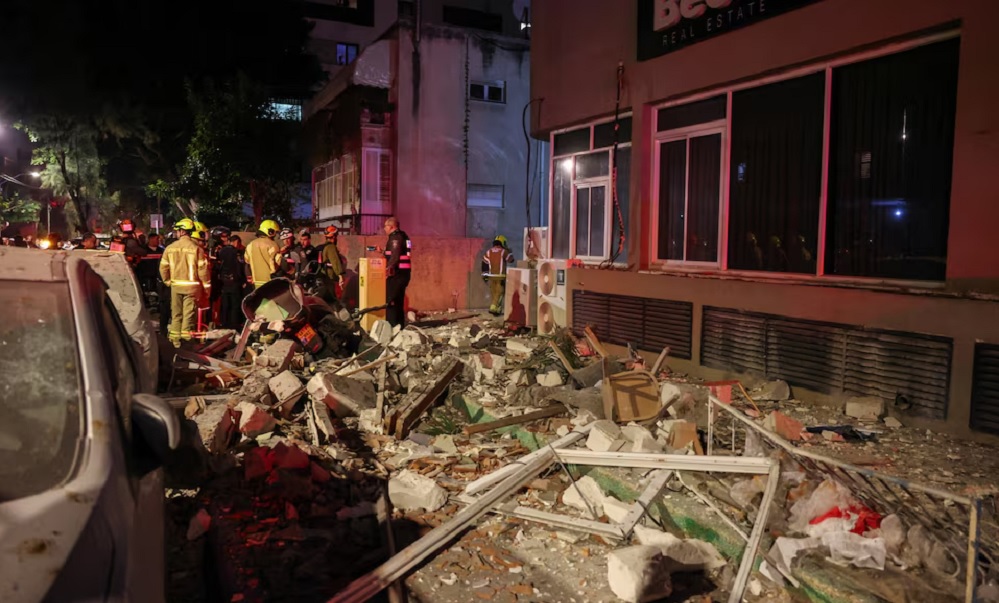
Iran targeted Tel Aviv with missiles carrying cluster warheads in what it said was retaliation for Israel’s assassination of Iran’s security chief Ali Larijani, Iranian state television reported on Wednesday.
Israel has said that Iran has repeatedly used cluster warheads, which disperse into multiple smaller explosives mid-air and spread over a wide area, making them difficult to intercept. The attack on densely populated Tel Aviv overnight on Tuesday killed two people, bringing the death toll in Israel from the war to at least 14, Reuters reported.
In Iran, a projectile hit an area near the Bushehr nuclear power plant on Tuesday evening, however it caused no damage or injuries, Iran told the International Atomic Energy Agency. IAEA chief Rafael Grossi reiterated his call for maximum restraint during the conflict to avoid the risk of a nuclear accident.
Israel and the U.S. have said preventing Iran from developing a nuclear weapons programme was one of the goals of the attacks they launched more than two weeks ago, which killed the country’s supreme leader and many other top officials.
The Iranian government on Tuesday confirmed the killing of Larijani, the most senior figure targeted since the U.S.-Israeli war’s first day, when an Israeli strike killed Iran’s Supreme Leader Ayatollah Ali Khamenei.
Iran’s Supreme National Security Council, which Larijani led as secretary, said Larijani’s son and his deputy, Alireza Bayat, were also killed in an Israeli attack on Monday night.
The targeted killings took place as the U.S.-Israeli war on Iran shows no signs of de-escalation.
Iran’s new supreme leader, Mojtaba Khamenei, has rejected proposals conveyed to Iran’s Foreign Ministry for “reducing tensions or ceasefire with the United States,” according to a senior Iranian official who asked not to be identified.
Khamenei, attending his first foreign-policy meeting since his appointment, said it was not “the right time for peace until the United States and Israel are brought to their knees, accept defeat, and pay compensation,” according to the official.
The official did not clarify whether the younger Khamenei, who has not yet appeared in photos or on TV since being named last week to replace his slain father, had attended the meeting in person or remotely.
TRUMP SAYS HELP FROM ALLIES TO SECURE STRAIT NOT NEEDED
U.S.-based Iran human rights group HRANA said on Monday that an estimated 3,000-plus people have been killed in Iran since the U.S.-Israeli attacks began at the end of February. Iranian attacks have killed people in Iraq and across the Gulf states, as well as Israel. More than 900 people have died since Israel began attacks on Lebanon on March 2, the Lebanese Health Ministry said on Tuesday.
The Strait of Hormuz, a transit point for a fifth of the global oil trade, remains largely closed as Iran threatens to attack tankers linked to the U.S. and Israel. Oil prices have soared.
U.S. President Donald Trump has repeatedly castigated allied countries in recent days for their cool response to his requests for military help to restore the passage of oil tankers through the strait.
Most U.S. allies in the North Atlantic Treaty Organization have told Trump they don’t want to get involved in the conflict, he said on Tuesday, describing their position as “a very foolish mistake.”
“Because of the fact that we have had such Military Success, we no longer ‘need,’ or desire, the NATO Countries’ assistance — WE NEVER DID!” Trump wrote on social media, also singling out Japan, Australia and South Korea.
European Union foreign policy chief Kaja Kallas said in an interview that nobody was ready to risk the lives of their people in protecting the strait.
“We have to find diplomatic ways to keep this open so that we don’t have a food crisis, fertilizers crisis, energy crisis as well,” Kallas said.
The U.S. has given shifting rationales for joining Israel to attack Iran and struggled to explain the legal basis for starting a new war, underscored by the Tuesday resignation of the head of the U.S. National Counterterrorism Center, Joseph Kent. Kent wrote in his resignation letter to Trump that Iran “posed no imminent threat to our nation.”
US TARGETS IRAN COASTLINE
Iran has responded to the Israeli-U.S. attacks with wide-ranging strikes on its Gulf neighbours, some of which host U.S. bases.
Gulf Arab states have faced more than 2,000 missile and drone attacks on U.S. diplomatic missions and military bases as well as oil infrastructure, ports, airports, ships and residential and commercial buildings, and most of them aimed at the United Arab Emirates.
Saudi Arabia will host a consultative meeting of foreign ministers from a number of Arab and Islamic countries in Riyadh on Wednesday evening to discuss ways to support regional security and stability, the kingdom’s foreign ministry said.
The United States military said on Tuesday it had targeted sites along Iran’s coastline near the Strait of Hormuz because Iranian anti-ship missiles posed a risk to international shipping there.
Oil prices rose about 3% on Tuesday as Iran renewed its strikes on oil facilities in the United Arab Emirates, and are up around 45% since the start of the war on February 28, raising concerns of a renewed spike in global inflation. The World Food Programme said tens of millions of people will face acute hunger if the war continues through June.
Global airlines sounded the alarm on Tuesday over soaring jet fuel prices, warning of hundreds of millions of extra costs, higher fares and cuts to some routes. Global aviation has been thrown into turmoil, with flights cancelled, rescheduled or rerouted as most Middle East airspace remains closed amid fears of missile and drone attacks.
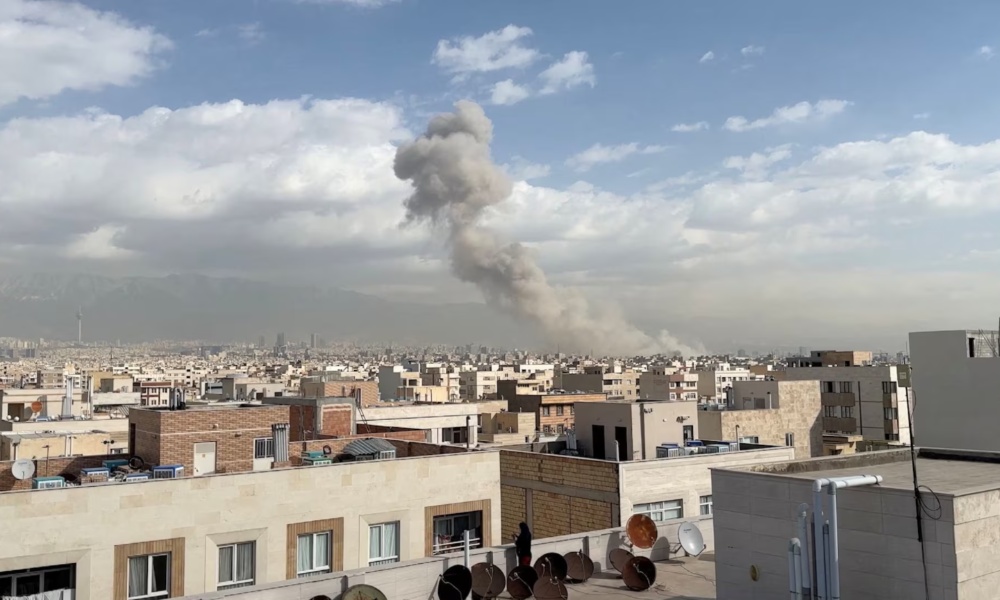
Defence Minister Israel Katz said on Tuesday the Israeli military had killed Iran’s security chief and the head of its Basij militia in airstrikes overnight, and Tehran kept up attacks against Gulf neighbours that have pushed up energy prices.
Katz said in a statement he had been informed by the military that Iran’s security chief Ali Larijani had been killed, Reuters reported.
Iranian state media published a handwritten note by Larijani commemorating Iranian sailors killed in a U.S. attack whose funeral was expected on Tuesday but there was no immediate comment by Tehran on Katz’s remarks.
Larijani would be the most senior figure assassinated since Supreme Leader Ayatollah Khamenei was killed on the first day of Israeli-U.S. airstrikes on February 28.
Katz said Gholamreza Soleimani, the commander of Iran’s Basij forces, had also been killed.
The Basij militia is a part-time paramilitary force under the control of the Islamic Revolutionary Guard Corps that is often used to quell protests inside Iran.
Israeli Prime Minister Benjamin Netanyahu’s office said in a statement that the Israeli leader had ordered “the elimination of senior officials of the Iranian regime”.
The U.S.-Israeli war on Iran is in its third week, with at least 2,000 people killed and no end in sight. The Strait of Hormuz remains largely closed off and U.S. allies have rebuffed U.S. President Donald Trump’s calls for them to help to reopen the vital waterway, through which about 20% of global oil and liquefied natural gas flows.
There was no let-up in attacks by both sides early on Tuesday, with Iran launching missiles on Israel overnight, underscoring that Tehran retains the capacity to carry out long-range strikes despite more than two weeks of pounding by U.S. and Israeli weapons.
The Israeli military said it was targeting “Iranian regime infrastructure” with a new wave of strikes across Tehran, as well as Hezbollah sites in Beirut, a day after saying it had drawn up detailed plans for at least three more weeks of war with Iran.


Tahawol: Temporary ceasefire draws broad support

Security Sources: Pakistani military shelling in Kunar and Nuristan leaves female doctor dead

Saar: Emphasis on resolving conflicts through diplomacy

UN Secretary-General condemns Pakistani airstrike on Kabul rehab center

IEA Supreme Leader: Afghanistan’s victory lies in faith and National unity

Pakistani military jet downed in Afghanistan’s Jalalabad, pilot captured alive

Afghan Air Force conducts airstrikes in Islamabad, other cities

Afghanistan’s Chief of Armed Forces underscores readiness and equipment for national defense

Afghanistan welcomes investment and technology partnerships with India

Prominent Muslim scholar issues fatwa calling for Afghanistan-Pakistan ceasefire
Tahawol: Temporary ceasefire draws broad support
Saar: Emphasis on resolving conflicts through diplomacy

Tahawol: Global reactions to Pakistan’s recent attacks discussed

Saar: Consequences of Pakistani airstrikes on Afghans discussed

Tahawol: Pakistan’s new attacks on Kabul hospital discussed
-
 Latest News4 days ago
IEA Supreme Leader issues Eid-ul-Fitr message urging unity and support for Islamic system
-
 Latest News5 days ago
Regional criticism grows amid Pakistan strikes inside Afghanistan
-
 Latest News5 days ago
Afghan airstrike targets a military camp in South Waziristan
-

 Business4 days ago
Turkmenistan, Afghanistan discuss steps to speed up land acquisition for TAPI pipeline
-

 Sport5 days ago
IPL 2026 kicks off in under two weeks; Afghan players set to shine
-

 Business5 days ago
Afghanistan expands exports through Lapis Lazuli Corridor
-
 Latest News1 day ago
IEA announces temporary pause in defensive operations against Pakistan for Eid
-
 World5 days ago
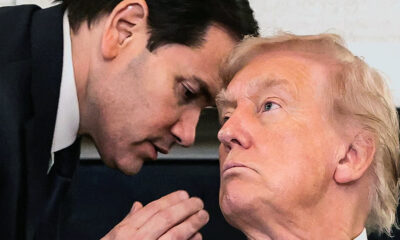
Trump rejects efforts to launch Iran ceasefire talks, sources say