
Regional
Iran’s new supreme leader has severe and disfiguring wounds

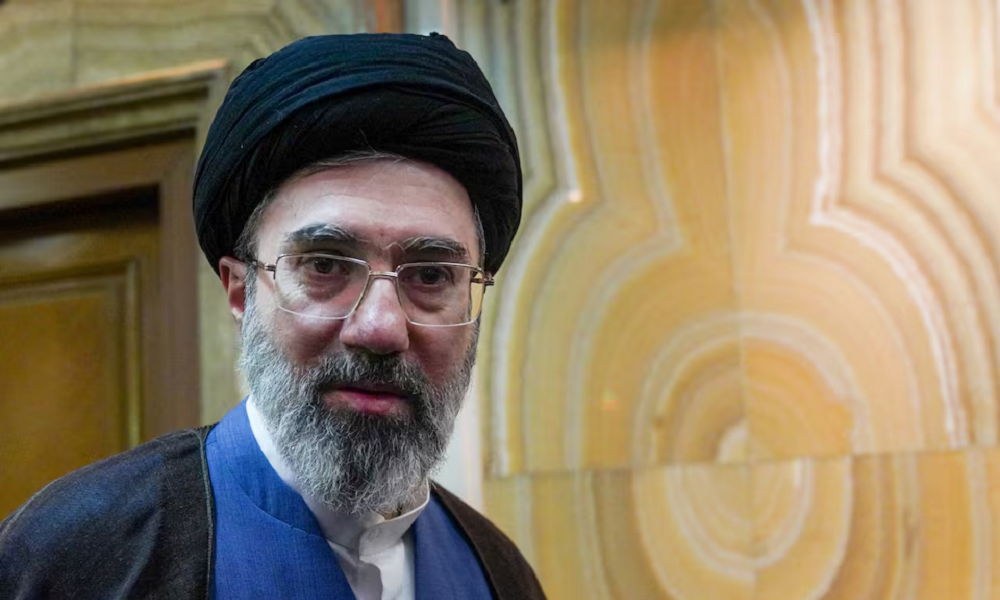
Iran’s new Supreme Leader Mojtaba Khamenei is still recovering from severe facial and leg injuries suffered in the airstrike that killed his father at the beginning of the war, three people close to his inner circle told Reuters.
Khamenei’s face was disfigured in the attack on the supreme leader’s compound in central Tehran and he suffered a significant injury to one or both legs, all three sources said.
The 56-year-old is nonetheless recovering from his wounds and remains mentally sharp, according to the people, who requested anonymity to discuss sensitive matters. He is taking part in meetings with senior officials via audio conferencing and is engaged in decision-making on major issues including the war and negotiations with Washington, two of them said.
The question of whether Khamenei’s health allows him to run state affairs comes during Iran’s moment of gravest peril for decades, with high-stakes peace talks with the United States opening in the Pakistani capital Islamabad on Saturday.
The accounts of the people close to Khamenei’s inner circle provide the most detailed description of the leader’s condition for weeks. Reuters couldn’t independently verify their descriptions.
Khamenei’s whereabouts, condition and ability to rule still largely remain a mystery to the public, with no photo, video or audio recording of him published since the air attack and his subsequent appointment as his father’s replacement on March 8.
Iran’s United Nations mission did not respond to Reuters questions about the extent of Khamenei’s injuries or the reason he has not yet appeared in any images or recordings.
Khamenei was wounded on February 28, the first day of the war launched by the U.S. and Israel, in the attack that killed his father and predecessor Ayatollah Ali Khamenei, who had ruled since 1989. Mojtaba Khamenei’s wife, brother-in-law and sister-in-law were among other members of his family killed in the strike.
There has been no official Iranian statement on the extent of Khamenei’s injuries. However, a newsreader on state television described him as a “janbaz”, a term used for those badly wounded in war, after he was named supreme leader.
The accounts of Khamenei’s injuries tally with a statement made by U.S. Secretary of Defense Pete Hegseth on March 13 when he said that Khamenei was “wounded and likely disfigured”.
A source familiar with U.S. intelligence assessments told Reuters that Khamenei was believed to have lost a leg.
The CIA declined to comment on Khamenei’s condition. The Israeli prime minister’s office didn’t respond to questions.
One of the people close to Khamenei’s circle said images of the supreme leader could be expected to be released within one or two months and that he might even appear in public then, although all three sources stressed he would only emerge when his health and the security situation allowed.




Regional
Iranian source says US has agreed to unfreeze Iranian funds held in Qatar, other countries
A senior U.S. official has rejected claims made by Iranian source regarding the release of Tehran’s frozen assets.
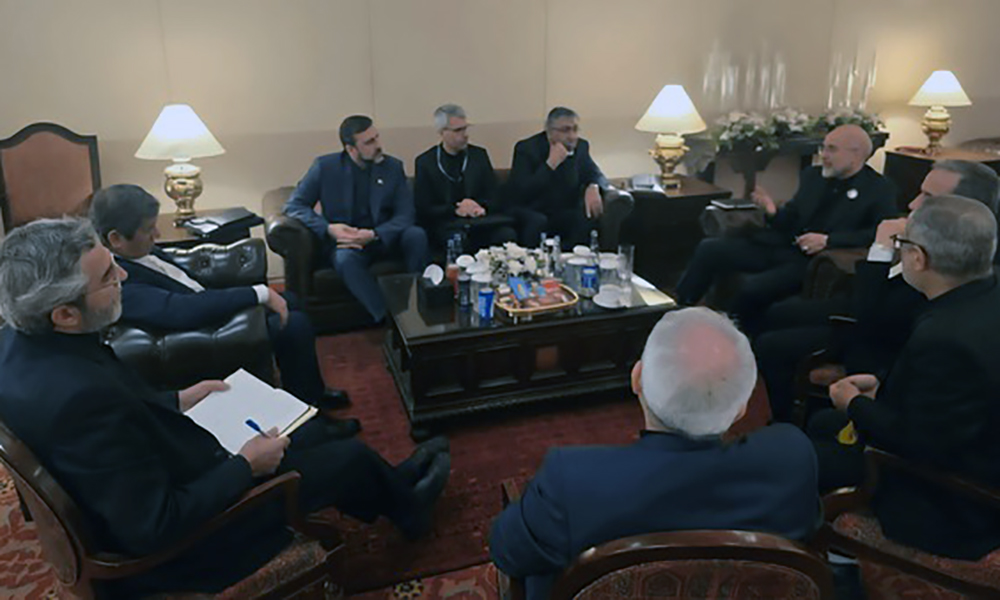
A senior Iranian source said on Saturday the U.S. had agreed to release Iranian frozen assets held in Qatar and other foreign banks, welcoming the move as a sign of “seriousness” in reaching a deal with Washington in talks in Islamabad, Reuters reported.
The source, who declined to be named due to the sensitivity of the matter, told Reuters that unfreezing the assets was “directly linked to ensuring safe passage through the Strait of Hormuz”, which is expected to be a key issue in the talks.
The senior source did not give a value for the assets that Washington had agreed to unfreeze. A second Iranian source said the United States had agreed to release $6 billion of frozen Iranian funds held by Qatar.
A senior U.S. official has rejected claims made by Iranian source regarding the release of Tehran’s frozen assets. In a statement to CBS News, the official said that the United States has not agreed to unfreeze any Iranian funds.
According to the report, talks with Iran have not yet begun, and therefore no agreements or arrangements have been discussed at this stage.
The $6 billion, originally frozen in 2018, had been due for release in 2023 as part of a U.S.-Iranian prisoner swap but the funds were again frozen by the administration of President Joe Biden following the October 7, 2023 attacks on Israel by Iran’s ally, the Palestinian militant group Hamas.
U.S. officials said at the time that Iran would not be able to access the money for the foreseeable future, stressing that Washington retained the right to completely freeze the account, read the report.
The funds stem from Iranian oil sales to South Korea and had been blocked in South Korean banks after President Donald Trump reimposed sanctions on Iran in 2018 – during his first term in the White House – and scrapped a deal between world powers and Tehran over its nuclear programme.
Under the September 2023 U.S.–Iran prisoner swap mediated by Doha, the money was transferred to Qatari bank accounts. The prisoner swap involved the release of five U.S. citizens detained in Iran in exchange for the funds’ release and the release of five Iranians held in the United States.
U.S. officials said at that time that the money was restricted to humanitarian use only, to be disbursed to approved vendors for food, medicine, medical equipment and agricultural goods shipped into Iran under U.S. Treasury oversight.
Regional
Iran war doubles Russia’s main oil revenue to $9 bln in April, Reuters calculations show
For the whole of 2026, Russia has budgeted for 7.9 trillion roubles from the mineral extraction tax.
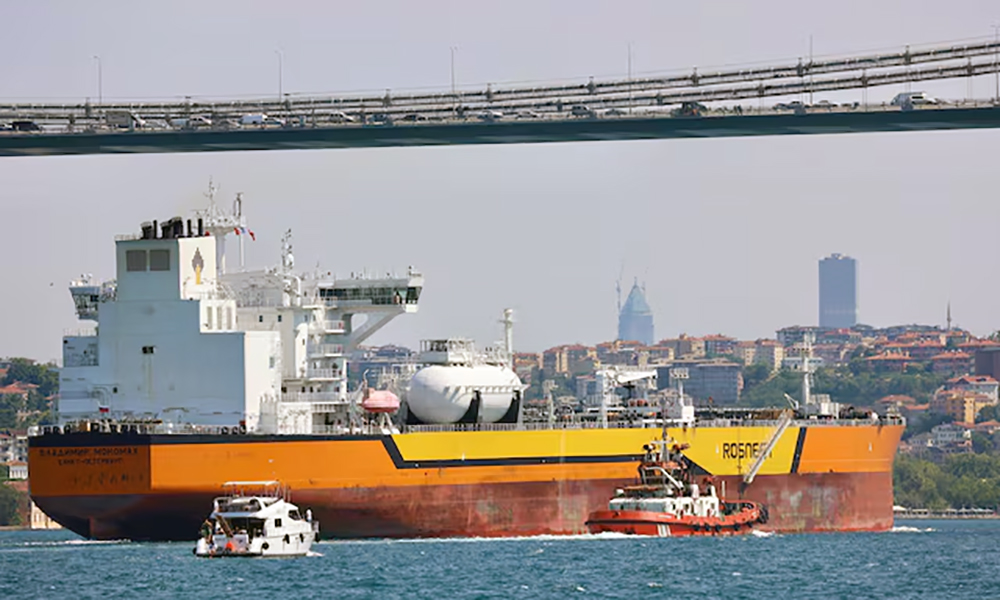
Russia will see revenue from its biggest single oil tax double to $9 billion in April due to the oil and gas crisis triggered by the U.S. and Israeli attack on Iran, Reuters calculations showed on Thursday.
The Reuters calculation is some of the first concrete evidence of a windfall for Russia, the world’s second-largest oil exporter, from the Iran war, which oil traders say has triggered the most serious energy crisis in recent history.
Iran effectively shut the Strait of Hormuz – a route for about a fifth of global oil and LNG flows – after U.S. and Israeli airstrikes on Iran at the end of February, sending Brent futures shooting well past $100 per barrel.
Russia’s main revenue from its vast oil and gas industry is based on production. Export duty on crude oil has been nullified from the start of 2024 as part of the so-called wider tax manoeuvre, a years-long tax reform of the industry.
According to Reuters calculations based on preliminary production data and oil prices, Russia’s mineral extraction tax on oil output will increase in April to around 700 billion roubles ($9 billion) from 327 billion roubles in March. The revenue is up by some 10% from April last year.
For the whole of 2026, Russia has budgeted for 7.9 trillion roubles from the mineral extraction tax.
The average price of Russia’s Urals crude, used for taxation, jumped to $77 per barrel in March, its highest since October 2023, according to economy ministry data.
That was up 73% from February’s $44.59 per barrel and above the level of $59 assumed in this year’s state budget.
The Kremlin said on Tuesday there were a huge number of requests for Russian energy from a range of different places amid a grave global energy crisis that was shaking the foundations of the oil and gas markets.
Still, there are limits on the windfall for Russia, and economists inside Russia have repeatedly cautioned that 2026 could be a tough year.
Russia ran a budget deficit of 4.58 trillion roubles, or 1.9% of gross domestic product, in January-March 2026, the finance ministry said on Wednesday.
And Ukraine’s attacks on Russian energy infrastructure, with an aim to cripple Moscow’s finances, have also contributed to lower earnings and threaten oil production cuts.
The size of the windfall for Russia will ultimately depend on how long the Iran crisis lasts.
Regional
Israel prepares for long conflict despite US–Iran ceasefire efforts
While Israel has reportedly halted direct strikes on Iran, it continues operations against Iran-aligned groups in neighbouring areas.
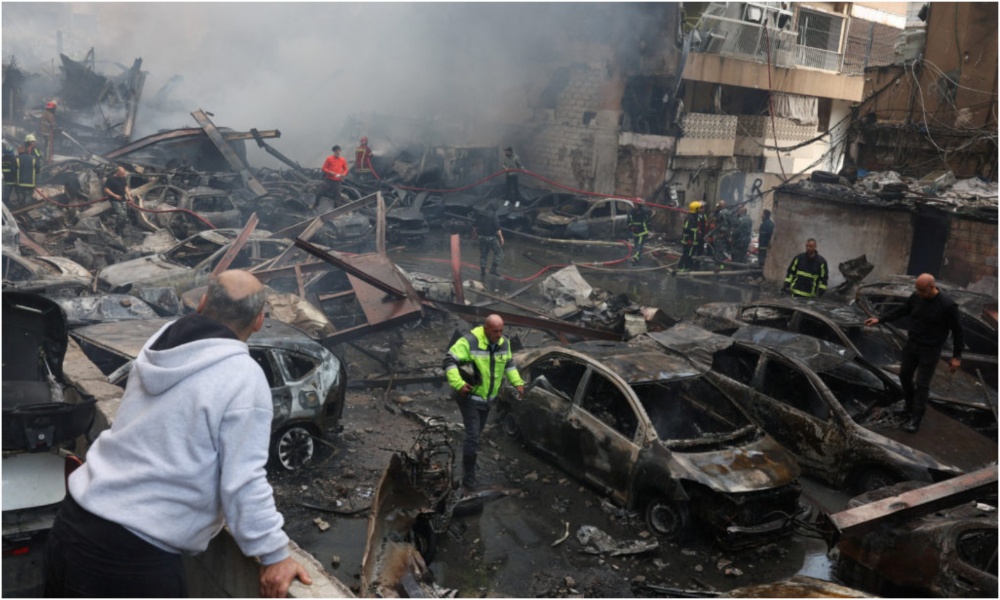
As the United States and Iran move toward cementing a ceasefire, Israeli military strategy appears increasingly focused on preparing for a prolonged and evolving regional conflict.
According to Israeli officials and analysts, the country has intensified efforts to establish and maintain “buffer zones” across multiple areas, including the Gaza Strip, southern Lebanon, and parts of Syria.
The approach reflects a shift in doctrine following the October 7 attacks, with an emphasis on containing threats rather than fully eliminating them.
Reuters reported that Israeli officials say the aim of these zones is to push potential threats further from border communities and reduce the risk of attacks. Military sources indicate that areas extending several kilometres beyond Israel’s borders are being cleared or monitored to limit the reach of armed groups such as Hezbollah and Hamas.
The developments come as Washington and Tehran agreed to a temporary pause in hostilities while negotiating a broader settlement following the latest escalation, which began in late February.
While Israel has reportedly halted direct strikes on Iran, it continues operations against Iran-aligned groups in neighbouring areas.
In southern Lebanon, Israeli forces have advanced into areas near the Litani River, with military officials describing efforts to establish a security belt aimed at preventing cross-border fire. The operation has reportedly involved evacuations and the destruction of structures suspected of being used for military purposes.
Israeli leaders have framed the strategy as necessary for long-term security.
In recent remarks, Benjamin Netanyahu said Israel has created defensive belts extending beyond its borders in multiple areas, including Gaza and Syria.
However, the approach has raised concerns among analysts and legal experts. Some warn that widespread destruction of civilian infrastructure may violate international law unless clearly justified by military necessity. Others caution that maintaining multiple fronts could place significant strain on Israeli forces over time.
The strategy also reflects deep scepticism within Israel about the prospects for lasting peace agreements. Surveys in recent years suggest limited public confidence in long-term stability with Palestinians or neighbouring states, reinforcing support for security-driven policies.
At the same time, statements from some members of Israel’s government have fuelled concern about possible territorial ambitions, particularly in Gaza and southern Lebanon. Still, military officials have indicated that buffer zones are intended as flexible security measures rather than permanent borders.
As diplomatic efforts continue, the contrast between ceasefire negotiations and military preparations highlights the uncertainty surrounding the region’s trajectory—raising the possibility that even if fighting subsides in the short term, a longer period of instability may lie ahead.


Afghanistan U-17 football team ends CAFA campaign with 3–2 loss to Tajikistan

Iran’s new supreme leader has severe and disfiguring wounds

Afghanistan’s new cricket head coach Richard Pybus arrives in Kabul

IEA issues new decree to regulate street vendors, boost urban order

Iranian source says US has agreed to unfreeze Iranian funds held in Qatar, other countries

IEA Supreme Leader issues Eid-ul-Fitr message urging unity and support for Islamic system

IEA supreme leader orders replacement of foreign terminology in official documents

14 Pakistani soldiers killed after military post falls along Durand line: MoD

Afghan airstrikes target Pakistani military sites in retaliation for air attacks

Turkmenistan, Afghanistan discuss steps to speed up land acquisition for TAPI pipeline

Tawsia: New transit route with Tatarstan, MoU with Uzbekistan discussed

Tahawol: China to host 2nd round of Kabul–Islamabad talks discussed

Saar: Fragile ceasefire in the Middle East reviewed

Tahawol: Two‑week truce agreement between Iran-US reviewed

Saar: US–Iran two-week ceasefire agreement discussed
-
 Latest News4 days ago
China seeking to build trust between Afghanistan and Pakistan
-
 Business4 days ago
Afghanistan, Uzbekistan sign $400 million trade deals in push to deepen ties
-
 International Sports4 days ago
IPL 2026: Rain scuppers KKR vs PBKS match
-
 Latest News4 days ago
Heavy rains in Nangarhar leave 16 dead and injured
-
 Latest News4 days ago
Fragile progress as US–Iran tensions shift toward negotiations, says Khalilzad
-
 Sport4 days ago
Afghanistan U-17s draw 0-0 against Turkmenistan in CAFA campaign
-
 Latest News4 days ago
Japan and UNDP launch $2.35 million livelihoods initiative in Afghanistan
-
 Latest News4 days ago
Karzai calls on UN to condemn Pakistan’s attacks on Afghan territory