
World
Islamic State driven out of Syria’s ancient Palmyra city

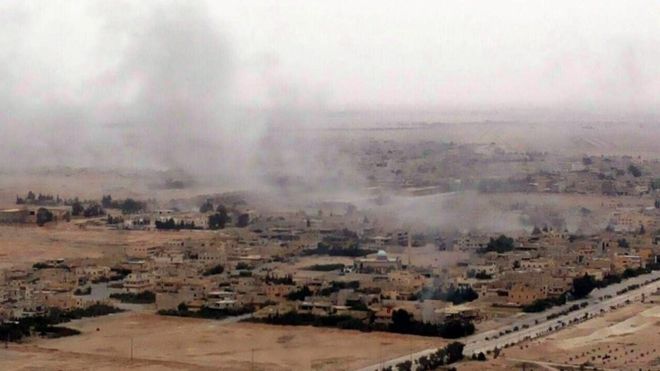
 Syrian government forces drove Islamic State fighters out of Palmyra on Sunday, the army said, inflicting a major defeat on the militants who seized the desert city last year and dynamited its ancient temples.
The army general command said in a statement that it had restored security and stability to the city in an operation it said showed that Islamic State was beginning to retreat and collapse.
The Syrian Observatory for Human Rights said there were still clashes on the eastern edge of Palmyra, around the prison and inside the airport, but the bulk of the Islamic State force had withdrawn and retreated east, leaving Palmyra under President Bashar al-Assad’s control.
Syrian state-run television broadcast from inside Palmyra on Sunday morning, showing largely deserted streets and several badly damaged buildings.
It quoted a military source saying Syrian and Russian jets were targeting Islamic State fighters as they fled, hitting dozens of vehicles on the roads leading east from the city.
For government forces, the recapture of Palmyra opens up much of Syria’s eastern desert stretching to the Iraqi border to the south and the Islamic State heartland of Deir al-Zor and Raqqa to the east.
It follows a three-week campaign by the army and its allies on the ground, backed by intensive Russian air strikes, aimed at driving Islamic State back.
Russia’s intervention in September turned the tide of Syria’s five-year-old conflict in Assad’s favor. Despite Moscow’s announcement that it was pulling out most military forces two weeks ago, Russian jets and helicopters carried out dozens of strikes daily over Palmyra at the height of the clashes.
Observatory director Rami Abdulrahman said 400 Islamic State fighters died in the battle for Palmyra, which he described as the biggest single defeat for the group since it declared a caliphate in areas of Syria and Iraq under its control in 2014.
The loss of Palmyra comes three months after Islamic State fighters were driven out of the city of Ramadi in neighboring Iraq, the first major victory for Iraq’s army since it collapsed in the face of an assault by the militants in June 2014.
Islamic State has lost ground elsewhere, including the Iraqi city of Tikrit last year and the Syrian town of al-Shadadi in February. The United States said the fall of Shadadi was part of efforts to cut Islamic State’s links between its two main power centers: the cities of Mosul in Iraq and Raqqa in Syria.
The Observatory said around 180 government soldiers and allied fighters were also killed in the campaign to retake Palmyra, which is home to some of the most extensive ruins of the Roman empire.
Islamic State militants dynamited several monuments last year, and Syrian television broadcast footage from inside Palmyra museum on Sunday showing toppled and damaged statues, as well as several smashed display cases.
Syria’s antiquities chief said this week that other ancient landmarks were still standing and pledged to restore the damaged monuments.
Written by: Reuters

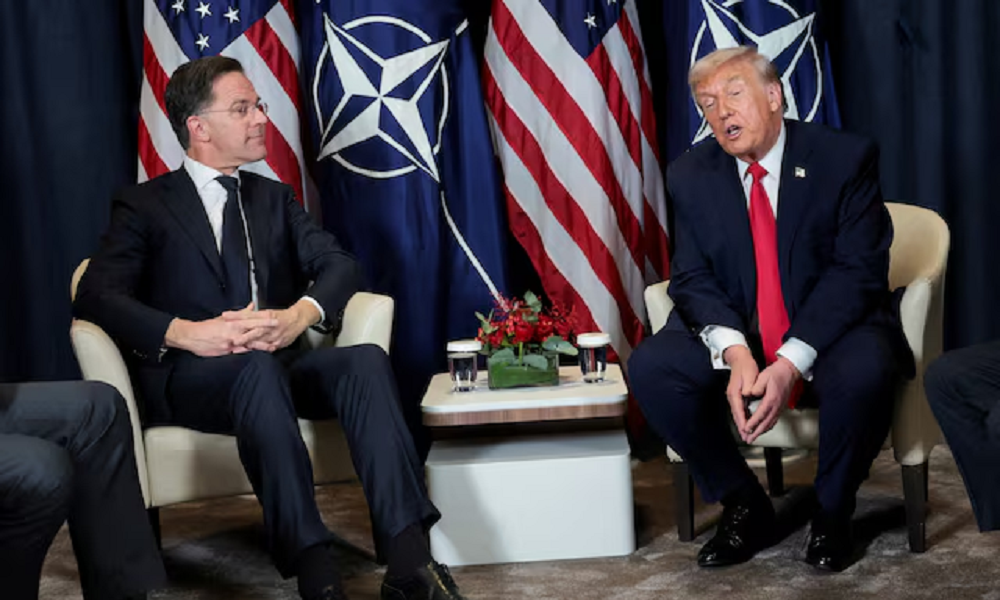
Mark Rutte has urged NATO capitals to consider rapid commitments to help secure the Strait of Hormuz, after US President Donald Trump signaled he wants concrete support within days.
Reuters reported that Rutte briefed several allied governments following a meeting with Trump in Washington on Wednesday, held against the backdrop of mounting tensions within NATO over the conflict with Iran.
Diplomats said frustration is growing in Washington, but some allies have pushed back, noting they were not consulted before or after the outbreak of hostilities.
While NATO as an alliance is not expected to take a direct role in military action against Iran, there is willingness among member states to explore longer-term measures to safeguard shipping through Hormuz, particularly as diplomatic efforts with Tehran continue.
Trump has repeatedly criticized NATO, describing it as ineffective and warning he could reconsider U.S. membership in the 32-country alliance. He has also argued that European allies have relied too heavily on American security guarantees while offering insufficient backing for the U.S.-Israeli campaign targeting Iran.
Although Trump announced earlier this week that strikes on Iran would pause under a two-week ceasefire, tensions have persisted.
Following his meeting with Rutte, Trump wrote on social media that NATO had failed to support the United States when needed and would likely do so again.
Rutte, who has cultivated a reputation in Europe for maintaining open lines with Trump, acknowledged the U.S. president’s dissatisfaction in a CNN interview, saying he could understand Washington’s concerns about burden-sharing within the alliance.
Meanwhile, early-stage international efforts are underway to address the situation in Hormuz. Britain is leading discussions among roughly 40 countries on a combined military and diplomatic approach to reopen and protect the vital shipping route. Emmanuel Macron said about 15 nations are considering steps to help restore maritime traffic.
However, officials caution that progress is likely to be slow. France’s foreign minister Jean-Noël Barrot said the strait cannot fully reopen without a durable agreement between Washington and Tehran.
Britain and Italy have also rejected suggestions from Iran that it could impose transit fees on vessels crossing the waterway.
Diplomats say discussions on Hormuz are proceeding separately from the recent White House talks, with European governments balancing the urgency expressed by Washington against the need for broader political conditions to stabilize the region.
“We understand the urgency from the U.S. side,” one diplomat said. “But the priority is not simply to respond to Washington — it is to ensure the right conditions are in place for a sustainable solution.”
World
NATO chief says Trump frustrated by allies’ stance on Iran conflict
Speaking after a closed-door meeting with Donald Trump, Rutte described the discussions as ‘very frank and open’.
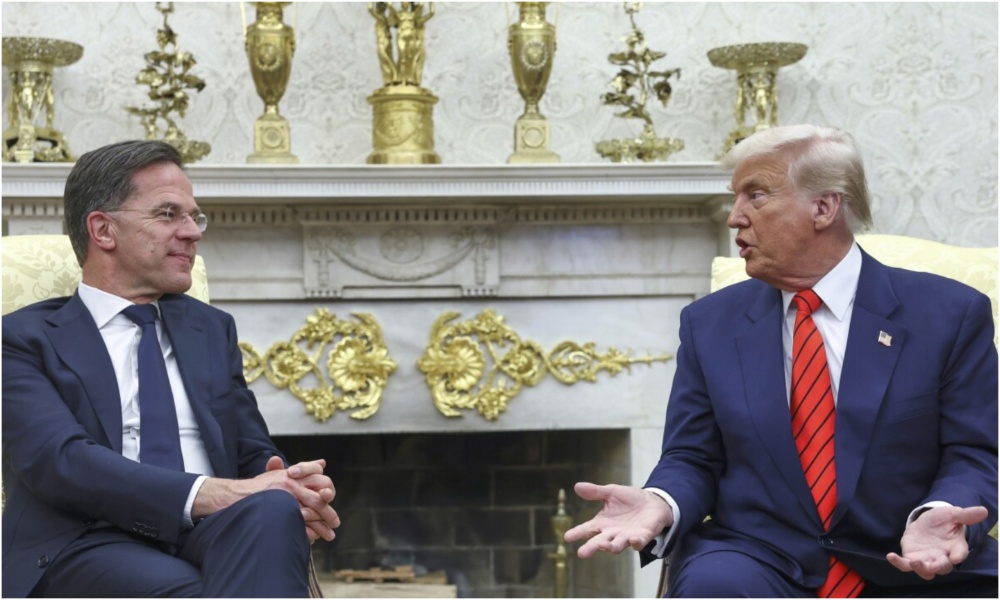
NATO Secretary General Mark Rutte has said Donald Trump was “clearly disappointed” that key U.S. allies declined to join Washington’s military campaign against Iran, following talks in Washington.
Speaking after a closed-door meeting with Trump, Rutte described the discussions as “very frank and open,” but stopped short of confirming whether the U.S. president directly raised the possibility of withdrawing from NATO.
The meeting came at a sensitive time, just a day after the United States and Iran agreed to a temporary ceasefire aimed at easing tensions and ensuring the reopening of the Strait of Hormuz, a critical global oil route.
In recent weeks, Trump has sharply criticised NATO, calling the alliance ineffective and expressing frustration that member states did not support U.S. efforts during the Iran conflict. His comments have fuelled renewed uncertainty about Washington’s long-term commitment to the alliance.
Rutte acknowledged Trump’s concerns, saying the U.S. leader had been candid about his views on the response of allies. However, he emphasised that the relationship remains important and complex.
Tensions have also been heightened by disagreements over military cooperation. Some NATO countries declined to provide direct support for U.S. operations or limited access to airspace and facilities, reflecting broader divisions within the alliance over how to respond to the conflict.
Despite the differences, NATO remains bound by its core principle of collective defence, under which an attack on one member is considered an attack on all. The provision has only been invoked once, following the September 11 attacks in 2001.
Senior U.S. officials have indicated that the administration continues to review its approach to NATO. White House press secretary Karoline Leavitt confirmed that Trump has discussed the alliance’s future, while lawmakers have urged caution.
Senator Mitch McConnell defended NATO’s role, noting that allied forces had previously supported the United States in conflicts in Afghanistan and Iraq. He warned against damaging relationships with long-standing partners.
Meanwhile, US Secretary of State Marco Rubio held separate talks with Rutte, focusing on the Iran conflict, efforts to end the war in Ukraine, and coordination within NATO.
The alliance has faced growing strain over the past year, particularly as the United States reassesses its military commitments abroad. Trump has also increased pressure on allies to take greater responsibility for regional security, including protecting key trade routes such as the Strait of Hormuz.
As diplomatic efforts continue, differences between Washington and its allies highlight ongoing challenges within NATO at a time of heightened global tensions.
World
US, Iran and mediators make push for 45-day ceasefire, Axios reports
The ceasefire could be extended if additional time was required for talks, the report said.
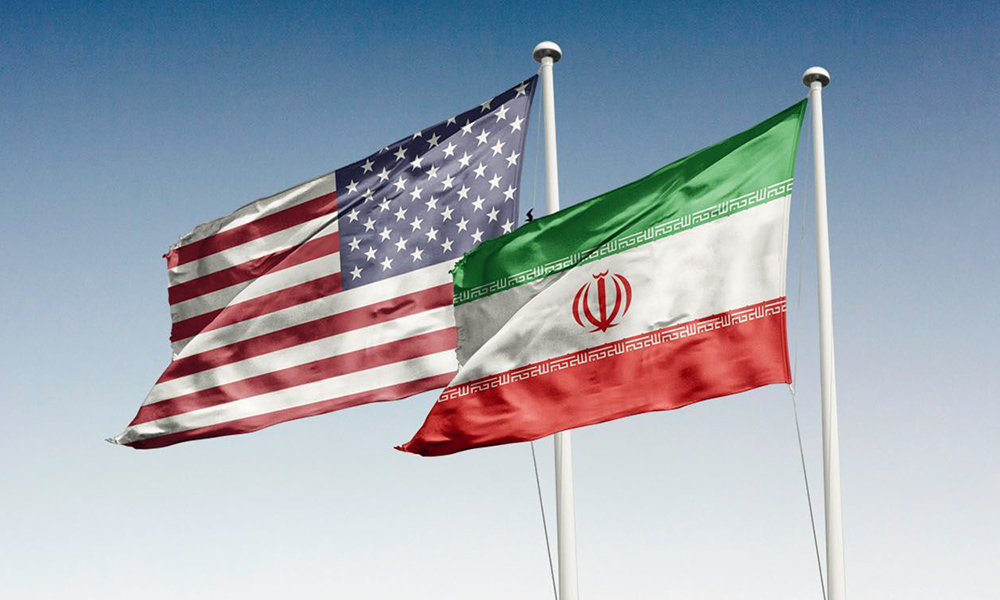
The U.S., Iran and a group of regional mediators are discussing the terms for a potential 45-day ceasefire that could lead to a permanent end to the war, Axios reported on Sunday, citing four U.S., Israeli and regional sources with knowledge of the talks.
Reuters could not immediately verify the report. The White House and the U.S. State Department did not immediately respond to Reuters’ requests for comment.
The mediators are discussing the terms of a two-phased deal, the report said, adding that the first phase would be a potential 45-day ceasefire during which a permanent end to the war would be negotiated.
The second phase would be an agreement on ending the war, the report said.
The ceasefire could be extended if additional time was required for talks, the report said.
U.S. President Donald Trump told the Wall Street Journal on Sunday his deadline for Iran to open the Strait of Hormuz or face attacks on critical infrastructure is Tuesday evening.


ATN seals Ariana Snooker Championship deal for five seasons

Tahawol: China to host 2nd round of Kabul–Islamabad talks discussed

Saar: Fragile ceasefire in the Middle East reviewed

FIFA appoints record number of match officials for 2026 World Cup

Afghanistan U-17s fall to Uzbekistan as CAFA campaign nears conclusion

IEA Supreme Leader issues Eid-ul-Fitr message urging unity and support for Islamic system

14 Pakistani soldiers killed after military post falls along Durand line: MoD

IEA supreme leader orders replacement of foreign terminology in official documents

Afghan airstrikes target Pakistani military sites in retaliation for air attacks

Turkmenistan, Afghanistan discuss steps to speed up land acquisition for TAPI pipeline
Tahawol: China to host 2nd round of Kabul–Islamabad talks discussed
Saar: Fragile ceasefire in the Middle East reviewed

Tahawol: Two‑week truce agreement between Iran-US reviewed

Saar: US–Iran two-week ceasefire agreement discussed

Tahawol: Ongoing negotiations between Kabul-Islamabad discussed
-
 Latest News5 days ago
IEA supreme leader orders replacement of foreign terminology in official documents
-
 Latest News5 days ago
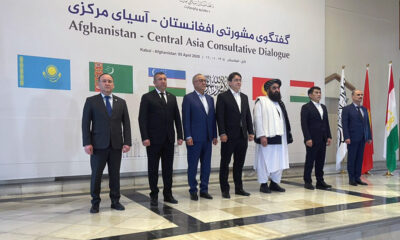
Afghanistan hosts inaugural Afghanistan–Central Asia Consultative Dialogue to strengthen regional cooperation
-
 Latest News5 days ago
IEA accuses Pakistan of war crimes amid heavy civilian losses
-
 World5 days ago
US rescues 2nd F-15 pilot hit above Iran: Trump
-
 Latest News3 days ago
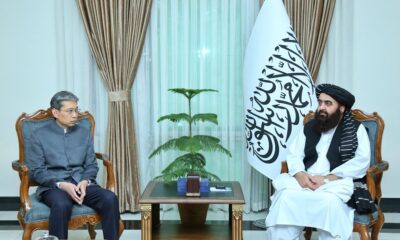
China seeking to build trust between Afghanistan and Pakistan
-
 Regional5 days ago
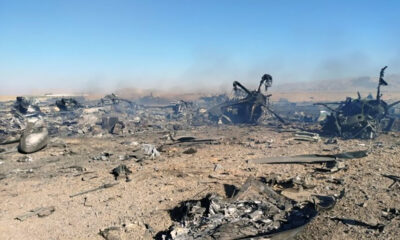
Iran claims it shot down US C-130 support aircraft in Isfahan
-

 International Sports4 days ago
IPL 2026: Lucknow hold nerve in final over to defeat Sunrisers
-
 Latest News4 days ago
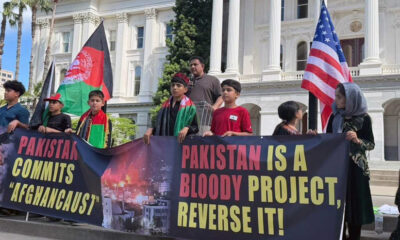
Afghan community in California condemns Pakistani strikes amid growing global protests