
Latest News
Karzai urges neighbors to halt forced deportations amid Afghanistan’s refugee crisis


Former Afghan President Hamid Karzai has called on regional countries to suspend the mass deportation of Afghan refugees, warning that the dire humanitarian and economic situation inside Afghanistan renders conditions unfit for return.
In a statement shared on his official X (formerly Twitter) account, Karzai said: “While we understand the challenges host countries face due to the large presence of refugees, the worsening situation inside Afghanistan has created circumstances in which the necessary conditions for their return do not exist. Forcibly sending them back in the current situation would not only add to the existing burdens, but could also create greater risks and serious threats — a situation that benefits no one.”
Karzai specifically appealed to Iran and Pakistan—two of the largest host nations for Afghan refugees—to reconsider their recent moves to accelerate deportations. He emphasized the need for a more humane and measured approach, particularly given Afghanistan’s ongoing economic collapse, restrictions on women’s rights, and widespread instability.
“Our request and expectation from host countries is to reconsider their decision regarding the mass and forced deportation of Afghan refugees, especially in light of the ongoing challenges — particularly the economic hardships and the closure of schools and universities to girls,” Karzai said.
Karzai’s comments come amid a growing refugee crisis. According to officials in Kabul, more than 500,000 Afghan migrants have returned from Iran in the past month alone, many of them forcibly deported.
The figure, reported by Deputy Prime Minister Abdul Salam Hanafi earlier this month, highlights the intensifying pressure on Afghanistan’s fragile infrastructure and social services.
The mass returns have overwhelmed border crossings in western provinces like Herat and Nimroz, where aid agencies have warned of insufficient shelter, food, and medical support for returnees—many of whom are women, children, or elderly.
Decades of displacement
Karzai also pointed to the historical context of Afghanistan’s refugee crisis. “The people of Afghanistan were first forced into involuntary and imposed migration nearly four and a half decades ago following the invasion of the former Soviet forces and continued foreign interventions,” he said. “As a result, they were compelled to leave their homeland and seek refuge in other countries—and this issue has only intensified in recent years.”
Host countries, especially Iran and Pakistan, have cited economic constraints, domestic political pressure, and national security concerns as reasons for accelerating deportations.
However, humanitarian groups including the UNHCR have urged these governments to respect the principle of non-refoulement, which prohibits the forced return of individuals to countries where they may face persecution or harm.
Karzai concluded his appeal by urging a cooperative regional approach that takes into account both the humanitarian needs of Afghan refugees and the practical limitations of host countries, but without resorting to mass forced returns.

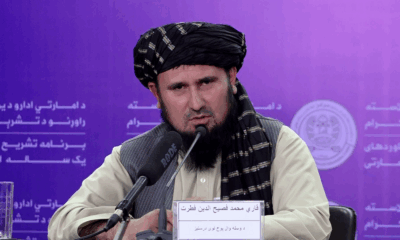




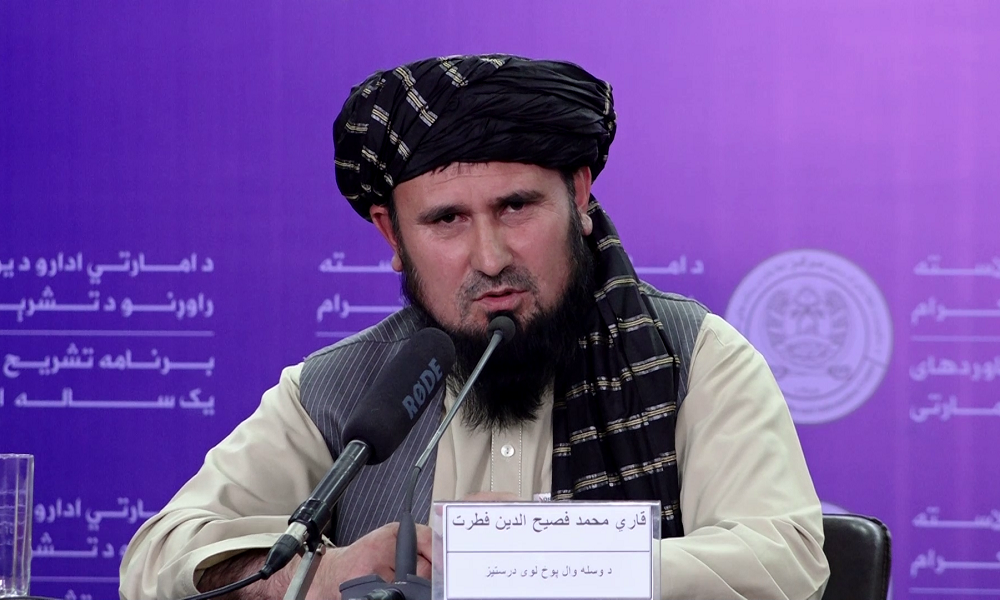
Afghanistan’s Chief of Armed Forces, Fasihuddin Fitrat, said in his Eid message that Pakistan’s military regime has violated the ceasefire along the Durand line.
According to the Eid message released by the Ministry of Defense, several civilians were killed in attacks carried out by Pakistani forces in border areas.
Fitrat added that the continuation of Pakistan’s attacks despite the ceasefire “demonstrates a lack of commitment and deception” on the part of the country.
He stressed that the Islamic Emirate has refrained from retaliatory action in order to prevent further deterioration of the situation and has remained committed to the ceasefire.
However, he warned that if such attacks are repeated, “the ceasefire will become meaningless,” and the Islamic Emirate will deliver a “decisive response” to Pakistan’s actions.
It is worth noting that the Islamic Emirate and Pakistan reached a temporary ceasefire on the occasion of Eid al-Fitr through mediation by Qatar, Turkey, and Saudi Arabia.
Latest News
Security Sources: Pakistani military shelling in Kunar and Nuristan leaves female doctor dead
The sources said the vehicle was struck by gunfire and subsequently fell into the Kunar River.
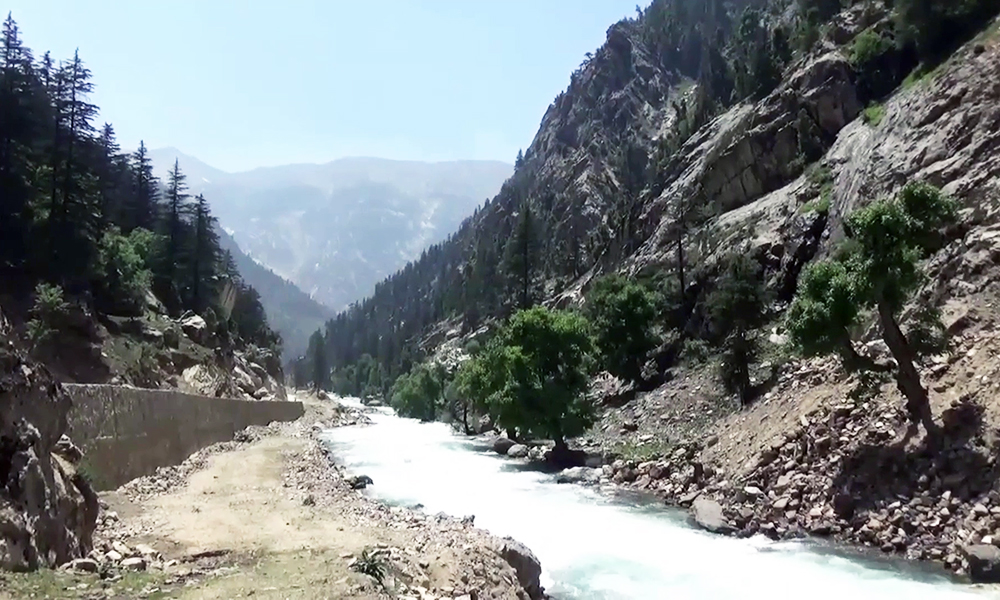
Security sources report that several security incidents in the eastern provinces of Kunar and Nuristan have resulted in the death of a female doctor, injuries to others, and several people reported missing.
According to the sources, early Thursday morning at around 9:30 a.m., Pakistani military forces opened fire on a Toyota vehicle in the Dokalam Baghcha area of Nari district in Kunar province.
The sources said the vehicle was struck by gunfire and subsequently fell into the Kunar River. As a result of the incident, a female doctor was killed and another person was injured. Five other individuals who were reportedly in the vehicle remain missing, the sources added.
In a separate incident, security sources stated that around 11:00 a.m. in the Seno area of Shultan district, Kunar province, Pakistani forces carried out artillery shelling that left one person injured. The injured individual was transferred to the provincial hospital for medical treatment.
Meanwhile, security sources in Nuristan say that despite Pakistan’s announced ceasefire, the main road between Kamdesh and Barg-e-Matal districts has been completely closed to traffic since Thursday morning.
According to the sources, the closure of the route has caused serious difficulties for local residents, preventing any movement in the area. The sources also claim that Pakistani military posts are located within close proximity of the road and have opened fire on people attempting to pass through the area.
Latest News
UN Secretary-General condemns Pakistani airstrike on Kabul rehab center
Meanwhile, a spokesperson for the Iranian Ministry of Foreign Affairs expressed concern over rising tensions between Afghanistan and Pakistan, stressing the importance of diplomacy to resolve conflicts.
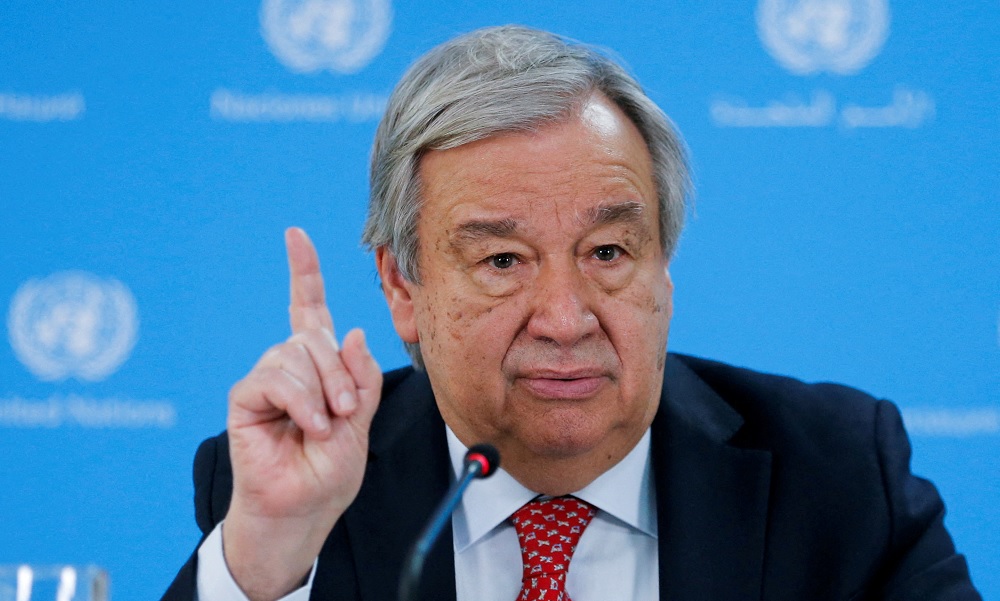
The United Nations Secretary-General has strongly condemned a Pakistani airstrike on a rehabilitation center for addicts in Kabul and expressed condolences to the families of the victims.
The attack, which occurred on March 16, reportedly left over 600 people killed or injured, according to local sources.
In an official statement, Antonio Guterres, UN Secretary-General, emphasized that under international humanitarian law, patients, medical staff, and healthcare facilities, including hospitals, must be respected and protected at all times.
Farhan Haq, Deputy Spokesperson for the UN Secretary-General, stated: “The Secretary-General strongly condemns the airstrike in Kabul, the capital of Afghanistan, on March 16, which reportedly resulted in the deaths and injuries of civilians at a medical facility.”
Haq added that Guterres has called for an independent and impartial investigation into the incident, while offering his deepest condolences to the families of the victims and wishing a speedy recovery for the injured.
The Secretary-General reiterated the urgent need to reduce tensions and immediately halt hostilities between Afghanistan and Pakistan, emphasizing that disputes should be resolved through dialogue and peaceful solutions in accordance with the UN Charter.
Meanwhile, a spokesperson for the Iranian Ministry of Foreign Affairs expressed concern over rising tensions between Afghanistan and Pakistan, stressing the importance of diplomacy to resolve conflicts.
This development comes after Afghanistan and Pakistan announced a temporary cessation of hostilities ahead of Eid al-Fitr, a move that regional officials hope will pave the way for a lasting ceasefire and ensure the protection of civilians in both countries.


FIFA sanctions Israeli Football Association over discrimination violations

IEA defense ministry accuses Pakistan of ceasefire violations

Israel launches new wave of attacks on Iran as regional crisis deepens

Tahawol: Temporary ceasefire draws broad support

Security Sources: Pakistani military shelling in Kunar and Nuristan leaves female doctor dead

Pakistani military jet downed in Afghanistan’s Jalalabad, pilot captured alive

Afghan Air Force conducts airstrikes in Islamabad, other cities

Afghanistan’s Chief of Armed Forces underscores readiness and equipment for national defense

Afghanistan welcomes investment and technology partnerships with India

Prominent Muslim scholar issues fatwa calling for Afghanistan-Pakistan ceasefire
Tahawol: Temporary ceasefire draws broad support

Saar: Emphasis on resolving conflicts through diplomacy

Tahawol: Global reactions to Pakistan’s recent attacks discussed

Saar: Consequences of Pakistani airstrikes on Afghans discussed

Tahawol: Pakistan’s new attacks on Kabul hospital discussed
-
 Latest News4 days ago
IEA Supreme Leader issues Eid-ul-Fitr message urging unity and support for Islamic system
-
 Latest News5 days ago
Regional criticism grows amid Pakistan strikes inside Afghanistan
-
 Latest News5 days ago
Afghan airstrike targets a military camp in South Waziristan
-

 Business4 days ago
Turkmenistan, Afghanistan discuss steps to speed up land acquisition for TAPI pipeline
-

 Sport5 days ago
IPL 2026 kicks off in under two weeks; Afghan players set to shine
-

 Business5 days ago
Afghanistan expands exports through Lapis Lazuli Corridor
-
 Latest News2 days ago
IEA announces temporary pause in defensive operations against Pakistan for Eid
-
 Sport3 days ago
Afghanistan national buzkashi team defeats Hungary 14–0