
Latest News
More Children Dying in Afghanistan War, Says UN, with Death Toll Up 15 Percent

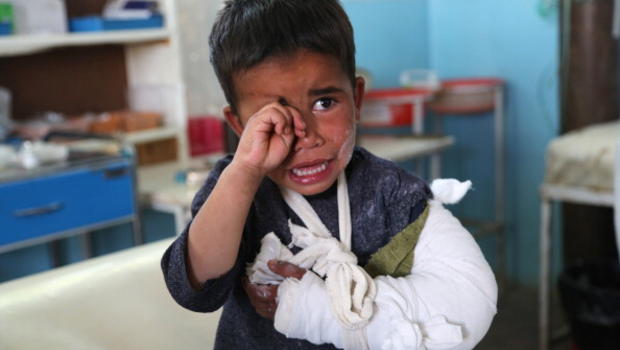
 The number of children killed and injured in Afghanistan’s war has increased in the first nine months of the year, 2016, compared to the previous year, said U.N. Assistance mission in a new report released Wednesday.
UN mission said it has documented 2,461 casualties among children in 2016 — 639 deaths and 1,822 wounded.
The statistic shows a 15 percent increase comparing to the last year, January-September 2015.
The mission voiced concern over the continuing increase in child casualties, which have risen every year since 2013.
Between Jan. 1 and Sept. 30, UNAMA documented 8,397 conflict-related civilian casualties with 2,562 deaths and 5,835 wounded. That represents a 1 percent decrease, compared to the same period in 2015, said the mission.
Suicide bombings and other attacks, including improvised explosive devices are the main reasons of civilian causalities.
“Increased fighting in densely populated areas makes it imperative for parties to take immediate steps to ensure all feasible precautions are being taken to spare civilians from harm,” the report quoted Tadamichi Yamamoto, the U.N. chief’s special representative for Afghanistan.
Casualties caused by pro-government forces rose 42 percent compared to last year, with 623 deaths and 1,274 injured, U.N. investigators reported.
That includes a spike of 72 percent in casualties from air strikes by the Afghan air force and its international allies.
At least 133 people were killed and 159 were injured in air strikes, with two-thirds of those casualties attributed to the Afghan air force, the U.N. said.
The deadliest areas for civilians are in the traditional Taliban heartland in the south, including Uruzgan, the deeply impoverished, mountainous province that claimed most of the 41 Australian Defense Force personnel who perished during Australia’s combat mission in Afghanistan.
The U.N. report also documented numerous conflict-related incidents targeting health-care and educational facilities, as well as those providing humanitarian aid.
In terms of deaths and injuries, 2013 was the worst year of the war for Afghan women and children, with most of the casualties caused by either stepping on or driving over roadside bombs or getting caught in fighting.
But the deadliest year of the war were 2011 and 2016, when 3,133 civilians died as the Taliban launched a fierce pushback with roadside bombs and other attacks against the increased number of international forces who wrested back much of the territory controlled by the insurgents and in 2016 the bloody year for civilians when they marched in a protest for transferring power from central areas of the country.

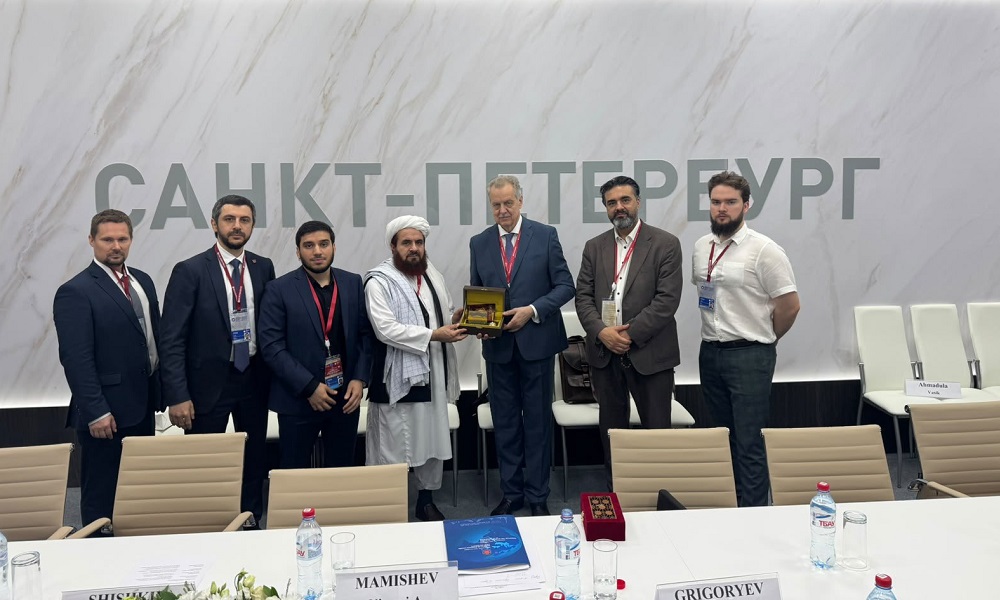
Gul Hassan Hassan, the Islamic Emirate of Afghanistan’s Ambassador to Moscow, met Saturday separately with Russian Deputy Prime Minister Alexey Overchuk, President of the Russian Chamber of Commerce and Industry Sergey Katyrin, and several other Russian officials on the sidelines of the St. Petersburg International Economic Forum.
According to the Afghan Embassy in Russia, the discussions focused on strengthening bilateral economic and trade ties, expanding opportunities for Afghan traders, and supporting Afghan nationals and students residing in St. Petersburg.
Latest News
Canada convenes UN Afghanistan meeting amid ongoing humanitarian crisis
The meeting comes as the UN Security Council prepares to renew UNAMA’s mandate before its expiry on 17 June, alongside its quarterly briefing on Afghanistan.
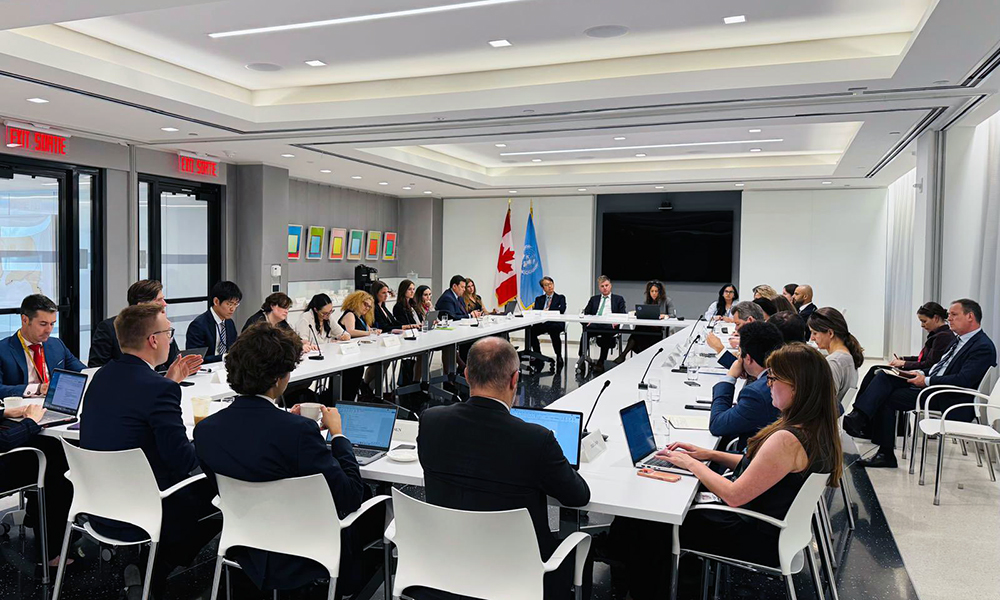
Canada has convened a meeting of the Group of Friends of Afghanistan at the United Nations, bringing together international partners to assess the country’s worsening political, humanitarian, security, and human rights situation ahead of a key UN Security Council review of the mission in Kabul.
Briefings from the United Nations Assistance Mission in Afghanistan (UNAMA) and the International Committee of the Red Cross (ICRC) highlighted the scale of Afghanistan’s ongoing crises, including severe humanitarian need, rising insecurity, and deepening restrictions on human rights.
UN officials warned that nearly 21.9 million people require humanitarian assistance in 2026, with millions facing acute food insecurity and a worsening child malnutrition crisis.
Funding shortfalls and restricted humanitarian access continue to limit relief operations, while large-scale returns from Iran and Pakistan are adding further pressure on already overstretched systems.
Security concerns remain acute, with UNAMA reporting continued cross-border tensions between Afghanistan and Pakistan, including intermittent clashes, airstrikes, and drone activity. These incidents have disrupted trade routes, heightened regional instability, and contributed to civilian casualties.
Human rights conditions, particularly for women and girls, were also raised as a central concern, with UN agencies warning that ongoing restrictions are deepening exclusion from education, work, and public life, and entrenching systemic discrimination.
The meeting comes as the UN Security Council prepares to renew UNAMA’s mandate before its expiry on 17 June, alongside its quarterly briefing on Afghanistan. Diplomats are expected to review the mission’s role amid calls from some members for a strategic reassessment of its priorities.
While Council members broadly agree on the need for an inclusive government and prevention of terrorism, divisions remain over international engagement, sanctions, and the linking of aid to human rights conditions.
Canada has continued to position the Group of Friends as a platform to sustain international attention on Afghanistan and coordinate responses to the country’s prolonged crisis.
Latest News
Uzbekistan advances feasibility study for Trans-Afghan Railway Project
The project gained momentum in July 2025 when Uzbekistan, Afghanistan and Pakistan signed a trilateral agreement in Kabul to jointly prepare the feasibility study for the railway.
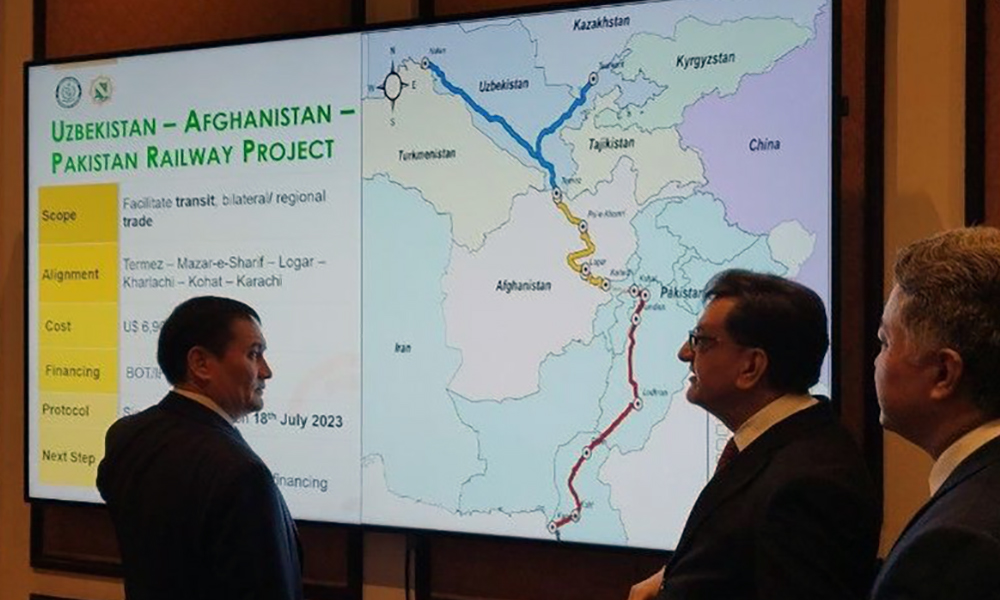
Uzbekistan has entered the active phase of preparing a feasibility study for the proposed Trans-Afghan Railway Project, a key regional initiative aimed at strengthening transport and trade links between Central and South Asia.
Speaking on the sidelines of the Termez Dialogue in Tashkent, Uzbekistan’s Deputy Minister of Investment, Industry and Trade, Shokhrukh Gulyamov, said field studies and technical assessments for the project are already underway.
“We have already begun the active phase of preparing the feasibility study for this project,” Gulyamov said, adding that authorities expect to have concrete figures by the end of the year to help determine the next stage of implementation.
The Trans-Afghan Railway Project is expected to connect Central Asian countries with Pakistani ports through Afghanistan, creating a shorter and more efficient trade route between Central and South Asia. Officials view the railway as one of the region’s most important connectivity initiatives.
Gulyamov said the project could eventually become part of a broader transport network across Afghanistan, further enhancing regional trade and transit opportunities.
He also noted that the railway complements wider regional infrastructure efforts, including cooperation with Kazakhstan and Kyrgyzstan and the China-Kyrgyzstan-Uzbekistan railway project.
According to Uzbek officials, growing trade volumes between Central and South Asia are increasing the need for expanded transport infrastructure and alternative transit corridors.
The project gained momentum in July 2025 when Uzbekistan, Afghanistan and Pakistan signed a trilateral agreement in Kabul to jointly prepare the feasibility study for the railway.
Once completed, the study is expected to provide key details on project costs, financing options, technical requirements and potential implementation timelines.
The proposed railway is widely seen as a strategic project that could boost regional connectivity, facilitate trade and strengthen economic integration across Central and South Asia.


Tahawol: Impact of Middle East crisis on aid transfers to Afghanistan

Saar: Calls to strengthen economic and trade cooperation discussed

Afghan ambassador in Moscow, Russian deputy PM discuss economic ties

Canada convenes UN Afghanistan meeting amid ongoing humanitarian crisis

Uzbekistan advances feasibility study for Trans-Afghan Railway Project

New Afghanistan-China transport corridor launched via Turkmenistan

Afghanistan signs $46 million deal to develop standard laboratory complexes

Large blast near Beit Shemesh part of pre-planned test: Israeli defense firm

Trump returns from China with stability but little progress

Afghanistan announce squad for India series
Tahawol: Impact of Middle East crisis on aid transfers to Afghanistan
Saar: Calls to strengthen economic and trade cooperation discussed

Tawsia: Signing of $20 million Herat salt mining deal discussed

Tahawol: Discussion on fear of internal disputes in Iran

Tahawol: Welcoming Qatar’s cooperation with Afghanistan discussed
-
 Business3 days ago
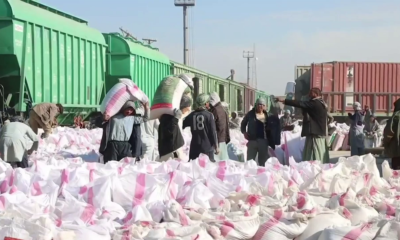
Afghanistan’s trade with Central Asia records sharp growth
-
 Latest News5 days ago
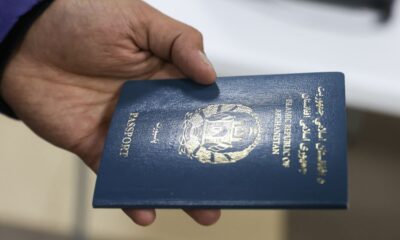
Russian business official proposes visa-free travel between Russia and Afghanistan
-

 Sport1 day ago
Gaikwad set to replace injured Kohli for Afghanistan ODI Series
-
 Latest News5 days ago
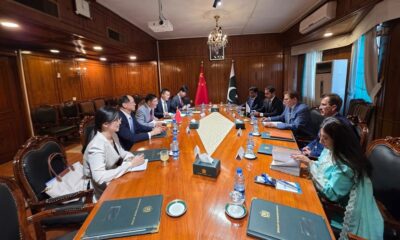
China and Pakistan’s special envoys for Afghanistan discuss Urumqi Process
-

 Sport4 days ago
Six Afghan cricketers selected for 2026 Lanka Premier League
-

 Latest News4 days ago
Three Afghans among four farmworkers burned alive in Italy; two Pakistanis arrested
-

 Sport3 days ago
Afghanistan name squad for A-team tri-series in Sri Lanka
-
 Latest News5 days ago
Russia-Afghanistan military deal focuses on repair of Soviet-made equipment, Kabulov says