
Climate Change
Nations reach historic accord to protect marine life on high seas

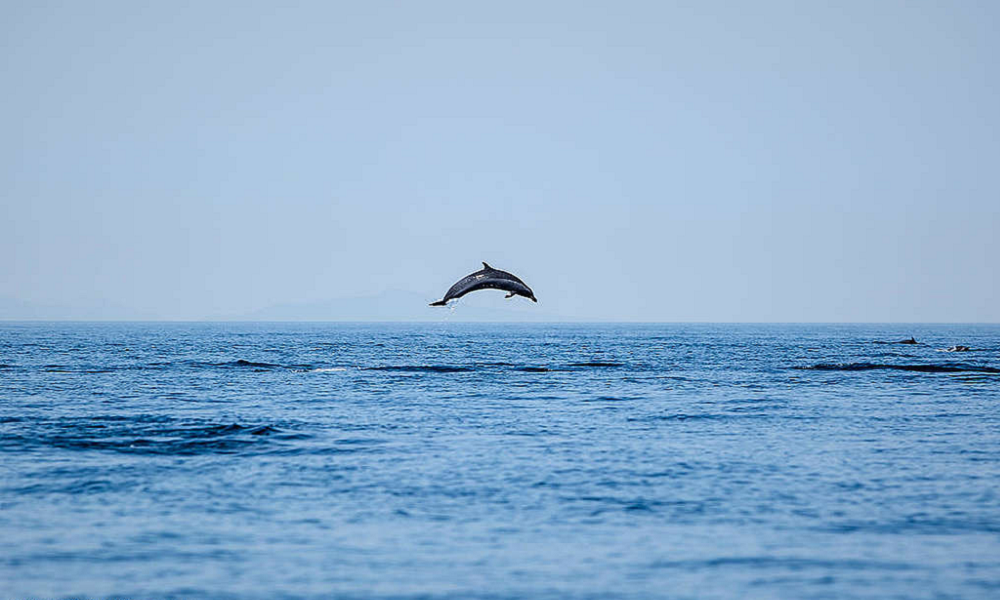
For the first time, United Nations members have agreed on a unified treaty to protect biodiversity on the high seas – representing a turning point for vast stretches of the planet where conservation has previously been hampered by a confusing patchwork of laws.
The U.N. Convention on the Law of the Sea came into force in 1994, before marine biodiversity was a well-established concept. The treaty agreement concluded two weeks of talks in New York, Associated Press reported Sunday.
An updated framework to protect marine life in the regions outside national boundary waters, known as the high seas, had been in discussions for more than 20 years, but previous efforts to reach an agreement had repeatedly stalled. The unified agreement treaty, which applies to nearly half the planet’s surface, was reached late Saturday.
“We only really have two major global commons — the atmosphere and the oceans,” said Georgetown marine biologist Rebecca Helm. While the oceans may draw less attention, “protecting this half of earth’s surface is absolutely critical to the health of our planet.”
Nichola Clark, an oceans expert at the Pew Charitable Trusts who observed the talks in New York, called the long-awaited treaty text “a once-in-a-generation opportunity to protect the oceans — a major win for biodiversity.”
The treaty will create a new body to manage the conservation of ocean life and establish marine protected areas in the high seas. And Clark said that’s critical to achieve the U.N. Biodiversity Conference’s recent pledge to protect 30% of the planet’s waters, as well as its land, for conservation.
Treaty negotiations initially were anticipated to conclude Friday, but stretched through the night and deep into Saturday. The crafting of the treaty, which at times looked in jeopardy, represents “a historic and overwhelming success for international marine protection,” said Steffi Lemke, Germany’s environment minister.
“For the first time, we are getting a binding agreement for the high seas, which until now have hardly been protected,” Lemke said. “Comprehensive protection of endangered species and habitats is now finally possible on more than 40% of the Earth’s surface.”
The treaty also establishes ground rules for conducting environmental impact assessments for commercial activities in the oceans.
Several marine species — including dolphins, whales, sea turtles and many fish — make long annual migrations, crossing national borders and the high seas. Efforts to protect them, along with human communities that rely on fishing or tourism related to marine life, have long proven difficult for international governing bodies.
“This treaty will help to knit together the different regional treaties to be able to address threats and concerns across species’ ranges,” Battle said.

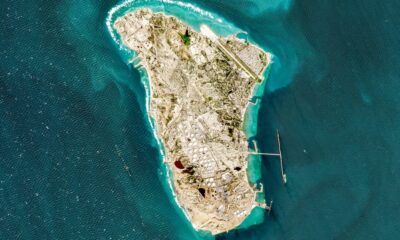







Japan and the UN Office for Project Services (UNOPS) have signed a $9.4 million grant agreement aimed at strengthening climate adaptation and disaster preparedness in Afghanistan.
The agreement, valued at 1.474 billion Japanese yen ($9.4 million) was signed by UNOPS Afghanistan Country Director Katy Ann Webley and Japan International Cooperation Agency (JICA) Afghanistan Chief Representative Sota Tosaka.
The project will be implemented in Kabul province and focuses on improving the capacity of local communities to cope with climate-related disasters.
Using a community-led approach, the programme will support the construction of infrastructure designed to reduce the impact of floods, droughts and other climate risks, alongside training to improve emergency preparedness and response.
Over the next 24 months, UNOPS will carry out activities aimed at enhancing climate risk awareness, strengthening local resilience and protecting livelihoods vulnerable to the effects of climate change.
Climate Change
Winter storm disrupts US travel, triggers thousands of flight cancellations
The disruptions followed a chaotic Sunday, when about 11,000 flights were scrapped—the highest daily total since the COVID-19 pandemic
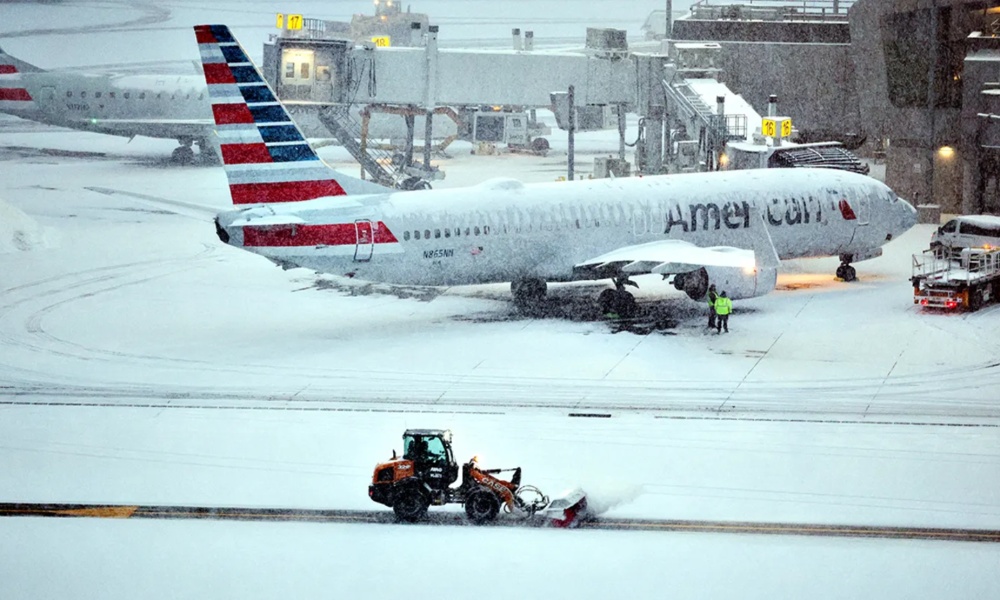
A powerful winter storm sweeping across the United States brought air travel to a near standstill on Monday, forcing airlines to cancel and delay thousands of flights as freezing rain and heavy snowfall battered large parts of the country.
By late afternoon, nearly 19% of scheduled flights had been canceled, according to aviation analytics firm Cirium. Separate data from FlightAware showed around 5,220 U.S. flights were canceled and more than 6,500 delayed by early evening.
The disruptions followed a chaotic Sunday, when about 11,000 flights were scrapped—the highest daily total since the COVID-19 pandemic, Cirium said.
The massive storm dumped up to a foot of snow from New Mexico to New England, paralyzing much of the eastern United States and contributing to at least 18 deaths. Extreme cold is expected to linger in some areas through the week.
American Airlines accounted for the largest share of disruptions on Monday, canceling nearly 1,180 flights and delaying about 1,130, followed by Republic Airways, JetBlue Airways, and Delta Air Lines.
In an advisory, the Federal Aviation Administration (FAA) warned that snow, freezing rain, and low visibility were affecting major hubs, including Boston and the New York metropolitan area. Boston Logan International Airport recorded the highest cancellation rate at 71%, according to Cirium.
American Airlines said the storm disrupted operations at five of its nine hub airports, including its largest base at Dallas–Fort Worth, where freezing temperatures and ice grounded flights.
The carrier requested FAA-approved ground stops for all its flights at Dallas–Fort Worth and Ronald Reagan Washington National Airport to manage gate capacity constraints.
The airline said teams were working around the clock to restore operations, as frustrated passengers flooded social media with requests for updates and assistance.
United Airlines said it had begun restoring flights, with cancellations dropping sharply from 1,019 on Sunday to 320 by Monday evening, FlightAware data showed.
The storm is on track to become the costliest severe weather event since the Los Angeles-area wildfires in early 2025, with preliminary damage and economic losses estimated between $105 billion and $115 billion, according to AccuWeather.
Airline operations remain vulnerable due to the interconnected nature of flight schedules, where cancellations can leave aircraft and crews out of position, slowing recovery efforts. Already, about 285 flights scheduled for Tuesday have been canceled, FlightAware data showed.
Climate Change
FAO warns of dry winter, low snowfall and rising food insecurity risks in Afghanistan
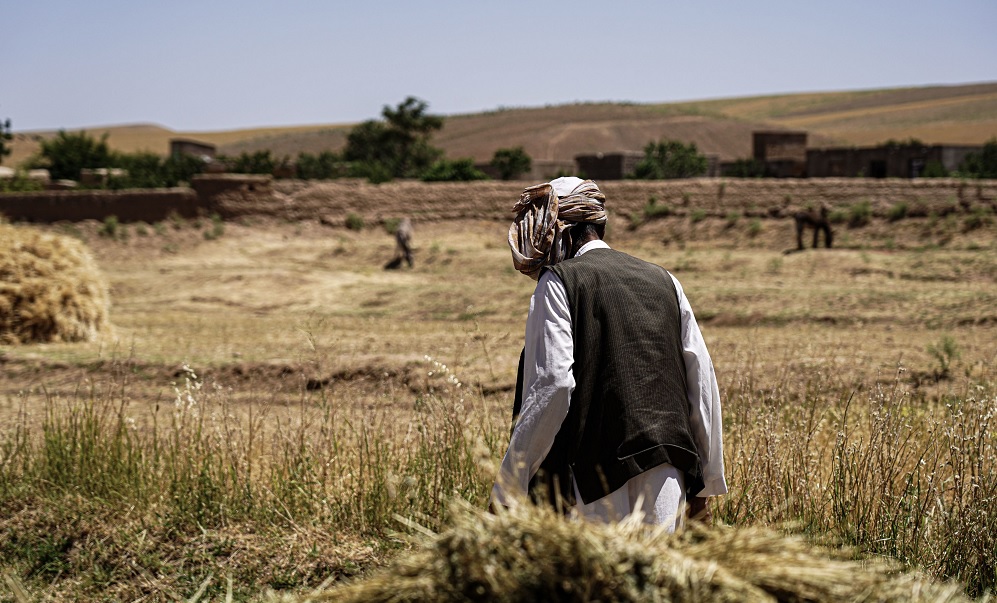
The Food and Agriculture Organization of the United Nations (FAO) has warned that Afghanistan is likely to face a drier and warmer-than-average winter, raising serious concerns about water availability, agricultural production and food security.
In its Seasonal Climate Outlook for December 2025 to February 2026, FAO said a weak La Niña pattern is driving below-average precipitation and above-average temperatures across most parts of the country. The report notes that the 2025/26 wet season has already begun drier and warmer than normal, with widespread soil moisture deficits persisting for another consecutive year
According to FAO, snow accumulation remains exceptionally low, with snow-water-equivalent levels at their lowest point in the past 25 years. This poses a critical hydrological risk, particularly for irrigated wheat-growing areas that depend on snowmelt-fed river systems. Even if precipitation improves later in winter, early deficits are unlikely to be fully offset, the report said
The outlook projects that December, January and February will all carry an elevated risk of below-normal rainfall, especially in northern, northeastern, western and central highland regions. Warmer daytime temperatures combined with cold nights are also expected to increase stress on crops, livestock and vulnerable communities
FAO warned that continued dryness could delay planting and weaken crop establishment for rain-fed winter wheat and barley, potentially reducing yields for the 2026 harvest. In irrigated areas, low snowpack threatens spring water supplies, increasing competition for water and reliance on already stressed groundwater resources.
Rangeland and pasture conditions are also expected to deteriorate, with delayed green-up likely to force herders to depend longer on stored fodder. This could lead to declining livestock health, reduced milk production and increased risk of animal losses toward late winter and early spring, the report said.
FAO and partner assessments caution that consecutive seasons of insufficient rainfall and high temperatures have already weakened agricultural systems and could leave millions of people facing acute food insecurity between late 2025 and early 2026
The UN agency emphasized the need for close monitoring of precipitation, snowpack and crop conditions, calling for timely agricultural support, improved water management and early anticipatory action to mitigate the impacts of the unfolding climate risks.


Tiny Persian Gulf oil hub at centre of high-stakes military calculations

Afghanistan opens doors to agribusiness investments amid rising opportunities

Afghan diaspora protests in London and Oslo over Pakistan strikes

Amnesty International raises alarm over deportations, protests ahead of FIFA World Cup

Mumbai Indians outclass KKR in high-scoring IPL thriller

Prominent Muslim scholar issues fatwa calling for Afghanistan-Pakistan ceasefire

Afghan air force strikes key Pakistani military installations in retaliatory operation

IEA Supreme Leader issues Eid-ul-Fitr message urging unity and support for Islamic system

14 Pakistani soldiers killed after military post falls along Durand line: MoD

Ronaldo’s private jet flies out of Saudi Arabia following US Embassy drone strike in Riyadh

Tahawol: Efforts for Kabul-Islamabad de-escalation

Saar: Restrictions on girls’ education in Afghanistan discussed

Tahawol: Concerns over spread of Middle East crisis discussed

Saar: Weakening relations between Kabul and Washington discussed

Exclusive interview with Indrika Ratwatte, Deputy UN Special Representative for Afghanistan
-

 Latest News4 days ago
Tajikistan shifts stance on Afghanistan amid rising border tensions
-

 Latest News3 days ago
Russia deems US military presence in Afghanistan unacceptable
-

 Latest News3 days ago
IEA says Iranian drivers no longer need visas to enter Afghanistan
-

 Latest News2 days ago
Afghan defense forces stand ready to protect national sovereignty: MoD
-

 Sport4 days ago
Myanmar trump Afghanistan 2-1 in Asian Cup Qualifier
-

 Sport4 days ago
Afghanistan to face Myanmar in crucial AFC clash
-

 Latest News4 days ago
Torkham crossing reopens for returning Afghan migrants
-
 Latest News5 days ago
UN experts call for lasting ceasefire as Afghan–Pakistan violence escalates