
Latest News
Off the Afghan Map: Nuristan residents appeal for decent road access
Currently, a 22-kilometer section of the Kunar-Nuristan highway is under reconstruction, with work said to be about halfway complete.

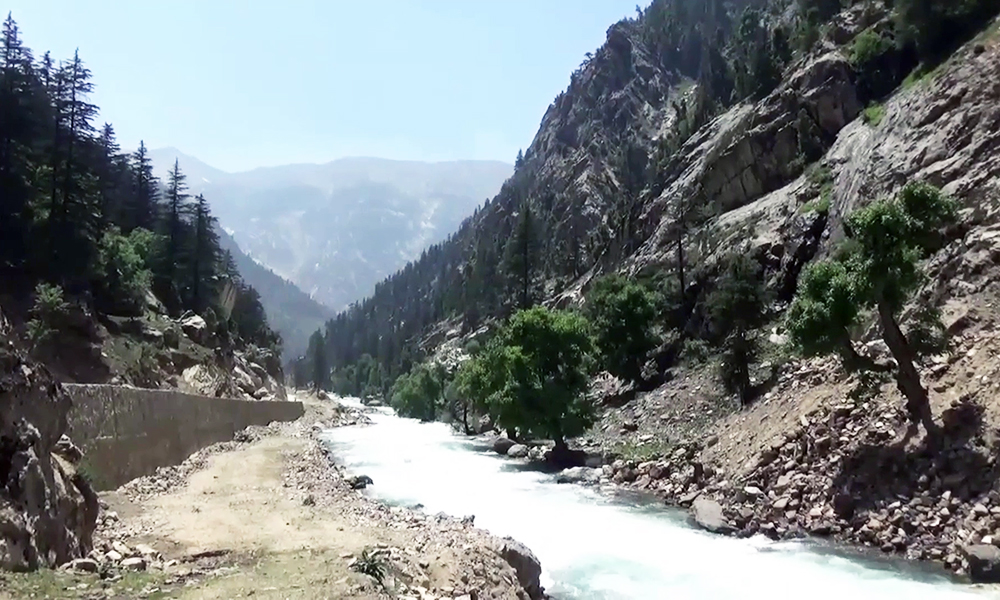
Tucked away in the steep folds of the Hindu Kush mountains, the people of Nuristan have long battled isolation. But for residents of this eastern Afghanistan province, it’s not just the geography that keeps them cut off — it’s the roads, or rather, the lack thereof.
The province’s main route, a vital artery linking Nuristan’s rugged valleys to the outside world, has become a treacherous track of dust, rock, and frustration. Locals say the road is in such poor condition that what should be a lifeline has instead become a major burden.
“Every time we travel, it’s a gamble,” said Mohammad Nazir, a driver who regularly ferries passengers through the region. “Landslides, flat tires, broken axles — these are daily problems. We just want a real road.”
Nuristan, celebrated for its emerald forests and striking mountain landscapes, draws hundreds of domestic and foreign tourists every year. But many never make it in. The journey, locals say, is enough to turn back even the most determined traveler.
Currently, a 22-kilometer section of the Kunar-Nuristan highway is under reconstruction, with work said to be about halfway complete. The road, planned to be nine meters wide, is part of a larger push by the Ministry of Public Works to improve connectivity in Afghanistan’s remote provinces.
Provincial officials say the project is progressing swiftly. More than 70 pieces of heavy machinery are in operation, and hundreds of Nuristanis have found work on the site. But patience is wearing thin.
“We’ve waited decades for a proper road,” said a local elder in Parun. “This should have been done long ago. We hope they won’t abandon the project halfway.”
The stakes are high. Beyond tourism, poor infrastructure affects nearly every aspect of life in Nuristan. Villagers report long delays in transporting patients to hospitals, skyrocketing prices for goods, and a lack of access to basic services.
While other parts of the country have begun to see a patchwork of paved roads, Nuristan remains without a single asphalted network. The province’s challenging terrain means road construction here isn’t just costly — it’s monumental.
For now, residents continue to rely on gravel roads and sheer determination. But their message to Kabul is clear: “Don’t forget us in the mountains.”
As one local put it: “We don’t need a miracle — just a road that works.”




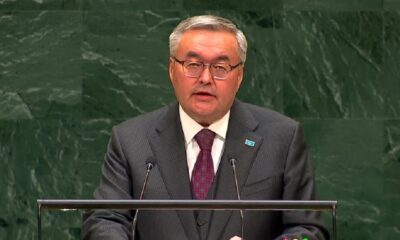






Kazakhstan’s Foreign Minister Mukhtar Tileuberdi has called for pragmatic and coordinated international engagement with Afghanistan, saying the country’s long-term stability is closely linked to the security and sustainable development of Central Asia.
Speaking during the general debate of the 81st session of the United Nations General Assembly in New York on Friday, Tileuberdi said humanitarian assistance to Afghanistan remains essential but alone cannot break the cycle of poverty, displacement and dependency.
He said Kazakhstan supports a “pragmatic, coordinated and step-by-step” approach to international engagement with Afghanistan, with the United Nations playing a central role.
Tileuberdi also said Kazakhstan is working with the UN to operationalize the United Nations Regional Centre for the Sustainable Development Goals for Central Asia and Afghanistan in Almaty.
He said the success of the centre should be measured by the results and assistance it delivers to the region.


Afghanistan Champions League: Omar Zawak Herat beat Toofan Herat 1-0

Blast in Pakistan’s Dera Ismail Khan kills 11, injures 30

Ariana Afghan Airlines increases Kabul-Delhi cargo flights

Khalilzad questions Pakistan’s commitment to Afghan welfare

India, UN envoy discuss Afghanistan’s humanitarian needs

Saudi energy group signs major Afghanistan deals covering gas exploration and pipeline plans

Trump floats idea of renaming Atlantic or Pacific Ocean

US hits Egyptian bank branches with Iran sanctions as war marks six months

Nepal flood rescue mission enters critical phase as thousands remain missing

Iranian clubs to face Gulf opponents at neutral venues in Asian Champions League Elite

Exclusive interview with Abdul Latif Mansoor, Minister of MRRD

Tawsia: Overview of Afghanistan’s iron mines

Tahawol: Discussion on fresh Pakistani airstrikes on Afghanistan

Saar: Calls for international support for Afghanistan discussed

Tahawol: Opening of the 81st UN General Assembly Session
-

 World4 days ago
CNN, MS NOW and Politico sue Trump, challenging White House ban
-

 Latest News3 days ago
Ariana Afghan Airlines ranks seventh among 45 Central Asian airlines
-

 Latest News4 days ago
UN reiterates call for respect for international law after Kunar airstrikes
-
 Latest News5 days ago
Khalilzad condemns Pakistan airstrikes, says current strategy is not working
-

 Regional3 days ago
US and Iran hold first talks since June after Trump’s ‘annihilation’ threat
-

 Latest News3 days ago
Silk Road highway in Wakhan corridor now reaches the China border
-

 Latest News4 days ago
Afghan Official: Pakistan’s airstrikes will not go unanswered
-

 Sport4 days ago
Afghan boxing referee heads to China for international festival