
Business
Pakistan eases import process for Afghan traders

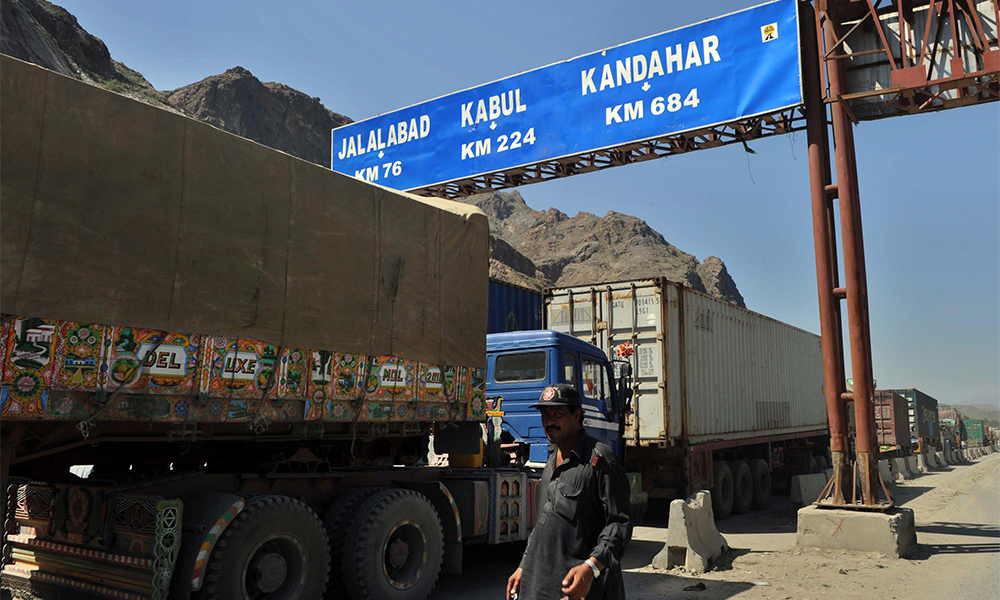
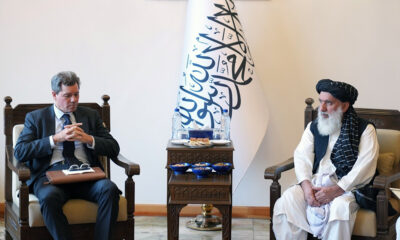
In a bid to facilitate trade activities, the Pakistan government has granted a temporary waiver of the Electronic Import Form (EIF) for Afghanistan.
The move was decided during an Afghanistan Inter-Ministerial Coordination Cell (AICC) meeting that was attended by Pakistan’s Special Envoy to Afghanistan Mohammad Sadiq and other high-ranking Pakistani officials.
According to Pakistan media, the waiver, initially granted for 45 days, comes as compliance with the directions of Prime Minister Imran Khan to assist Afghanistan in addressing the impending humanitarian and economic crisis.
As EIFs were not being issued by the corresponding banks to execute transactions for imports, this led to a situation with long queues of cargo vehicles being stuck at Torkham and Chaman border crossings, Pakistan’s Business Recorder reported.
However, now with the introduction of the new measures, imports from Afghanistan will be possible without the mandatory requirement of Electronic Import Form (EIF) as required by the State Bank of Pakistan.
The new initiative will come as a huge relief for Afghan traders and will help to immediately clear hundreds of cargo trucks currently stuck at various border crossings due to the non-availability of EIF.
The decision comes after a visit by Pakistan’s National Security Advisor Moeed Yusuf to Kabul late last month to establish national level coordination mechanisms to enhance ties and trade between the two countries. Yusuf also heads up the newly formed Afghanistan Inter-Ministerial Coordination Cell.






Business
Saudi energy group signs major Afghanistan deals covering gas exploration and pipeline plans
The agreements cover exploration across the Kushk and Tirpul contract area in Herat, spanning approximately 23,317 square kilometers.
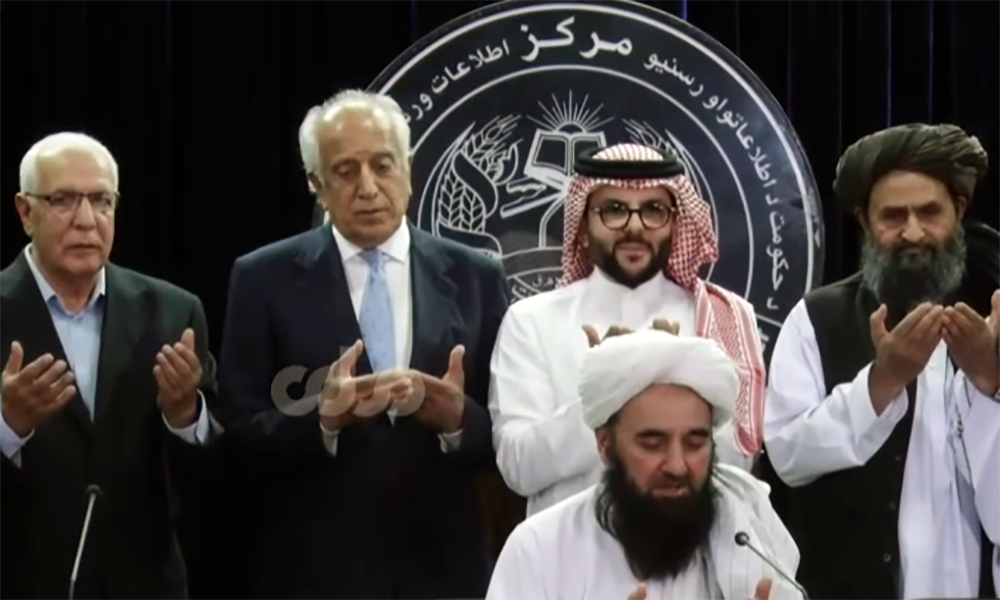
Saudi Arabia’s Delta Energy Group has signed a series of agreements with Afghanistan’s Ministry of Mines and Petroleum covering hydrocarbon exploration, natural gas utilization in Herat and a proposed regional gas pipeline.
According to a statement issued by Delta Energy on September 6, the agreements cover exploration across the Kushk and Tirpul contract area in Herat, spanning approximately 23,317 square kilometers.
Under the agreements, Delta Energy will conduct geological and geophysical studies, seismic surveys, exploration drilling and reservoir evaluations to determine the scale and commercial potential of Afghanistan’s hydrocarbon resources.
The company will also finance a study on the utilization of natural gas for Herat Industrial Park, Herat city and other approved areas, including potential applications in industry and power generation.
A separate agreement provides a framework to assess the proposed 700-kilometre CentGas “Corridor of Prosperity” pipeline, which would potentially connect a gas receipt point near Guzara district in Herat with a delivery point near Spin Boldak in Kandahar.
Delta Energy estimates the proposed pipeline could require about $10 billion in investment over 10 years, subject to technical and economic feasibility, financing, regulatory approvals and a final investment decision.
The company said the broader integrated programme could represent tens of billions of dollars in potential investment over the coming years, covering exploration, field development, gas utilization and related infrastructure. However, all subsequent phases will depend on exploration results, commercial viability, financing and required approvals.
Sheikh Badr Mohammed Al-Aiban, chairman of Delta International Holding Group, said the project was more than an oil and gas investment, describing it as an opportunity to develop an integrated energy ecosystem that could create jobs, support industry and improve regional connectivity.
Afghanistan’s Minister of Mines and Petroleum, Hidayatullah Badri, welcomed the agreements, saying cooperation with Delta Energy could help advance exploration of the country’s hydrocarbon resources, strengthen energy security and support economic activity.
Business
Imam Abu Hanifa exhibition to draw exhibitors from more than 20 countries
Representatives from more than 20 countries are expected to attend, including Russia, India, Türkiye and Japan.
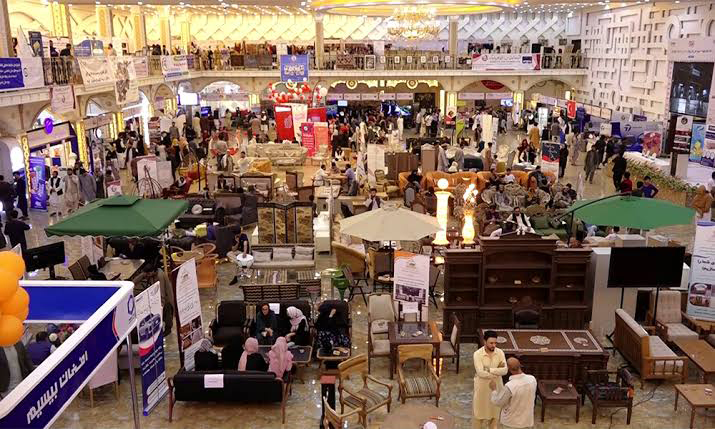
The fifth Imam Abu Hanifa National and International Exhibition will be held in Kabul from October 7 to 13, the Afghanistan Chamber of Commerce and Investment (ACCI) says.
Representatives from more than 20 countries are expected to attend, including Russia, India, Türkiye and Japan.
Ahmad Shakil Hazim, ACCI’s Deputy for Policy and Technical Affairs, said the exhibition would give traders, investors and producers an opportunity to showcase their products and expand business ties with international markets.
Economic experts say international trade exhibitions can strengthen commercial relations between Afghan and foreign businesses and help attract investment.
The fourth edition of the exhibition was held in Kabul last year, with officials saying trade agreements and contracts worth more than $700 million were signed between Afghan and foreign traders on the sidelines of the event.
Business
Afghanistan, Russia discuss expanding trade cooperation
The Ministry of Industry and Commerce said the two sides described the meeting as productive and stressed the need to further expand economic and trade relations between Afghanistan and Russia.
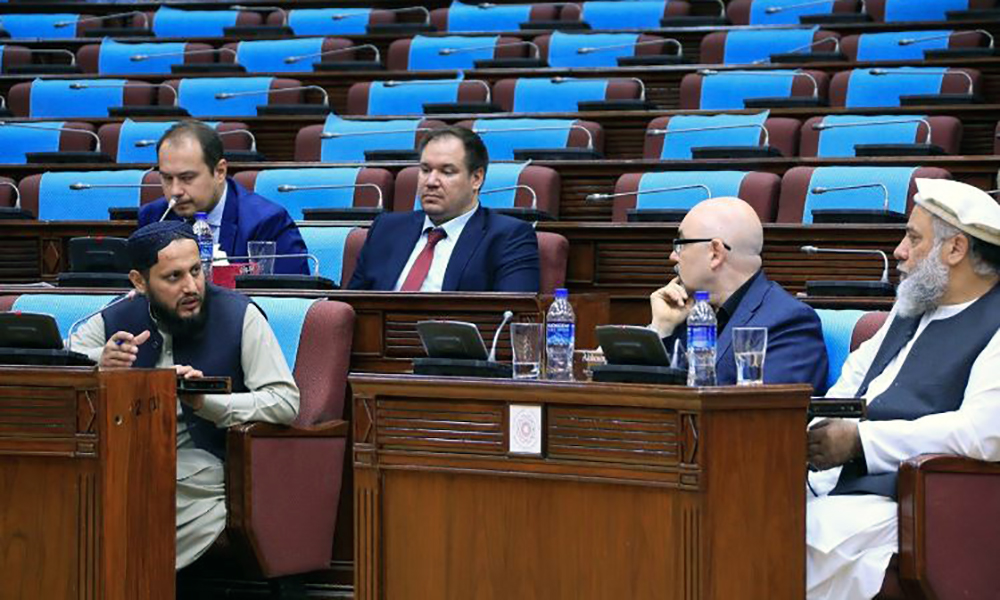
Afghanistan and Russia have discussed ways to expand economic and trade cooperation, including increasing exports of Afghan products to Russia and importing Russian machinery and technology into Afghanistan.
Afghanistan’s Minister of Industry and Commerce Nooruddin Azizi met with Nikita Kornienko, Minister of International and Interregional Cooperation of Russia’s Chelyabinsk Region, and his delegation, according to the ministry.
The talks focused on strengthening economic ties, improving coordination between traders from both sides, expanding exports of Afghan goods to Chelyabinsk, importing Russian machinery and modern technologies, and enhancing banking cooperation.
Azizi highlighted the need to increase Afghan exports to Russia and said Afghanistan was ready to establish a distribution centre for Russian goods in Afghanistan and a market for Afghan products in Chelyabinsk.
Kornienko welcomed greater trade cooperation with Afghanistan and invited a delegation from the Islamic Emirate, including private-sector representatives, to visit Chelyabinsk to help strengthen coordination between traders from both sides.
The Ministry of Industry and Commerce said the two sides described the meeting as productive and stressed the need to further expand economic and trade relations between Afghanistan and Russia.


Tahawol: Possible future scenarios for Ukraine crisis

New faculty of aerospace engineering established at Kabul Polytechnic University

Saar: Afghanistan’s relations with international community

Afghanistan end AFC U20 Asian Cup qualifying campaign with 3-1 win over Bahrain

Saudi energy group signs major Afghanistan deals covering gas exploration and pipeline plans

Four mediators struggle to secure lasting Pakistan-Afghanistan ceasefire

HesabPay unveils new visa card and digital payment app in Kabul

AFC Champions League Elite draw nears as Al-Nassr seeded above Al-Hilal

Afghanistan secure direct qualification for 2027 Men’s ODI World Cup

Abasin Defenders stun Kabul Zalmi in Kabul Premier League
Tahawol: Possible future scenarios for Ukraine crisis
Saar: Afghanistan’s relations with international community

Tahawol: Hopes for improved relations between Kabul and Washington

Saar: Afghan refugee returns discussed

Tahawol: Afghanistan and great power rivalry in Central Asia discussed
-
 Latest News4 days ago
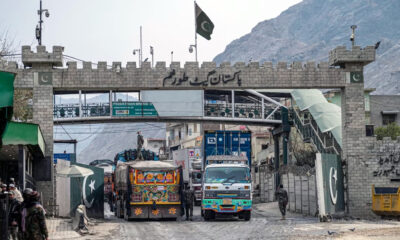
Khyber Chamber demands reopening of Torkham crossing
-

 Regional4 days ago
Syria begins destroying Assad-era chemical weapons
-
 Latest News3 days ago
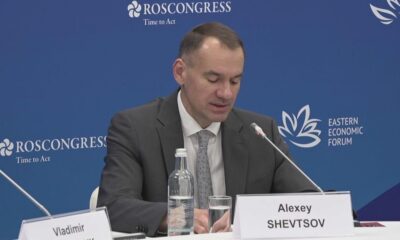
Russian official: West seeks military infrastructure in Central Asia, citing Afghanistan threat
-
 World4 days ago
South Korea reviews military options for Strait of Hormuz
-
 Latest News2 days ago
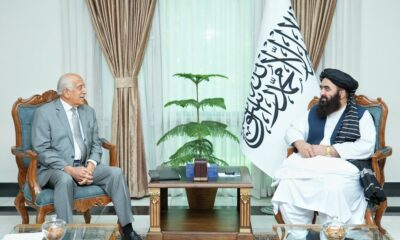
Muttaqi and Khalilzad discuss expanding Afghanistan-US relations
-
 Latest News3 days ago
Pakistan’s envoy to Afghanistan discusses regional security with top officials in Islamabad
-
 Climate Change4 days ago
El Niño likely to intensify, may become strongest ever recorded, WMO says
-
 Latest News5 days ago
Aisha Wahab sworn in as first Afghan American in U.S. Congress