
Latest News
Pakistan Leads “Proxy War” In Afghanistan: NDS

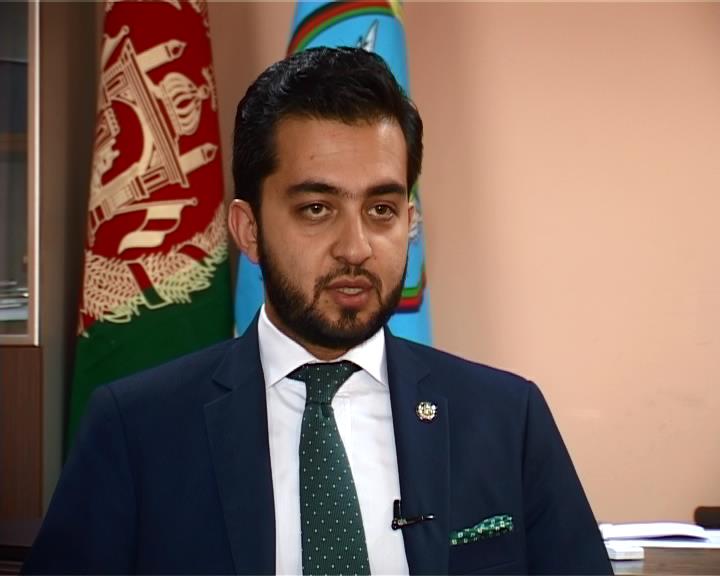

Afghanistan National Directorate Security (NDS) claimed that Pakistani army officers are leading war in Afghanistan after the death of Mullah Omar; Taliban’s ex-leader.
Spokesman of NDS declared that Pakistan’s army has launched “Proxy war” in Afghanistan since years ago.
Taliban’s reclusive leader, Mullah Muhammad Omar, has died of health problems in a Pakistani hospital in 2013.
Under Omar’s leadership, the Taliban offered safe haven to al Qaeda leader Osama bin Laden, precipitating the U.S. military action in Afghanistan after the terror attacks of September 11, 2001.
Now Mullah Akhtar Muhammad Mansour is the new leader of the Taliban. Mansour has been the charge of Taliban’s executive affairs for years already. He previously was the Taliban’s minister of civil aviation and transportation and considered a prominent member of the group.
Afghanistan NDS noted that Pakistan is trying to reach its special goals with destabilizing Afghanistan and launching a proxy war in the country.
Besides the proxy war, Pakistan has repeatedly attacked Afghanistan, occupied strategic locations along the Durand Line, and killed dozens of Afghans with cross-border shelling.
“Dimension of war is wide and multiple, the war in Afghanistan leads by Pakistani army officers and Pakistan’s proxy war is against Afghanistan security,” Abdul Hasib Sidiqi, NDS spokesman said.
Hints at the recent bloody attacks in Kabul, Sidiqi said that Pakistan involves in these attacks.
“Most of suicide attacks in Afghanistan are carried out by Haqqani network and Pakistan’s military forces,” Sidiqi noted.
Pakistan, which has been jockeying for a larger role in the Afghan peace process, has often been accused of trying to create “strategic depth” in Afghanistan.
The country has always reported to have provided access and facilities for Taliban group.
Afghanistan–Pakistan relations refer to the bilateral relations between Afghanistan and Pakistan. Both being neighboring states, relations between the two began in August 1947 after Pakistan became an independent nation. Pakistan and Afghanistan have been described by former Afghan President Hamid Karzai as “inseparable brothers”.

Latest News
Mujahid: IEA seeks positive ties with US, denies receiving foreign aid
“The policy of the Islamic Emirate is based on self-reliance. Afghans must resolve their internal challenges themselves,” Mujahid said.
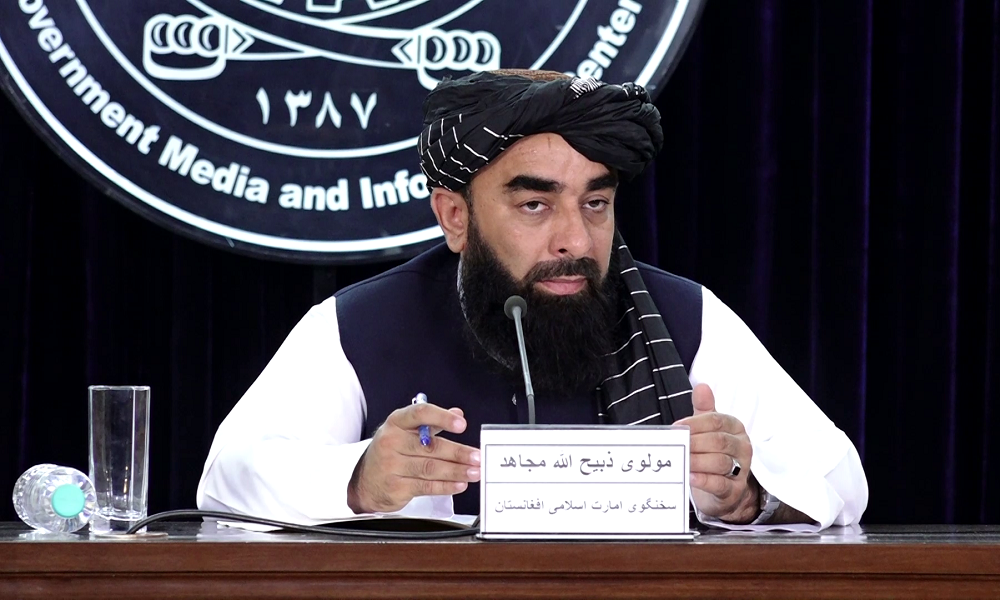
Zabihullah Mujahid, spokesperson for the Islamic Emirate of Afghanistan (IEA), said the group seeks positive and balanced relations with all countries, including the United States, while insisting that no foreign financial aid has been provided directly to the Emirate or the Afghan government.
In an exclusive interview with Payam Afghan TV, Mujahid responded to recent U.S. Senate legislation aimed at restricting aid to Afghanistan, stating that Washington has not sent any assistance directly to the Islamic Emirate. He said humanitarian aid to Afghanistan has been suspended or provided solely on humanitarian grounds.
Mujahid added that past international assistance was channeled through domestic institutions and human rights organizations and remained under the control of those entities, with no direct involvement from the Islamic Emirate.
“The policy of the Islamic Emirate is based on self-reliance. Afghans must resolve their internal challenges themselves,” Mujahid said.
He emphasized that the Emirate’s focus is on attracting investment and promoting economic development while safeguarding national sovereignty and preventing foreign political interference. Mujahid cited engagement with China, Russia, and neighboring countries as examples of this approach.
He concluded that the Islamic Emirate is open to cooperation with European and American investors, aiming to turn Afghanistan into a regional and global economic hub, provided its sovereignty and internal affairs are fully respected.
Latest News
US Senate advances bill to block funds reaching IEA
Committee Chairman Senator Jim Risch cited the human cost of the Afghanistan war, noting that more than 2,000 U.S. service members were killed and over 20,000 injured during the conflict.
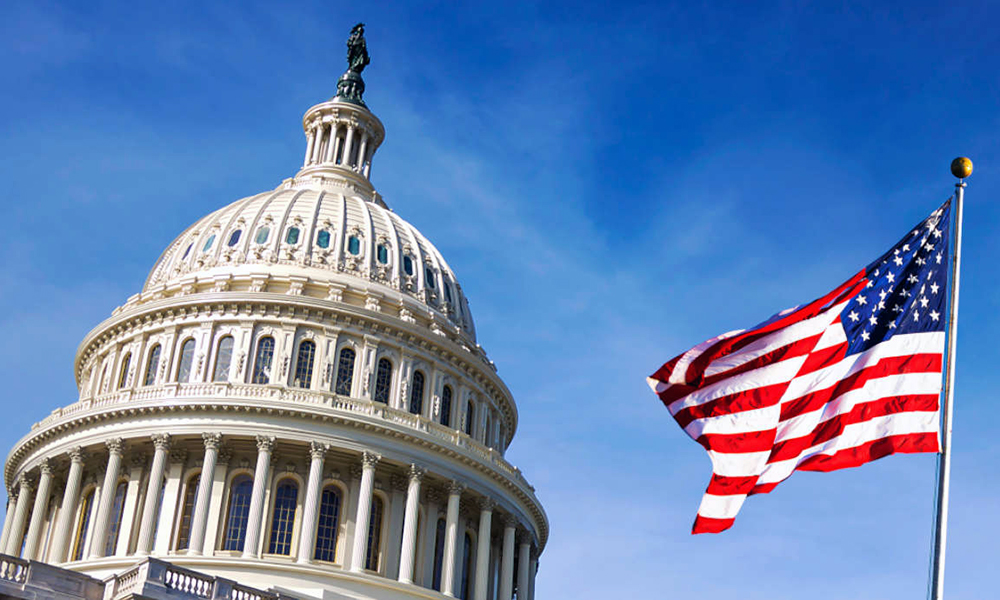
The U.S. Senate has advanced legislation aimed at preventing American taxpayer funds from reaching the Islamic Emirate of Afghanistan (IEA), marking a new step in Washington’s efforts to restrict financial support to groups it designates as terrorist organizations.
The No Tax Dollars for Terrorists Act, approved by the Senate Foreign Relations Committee, now moves to the full Senate for consideration. The bill seeks to bar U.S. funds from directly or indirectly benefiting the IEA and establishes official U.S. policy opposing financial or material support to the group by foreign governments or non-governmental organizations.
Committee Chairman Senator Jim Risch cited the human cost of the Afghanistan war, noting that more than 2,000 U.S. service members were killed and over 20,000 injured during the conflict. He described any transfer of U.S. funds to the IEA as “a betrayal of the victims of the war,” calling the legislation a common-sense measure to ensure taxpayer dollars are not diverted to militant groups.
The bill was introduced in January 2025 by Senator Tim Sheehy, with co-sponsorship from Senators Bill Hagerty, Tommy Tuberville, and Steve Daines. It also directs the State Department to develop strategies to counter foreign assistance that could benefit the IEA.
In response, Zabihullah Mujahid, spokesperson for the Islamic Emirate, said the United States has not provided funds directly to the Emirate. He added that international assistance entering Afghanistan is intended exclusively for humanitarian purposes.
Supporters of the legislation say it reinforces U.S. efforts to cut off financial resources to militant groups while allowing humanitarian aid to continue through international organizations operating in Afghanistan.
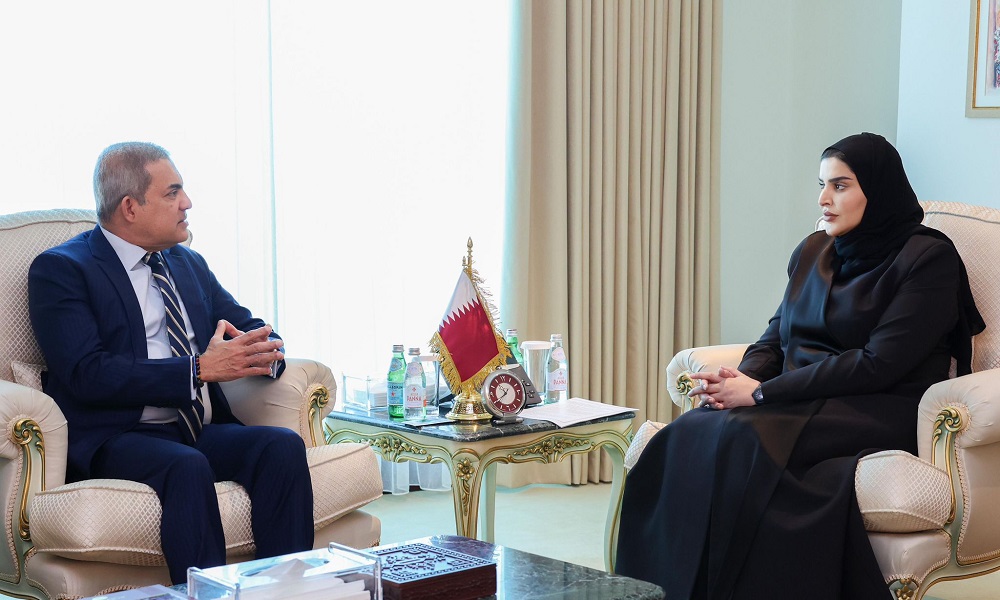
Qatar’s Minister of State for International Cooperation, Mariam bint Ali bin Nasser Al Misnad, met with the Deputy Special Representative of the UN Secretary-General for Afghanistan and Resident Coordinator for Humanitarian Affairs, Indrika Ratwatte, to discuss strengthening cooperation on humanitarian and development efforts in Afghanistan.
According to an official statement, the meeting reviewed ongoing cooperation between the State of Qatar and the United Nations and explored ways to enhance joint initiatives aimed at addressing Afghanistan’s urgent humanitarian and development needs.
Al Misnad reaffirmed Qatar’s commitment to serving as a platform for dialogue and as a key logistical, political, and humanitarian partner for the United Nations in facilitating its work related to Afghanistan.
She also reiterated Doha’s support for the Afghan people, emphasizing the importance of sustained international engagement to ensure the delivery of emergency humanitarian assistance and to support critical sectors, including health, education, and economic empowerment.


Pakistan, China plan to extend CPEC to Afghanistan, revive trilateral framework

Guterres warns of UN’s ‘imminent financial collapse’

Iran ready for ‘fair’ talks with US but not on defence capabilities

Afghanistan roar into U19 World Cup 2026 semis after defeating Ireland

Afghanistan dominates Malaysia 7–0 in AFC Futsal Asian Cup

Turkey withdraws from Afghanistan-Pakistan mediation amid rising tensions

ICG report says Pakistan most impacted by IEA’s return in Afghanistan

Pakistan approves re-export of stranded Afghan transit trade cargo

Afghanistan–China joint market opens in Kabul

Afghanistan set to face West Indies in crucial T20I series

Tahawol: Defense Ministry’s high-level visit to Russia discussed

Saar: Ongoing tensions between US and Iran reviewed

Tahawol: Tashkent’s interest in military cooperation with Kabul discussed

Saar: Kabul, Ashgabat call for regional cooperation discussed

Tahawol: Russia’s reaction to recent US moves discussed
-

 Sport5 days ago
Thrilling battles await as AFC Futsal Asian Cup Indonesia 2026 set to kickoff in hours
-
 Sport3 days ago
AFC Futsal Asian Cup 2026: Day One Review
-

 Sport4 days ago
Afghanistan’s Mahdi Norouzi ruled out of AFC Futsal Asian Cup due to injury
-

 Sport3 days ago
Scotland name Afghanistan-born Zainullah Ihsan in T20 World Cup squad
-

 Sport2 days ago
Afghanistan shine on Day Two of AFC Futsal Asian Cup Indonesia 2026
-
 Sport2 days ago
Afghanistan eye second straight win ahead of Malaysia clash at AFC Futsal Asian Cup
-
 Business4 days ago
Afghanistan’s exports drop sharply in December 2025: World Bank
-

 Latest News2 days ago
Australia announces $50 million in new humanitarian aid for Afghanistan