
Latest News
Pakistan urges Taliban to stay engaged in Afghan peace process

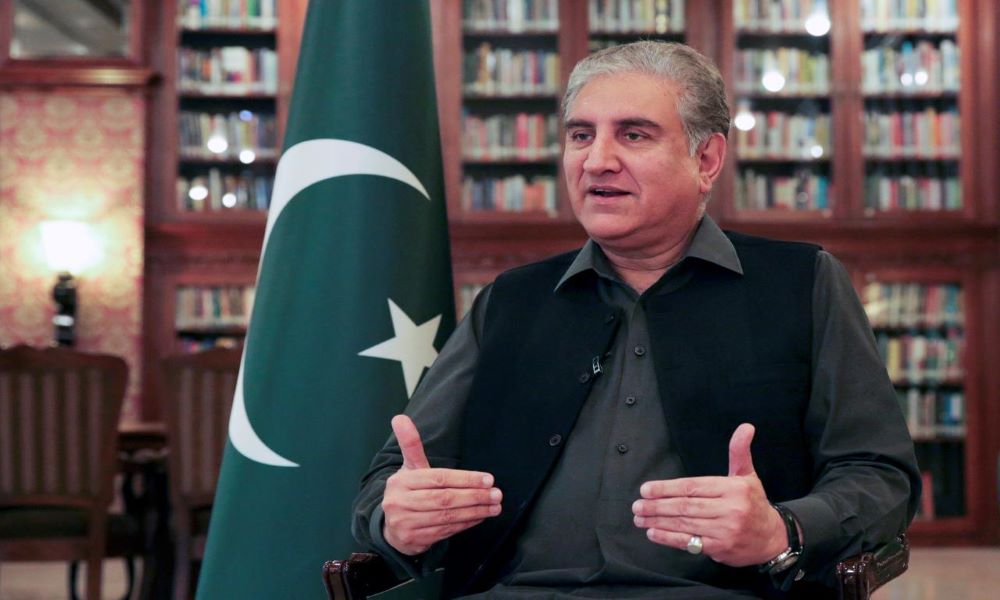
Pakistan on Monday urged the Taliban to remain engaged in the Afghan peace process after the armed group said it would now shun summits about Afghanistan until all foreign forces had left.
The decision was taken after the United States said last week it would withdraw all troops by Sept. 11 this year, later than a May 1 deadline set out by the previous administration.
“They take their own decisions but we will do whatever we can to convince them that it is in their national interest to remain engaged,” Pakistani Foreign Minister Shah Mahmood Qureshi said of the Taliban in an interview with Reuters in Abu Dhabi.
The refusal has thrown the peace process into disarray with Turkey scheduled to host a summit this Saturday, which diplomats had hoped would create new momentum towards a political settlement between the Taliban and Afghan government.
The Taliban ruled Afghanistan from 1996 to 2001 when they were ousted by U.S.-led forces, but they still control wide areas.
Qureshi said delays to the withdrawal were always a possibility due to logistics but that the Taliban had largely succeeded in their objective for foreign troops to withdraw and so should show flexibility towards the new Sept. 11 deadline.
“The troops will be out and a date has been given and the process starts on the 1st of May and goes on until the 11th of September so there is a definite time frame,” Qureshi said.
He also said he had no contact with the Taliban but that he believed the insurgent group would benefit by remaining engaged in the process, suggesting that they show patience and perseverance.
Pakistan, which helped facilitate U.S.-Taliban negotiations in Doha that resulted in the initial May 1 withdrawal deal, wields considerable influence with the Taliban.
The insurgents have sanctuaries in Pakistan, whose main military-run intelligence service gives them support, according to U.S. and Afghan officials. Pakistan denies the allegation.
Qureshi said he fears violence could escalate if the peace process remains deadlocked, plunging Afghanistan into civil war and leading to an exodus of Afghans.
Pakistan, which hosts close to 3 million Afghan refugees and economic migrants, has built 90% of a fence along its disputed 2,500 km (1,500 mile) border with Afghanistan and would hopefully be completed by September, he said.
He also said Pakistan was ready to engage in direct dialogue with arch-rival India once Jammu and Kashmir statehood was restored, which New Delhi in 2019 split into territories.
“We are two atomic powers that cannot, should not go into a direct conflict. It would be suicidal,” Qureshi said.
But he said he had no plans to meet with his Indian counterpart is also in the United Arab Emirates this week.
Top intelligence officers from India and Pakistan held secret talks in Dubai in January in a new effort to calm military tension over the disputed Himalayan region of Kashmir, sources have told Reuters


Latest News
CSTO chief says IEA has become long-term political actor in Afghanistan
Masadykov said CSTO member states have stepped up bilateral engagement with the IEA authorities in Kabul to promote economic development.
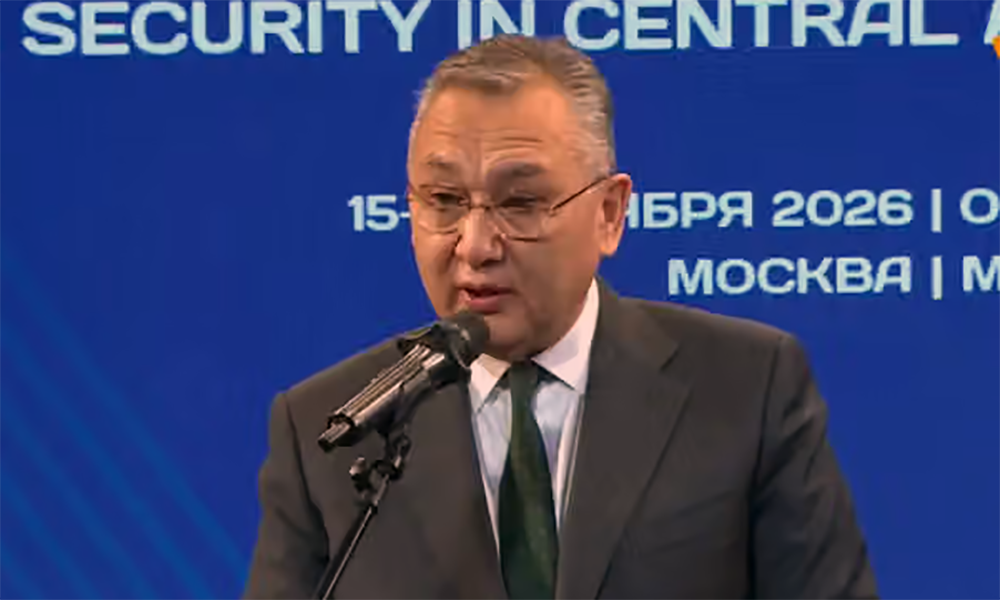
Talatbek Masadykov, secretary-general of the Collective Security Treaty Organization (CSTO), has said the Islamic Emirate of Afghanistan (IEA) has become a long-term political actor in the country, noting that most CSTO member states have intensified contacts with IEA officials.
Masadykov said CSTO member states have stepped up bilateral engagement with the IEA authorities in Kabul to promote economic development, strengthen social stability and reduce security risks originating from Afghanistan.
He stressed that Afghanistan urgently needs peace, stability and economic development, adding that addressing poverty, drug trafficking, terrorist activities, armed conflicts and other security threats requires pragmatic, coordinated and gradual international engagement with the country.
The CSTO secretary-general also highlighted the importance of closer coordination among the CSTO, the Commonwealth of Independent States (CIS) and the Shanghai Cooperation Organization (SCO) in supporting peace and stability in Afghanistan.
Masadykov made the remarks during a joint meeting of representatives from the three organizations focused on security in Central Asia and Afghanistan.
Latest News
Lavrov warns of western-backed ‘color revolutions,’ raises concerns over Afghanistan’s regional security
He also warned that radical groups were seeking to use Afghanistan as a launching pad to expand threats towards Central Asia and Russia.
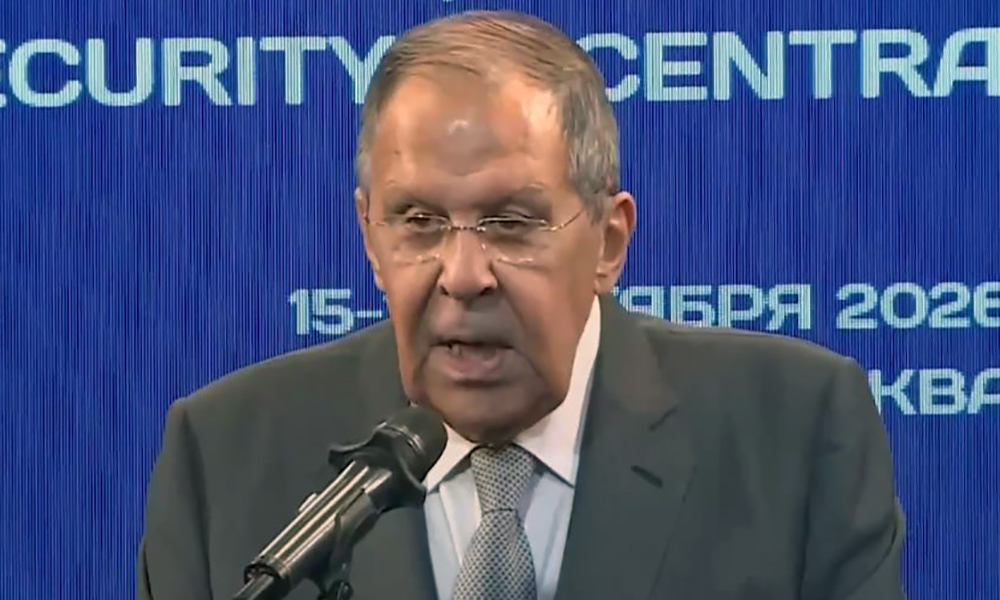
Russian Foreign Minister Sergey Lavrov has warned that any country, including Russia’s partners in Central Asia, could become a target of what he described as Western-orchestrated “color revolutions,” while raising concerns about security threats emerging from Afghanistan.
According to Russia’s TASS news agency, Lavrov made the remarks on Friday, October 16, during a conference on security in Central Asia and Afghanistan in Moscow, attended by representatives of the Collective Security Treaty Organization (CSTO), the Commonwealth of Independent States (CIS) and the Shanghai Cooperation Organization (SCO).
Lavrov said attempts to initiate such movements in several neighbouring countries had already been thwarted.
Lavrov Raises Concerns Over Afghanistan’s Security Legacy
Referring to the two decades of US and NATO military presence in Afghanistan, Lavrov said the consequences of what he described as an unsuccessful occupation would take a long time to overcome.
He also warned that radical groups were seeking to use Afghanistan as a launching pad to expand threats towards Central Asia and Russia.
This comes as the Islamic Emirate of Afghanistan has repeatedly stated that Afghan territory will not be used against any neighboring country, and that no armed group will be permitted to operate.
The meeting was held with the participation of representatives from the Collective Security Treaty Organization, the Commonwealth of Independent States, and the Shanghai Cooperation Organization.
Latest News
IEA leader urges students to pursue religious knowledge for faith, not worldly positions
Addressing students’ future responsibilities, he urged them not to focus on worldly positions and described their current period of study as a time of testing that requires caution.

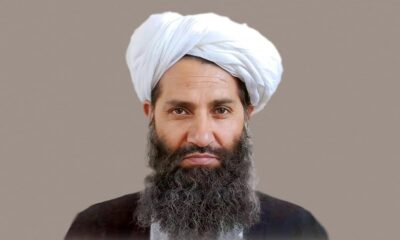
The supreme leader of the Islamic Emirate of Afghanistan (IEA), Sheikh Hibatullah Akhundzada, has stressed the importance of religious education, sincerity, humility and respect for teachers in a speech at the Jihadi Madrasa in Kandahar, urging students to continue their studies and share their knowledge with others.
Hamdullah Fitrat, deputy spokesperson for the Islamic Emirate of Afghanistan, released details of the speech, saying Akhundzada addressed the gathering on Thursday afternoon, the third of Jumada al-Awwal 1448 in the Islamic calendar.
Emphasis on Religious Education and Social Reform
According to Fitrat, Akhundzada described knowledge as an attribute of Allah and said acquiring knowledge brings people closer to Allah and helps them attain spiritual perfection.
He said education and the pursuit of knowledge were necessary to eliminate corruption and promote reform in society, adding that religious scholars and the public should continue religious education and teaching to preserve the faith.
Akhundzada also described religious scholars as heirs of the prophets, saying religious rulings, decisions and Islamic law are conveyed to the public through scholars, who also play a role in reforming society.
Warning Against Pursuing Worldly Status Through Education
According to the deputy spokesperson’s account, Akhundzada urged students to acquire knowledge with the intention of understanding and practising their religion rather than seeking social recognition, status or worldly privileges.
He said religious knowledge should be pursued for practical application and that students had a responsibility to pass their knowledge on to others.
He also described knowledge as a trust that must not be concealed, urging students to communicate religious teachings to the public under all circumstances.
Students Urged to Respect Teachers and Continue Learning
Akhundzada called on students not to abandon their studies and to continue working to expand their knowledge. He also warned against arrogance and pride when learning from others.
He encouraged students to attend jurisprudential and academic gatherings after graduation, saying such meetings provide opportunities to exchange knowledge and learn from one another.
Addressing students’ future responsibilities, he urged them not to focus on worldly positions and described their current period of study as a time of testing that requires caution.
He also stressed the importance of respecting teachers, urging students to treat them with great respect, remain humble, value their religious schools and fellow students, and pay close attention to school regulations.


Regional partners seek progress on Trans-Afghan corridor and CASA railway

CSTO chief says IEA has become long-term political actor in Afghanistan

Lavrov warns of western-backed ‘color revolutions,’ raises concerns over Afghanistan’s regional security

IEA leader urges students to pursue religious knowledge for faith, not worldly positions

Nearly 19.2 million Afghans face winter hunger as child malnutrition set to surge, UN agencies warn

Cricket Bonanza: Afghanistan set for packed international schedule

Afghanistan says 28 killed, 32 captured in Nuristan operation

CNN, MS NOW and Politico sue Trump, challenging White House ban

Silk Road highway in Wakhan corridor now reaches the China border

Dogharoun handles 60% of Iran’s exports to Afghanistan

Saar: Review of state officials’ visits to Kabul over past month discussed

Tahawol: Kyrgyzstan’s rejection of Afghan refugees discussed

Saar: Central Asia’s trade alternative to Pakistan discussed

Tahawol: Warnings over worsening insecurity in Pakistan discussed

Saar: Concerns over potential return of US military bases to Afghanistan discussed
-

 World4 days ago
One dead in new attack on Saudi airport, a day after Houthi strike kills 13
-
 Latest News2 days ago
Afghan official says Durand Line crossings to remain closed until Islamabad accepts demands
-
 Sport5 days ago
Afghanistan Champions League second half to kick off on October 16
-
 Regional4 days ago
Pakistan deploys military to Peshawar after emergency rule declared
-

 Sport2 days ago
Afghan futsal coach: Brazil tournament is first step towards new goals and World Cup
-

 Sport5 days ago
Bangladesh take 329-run lead against Afghanistan in one-off Test
-
 Business4 days ago
Afghanistan, US business leaders discuss trade and investment opportunities
-
 Sport4 days ago
Afghanistan U19 begin Asia Cup Preparations with Oman tour