
Latest News
Pompeo calls for Yemen’s Houthi movement to be classed a foreign terror group

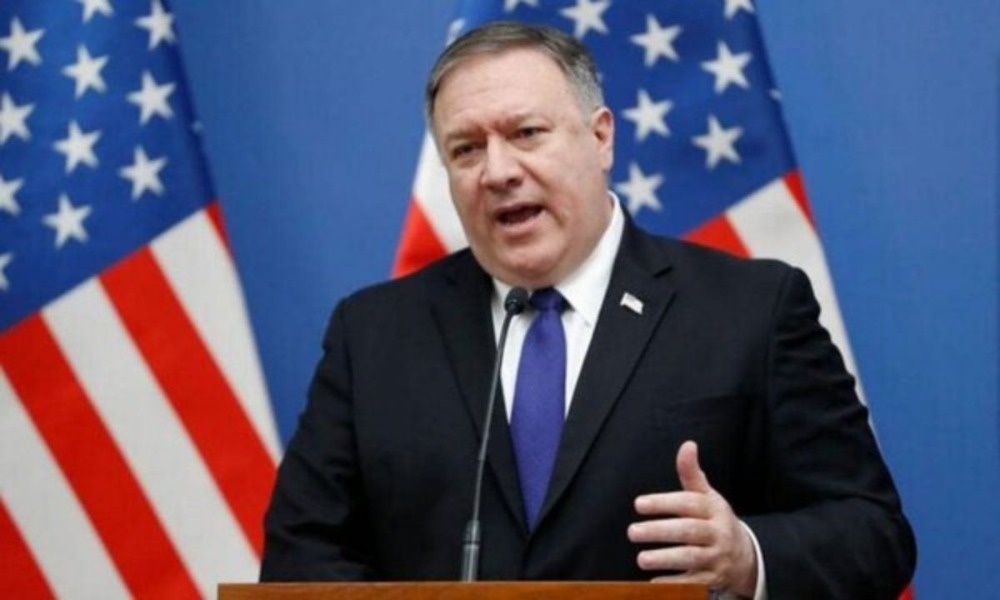
US Secretary of State Mike Pompeo said on Monday the Department of State will notify Congress of his intent to designate Yemen’s Houthi movement, as a foreign terrorist organization.
“I also intend to designate three of Ansarallahs leaders, Abdul Malik al-Houthi, Abd al-Khaliq Badr al-Din al-Houthi, and Abdullah Yahya al-Hakim, as Specially Designated Global Terrorists (SDGTs)”, he said in a statement.
According to the State Department, these designations will provide additional tools to confront terrorist activity and terrorism by Ansarallah, a deadly Iran-backed militia group in the Gulf region.
“The designations are intended to hold Ansarallah accountable for its terrorist acts, including cross-border attacks threatening civilian populations, infrastructure, and commercial shipping,” the statement read.
“The designations are also intended to advance efforts to achieve a peaceful, sovereign, and united Yemen that is both free from Iranian interference and at peace with its neighbors. Progress in addressing Yemen’s instability can only be made when those responsible for obstructing peace are held accountable for their actions,” the statement added.
The State Department said the United States recognizes concerns that these designations will have an impact on the humanitarian situation in Yemen but that they are planning to put in place measures to reduce the impact on certain humanitarian activity and imports into Yemen.
“We have expressed our readiness to work with relevant officials at the United Nations, with international and non-governmental organizations, and other international donors to address these implications.”
The United States was the largest humanitarian donor to Yemen in 2020, providing $630 million in humanitarian assistance to alleviate the suffering of the Yemeni people.
American assistance has reached all corners of Yemen and has been used in critical program support for food, nutrition, hygiene, and for internally displaced people. The United States is also providing more than $18 million to respond to the COVID-19 pandemic in Yemen.
The statement cited Pompeo as saying “we need not look further than the callous attack targeting the civilian airport in Aden on December 30, in which the Houthis struck the arrival terminal killing 27 individuals, including three staff members of the International Committee of the Red Cross, to see the destruction the Houthis continue to inflict upon civilians and civilian infrastructure.
“The Yemeni and Saudi governments as well as multiple experts have directly tied this attack to Ansarallah.”
If Ansarallah did not behave like a terrorist organization, we would not designate it as an FTO and SDGT, Pompeo stated.
“It has led a brutal campaign that has killed many people, continues to destabilize the region, and denies Yemenis a peaceful solution to the conflict in their country.
“Rather than distance itself from the Iranian regime, it has embraced the world’s leading state-sponsor of terrorism even more. Iran’s Islamic Revolutionary Guard Corps (IRGC) has supplied Ansarallah with missiles, drones, and training, allowing the group to target airports and other critical infrastructure.
He also said the US has worked through its partners in the region to urge Ansarallah to stop engaging in terrorist activities, including those involving attacks threatening civilian infrastructure in the region, as well as to cut off ties with IRGC officials and stop the practice of kidnapping, which has included the deaths and kidnappings of US nationals.
“The international community has collectively agreed through UN Security Council resolutions and in other fora that unilateral actions to take over the institutions of the legitimate Republic of Yemen Government are unacceptable and that a legitimate political transition – long sought by the Yemeni people – can be accomplished only through political negotiations,” he said.
“However, the political process has produced limited results over several years. This compels us to look for additional means by which to change the behavior of Ansarallah and its supporters in our search for peace and security in Yemen,” he added.








Latest News
Iran-US talks make encouraging progress as framework for final agreement emerges
Earlier, US President Donald Trump warned that Washington could consider military action if Iran continues to support Hezbollah.
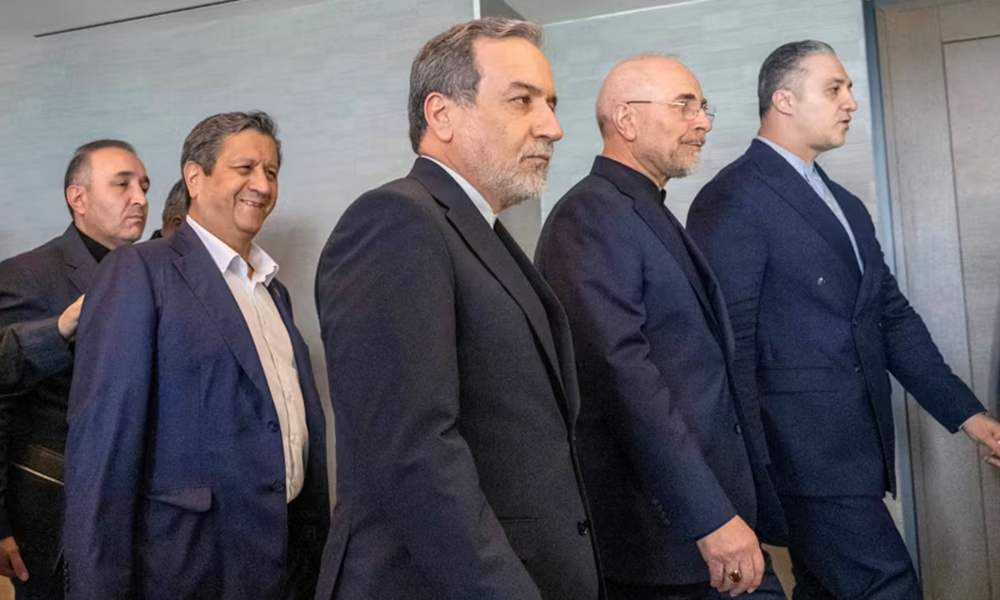
Iran’s senior negotiating team has returned to Tehran following nearly 18 hours of intensive discussions with United States officials in Switzerland, while technical experts remain in place to continue work on the Islamabad memorandum of understanding.
Mediators Pakistan and Qatar reported that the opening round of high-level negotiations yielded “encouraging progress,” with both sides agreeing to a roadmap designed to secure a comprehensive agreement within the next 60 days.
The diplomatic efforts come amid ongoing regional tensions. Earlier, US President Donald Trump warned that Washington could consider military action if Iran continues to support Hezbollah. In response, Iran’s chief negotiator, Mohammad Bagher Ghalibaf, urged the United States to avoid inflammatory rhetoric that could undermine the talks.
Meanwhile, Israeli Defence Minister Israel Katz said Israeli forces would remain deployed in southern Lebanon for as long as necessary, while Hezbollah pledged to respond to any breaches of the current ceasefire arrangement.
Despite the challenges, US Vice President JD Vance struck an optimistic tone, describing the negotiations as highly productive. He said a “very good foundation” had been laid for a final agreement and noted that negotiators had achieved significant progress, expressing confidence in the direction of the talks.
The latest developments have raised hopes that sustained diplomatic engagement could pave the way for a broader understanding between Tehran and Washington in the coming weeks.
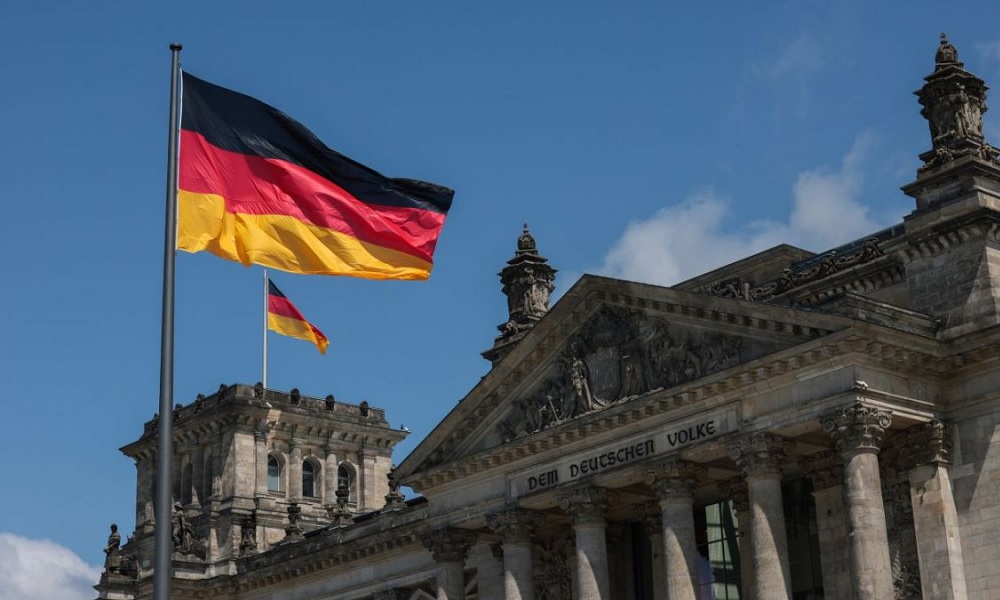
Germany has reportedly agreed to accept six additional Islamic Emirate-appointed diplomats as part of an arrangement aimed at expanding deportation flights for Afghan nationals, according to a report by German broadcaster NDR.
The report, citing diplomatic sources, states that the agreement emerged from confidential talks held last week in Istanbul between representatives of the Islamic Emirate and senior officials from Germany’s Federal Ministry of the Interior.
Germany’s Interior Ministry confirmed that discussions had taken place at a “technical level” between ministry officials and representatives of the Islamic Emirate, but declined to provide details about the location or duration of the meetings.
According to NDR, the agreement would allow Germany to significantly increase deportations to Afghanistan. A ministry spokesperson said charter flights to Kabul are being expanded, with up to three deportation flights per month planned in the future. Authorities may also be able to deport individuals using regular commercial flights.
The report says the IEA had long linked cooperation on deportation flights to Germany’s willingness to accept additional Afghan diplomats. These officials are reportedly needed to verify the identities of Afghan nationals facing deportation and issue the necessary travel documents.
At present, only two IEA-appointed consular officials are operating in Germany. Arriving in 2025, they have reportedly assumed key responsibilities at the Afghan Embassy in Berlin and the Consulate General in Bonn.
German Interior Minister Alexander Dobrindt defended the government’s deportation policy, telling Bild am Sonntag that individuals who commit serious crimes after receiving protection in Germany should be returned to their home country.
“Anyone who abuses our protection and commits serious crimes here must seek their future in their home country,” Dobrindt said. “Our society has a legitimate interest in criminals leaving our country.”

An earthquake of magnitude 5.2 struck Afghanistan’s Hindu Kush region on Monday, the U.S. Geological Survey (USGS) said.


Tahawol: Iran-US talks make encouraging progress

Saar: Astana’s New Era of Engagement with Kabul

Iran goalkeeper shines in heroic draw against Belgium at FIFA World Cup 2026

Afghanistan officials call for investment during Indian expo visit

Iran-US talks make encouraging progress as framework for final agreement emerges

Norway’s Viking-inspired World Cup team photo goes viral

Afghanistan announce squad for India series

Afghanistan, Russia sign military cooperation agreement

Major pharma firms eye investment in Afghanistan

Afghanistan expands oil production as investment in Amu Darya fields grows
Tahawol: Iran-US talks make encouraging progress
Saar: Astana’s New Era of Engagement with Kabul

Saar: Iran vs US Talks Begin – Will Tensions Ease?

Tahawol: Discussion on reopening of Strait of Hormuz

Saar: Afghanistan-Pakistan tense relations disucssed
-
 Business5 days ago
Afghanistan signs $67 million contract for cement production in Samangan
-

 Saar4 days ago
Saar: Trump’s remarks on US military equipment in Afghanistan discussed
-

 Health5 days ago
Polio cases in Afghanistan rise to six in 2026 as two new cases confirmed
-

 Latest News5 days ago
Trump says US may seek return of military equipment left in Afghanistan
-
 Latest News4 days ago
Khalilzad calls for Afghanistan-Pakistan dialogue after airstrikes
-

 International Sports5 days ago
Messi hat-trick powers Argentina to 3-0 victory over Algeria in World Cup opener
-

 International Sports5 days ago
FIFA, TikTok and Atlanta unite to tackle hate speech ahead of World Cup clash
-
 World5 days ago
The 14-point US-Iran pact as read by US official