
Latest News
President’s Visit of China Creates a Long-Term Strategic Conundrum

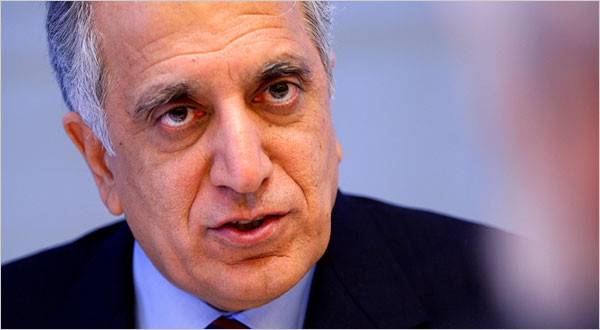

Last week, Afghanistan’s new President, Ashraf Ghani, traveled to China for his first state visit abroad. Mr. Ghani’s calculation — that Beijing could offset the decline in American and Western support — creates a long-term strategic conundrum: Can Afghanistan attract Chinese investment and security assistance while avoiding the perils of excessive dependency on Beijing?
Mr. Ghani’s outreach to China is driven by a combination of short-term realities and long-term goals. The Western drawdown comes at a time when the Afghan government is neither fiscally self-sufficient nor capable of defeating the Pakistan-backed Taliban insurgency. In the short term, there is little alternative to international assistance to keep the Afghan state afloat.
In the longer term, however, Afghanistan hopes to leverage two of the country’s assets to achieve genuine stability and self-reliance: its natural resources and its strategic location, wedged as it is between Iran, Pakistan, China and the Central Asian states. The development of Afghan infrastructure could turn the country into a regional land bridge. Afghanistan would enjoy unimpeded access to regional and global markets while collecting transit fees from the region’s commercial activity.
Washington’s long-standing support hasn’t been enough to bring the land bridge concept to fruition. Although the United States has spent $4 billion constructing roads, the project requires far more money and political stability. The Asian Development Bank estimates that an additional $2 billion of investments in roads and transmission lines is required — and even more for pipelines, railways and upgrading regional infrastructure. Yet continuing security challenges are diverting attention and resources from the initiative.
China is perhaps the only power with the incentives, resources and national will to make Afghanistan’s ambitious vision a reality. Beijing has already made sizable investments in Afghan copper and oil — including a $3 billion agreement to develop the Aynak copper mine. China is eyeing Afghan natural gas. Western companies, lacking sufficient state backing from their governments, have proven unwilling or unable to make comparable investments. If Beijing were to invest in the country’s infrastructure, new transit corridors would facilitate Chinese trade westward to Iran and the Middle East, and south to the Gwadar port in Pakistan.
Despite the fact that an Afghan land bridge would give Pakistan access to Central Asian markets and products, American pressure alone has not persuaded Islamabad to abandon its support for militants. Pakistan’s civilian leaders are increasingly open to a settlement between the Afghan government and the Taliban. But the overall lack of progress on reconciliation is saddling the United States with the disproportionately large cost of supporting Afghanistan’s security forces.
Pakistani intransigence has strengthened Afghanistan’s case for engagement with China. Since 2001, China has largely stayed on the sidelines as the United States has assumed the heavy lifting on the counterterrorism front. China has pursued its economic interests in Afghanistan while benefiting from the security provided by the American military presence. At the same time, China has maintained friendly relations with Pakistan and has refused to lean on the Pakistani military to change its ways.
Continue reading the main storyContinue reading the main storyContinue reading the main story
Recently, however, there have been signs that Chinese policy is changing. Beijing has indicated that it opposes the Taliban’s return to power and believes that the Taliban’s participation in the political system should be contingent on its renunciation of violence. China has even offered to mediate discussions between Kabul and the Taliban, a sign that it no longer sees its relations with Afghanistan simply as an extension of its ties to Pakistan. Beijing is also promoting the idea of a regional forum for Afghan reconciliation and favors establishing trilateral meetings between China, Afghanistan and the United States.
The Afghan government has so far welcomed Chinese efforts to promote reconciliation. The Taliban’s reaction, which will be influenced by the outcome of talks between Beijing and Islamabad, remains uncertain. Given that China, unlike America, has earned the Pakistani military’s trust over many decades, Beijing is better positioned to bring about a shift in Pakistani policy.
Security interests have been the most important factor in China’s reassessment. Beijing is belatedly coming to terms with the threat Islamic extremists pose to China’s territorial integrity. Terrorists in China’s restive Xinjiang province are training in Pakistani camps and honing military skills through their experience in Afghanistan. China fears that with the American withdrawal, Afghanistan will become a bigger sanctuary for anti-Chinese extremists. The fact that Chinese separatism is becoming a global Islamist cause has not escaped Beijing’s notice; the Islamic State has already vowed to “liberate” Xinjiang.
Economic and security aid from China is not without risks. Afghan institutions may not be strong enough to ensure that Chinese investors meet their contractual obligation to put Afghans to work, meet international environmental and health standards, and protect heritage sites.
And if America’s relations with China deteriorate, Afghanistan might be forced to make a choice. The threat of becoming dependent on China would be particularly acute if the United States were to disengage from Afghanistan. Indeed, during the early years of the Cold War, Afghanistan benefited from the simultaneous infusion of American and Soviet foreign assistance until Washington made a fateful decision to cede the country to Soviet influence.
These concerns are not an argument against expanding ties with China. But they underscore the geopolitical factors at play. Afghanistan must ensure that closer ties to China don’t come at the expense of its partnership with the West.
Washington will have to play its part by participating in the proposed trilateral forum. But it must avoid the temptation to abandon Afghanistan once again and thereby cede wider regional influence to China.
Zalmay Khalilzad was the United States ambassador to Afghanistan, Iraq and the United Nations.

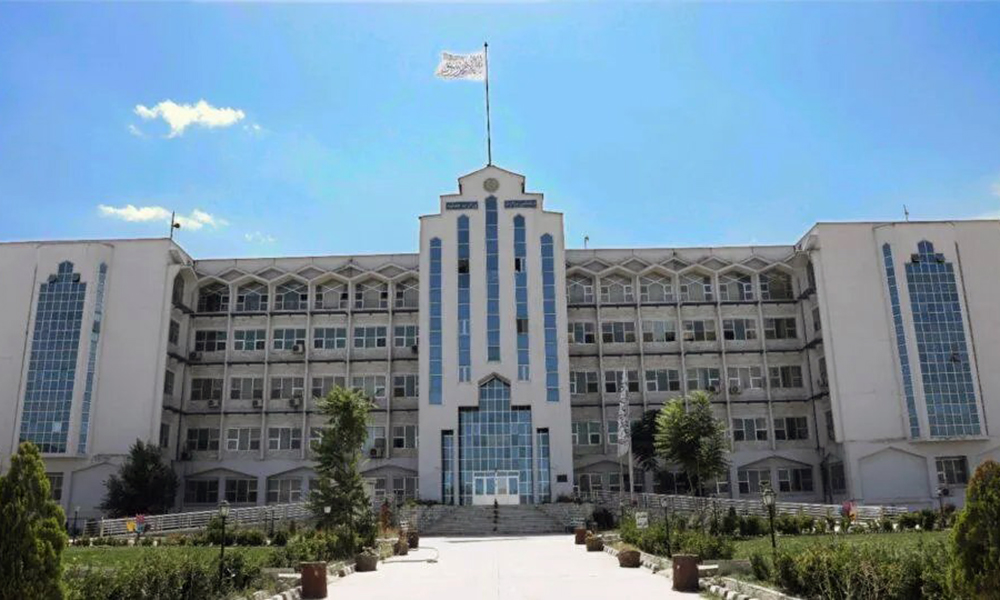
Afghanistan’s Ministry of Justice has announced that the procedure governing the mobilization, collection, and distribution of assistance for migrants returning to Afghanistan has been published in the Official Gazette following its approval by the leader of the Islamic Emirate.
According to the ministry, the procedure consists of an introduction, three chapters, four sections, and 14 articles, and will be implemented by central and provincial committees responsible for mobilizing, collecting, and distributing aid to returning migrants.
The document outlines the composition and authorities of the central and provincial committees, as well as the mechanisms for soliciting, collecting, registering, storing, and distributing cash, in-kind, and service-based assistance. It also specifies oversight measures for aid distribution and restrictions related to the receipt and allocation of assistance.
Under the new procedure, the central committee is tasked with preparing lists of donors and the needs of returning migrants, and formally engaging with domestic donors and Afghans living abroad to attract additional support.
The Ministry of Justice added that the procedure also defines the methods for mobilizing aid and prohibits the collection of domestic assistance outside official channels, as well as the receipt of foreign assistance in violation of the laws and principles of the Islamic Emirate and the provisions of the procedure.
The ministry further noted that the same issue of the Official Gazette includes a decree by the leader of the Islamic Emirate dissolving the Directorate for the Review of Residential Affairs under the General Directorate of Administrative Affairs and transferring its responsibilities to the Supreme Court.
International Sports
One Day to Go: Everything you need to know about FIFA World Cup 2026
With one day remaining until kickoff, anticipation is building around the world as football prepares to take centre stage once again.

The countdown is almost over. In just one day, the FIFA World Cup 2026 will get underway, launching what is widely regarded as the world’s greatest sporting event.
Football fans across Afghanistan and around the globe are preparing for a month of excitement as 48 nations compete for the most coveted prize in international football.
What is the FIFA World Cup?
The FIFA World Cup is the premier international football tournament, held every four years and featuring the world’s best national teams.
The 2026 edition will be the largest in the tournament’s history, expanding from 32 to 48 teams and featuring a record 104 matches.
Where is the tournament being held?
For the first time, the World Cup will be jointly hosted by three countries:
- United States
- Canada
- Mexico
Matches will be played across 16 host cities throughout North America.
When does the tournament start?
The tournament kicks off on June 11, with hosts Mexico facing South Africa in the opening match in Mexico City.
The final will be played on July 19 in New York.
Why is this World Cup historic?
The 2026 tournament marks several major milestones:
- First World Cup hosted by three nations.
- First World Cup featuring 48 teams.
- Largest World Cup ever with 104 matches.
- First time Canada hosts World Cup matches.
Organizers expect millions of fans to attend matches, while billions around the world are expected to follow the tournament on television and digital platforms.

Which teams are among the favourites?
Several traditional football powers enter the tournament among the leading contenders, including:
Argentina (defending champions)
- France
- Brazil
- England
- Spain
- Germany
- Portugal
Stars such as Kylian Mbappé, Erling Haaland, Vinícius Júnior, Jude Bellingham, Harry Kane and Lionel Messi are expected to be among the tournament’s biggest attractions.
How can fans in Afghanistan watch the World Cup?
Football supporters across Afghanistan will be able to follow every moment of the tournament through Ariana Radio and Television Network’s (ATN) extensive coverage – on both TV and radio.
Ariana Television will broadcast FIFA World Cup 2026 matches live across Afghanistan, bringing viewers comprehensive coverage of the world’s biggest football event.
For fans on the move or unable to watch television, Ariana FM will also provide live match broadcasts throughout the tournament, ensuring supporters can stay connected to the action wherever they are.
What can fans expect?
From dramatic goals and unforgettable upsets to emerging stars and title contenders battling for glory, the FIFA World Cup consistently delivers some of sport’s most memorable moments.
With one day remaining until kickoff, anticipation is building around the world as football prepares to take centre stage once again.
Fans in Afghanistan can tune in to Ariana Television from 11:30pm to watch kick off between Mexico and South Africa on Thursday night, June 11.



Pakistan says all aboard military helicopter killed in crash in Pakistani Kashmir

Procedure for mobilizing and distributing aid to returning migrants approved

India’s Hardik Pandya ruled out of Afghanistan ODI series with injury

One Day to Go: Everything you need to know about FIFA World Cup 2026

Iran targets US bases in Jordan and the Gulf after Trump orders strikes near Hormuz

Afghanistan signs $46 million deal to develop standard laboratory complexes

Large blast near Beit Shemesh part of pre-planned test: Israeli defense firm

Trump returns from China with stability but little progress

Afghanistan announce squad for India series

Afghanistan, Russia sign military cooperation agreement

Tahawol: Calls for Afghanistan’s integration discussed

Saar: Alleviating impact of pressure on Afghanistan discussed

Tahawol: The Shadow of War Returns to the Middle East

Saar: New report on US troop withdrawal from Afghanistan

SAAR: UN Security Council Holds Quarterly Meeting on Afghanistan
-

 International Sports1 day ago
Norway’s Viking-inspired World Cup team photo goes viral
-
 Latest News4 days ago
Uzbekistan advances feasibility study for Trans-Afghan Railway Project
-

 International Sports4 days ago
From AI to Robot Dogs: What’s new at FIFA World Cup 2026
-

 Latest News3 days ago
UNAMA voices concern over reported detention of women in Herat
-

 Latest News4 days ago
Karzai welcomes graduation of 74 Afghan girls from US universities
-
 Regional4 days ago
Iran declares support for Hezbollah with wider peace deal in doubt
-
 Business4 days ago
Uzbekistan reports strong surge in trade with global partners led by China
-

 International Sports3 days ago
Midfield Maestros: 10 players set to control the 2026 FIFA World Cup