
World
Record numbers of coronavirus cases in every global region: Reuters tally

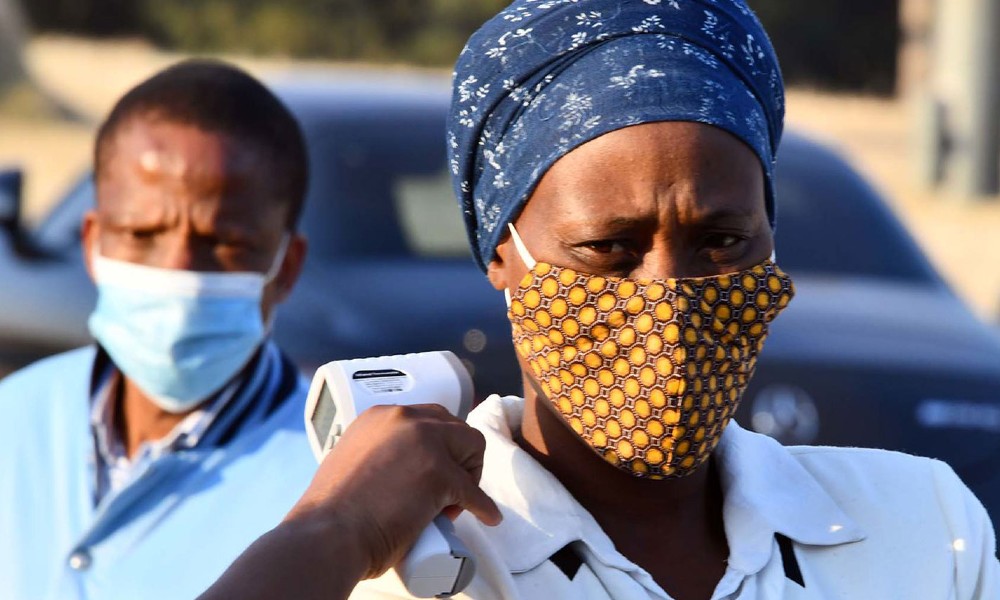
Almost 40 countries have reported record single-day increases in coronavirus infections over the past week, around double the number that did so the previous week, according to a Reuters tally showing a pick-up in the pandemic in every region of the world.
The rate of cases has been increasing not only in countries like the United States, Brazil and India, which have dominated global headlines with large outbreaks, but in Australia, Japan, Hong Kong, Bolivia, Sudan, Ethiopia, Bulgaria, Belgium, Uzbekistan and Israel, among others.
Many countries, especially those where officials eased earlier social distancing lockdowns, are experiencing a second peak more than a month after recording their first.
“We will not be going back to the ‘old normal’. The pandemic has already changed the way we live our lives,” World Health Organization (WHO) Director-General Tedros Adhanom Ghebreyesus said this week.
“We’re asking everyone to treat the decisions about where they go, what they do and who they meet with as life-and-death decisions – because they are.”
The Reuters data, compiled from official reports, shows a steady rise in the number of countries reporting record daily increases in the virus that causes COVID-19 over the past month.
At least seven countries recorded such increases three weeks ago, rising to at least 13 countries two weeks ago to at least 20 countries last week and to 37 countries this week.
The true numbers of both cases and deaths are almost certainly underreported, particularly in countries with poorer health care systems, health experts and officials say.
For this report, the Reuters data was restricted to countries that provide regular daily numbers.
A surge in cases usually precedes a rise in deaths by a couple of weeks.
The United States remains at the top of the case list, this week passing more than 4 million cases and recording more than 1,000 deaths for four consecutive days. Brazil and India – which epidemiologists say is still likely months from hitting its peak – have also exceeded 1 million cases.
The data reveals a growing number of resurgent cases in countries across all regions.
In Australia, officials enforced a six-week partial lockdown and made face masks mandatory for residents in the country’s second-largest city, Melbourne, after a fresh outbreak.
Australia and Japan, which also posted a daily case record this week, both warned of a rise in infections among young people, many of whom celebrated the end of social restrictions at bars and parties.
In Mexico, which also posted a daily record this week and has the fourth-highest death toll of any country, officials warned that a downward trend in case numbers that began in mid-June – about the time the city began relaxing social distancing measures – could reverse.
Based on the rate of hospital admissions over the past week, Mexico City Mayor Claudia Sheinbaum said, hospitalization levels by October could exceed those registered in June, the height of the pandemic.
“It is important to recognize that if we do not change the trend, there could be exponential growth,” she said.
In Europe, where the summer vacation season is in full swing, a new daily record figure in Spain is likely to deter tourists from visiting one of the continent’s most popular destinations.
In Africa, Kenya recorded a record high daily case number less than two weeks after reopening activity, including domestic passenger flights. President Uhuru Kenyatta, who had announced international flights would resume on August 1, has summoned officials to an emergency meeting on Monday to discuss the surge in cases.
In the Middle East, Oman imposed new restrictions that begin on Saturday in addition to a two-week lockdown that will overlap the Islamic feast of Eid al-Adha after reporting a record number of cases.



World
Trump says Iran “should wave the white flag of surrender”
When asked what Iran would need to do to violate the ceasefire, Trump said: “Well, you’ll find out, because I’ll let you know … They know what not to do.”

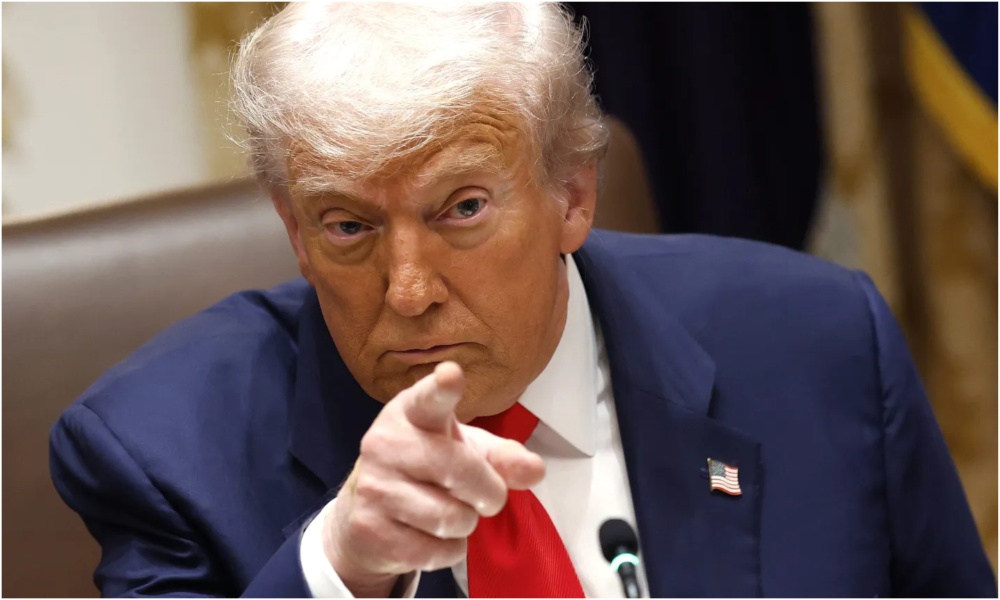
President Donald Trump on Tuesday dismissed Iran’s military capability and said Tehran “should wave the white flag of surrender” but is too proud to do so, Reuters reported.
Trump told reporters in the Oval Office that Iran’s military has been reduced to firing “peashooters” and that Tehran privately wants to make a deal despite its public sabre-rattling.
“They play games, but let me just tell you, they want to make a deal. And who wouldn’t, when your military is totally gone?” he said.
Trump heaped praise on the U.S. blockade of Iranian ports in the region. “It’s like a piece of steel. Nobody’s going to challenge the blockade. And I think it’s working out very well,” he said, read the report.
When asked what Iran would need to do to violate the ceasefire, Trump said: “Well, you’ll find out, because I’ll let you know … They know what not to do.”
Trump said Iran “should save the white flag of surrender.”
“If this were a fight, they’d stop it,” said Trump.
World
Secret Service says it exchanged gunfire with armed suspect near White House
The suspect was not on the White House property, Quinn said.
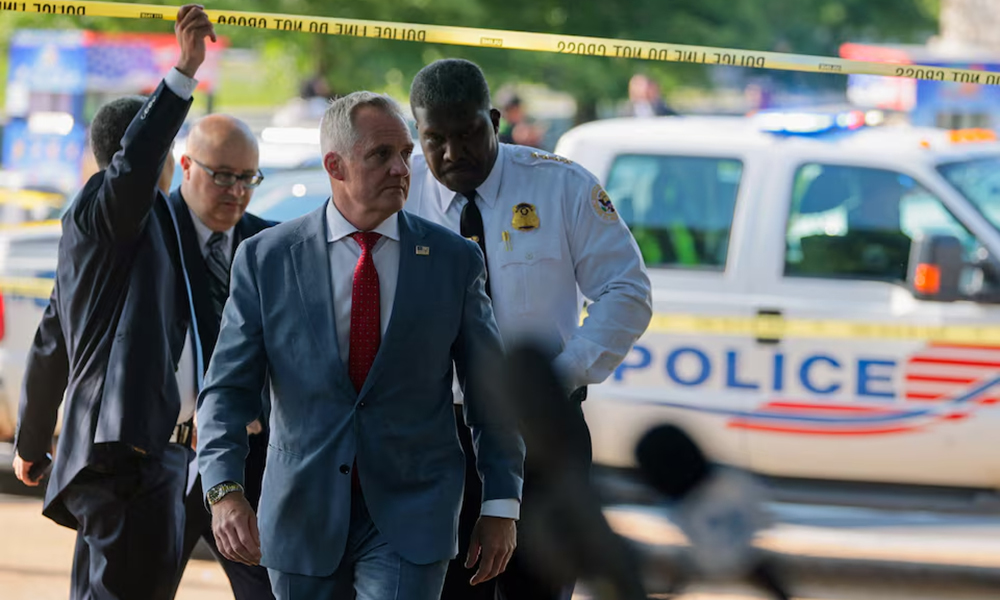
The U.S. Secret Service said on Monday its officers confronted an armed and “suspicious individual” near the White House who later fired at them before fleeing on foot and being shot by law enforcement, Reuters reported.
The incident led to a brief lockdown at the White House.
Agents patrolling the outer perimeter of the White House complex identified a person who Secret Service Deputy Director Matthew Quinn said was a “suspicious individual that appeared to have a firearm.”
He briefly fled on foot after being approached by Secret Service officers and fired in their direction, Quinn said at a press conference.
Secret Service then fired at the suspect who was hit and subsequently hospitalized, Quinn added.
Vice President JD Vance’s motorcade transited through the area “not long before” the incident, Quinn said. There was no indication that the suspect intended to approach Vance’s motorcade, the Secret Service deputy director said.
A juvenile bystander was hit by the suspect but did not receive any life-threatening injuries and was being treated at a hospital, Quinn added.
Agents observed “visual print of a firearm” in considering the individual’s behavior as suspicious when he was spotted, Quinn told reporters.
The suspect was not on the White House property, Quinn said.
Law enforcement have been on alert in recent days in the U.S. capital following a shooting at the White House Correspondents’ Association Dinner late last month over which a man has been arrested, read the report.
Quinn was asked if Monday’s incident was linked to “other recent attempts” on President Donald Trump’s life. Trump was in the White House when this incident unfolded.
“Whether or not it was directed to the president or not, I don’t know but we will find out,” Quinn said.
The Secret Service deputy director confirmed that a weapon was recovered from the suspect but did not elaborate.
The Secret Service said earlier its personnel were on the scene of the officer-involved shooting at 15th Street and Independence Avenue in Washington, D.C.
The DC Police Department was handling the probe.
World
Trump says US could restart Iran strikes ‘if they misbehave’
Iran has been blocking nearly all shipping from the Gulf apart from its own for more than two months. Last month, the U.S. imposed its own blockade of ships from Iranian ports.
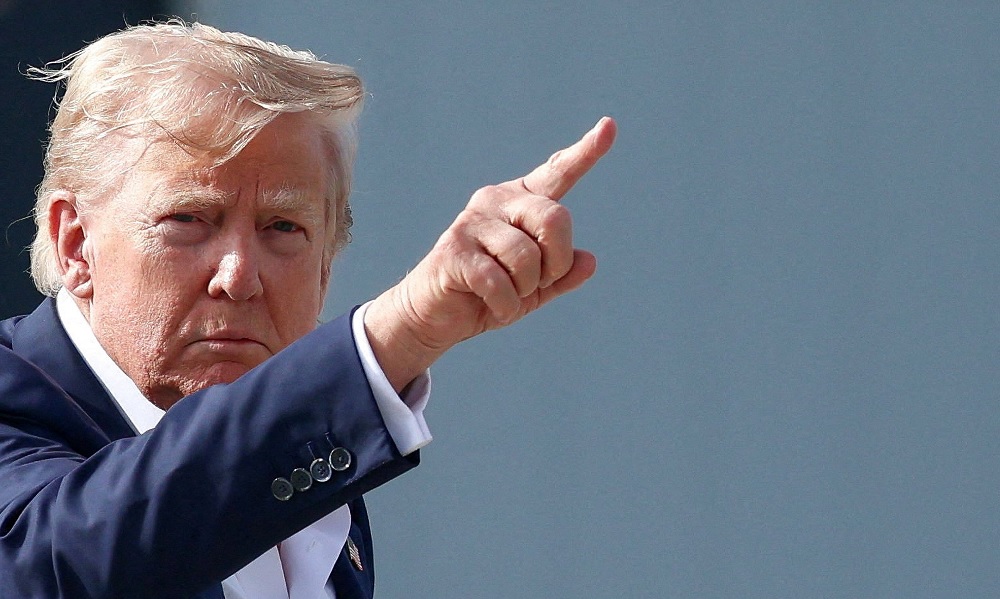
U.S. President Donald Trump said on Saturday he had been told about the concept of a deal with Iran, but was waiting for the exact wording, while warning there was still the possibility of restarting strikes on the country if Tehran misbehaves, Reuters reported.
A senior Iranian official said on Saturday that an Iranian proposal so far rejected by Trump would open shipping in the Strait of Hormuz and end the U.S. blockade of Iran while leaving talks on Iran’s nuclear program for later.
When asked about Iran’s proposal before boarding a flight to Miami at West Palm Beach, Florida, Trump replied: “They told me about the concept of the deal. They’re going to give me the exact wording now.”
He added on his social media channel that he could not imagine the proposals would be acceptable and that Iran had not paid a big enough price for what it had done.
Asked if he might restart strikes on Iran, Trump replied: “I don’t want to say that. I mean, I can’t tell that to a reporter. If they misbehave, if they do something bad, right now we’ll see. But it’s a possibility that could happen.”
Trump has said repeatedly that Iran can never have a nuclear weapon and said on Friday he was not satisfied with the latest Iranian proposal, while Iran’s foreign minister said Tehran was ready for diplomacy if the U.S. changes its approach, read the report.
Reuters and other news organizations reported over the past week that Tehran was proposing to reopen the strait before nuclear issues were resolved. The official confirmed that this new timeline had now been spelled out in a formal proposal conveyed to the United States through mediators.
Trump also said on Friday that “on a human basis,” he did not prefer the military course of action and told congressional leaders he did not need their permission to extend the war beyond a deadline set by law for that day because the ceasefire had “terminated” hostilities.
While saying repeatedly he is in no hurry, Trump is under domestic pressure to break Iran’s hold on the strait, which has choked off 20% of the world’s oil and gas supplies and pushed up U.S. gasoline prices. Trump’s Republican Party faces the risk of a voter backlash over higher prices when the country votes in midterm congressional elections in November.
Iranian media said Tehran’s 14-point proposal included the withdrawal of U.S. forces from areas surrounding Iran, lifting the blockade, releasing Iran’s frozen assets, payment of compensation, lifting sanctions and ending the war on all fronts, including Lebanon, as well as a new control mechanism for the strait.
The United States and Israel suspended their bombing campaign against Iran four weeks ago, but appear no closer to a deal to end a war that has caused the biggest disruption ever to global energy supplies, roiled global markets and raised worries about the possibility of a wider global economic downturn.
Iran has been blocking nearly all shipping from the Gulf apart from its own for more than two months. Last month, the U.S. imposed its own blockade of ships from Iranian ports.
Washington has repeatedly said it will not end the war, which has led to the deaths of thousands of people, without a deal that prevents Iran from obtaining a nuclear weapon, the primary aim Trump cited when he launched strikes in February in the midst of nuclear talks. Iran says its nuclear program is peaceful.
Speaking on condition of anonymity to discuss confidential diplomacy, the senior Iranian official said Tehran believed its latest proposal to shelve nuclear talks for a later stage was a significant shift aimed at facilitating an agreement, Reuters reported.
Under the proposal, the war would end with a guarantee that Israel and the United States would not attack again. Iran would open the strait, and the United States would lift its blockade.
Future talks would then be held on curbs to Iran’s nuclear program in return for the lifting of sanctions, with Iran demanding Washington recognize its right to enrich uranium for peaceful purposes, even if it agrees to suspend its nuclear program.
“Under this framework, negotiations over the more complicated nuclear issue have been moved to the final stage to create a more conducive atmosphere,” the official said.


Uzbekistan launches new cargo corridor linking China and Afghanistan

Afghanistan presses Chinese contractor over delays in Mes Aynak copper project

Afghan activist Matiullah Wesa awarded France’s Freedom Prize 2026

Ahmedabad to host IPL 2026 final; BCCI announces playoff schedule

Trump says Iran “should wave the white flag of surrender”

Bayat Power extends gas supply deal with Afghan Gas

Etihad Airways to expand Kabul–Abu Dhabi flights to daily service amid surging demand

Afghanistan’s new cricket head coach Richard Pybus arrives in Kabul

Afghanistan, Uzbekistan sign $400 million trade deals in push to deepen ties

Afghanistan moves toward self-sufficiency in car battery production

Tahawol: Deportation of Afghan refugees from Germany discussed

Saar: Criticism over Pakistan’s policies discussed

Tahawol: Pakistan’s dual policy on Afghanistan

Saar: Iran’s warning to US forces

Tahawol: Efforts for US-Iran agreement
-

 Latest News4 days ago
Germany to launch online visa system for Afghan study and work applicants in Pakistan
-
 Regional5 days ago
Iran sends new negotiation proposal to US via Pakistan
-

 Regional4 days ago
Iranian proposal rejected by Trump would open strait before nuclear talks, Iran official says
-
 World3 days ago
Trump says US could restart Iran strikes ‘if they misbehave’
-

 Regional3 days ago
Iran says it has received US response to its latest offer for talks
-

 Business3 days ago
Afghan economic commission approves 12 major development projects across key sectors
-
 World4 days ago
Trump says he’s dissatisfied with Iranian proposal as rift with allies deepens
-

 Sport2 days ago
Afghanistan set for Maldives four-nation tournament