
Latest News
Russia calls for broad engagement with Afghan authorities


Russia has urged the international community to adopt a comprehensive and non-politicized approach toward Afghanistan, emphasizing dialogue, regional cooperation, and practical support to stabilize the country and prevent further security deterioration.
Speaking at a recent UN Security Council meeting, Russia’s Permanent Representative, Vassily Nebenzia, said that contrary to Western predictions following the withdrawal of foreign troops, Afghanistan did not collapse. He argued that despite ongoing sanctions, Afghan authorities are making efforts to address long-standing challenges and pursue regional cooperation aimed at building a self-reliant state, though he acknowledged the process would take time and require international support.
Nebenzia said Russia continues to back the UN Assistance Mission in Afghanistan (UNAMA) and supports initiatives such as the Doha Process, which promotes engagement with the Islamic Emirate and Afghanistan’s gradual reintegration into global affairs. He stressed that constructive dialogue with the Afghan authorities is essential and warned against what he described as pressure, ultimatums, or sanctions-driven approaches, saying these could harden positions and undermine UN efforts on the ground.
The Russian envoy said regional players, including members of the Shanghai Cooperation Organization (SCO) and the Collective Security Treaty Organization (CSTO), share the view that engagement is the only viable path forward.
He also called for progress on unfreezing Afghan assets and expanding development assistance, warning that failure to do so could lead to a further drawdown of the UN presence in the country.
On security, Nebenzia expressed concern about ongoing terrorist threats, particularly from Islamic State Khorasan Province (ISKP), also known as Daesh, noting that the group continues to receive external funding and recruit foreign fighters, including individuals with combat experience from Syria and Iraq.
He also raised alarm over uncertainty surrounding weapons left behind by NATO forces and warned of the growing production of synthetic drugs, which he said is closely linked to terrorism.
Nebenzia said Russia supports dialogue between Afghanistan and Pakistan amid rising tensions linked to militant activity, urging both sides to expand cooperation, especially on counterterrorism.
He also highlighted the worsening socio-economic situation in Afghanistan and praised humanitarian agencies for continuing their work despite funding cuts. Russia, he said, remains engaged in providing assistance and expanding cooperation with Afghanistan in political, security, and economic fields.
The Russian envoy reiterated Moscow’s support for the rights of all Afghans and the formation of an inclusive government, calling for respect for fundamental freedoms, including access to education and employment, without discrimination.
Nebenzia concluded by urging the UN to engage with Afghanistan’s “real authorities” to help resolve the country’s challenges and support its reintegration into the international community.

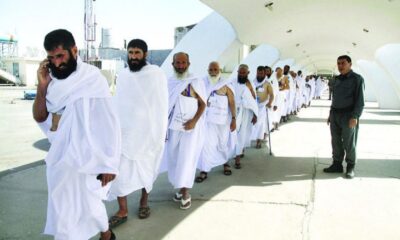

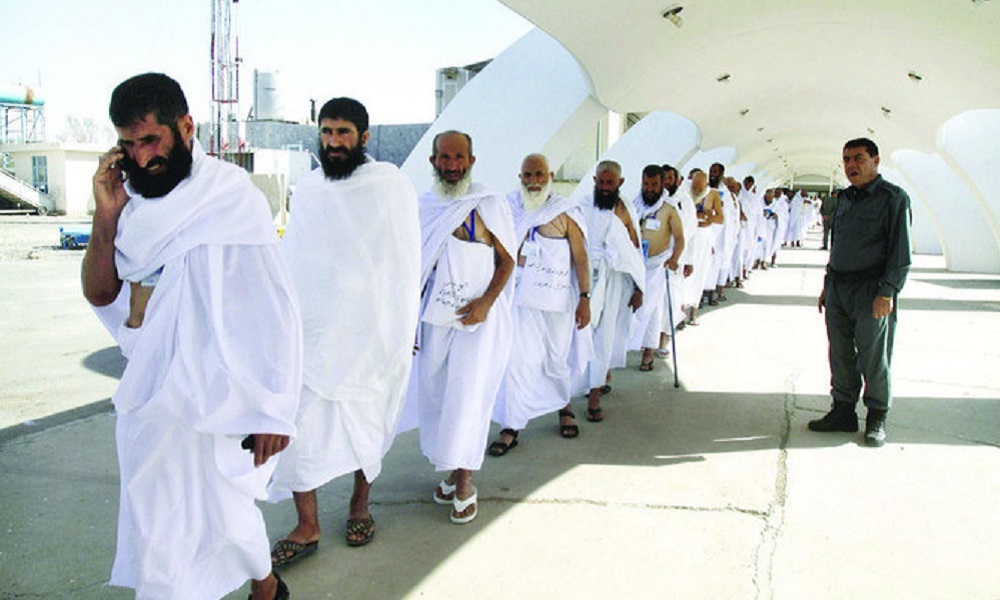
Noor Mohammad Saqib, Minister of Hajj and Religious Affairs, announced on Saturday that Afghanistan has secured a quota of 30,000 for the 2026 Hajj pilgrimage, and that this quota has been distributed transparently and fairly among Hajj applicants across the country.
Speaking at a press conference, Saqib said that the cost for each pilgrim from Afghanistan to perform next year’s Hajj has been set at 266,400 AFN, which is a reduction of 15,690 AFN compared to the previous period.
According to Saqib, the total expenses for the Hajj process have been set at 7,818,307,200 AFN.
He stated that separate quotas have also been determined for Mujahideen and Afghan migrants in Iran, Pakistan, and other countries, and that Saudi Arabia has pledged to allocate a larger quota to Afghanistan in the future.
He added that after the Islamic Emirate came to power in Afghanistan, there were 87,104 Hajj applicants who had previously registered across the country. He said that this year the majority of Afghanistan’s allocated quota was given to these applicants.
The Minister of Hajj also emphasized that contracts have been signed with Ariana Airlines and Kam Air to transport pilgrims to Saudi Arabia.
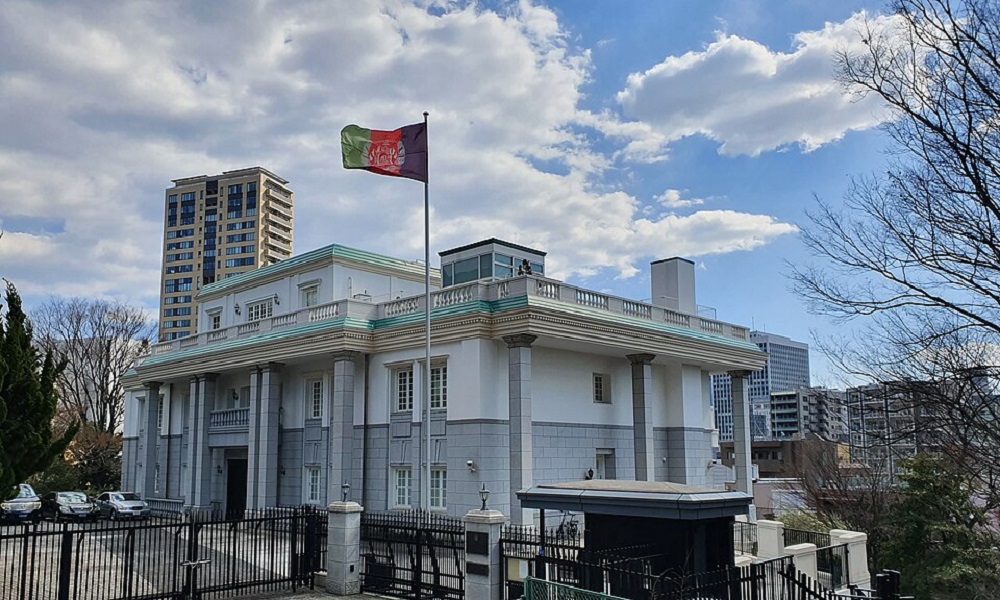
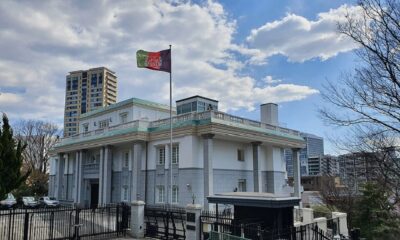
Shida Mohammad Abdali, the ambassador of the former Afghan government in Japan, has announced that the activities of the embassy have been suspended as of today, Saturday.
In a statement, Abdali said that today was the last day of the Afghanistan Embassy’s operations in Tokyo and that the embassy has officially been handed over to a delegation from the Japanese Ministry of Foreign Affairs.
Until now, the Afghanistan Embassy in Japan had been operating under the name of the former government, and its ambassador had been appointed by the former Afghan administration.
Earlier, the embassy had announced that its activities would be suspended from January 31, 2026.
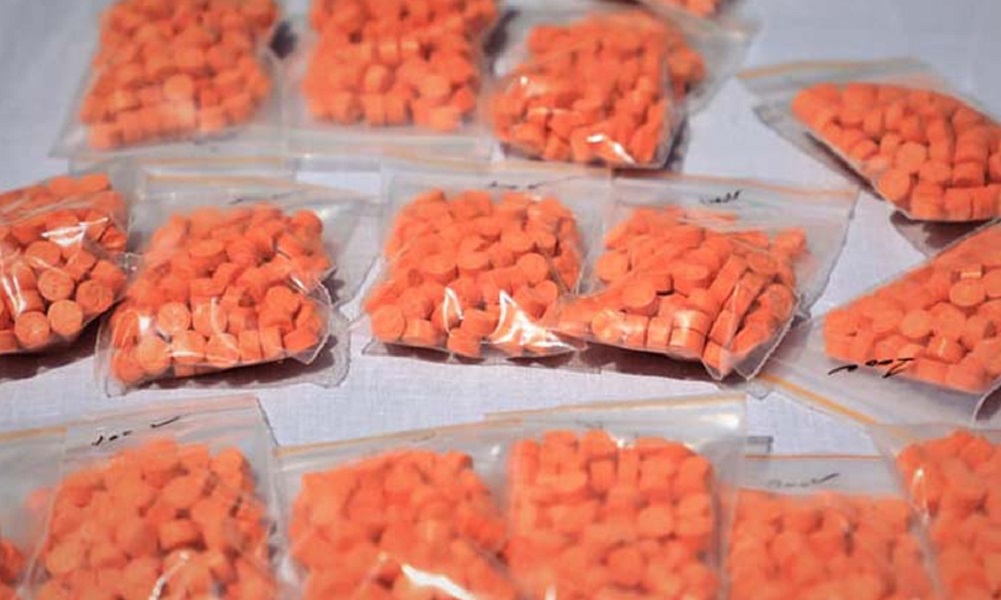
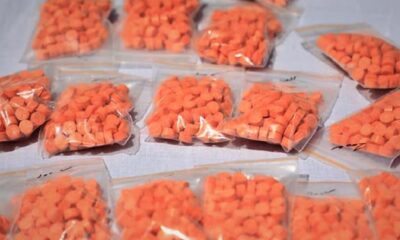
The United Nations has warned that drug use patterns in Afghanistan are shifting away from traditional narcotics toward synthetic drugs and the misuse of medical substances, according to a new report released by the UN Office on Drugs and Crime (UNODC).
The report, the third and final volume of the National Drug Use Survey in Afghanistan, found that cannabis and opium remain the most commonly used substances, accounting for 46 percent and 19 percent of drug consumption, respectively. However, it highlights a growing use of synthetic drugs, with so-called “K” tablets making up 11 percent and methamphetamine, commonly known as crystal meth, accounting for 7 percent.
The survey was conducted by UNODC with financial support from the United Nations Development Programme (UNDP). It also points to the heavy economic burden drug use places on Afghan households, noting that the cost of substances such as methamphetamine can consume a substantial share of a daily wage earner’s income.
Respondents identified poverty, unemployment, physical pain, psychological stress and family problems as the main factors driving drug use. UN officials emphasized that addressing the issue requires integrated responses, including treatment and harm-reduction services alongside primary healthcare, psychosocial support and social protection measures.
The report also highlights significant gaps in access to drug treatment services, particularly for women, whose access remains considerably lower than that of men.


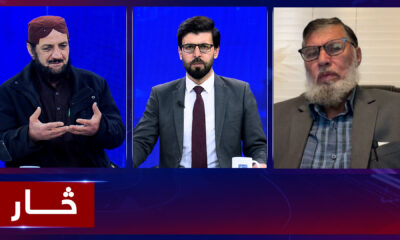
Saar: BLA’s attacks on Pakistani army bases discussed

Afghanistan granted 30,000 Hajj quota for 2026

Afghan Embassy in Japan suspends operations

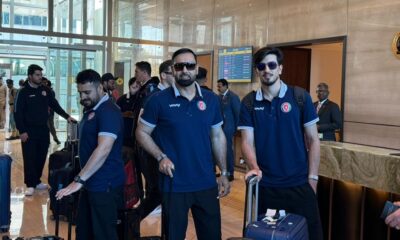
T20 World Cup 2026: Afghanistan national cricket team arrives in India

UN report warns of shift toward synthetic drugs in Afghanistan

Turkey withdraws from Afghanistan-Pakistan mediation amid rising tensions

ICG report says Pakistan most impacted by IEA’s return in Afghanistan

Pakistan approves re-export of stranded Afghan transit trade cargo

Afghanistan–China joint market opens in Kabul

Afghanistan set to face West Indies in crucial T20I series
Saar: BLA’s attacks on Pakistani army bases discussed

Tahawol: Defense Ministry’s high-level visit to Russia discussed

Saar: Ongoing tensions between US and Iran reviewed

Tahawol: Tashkent’s interest in military cooperation with Kabul discussed

Saar: Kabul, Ashgabat call for regional cooperation discussed
-
 Sport3 days ago
AFC Futsal Asian Cup 2026: Day One Review
-

 Sport4 days ago
Afghanistan’s Mahdi Norouzi ruled out of AFC Futsal Asian Cup due to injury
-

 Sport3 days ago
Scotland name Afghanistan-born Zainullah Ihsan in T20 World Cup squad
-

 Sport2 days ago
Afghanistan shine on Day Two of AFC Futsal Asian Cup Indonesia 2026
-
 Sport2 days ago
Afghanistan eye second straight win ahead of Malaysia clash at AFC Futsal Asian Cup
-
 Business4 days ago
Afghanistan’s exports drop sharply in December 2025: World Bank
-
 Latest News2 days ago
Australia announces $50 million in new humanitarian aid for Afghanistan
-
 Regional4 days ago
EU and India move toward closer defence ties amid shifting global security landscape