
Latest News
Sept. 11 victims cannot seize Afghan central bank assets: US judge

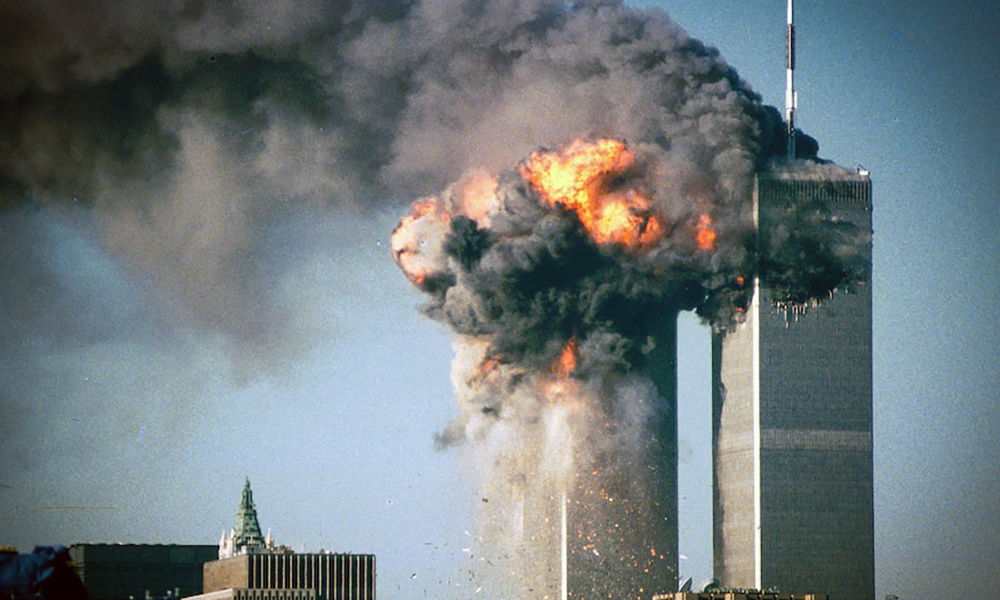
A US judge decided on Tuesday that victims of the Sept. 11, 2001, attacks are not entitled to seize $3.5 billion of assets belonging to Afghanistan’s central bank to satisfy court judgments they obtained against the Islamic Emirate of Afghanistan (IEA), Reuters reported.
US District Judge George Daniels in Manhattan said he was “constitutionally restrained” from finding that the IEA was Afghanistan’s legitimate government, a precursor for attaching assets belonging to Da Afghanistan Bank, or DAB.
Daniels said letting victims seize those assets would amount to a ruling that the IEA are Afghanistan’s legitimate government.
He said US courts lack power to reach that conclusion, noting that Biden administration does not recognize the IEA as Afghanistan’s government, read the report.
“The judgment creditors are entitled to collect on their default judgments and be made whole for the worst terrorist attack in our nation’s history, but they cannot do so with the funds of the central bank of Afghanistan,” Daniels wrote.
“The Taliban [Islamic Emirate of Afghanistan] – not the former Islamic Republic of Afghanistan or the Afghan people – must pay for the IEA’s liability in the 9/11 attacks,” he added.
Daniels’ decision is a defeat for four groups of judgment creditors that claimed some of the $7 billion of DAB funds that had been frozen at the Federal Reserve Bank in New York, Reuters reported.
“This decision deprives over 10,000 members of the 9/11 community of their right to collect compensation from the Taliban [IEA],” said Lee Wolosky, a lawyer for one creditor group known as the Havlish plaintiffs. “We believe it is wrongly decided and will appeal.”
The other creditor groups are also planning an appeal, a separate Tuesday court filing shows, read the report.
In an executive order last February, US President Joe Biden ordered $3.5 billion of the DAB funds set aside to benefit the Afghan people.
Last September, the US Treasury said it would move that money to a Swiss-based trust beyond the IEA’s reach.
NOT THE IEA’S MONEY
The creditor groups had sued many defendants, including al-Qaeda, over the Sept. 11 attacks, and obtained default judgments after the defendants failed to show up in court, Reuters reported.
At the time of the attacks, the Islamic Emirate of Afghanistan (IEA) had allowed al-Qaeda to operate within Afghanistan.
The United States ousted the IEA and al-Qaeda in late 2001, but the IEA returned to power in 2021 when Western forces pulled out of the country.
In his 30-page decision, Daniels adopted findings of US Magistrate Judge Sarah Netburn, who last August also recommended no recovery for the creditor groups.
Daniels said he lacked jurisdiction over DAB under federal law because the bank was an instrumentality of a foreign government and thus had immunity.
He also said Afghanistan, as opposed to the IEA, neither qualified as a “terrorist party” nor had been designated a state sponsor of terrorism, read the report.
“Neither the Taliban [IEA] nor the judgment creditors are entitled to raid the coffers of the state of Afghanistan to pay the Taliban’s debts,” Daniels wrote.
Other countries recently held about $2 billion of Afghan reserves, Reuters reported.
Nearly 3,000 people died on Sept. 11, 2001, when planes were flown into New York’s World Trade Center, the Pentagon in northern Virginia, and a Pennsylvania field.
US sanctions ban doing financial business with the IEA but allow humanitarian support for the Afghan people.
The case is in re Terrorist Attacks on Sept. 11, 2001, US District Court, Southern District of New York, No. 03-md-01570, Reuters reported.












Kazakhstan’s Foreign Minister Mukhtar Tileuberdi has called for pragmatic and coordinated international engagement with Afghanistan, saying the country’s long-term stability is closely linked to the security and sustainable development of Central Asia.
Speaking during the general debate of the 81st session of the United Nations General Assembly in New York on Friday, Tileuberdi said humanitarian assistance to Afghanistan remains essential but alone cannot break the cycle of poverty, displacement and dependency.
He said Kazakhstan supports a “pragmatic, coordinated and step-by-step” approach to international engagement with Afghanistan, with the United Nations playing a central role.
Tileuberdi also said Kazakhstan is working with the UN to operationalize the United Nations Regional Centre for the Sustainable Development Goals for Central Asia and Afghanistan in Almaty.
He said the success of the centre should be measured by the results and assistance it delivers to the region.


Abu Muslim Farah defeat Khurasan Faryab 2-0 in ACL season six

Saar: Concerns over Pakistan’s political crisis discussed

Afghanistan Champions League: Omar Zawak Herat beat Toofan Herat 1-0

Blast in Pakistan’s Dera Ismail Khan kills 11, injures 30

Ariana Afghan Airlines increases Kabul-Delhi cargo flights

Saudi energy group signs major Afghanistan deals covering gas exploration and pipeline plans

Trump floats idea of renaming Atlantic or Pacific Ocean

US hits Egyptian bank branches with Iran sanctions as war marks six months

Nepal flood rescue mission enters critical phase as thousands remain missing

Iranian clubs to face Gulf opponents at neutral venues in Asian Champions League Elite
Saar: Concerns over Pakistan’s political crisis discussed

Exclusive interview with Abdul Latif Mansoor, Minister of MRRD

Tawsia: Overview of Afghanistan’s iron mines

Tahawol: Discussion on fresh Pakistani airstrikes on Afghanistan

Saar: Calls for international support for Afghanistan discussed
-

 World5 days ago
CNN, MS NOW and Politico sue Trump, challenging White House ban
-

 Latest News4 days ago
Ariana Afghan Airlines ranks seventh among 45 Central Asian airlines
-

 Latest News5 days ago
UN reiterates call for respect for international law after Kunar airstrikes
-

 Regional4 days ago
US and Iran hold first talks since June after Trump’s ‘annihilation’ threat
-

 Latest News4 days ago
Silk Road highway in Wakhan corridor now reaches the China border
-

 Regional3 days ago
Iran airlines cancel flights as US sanctions hit
-

 Latest News5 days ago
Afghan Official: Pakistan’s airstrikes will not go unanswered
-

 Sport5 days ago
Afghan boxing referee heads to China for international festival