
Latest News
To reach a peace deal, Taliban say Ghani must go

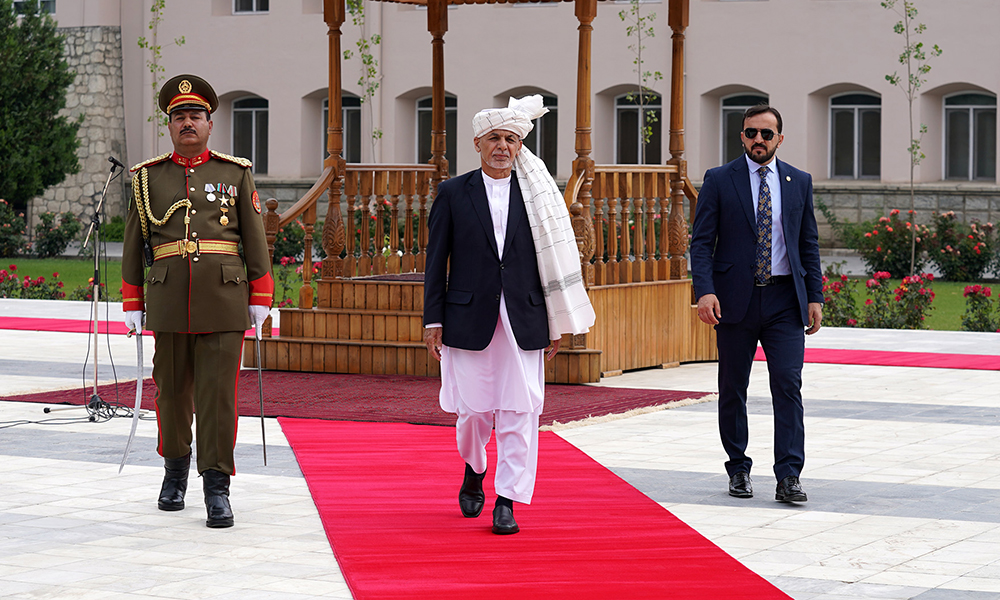
The Taliban say they don’t want to monopolize power, but insist there will only be peace in Afghanistan once President Ashraf Ghani has been removed from power and a new government is in place.
In an interview with The Associated Press, Taliban spokesman Suhail Shaheen, who is also a member of the group’s negotiating team, laid out the insurgents’ stance on what should come next in the country.
The Taliban have swiftly captured territory in recent weeks, seized strategic border crossings and are threatening a number of provincial capitals, as the last U.S. and NATO soldiers leave Afghanistan.
This week, the top U.S. military officer, General Mark Milley, told a Pentagon press conference that the Taliban have “strategic momentum,” and he did not rule out a complete Taliban takeover. But he said it is not inevitable. “I don’t think the end game is yet written,” he said.
Shaheen told AP that the Taliban will lay down their weapons when a negotiated government acceptable to all sides in the conflict is installed in Kabul and Ghani’s government is gone.
“I want to make it clear that we do not believe in the monopoly of power because any governments who (sought) to monopolize power in Afghanistan in the past, were not successful governments,” said Shaheen, apparently including the Taliban’s own five-year rule in that assessment.
“So we do not want to repeat that same formula,” he said.
But he was also uncompromising on the continued rule of Ghani, calling him a war monger and accusing him of using his Tuesday speech on the Islamic Holy day of Eid-al-Adha to promise an offensive against the Taliban, AP reported.
Shaheen dismissed Ghani’s right to govern, resurrecting allegations of widespread fraud that surrounded Ghani’s 2019 election win. After that vote, both Ghani and his rival Abdullah Abdullah declared themselves president. After a compromise deal, Abdullah is now No. 2 in the government and heads the reconciliation council, AP reported.
Shaheen meanwhile called last week’s talks in Doha a good beginning. But he said the government’s repeated demands for a ceasefire while Ghani stayed in power were tantamount to demanding a Taliban surrender.
“They don’t want reconciliation, but they want surrendering,” he said.
Before any ceasefire, there must be an agreement on a new government “acceptable to us and to other Afghans,” he said. Then “there will be no war.”
Shaheen said under this new government, women will be allowed to work, go to school, and participate in politics, but will have to wear the hijab, or headscarf. He said women won’t be required to have a male relative with them to leave their home, and that Taliban commanders in newly occupied districts have orders that universities, schools and markets operate as before, including with the participation of women and girls, AP reported.
Shaheen said there are no plans to make a military push on Kabul and that the Taliban have so far “restrained” themselves from taking provincial capitals. But he warned they could, given the weapons and equipment they have acquired in newly captured districts, AP reported. He contended that the majority of the Taliban’s battlefield successes came through negotiations, not fighting.
“Those districts which have fallen to us and the military forces who have joined us … were through mediation of the people, through talks,” he said. “They (did not fall) through fighting … it would have been very hard for us to take 194 districts in just eight weeks.”
AP reported that the Taliban control about half of Afghanistan’s 419 district centers, and while they have yet to capture any of the 34 provincial capitals
On the issue of a possible civil war, Shaheen told AP: “You know, no one no one wants a civil war, including me.”
Shaheen also repeated Taliban promises aimed at reassuring Afghans who fear the group and said they had nothing to fear from the Taliban and denied threatening them.
But, he added, if some want to take asylum in the West because Afghanistan’s economy is so poor, “that is up to them.”
He also denied that the Taliban have threatened journalists and Afghanistan’s civil society, which has been targeted by dozens of killings over the past year, AP reported.
While Daesh has taken responsibility for some attacks, the Afghan government has blamed the Taliban for most of the killings while the Taliban in turn accuse the Afghan government of carrying out the killings to defame them.
Shaheen said journalists, including those working for Western media outlets, have nothing to fear from a government that includes the Taliban.
“We have not issued letters to journalists (threatening them), especially to those who are working for foreign media outlets. They can continue their work even in the future,” he said.







Latest News
Afghanistan’s hunger crisis deepens as 16 million face food insecurity ahead of winter
John Aylieff, Afghanistan Country Director for the World Food Programme (WFP), said acute malnutrition among women and children had deteriorated significantly.
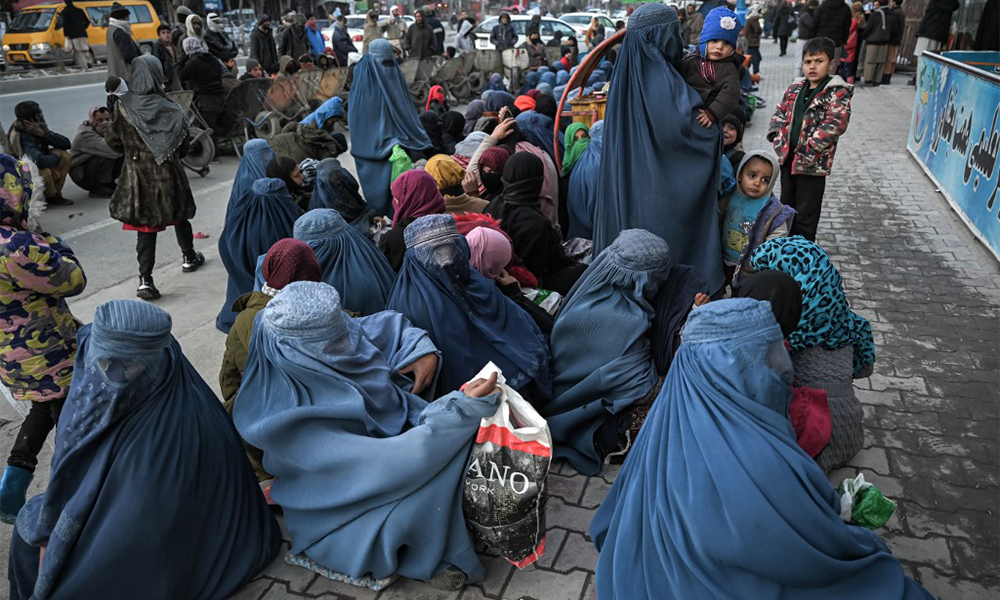
Afghanistan is facing a worsening humanitarian crisis as nearly 16 million people struggle to access sufficient food ahead of winter, while acute malnutrition among women and children continues to rise, officials from international humanitarian organisations have warned.
Jan Egeland, Secretary-General of the Norwegian Refugee Council (NRC), has warned that approximately one-third of Afghanistan’s population could face hunger this winter if urgent action is not taken.
In a recent statement, Egeland said the number of people unable to access the food they need had increased by two million compared with the same period last year.
He attributed the worsening situation to rising inflation, high unemployment, climate change and declining humanitarian assistance, warning that millions of Afghan families are struggling to meet their basic needs.
“Mothers I met last month in Kabul and Kandahar told me they have too little food for their children, and feared the coming winter,” Egeland said.
He also expressed concern over declining international support, describing Afghanistan’s humanitarian response as one of the least-funded operations globally.
Meanwhile, John Aylieff, Afghanistan Country Director for the World Food Programme (WFP), said acute malnutrition among women and children had deteriorated significantly.
“About 1.3 million more women and children are acutely malnourished this year even than they were in 2022 just after the country was taken over,” Aylieff said, referring to the period following the IEA’s return to power.
He added that the international community’s withdrawal and the near-collapse of Afghanistan’s economy had contributed to the worsening crisis.
“So it is deepening. It is extremely serious and it is a crisis which is spinning out of control which we simply don’t have the resources to contain,” Aylieff warned.
Egeland called for an urgent increase in humanitarian assistance, particularly for women, children and Afghans recently returned from Iran and Pakistan.
Humanitarian officials warn that without additional funding and sustained support, food insecurity and malnutrition could worsen further as winter approaches, placing millions of vulnerable Afghans at greater risk.
Latest News
Russia-Afghanistan trade doubles in first half of 2026, envoy says
“Trade turnover between our countries is growing. In the first half of this year, it doubled,” Kabulov said.
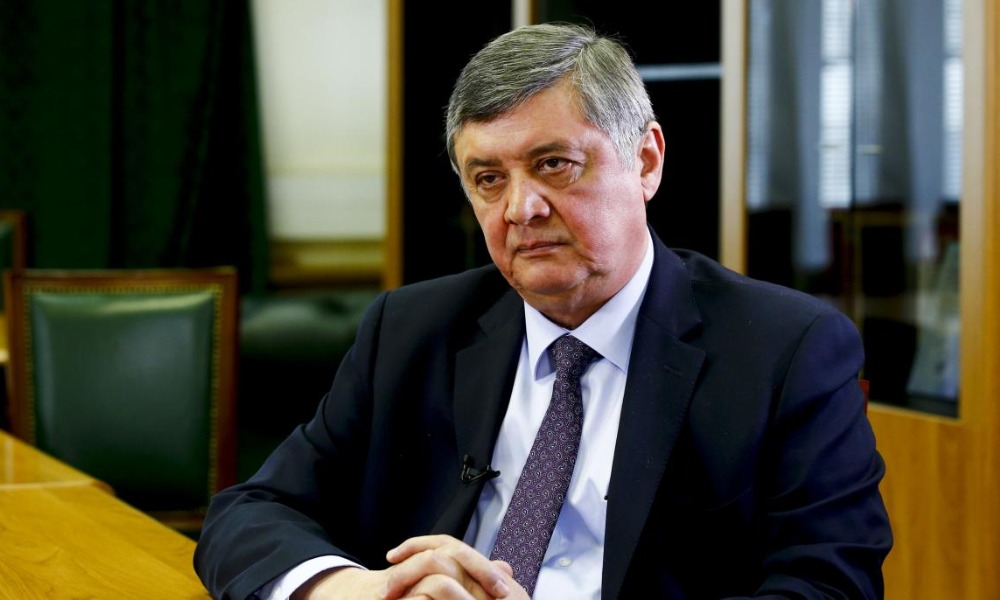
Trade turnover between Russia and Afghanistan doubled in the first six months of 2026, indicating a steady growth trend in economic ties between the two countries, Russian Presidential Special Representative for Afghanistan Zamir Kabulov has said.
According to Russia’s TASS news agency, Kabulov made the remarks on Friday, October 16, during a conference on security in Central Asia and Afghanistan hosted by the Collective Security Treaty Organization (CSTO), the Commonwealth of Independent States (CIS) and the Shanghai Cooperation Organization (SCO).
“Trade turnover between our countries is growing. In the first half of this year, it doubled,” Kabulov said.
He acknowledged that the overall trade figures remain modest but described the increase as significant for Afghanistan, which he said is recovering from two decades of US and NATO military presence.
Moscow Seeks to Sustain Trade Growth
Kabulov stressed that maintaining steady and progressive growth in bilateral trade is important, adding that Russia would work to sustain the current pace of development.
He also said Russia and Afghanistan were building relations based on mutually beneficial and constructive engagement.
The remarks highlight Moscow’s stated intention to strengthen economic cooperation with Afghanistan as regional countries continue discussions on security, stability and development across Central Asia and Afghanistan.
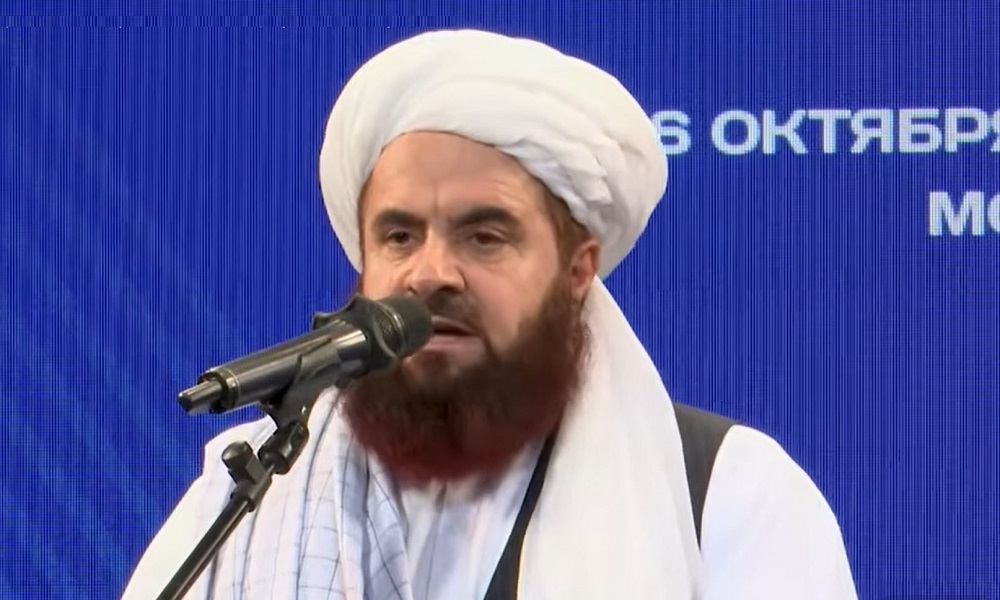
Gul Hassan Hassan, the Islamic Emirate of Afghanistan’s (IEA) ambassador to Russia, said on Friday that the group’s leadership and centers had been completely eliminated from Afghan territory.
He made the remarks during a joint security conference in Moscow involving the Collective Security Treaty Organization (CSTO), the Commonwealth of Independent States (CIS) and the Shanghai Cooperation Organization (SCO), which focused on security issues in Central Asia and Afghanistan.
Hassan stressed that the IEA would not allow anyone to use Afghan territory against other countries.
He also said the IEA had made significant progress in strengthening security, combating narcotics and boosting the country’s economy over the past five-plus years.


Afghanistan’s hunger crisis deepens as 16 million face food insecurity ahead of winter

Russia-Afghanistan trade doubles in first half of 2026, envoy says

Trump says US may strike Iran’s ‘Pickaxe Mountain’ nuclear facility

Tawsia: Efforts to increase energy production capacity in Afghanistan

Afghanistan Champions League: Abu Muslim Farah beat Sarsabz Yashlar 3-1

Cricket Bonanza: Afghanistan set for packed international schedule

Afghanistan says 28 killed, 32 captured in Nuristan operation

Silk Road highway in Wakhan corridor now reaches the China border

CNN, MS NOW and Politico sue Trump, challenging White House ban

Dogharoun handles 60% of Iran’s exports to Afghanistan
Tawsia: Efforts to increase energy production capacity in Afghanistan

Saar: Review of state officials’ visits to Kabul over past month discussed

Tahawol: Kyrgyzstan’s rejection of Afghan refugees discussed

Saar: Central Asia’s trade alternative to Pakistan discussed

Tahawol: Warnings over worsening insecurity in Pakistan discussed
-

 Sport3 days ago
Afghan futsal coach: Brazil tournament is first step towards new goals and World Cup
-
 Latest News3 days ago
Afghan official says Durand Line crossings to remain closed until Islamabad accepts demands
-
 Sport5 days ago
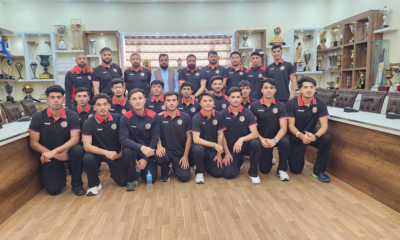
Afghanistan U19 begin Asia Cup Preparations with Oman tour
-

 Latest News2 days ago
India, Russia hold security talks on Afghanistan and Pakistan amid regional tensions
-
 Sport4 days ago
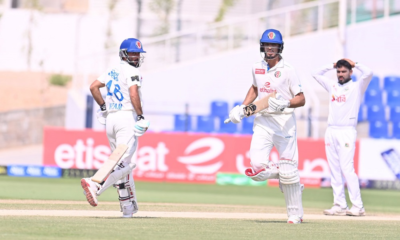
Afghanistan hold Bangladesh to dramatic draw in Abu Dhabi Test
-
 Latest News3 days ago
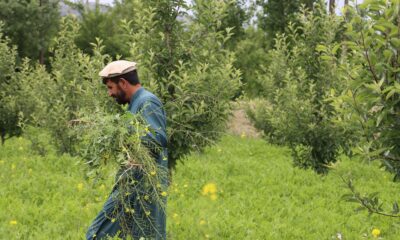
Afghan farmers adopt climate-resilient innovations to improve food security
-

 Tahawol5 days ago
Tahawol: Kabul’s criticism of Islamabad’s policy toward Afghanistan
-
 Latest News3 days ago
Guterres proposes 60 job cuts at UNAMA