
Latest News
U.S. Expects Afghan Govt’s Inclusion in Ongoing Peace Talks


Washington is expecting the Afghan government’s engagement in the ongoing peace talks with the Taliban, the U.S. Vice President Mike Pence said during a meeting with Afghan President Ashraf Ghani at the sidelines of Munich Security Conference on Saturday.
Pence said that the United States is encouraged that the Taliban has shown the interest to come to the negotiating table after years of fighting.
“We are encouraged that the Taliban has come to the table and we look forward to those discussions going forward,” Pence said.
The Taliban has held at least four round of talks with the U.S. representatives so far, but the armed group has repeatedly refused to engage in talks with the Afghan government, insisting that the U.S. is their main adversary.
However, the U.S. Vice President said that they are expecting the Afghan government’s inclusion in the peace talks.
“We look forward to your engagement and the government’s engagement,” Pence told Ghani.
He, meanwhile, expressed hope that the ongoing peace efforts reach into a peaceful statement in Afghanistan that could let the Afghans to have a “great future” and that Afghanistan never again used by terrorist organizations to bring violence against Afghan people and nations around the world including the United States.
On his turn, President Ghani paid tribute to sacrifices of the American troops in Afghanistan. He said since he became president only 66 American troops have been killed in his country.
“It is fortunate that since I have been president only 66 American [troops] paid the ultimate sacrifices, 66 is to many but clearly after the transition and with the launch of South Asia strategy now the war is no longer an American war,” he said.
Thanking the U.S. forces’ support to Afghanistan, Ghani said that it is the “patriotic” Afghan security forces that are doing the fighting and that are dying for “a free homeland and for a secure world”.
The Afghan president also hailed the U.S. South Asia Strategy and described as “game changer”. He said the strategy is working.
“We would like to thank President Trump and yourself who have paid a very significant role in making this possible,” Ghani told Pence.
Regarding the ongoing peace talks, Ghani said that it is “critical” to ensure an “enduring” peace results from these discussions.






A delegation from Afghanistan’s pharmaceutical sector has signed a $5 million agreement with five major Uzbek pharmaceutical companies to import medicines from Uzbekistan, officials said.
The 35-member delegation from Balkh province signed the agreements during a visit to Tashkent aimed at expanding pharmaceutical trade between the two countries.
Officials at the Balkh Chamber of Commerce and Investment said the deal could help meet up to 25 percent of Afghanistan’s medicine demand through imports from Uzbekistan.
Mohammad Sadiq Mohammadi, head of the pharmaceutical union in Balkh, said contracts worth nearly $5 million had been finalized with Uzbek companies for the supply of medicines to Afghanistan.
The Balkh Chamber of Commerce and Investment also described Uzbek medicines as affordable for Afghan traders and said the agreements could help address a significant portion of the country’s pharmaceutical needs.
Economic analysts said medicines produced in Uzbekistan are considered high-quality and reasonably priced, while also emphasizing the importance of strengthening domestic pharmaceutical production in Afghanistan.
Afghanistan continues to rely heavily on imported medicines, and reduced trade with Pakistan has increased the country’s dependence on pharmaceutical imports from alternative markets.
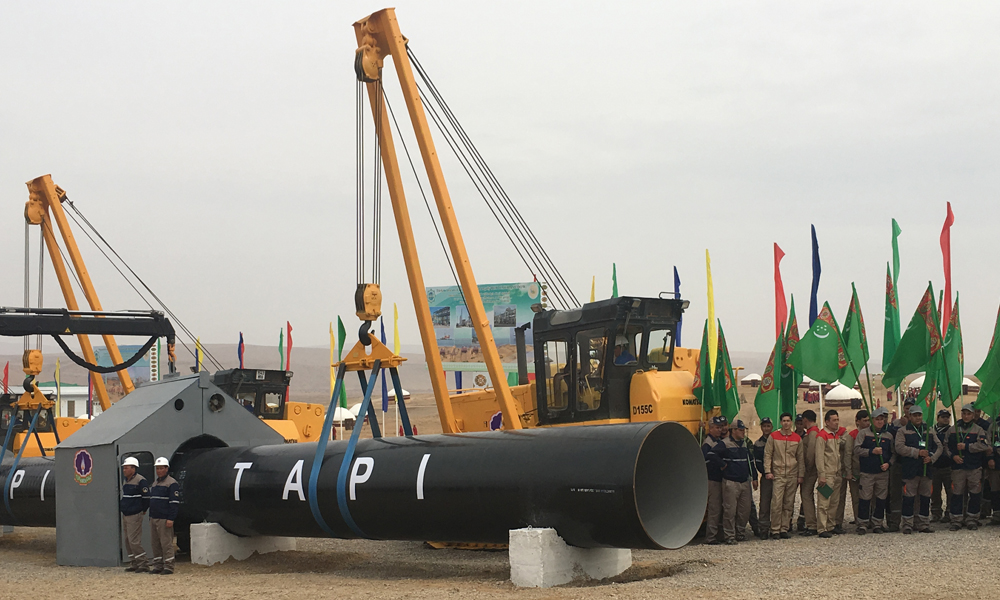
Officials of the Islamic Emirate say that despite recent tensions between Afghanistan and Pakistan, regional economic projects have not been negatively affected and implementation efforts continue as planned.
The spokesman for the Islamic Emirate, Zabihullah Mujahid, said that work on all major projects linking Central and South Asia is continuing in an organized manner. He stressed that IEA remains committed to implementing and completing regional economic development projects.
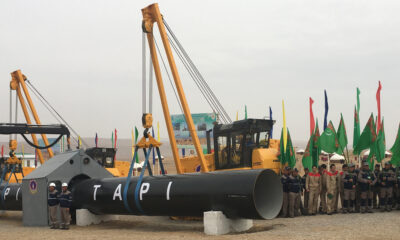
According to Mujahid, although recent tensions between Afghanistan and Pakistan have somewhat affected political and economic relations between the two countries, projects such as TAPI, TAP, CASA-1000, and the Trans-Afghan railway project are still progressing and could play an important role in the region’s economic development.
“The TAPI project is under implementation inside Afghanistan, the work is progressing normally and has even accelerated. The TAP project and some other projects are in the survey phase, their assessments have been completed, and there are no obstacles facing them. We are trying to ensure that major projects move forward normally,” Mujahid said.
Members of the private sector also stated that the implementation and coordination of major regional projects in Afghanistan are progressing well. They called on other partner countries involved in the projects to increase cooperation in order to speed up implementation and create greater economic momentum in the region.
Zabihullah Nazari, a member of the Chamber of Industries and Mines, said accelerating major regional economic projects could help build trust among neighboring and regional countries while also creating tens of thousands of direct and indirect jobs.
Economic analysts say the Islamic Emirate has so far fulfilled its role in advancing these regional projects in line with international principles, which could help attract global investment to the region. However, they added that some partner countries, due to what they described as incorrect policies, continue to create obstacles and delays in the implementation process.
According to the analysts, if all partners in projects such as TAPI, TAP, CASA-1000, and the Trans-Afghan project begin implementation sincerely and practically, it could pave the way for major economic initiatives and positive economic movement across the region, including Afghanistan.
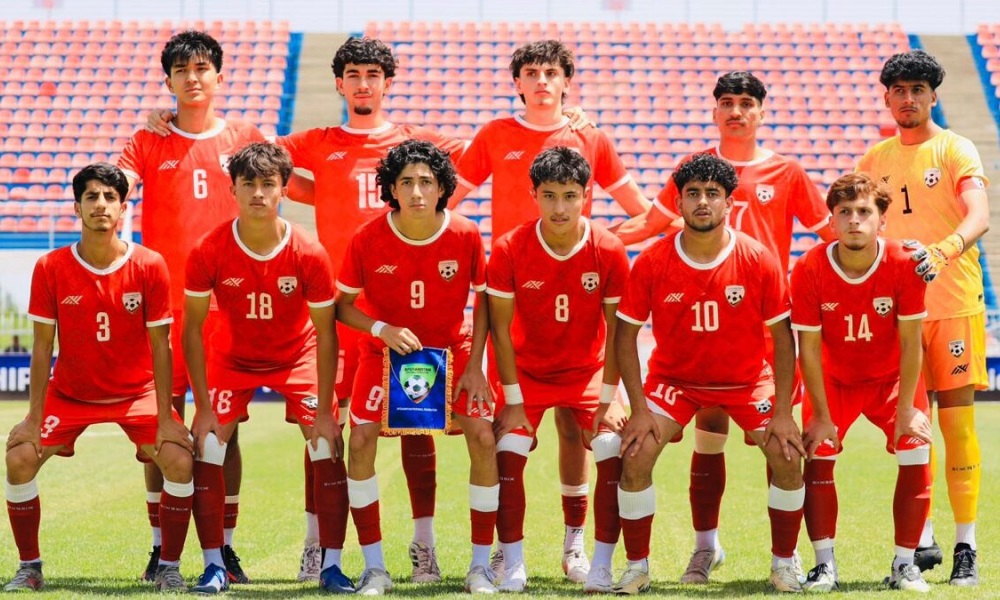
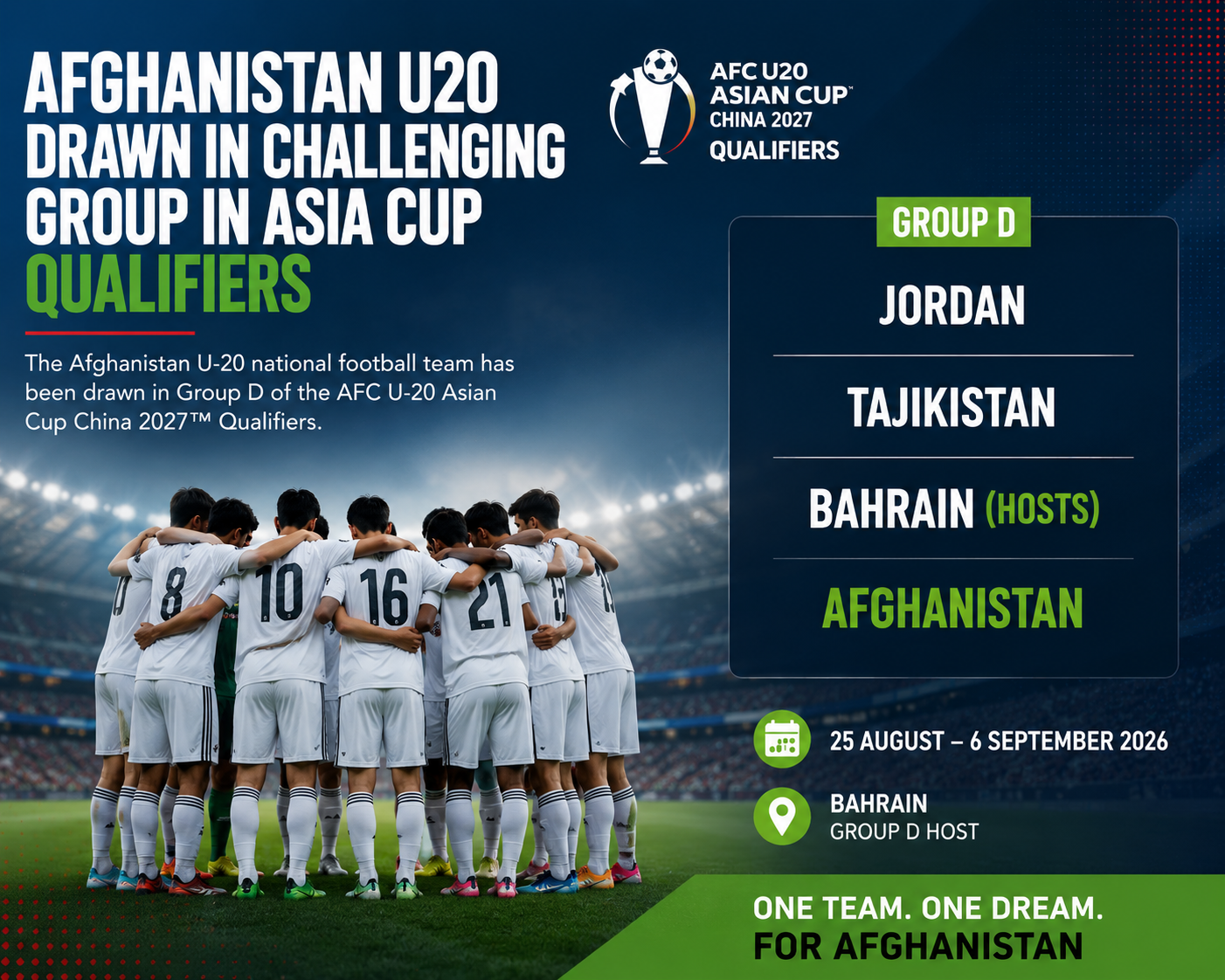
The Afghanistan U-20 national football team has been drawn alongside Jordan, Tajikistan and hosts Bahrain in Group D of the AFC U-20 Asian Cup China 2027 qualifiers.
The official draw was held Thursday at AFC House in Kuala Lumpur, Malaysia, with qualification matches scheduled to take place from August 25 to September 6, 2026 in a centralized league format hosted by Bahrain.
Afghanistan faces a difficult path to qualification, with Jordan and Tajikistan both regarded as strong competitors in Asian youth football, while Bahrain will enjoy home advantage during the tournament.
The qualifiers are part of a newly restructured AFC youth competition system approved earlier this year. Under the new format, 32 teams in the Qualification Phase have been divided into eight groups of four teams each.
Group winners, along with the seven best second-placed teams, will advance to the AFC U-20 Asian Cup China 2027 finals.
The AFC said the revised format is aimed at creating more competitive and meaningful matches while giving teams the opportunity to face opponents of similar technical standards.
Under the new system, the bottom team in each qualification group will be relegated to the Development Phase for the following edition of the competition.
For Afghanistan, the tournament represents an important opportunity to continue developing young football talent and gain valuable international experience against some of the region’s stronger youth sides.
Football remains one of Afghanistan’s most popular sports, and youth national teams have increasingly participated in regional and continental competitions despite ongoing challenges facing the country’s sporting sector.
The AFC U-20 Asian Cup China 2027 finals are scheduled to be held from March 24 to April 10, 2027.
Draw Result
Qualification Phase
-
Group A: Korea Republic, Kyrgyz Republic (H), Philippines, Lebanon
-
Group B: Uzbekistan (H), Syria, India, Bangladesh
-
Group C: Iran, Vietnam (H), DPR Korea, Palestine
-
Group D: Jordan, Tajikistan, Bahrain (H), Afghanistan
-
Group E: Saudi Arabia, Qatar (H), Oman, Hong Kong, China
-
Group F: Iraq, Thailand (H), UAE, Turkmenistan
-
Group G: Japan, Yemen, Cambodia (H), Kuwait
-
Group H: Australia, Indonesia, Malaysia, Laos (H)
Group winners and seven best second-placed teams advance to Finals.
The bottom team of each group relegated to the Development Phase of next edition.
Development Phase
-
Group I: Mongolia (H), Guam, Nepal, Northern Mariana Islands
-
Group J: Chinese Taipei, Singapore, Bhutan (H), Macau
-
Group K: Myanmar (H), Maldives, Brunei Darussalam, Sri Lanka
Group winners and second-placed teams promoted to the Qualification Phase of next edition.


Tawsia: Afghanistan’s weekly economic roundup reviewed

Afghanistan signs $5 million deal to import medicines from Uzbekistan

Work on TAPI project in Afghanistan ongoing and accelerating: Mujahid

Afghanistan drawn in challenging group for AFC U-20 Asian Cup 2027 qualifiers

Messi headlines Argentina squad for World Cup title defence

New Afghanistan-China transport corridor launched via Turkmenistan

Afghanistan signs $46 million deal to develop standard laboratory complexes

Germany to launch online visa system for Afghan study and work applicants in Pakistan

Large blast near Beit Shemesh part of pre-planned test: Israeli defense firm

Trump returns from China with stability but little progress
Tawsia: Afghanistan’s weekly economic roundup reviewed

Tahawol: Kabul Pursuing Constructive Regional Diplomacy

Saar: Afghanistan, Russia sign military cooperation agreement

Saar: IEA seeking Sharia-based global engagement

Tahawol: Islamic Emirate defense minister’s visit to Russia
-
 Sport3 days ago
Afghanistan announce squad for India series
-
 Latest News2 days ago
Afghanistan, Russia sign military cooperation agreement
-
 Latest News3 days ago
‘We will never bow our heads before infidels,’ says IEA Supreme Leader
-

 Sport5 days ago
IPL 2026 Playoffs Confirmed: RCB, GT, SRH and RR reach top four
-
 Latest News4 days ago
China and Pakistan deepen Afghanistan cooperation after Beijing talks
-
 Latest News5 days ago
Moscow expects UNAMA mission in Afghanistan to continue under certain conditions: Kabulov
-
 Latest News2 days ago
Mujahid calls for stronger Afghanistan-Russia relations during Moscow meeting
-
 Business5 days ago
Chief of Jamaat-e-Islami Pakistan calls for reopening of Durand Line crossings