
Latest News
U.S. Should Have Gradual, Responsible Withdrawal from Afghanistan: Russian Embassy

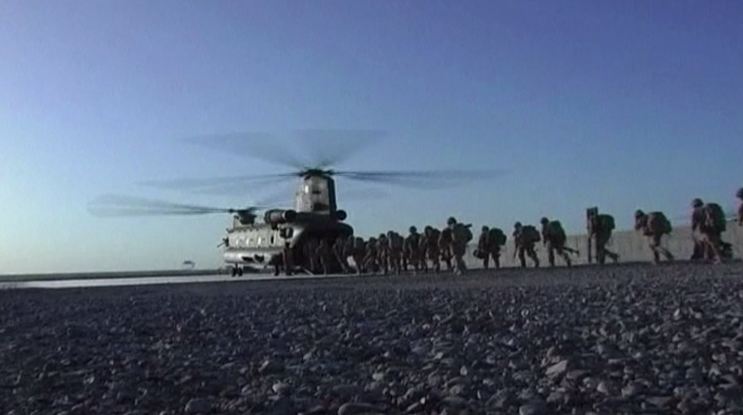
The Russian Embassy in Kabul says Moscow is not sure that the upcoming U.S.-Taliban meeting in Qatar would finalize a timeline for withdrawal of American troops from Afghanistan.
The U.S. special envoy for Afghanistan Reconciliation Zalmay Khalilzad and the Taliban delegation is expected to hold another of round talks in the Qatari capital Doha, on February 25 and possibly discuss on a mechanism for withdrawal of American forces from Afghanistan.
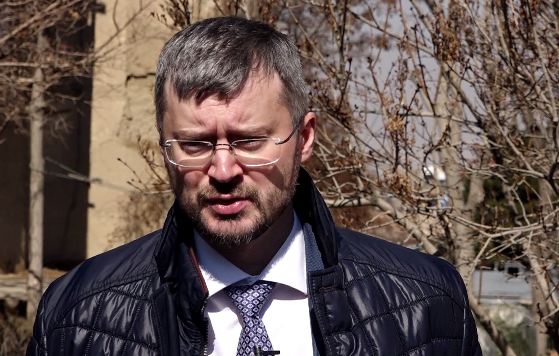
Speaking to Ariana News on Friday, the Russian deputy ambassador to Afghanistan Albert Khorev said that he is not sure that the Doha meeting would finalize a mechanism for U.S. pullout from Afghanistan.
“I am not sure, because the talks between the United States and the Taliban are going slowly and its main and major outcomes yet to be revealed,” Khorev said.
However, the Russian diplomat said that the United States should gradually and responsibly withdraw from Afghanistan.
The U.S. officials have said President Donald Trump wants to bring home about half of the 14,000 American troops from Afghanistan.
The Afghan government which sent a letter President Donald Trump last month and offered him reduced costs for keeping U.S. troops in Afghanistan assured that the United States won’t withdraw abruptly and without any consent with Kabul.
Nasir Ahmad Andesha, the Deputy Foreign Minister said that a legal framework entitled Status of Forces Agreement (SOFA) in place between the United States and Afghanistan and that any decision would be taken in coordination with the Afghan government.

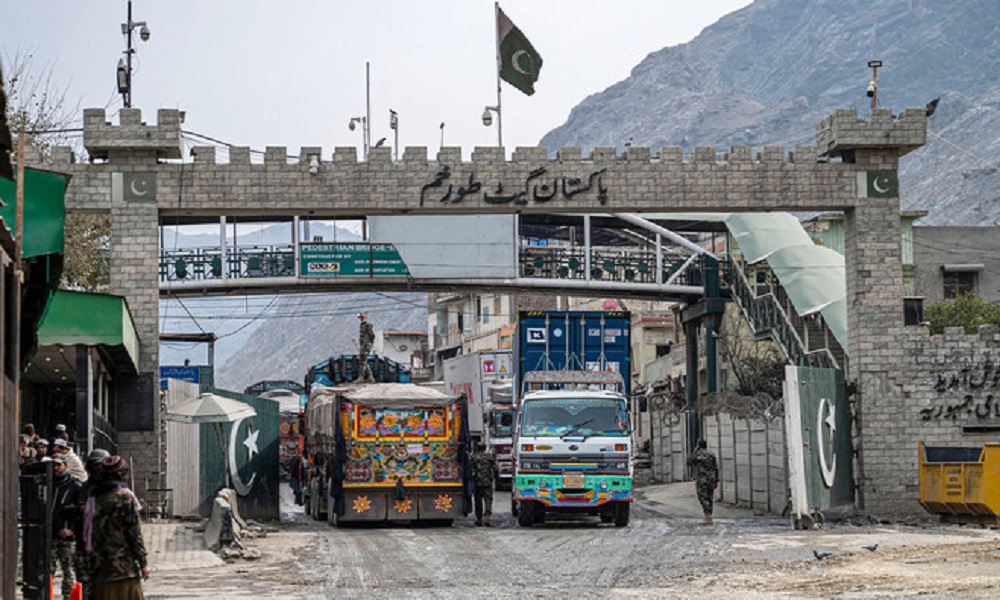
Hundreds of Pakistani truck drivers and conductors who were stranded in Afghanistan for nearly nine months have begun returning home, marking the end of a prolonged disruption caused by the closure of the Torkham crossing in October 2025.
The repatriation of stranded Pakistani nationals follows weeks of diplomatic engagement between Islamabad and Kabul. Local political and community leaders have confirmed that the process is now underway and expected to conclude in the coming days, the Express Tribune newspaper reported.
Maulana Ijaz Shinwari, a senior district leader of Jamiat Ulema-e-Islam-Fazl (JUI-F), said the return process had formally begun.
“The return of stranded Pakistani trucks, drivers and conductors is underway, and we expect all of them to reach home soon,” he said, adding that the crossing closure had severely damaged bilateral trade and worsened economic conditions in communities along the Durand Line.
According to him, the suspension of operations not only disrupted commerce but also triggered a humanitarian crisis, increasing poverty and unemployment across the region.
Local officials say the immediate priority is the safe return of all stranded Pakistani citizens, after which authorities are expected to outline a roadmap for the gradual restoration of trade.
While Pakistani transport workers are returning home, Afghan nationals are simultaneously moving back to Afghanistan in significant numbers from Pakistan.
The Khyber-Pakhtunkhwa government has instructed relevant departments to accelerate the repatriation process and complete ongoing operations within 30 to 45 days.
Special Assistant to the Chief Minister on Interior Tariq Saeed Marwat said temporary transit camps are operating in Peshawar, Charsadda, Kohat, and Hangu to assist returning Afghan families.
“We have reviewed all pending visa and stay-related matters concerning Afghan citizens,” he said. “The dignity, self-respect, and fundamental rights of those returning will be protected throughout the process.”
According to the latest figures from the United Nations High Commissioner for Refugees (UNHCR) and the International Organization for Migration (IOM), more than 2.5 million Afghan nationals have returned from Pakistan to Afghanistan between September 2023 and June 2026.
The report states that 2,500,712 Afghans returned during this period, including over 1.9 million voluntary returns, 334,929 through UN-supported repatriation programmes, and 252,844 deportations.
The pace of returns has also accelerated in recent weeks. Between June 7 and June 13 alone, 28,285 Afghan citizens crossed back through major points including Torkham, Ghulam Khan, Chaman, Badini, and Bahramcha.
This marks an 11 percent increase in overall returns and a 22 percent rise in deportations compared to the previous week.
International Sports
Messi, David, and Undav lead thrilling 2026 FIFA World Cup Golden Boot race
The Golden Boot race remains wide open with several group-stage matches still to be played. Pre-tournament favourites Mbappé, Kane and Messi entered the competition among the bookmakers’ leading contenders, while Haaland and Vinícius Júnior were also widely tipped to challenge for the award.
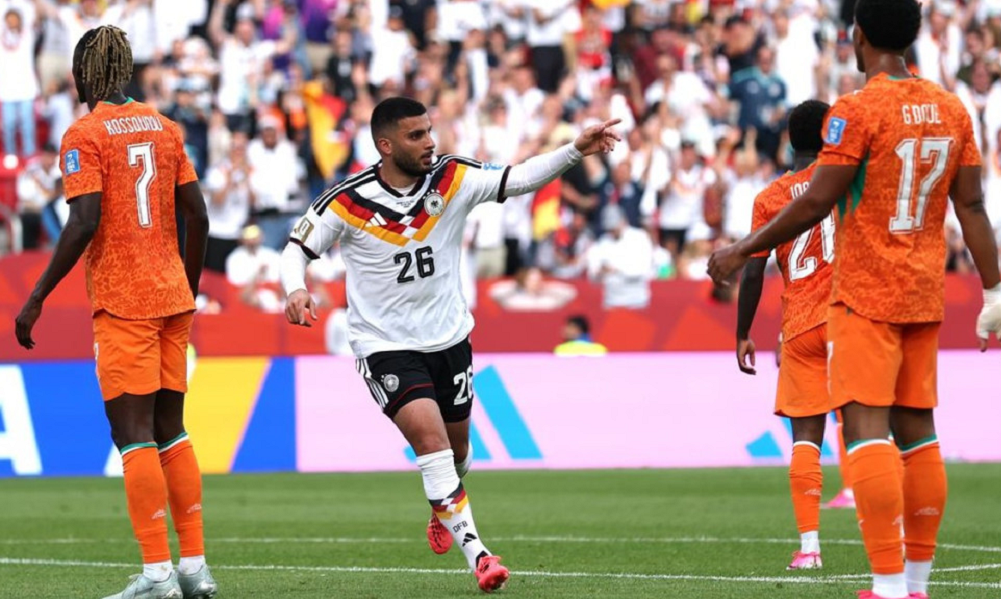
The battle for the Golden Boot at the 2026 FIFA World Cup is beginning to take shape, with Canada’s Jonathan David, Germany’s Deniz Undav and Argentina captain Lionel Messi emerging as the early frontrunners in the race to finish as the tournament’s leading goalscorer.
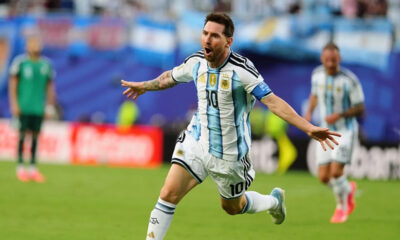
After the opening round of group-stage matches, all three players sit atop the scoring charts with three goals each. Messi’s hat-trick in Argentina’s 3-0 victory over Algeria underlined the veteran forward’s enduring quality, while David has been instrumental in Canada’s impressive attacking displays. Germany striker Undav has also made a strong start, helping his side maintain its position among the tournament favourites.
A large chasing pack remains within striking distance. Fifteen players have already scored twice, including France star Kylian Mbappé, England captain Harry Kane, Norway’s Erling Haaland, Brazil duo Vinícius Júnior and Matheus Cunha, Spain forward Mikel Oyarzabal, and Netherlands attackers Cody Gakpo and Brian Brobbey.
Japan’s Ayase Ueda and Daichi Kamada, Morocco’s Ismael Saibari, Switzerland’s Johan Manzambi, New Zealand winger Elijah Just and Germany’s Kai Havertz have also made their mark with two goals each as the tournament’s attacking talent continues to shine.
The Golden Boot race remains wide open with several group-stage matches still to be played. Pre-tournament favourites Mbappé, Kane and Messi entered the competition among the bookmakers’ leading contenders, while Haaland and Vinícius Júnior were also widely tipped to challenge for the award.
The competition’s history suggests that a strong group stage can be decisive. France’s Mbappé claimed the Golden Boot at the 2022 World Cup with eight goals, while Kane won the award in Russia in 2018 with six. Colombia’s James Rodríguez topped the charts with six goals in 2014, while Germany’s Thomas Müller and Miroslav Klose won the award in 2010 and 2006 respectively.
Among the surprise names on this year’s scoresheet are Cape Verde’s Hélio Varela and Kevin Pina, South Africa midfielder Teboho Mokoena, Jordan’s Ali Olwan and Ghana’s Caleb Yirenkyi, highlighting the global nature of a tournament that has already produced goals from every corner of the football world.
With the knockout rounds still weeks away and several star forwards yet to hit top form, the race for the Golden Boot promises to be one of the defining storylines of the 2026 FIFA World Cup. For now, David, Undav and Messi lead the way, but with so much football still to be played, the contest remains anyone’s to win.
How to watch this event
Ariana Radio and Television Network (ATN) is broadcasting matches live and exclusively across Afghanistan daily.
Fans are encouraged to follow Ariana Television and Ariana News’ social media pages for updated schedules, highlights and other match action.
Latest News
Iran invites Afghanistan’s prime minister to attend funeral ceremony of Ali Khamenei
Iran’s Alireza Bikdeli described relations between Afghanistan and Iran as historical and deep, and expressed appreciation for the sympathy shown by the Islamic Emirate and the Afghan people during the recent conflict. He added that political and economic ties between the two countries had continued without interruption despite the war.
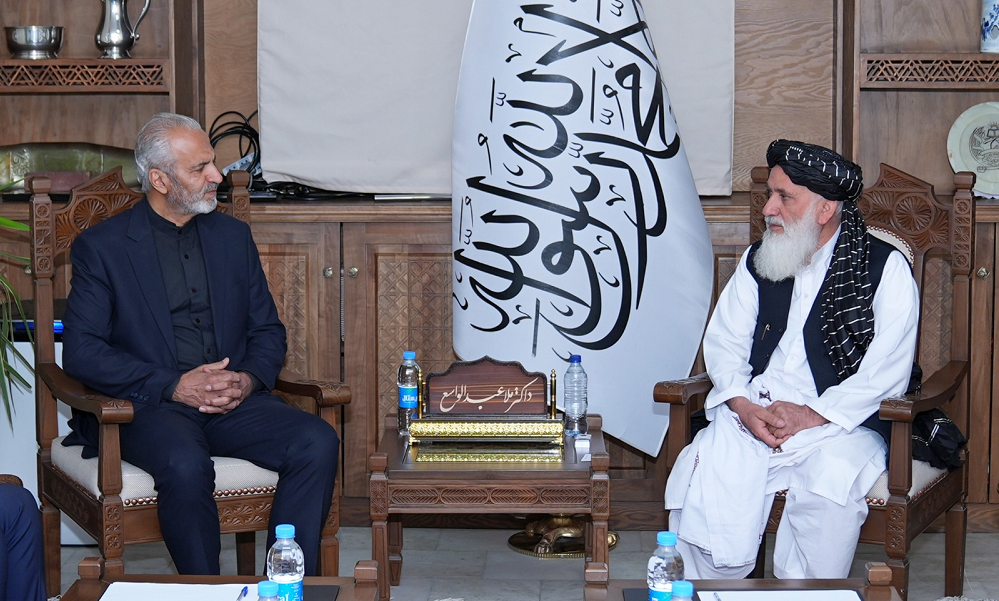


Pakistani truckers return home after 9 months stranded in Afghanistan

Messi, David, and Undav lead thrilling 2026 FIFA World Cup Golden Boot race

Iran invites Afghanistan’s prime minister to attend funeral ceremony of Ali Khamenei

Kazakh envoy urges engagement to prevent instability in Afghanistan

US and Iran conclude high-level talks in Switzerland, mediators say

Norway’s Viking-inspired World Cup team photo goes viral

Afghanistan announce squad for India series

Afghanistan, Russia sign military cooperation agreement

Major pharma firms eye investment in Afghanistan

Afghanistan expands oil production as investment in Amu Darya fields grows

Saar: Iran vs US Talks Begin – Will Tensions Ease?

Tahawol: Discussion on reopening of Strait of Hormuz

Saar: Afghanistan-Pakistan tense relations disucssed

Tawsia: Last week’s key economic developments discsused

Tahawol: Afghanistan–UN ongoing engagement discussed
-
 Business4 days ago
Afghanistan signs $67 million contract for cement production in Samangan
-
 Saar4 days ago
Saar: Trump’s remarks on US military equipment in Afghanistan discussed
-
 Sport5 days ago
2nd ODI: India crush Afghanistan by 170 runs to seal series lead
-
 Latest News4 days ago
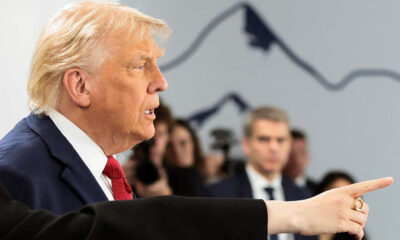
Trump says US may seek return of military equipment left in Afghanistan
-
 Health4 days ago
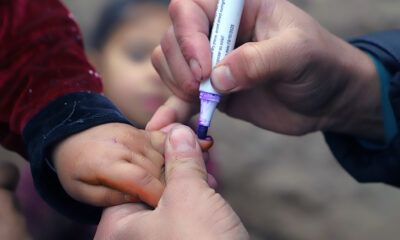
Polio cases in Afghanistan rise to six in 2026 as two new cases confirmed
-
 Latest News3 days ago
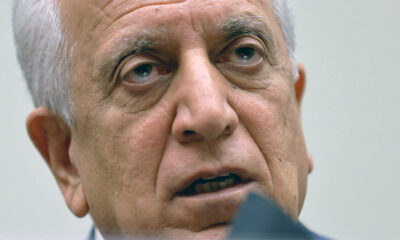
Khalilzad calls for Afghanistan-Pakistan dialogue after airstrikes
-
 Latest News5 days ago
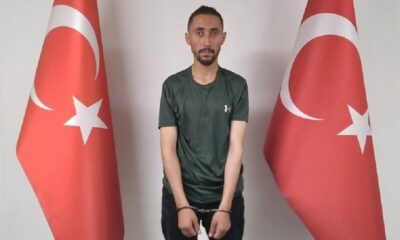
Türkiye captures senior ISIS-K operative
-
 International Sports4 days ago
Messi hat-trick powers Argentina to 3-0 victory over Algeria in World Cup opener