
Latest News
UN: 6.3 Million Afghans in Need of Humanitarian Aids

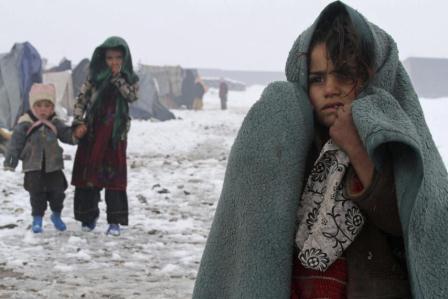
 UN and the Organization of Islamic Cooperation (OIC) in World Humanitarian Day in Kabul on Saturday said that the civilians continued to bear the brunt of a conflict that has grown in intensity and geographic scope, affecting the lives of at least 6.3 million Afghans.
Over 210,000 people have been newly internally displaced by conflict in 2016 alone – some 1,000 people per day.
Commemorating the World Humanitarian Day in Kabul, UN high-level officials have urged for the increased international partnerships to address the root causes of humanitarian needs, reduce communities’ vulnerability to disasters and raise awareness of Afghanistan’s protracted humanitarian crisis.
UN Assistant Secretary-General for Humanitarian Partnerships with the Middle East and Central Asia Rashid Khalikov said: “Nearly a third of the people of Afghanistan are in need of humanitarian aid and this continues year after year. It is critical that the UN works to reinforce the humanitarian partnerships that can support and enhance the response to people’s immediate and longer term needs.”
UN Assistant Secretary-General for Humanitarian Partnerships with the Middle East and Central Asia Rashid Khalikov said: “Nearly a third of the people of Afghanistan are in need of humanitarian aid and this continues year after year. It is critical that the UN works to reinforce the humanitarian partnerships that can support and enhance the response to people’s immediate and longer term needs.”
A 2016 mid-year UN report recorded a total number of 5,166 civilian casualties, the largest since 2009. One third of the casualties were children. The total number of civilian casualties since 2009 amounts to 63,934.
Ambassador Hesham Youssef, assistant secretary-general of OIC for humanitarian affairs, said: “It is evident to us that much more effort is needed to address the deteriorating situation in Afghanistan. This is why the OIC is exerting extensive efforts to address the escalating conflict.
“We also hope to be able to benefit from this mission in raising awareness of the humanitarian situation in Afghanistan at the international level and in our Member States with the objective of increasing their assistance and investment in sustainable development solutions for the people of Afghanistan.”
Chairman of OIC Humanitarian Funds’ Board of Trustees Sheikh Abdul Aziz al-Thani said: “With this visit marking World Humanitarian Day, and as needs continue to grow, we are looking into how the OIC Humanitarian Fund for Afghanistan can build on 15 years of presence to mobilise greater and more predictable funding for humanitarian programmes.”
UN’s Deputy Special Representative of Secretary-General Resident and Humanitarian Coordinator Mark Bowden said: “Afghanistan remains as one of the world’s most protracted crises that has led to massive levels of internal displacement.
“Each year sees more families uprooted by conflict many of whom remain displaced and at the margins of survival. In this, the first World Humanitarian day following the World Humanitarian Summit, we must make more determined efforts to live up to international commitments made in Istanbul to leave no one behind and better address the needs of displaced people…”
In the meantime, Ministry of Refugees and Repatriation said nearly 170,000 Afghans have been displaced in various parts of the country and the world since the beginning of the current year.
“The number of displaced due to war have been increased and this figure has spiked compared to the previous year. We are trying to send them aids,” said Mia Khail, deputy of Ministry of Refugees and Repatriation.
The continued conflict and displacement create recurring humanitarian emergencies which place further strain on already overstretched and insufficient basic services.
Afghanistan has the world’s second highest mortality rate for children under five and almost 3 million people are affected by malnutrition.
The deteriorating security situation severely hampers the delivery of health services and the displaced people are highly vulnerable to both diseases and malnutrition.
In addition, natural disasters such as floods, earthquakes, landslides and droughts impact on an estimated 235,000 people every year.
The current humanitarian situation is already severe and needs are increasing. The 2016 Humanitarian Response Plan, aiming to help 3.5 million people in need, is tightly focused on the most acute life-saving response to displaced people and on life-saving interventions in health and nutrition.
As of 30 June, 61 per cent – US$207 million – of the $339 million mid-year revised request have been received.
Every effort must be made to increase current levels of international humanitarian aid and at the same time invest in long-term, sustainable development solutions to address the recurrent humanitarian needs and strengthen community resilience.

Latest News
UN warns of deepening humanitarian crisis in Afghanistan, calls for urgent aid
Dujarric also highlighted a 5.9-magnitude earthquake that struck the Hindu Kush region on Sunday, causing additional casualties and damage, including in Kabul and nearby areas.
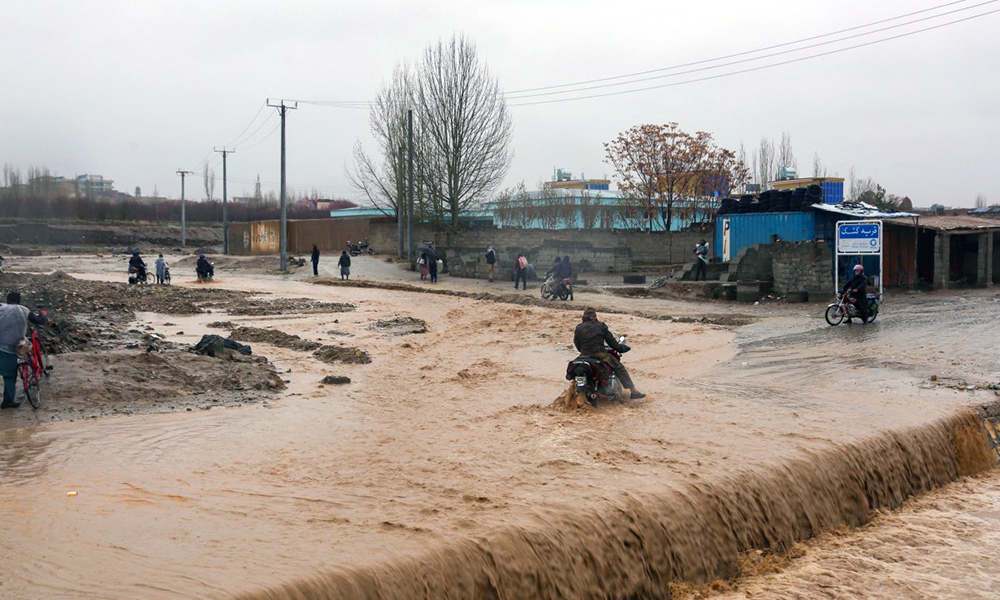
The United Nations has raised alarm over a worsening humanitarian crisis in Afghanistan, citing the combined impact of ongoing conflict and severe weather conditions, and urging the international community to step up assistance.
Speaking at a daily press briefing, UN Secretary-General spokesperson Stéphane Dujarric said that recent heavy rains and flooding have led to significant casualties and widespread destruction across the country.
“Nearly 100 people have reportedly been killed, more than 180 injured, and several others remain missing. Thousands of homes have been severely damaged or completely destroyed, along with critical infrastructure and large areas of agricultural land,” Dujarric said.
He noted that Nangarhar Province in eastern Afghanistan has been among the hardest hit regions, already recovering from a devastating earthquake in September last year.
Dujarric also highlighted a 5.9-magnitude earthquake that struck the Hindu Kush region on Sunday, causing additional casualties and damage, including in Kabul and nearby areas.
“We and our humanitarian partners have so far reached more than 8,000 people with assistance, including food, cash aid, health services, emergency shelter, and other life-saving support,” he added.
The UN said assessments are ongoing to ensure aid reaches the most vulnerable populations, as Afghanistan faces mounting humanitarian challenges amid overlapping crises.
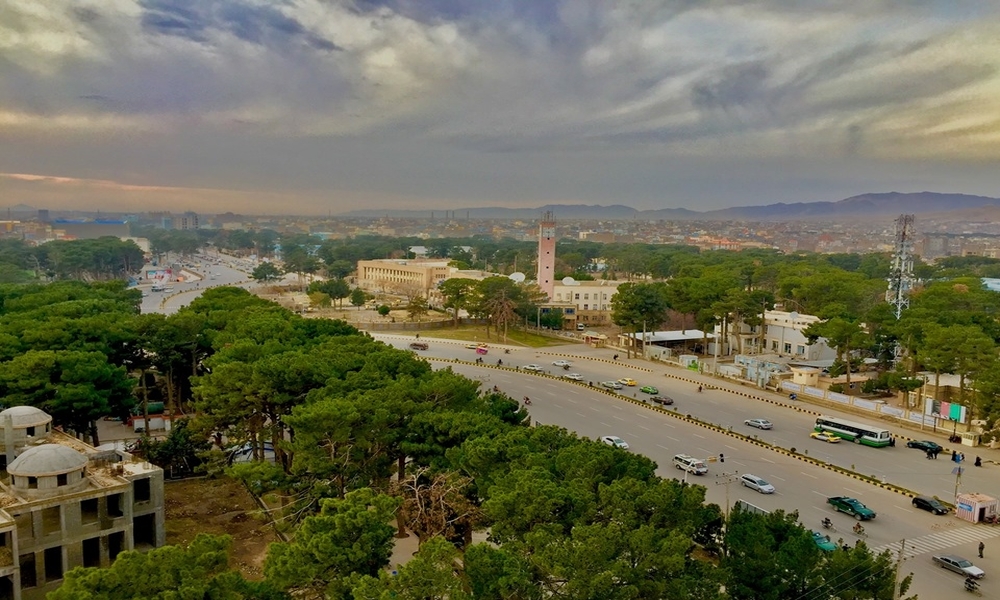
Seven people were killed and 13 injured in a shooting by unidentified armed men in Herat province, said Interior Ministry spokesperson Abdul Mateen Qani.
Qani added that after midday on Friday, unidentified gunmen on motorcycles opened fire on a group of civilians who had gathered for recreation near a picnic area in Qabarzon village, Injil district of Herat province.
According to Qani, initial information indicates that 7 people were killed and 13 others wounded in the attack. The condition of some of the injured is reported to be critical.
Latest News
UK backs Afghanistan–Pakistan talks, calls dialogue key to lasting peace
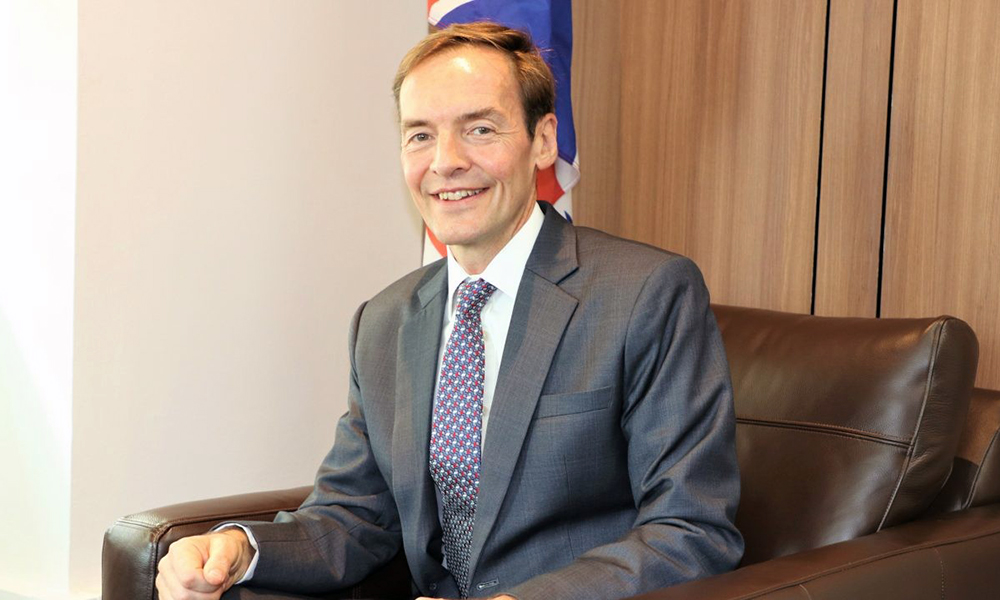
Richard Lindsay, the UK’s Special Representative for Afghanistan, described the latest round of talks as a positive step forward.
The United Kingdom has welcomed recent diplomatic engagements between Afghanistan and Pakistan, emphasizing that sustained dialogue remains the most effective path toward reducing tensions and achieving long-term stability.
Richard Lindsay, the UK’s Special Representative for Afghanistan, described the latest round of talks as a positive step forward. He praised the engagement between both sides and urged continued efforts to reach a comprehensive resolution.
“I welcome the recent interactions between the negotiating teams of Afghanistan and Pakistan and encourage continued dialogue to reach a comprehensive solution. Dialogue remains the only way to reduce tensions and achieve sustainable peace,” Lindsay said.
The week-long discussions, held in Urumqi, involved diplomatic, defense, and security officials from both countries. The talks concluded with a preliminary agreement aimed at immediate de-escalation, with participants committing to practical measures to manage tensions and prevent further escalation.
Chinese officials noted that both sides agreed on steps to stabilize the situation, signaling cautious optimism after a period of strained relations.
Regional analysts have underscored the importance of maintaining diplomatic momentum, warning that prolonged instability could worsen broader security challenges. They stress that constructive engagement between Kabul and Islamabad is essential to prevent further deterioration.
Following the initial round, expectations are rising for a second phase of talks at a higher diplomatic level—potentially paving the way for concrete measures to ease tensions and reinforce regional stability.


US, Iran teams in Pakistan for peace talks amid doubts over Lebanon, sanctions

Rajasthan Royals beat Royal Challengers Bengaluru by six wickets

UN warns of deepening humanitarian crisis in Afghanistan, calls for urgent aid

Tawsia: New transit route with Tatarstan, MoU with Uzbekistan discussed

7 killed, 13 injured in shooting by unidentified gunmen in Herat

IEA Supreme Leader issues Eid-ul-Fitr message urging unity and support for Islamic system

IEA supreme leader orders replacement of foreign terminology in official documents

14 Pakistani soldiers killed after military post falls along Durand line: MoD

Afghan airstrikes target Pakistani military sites in retaliation for air attacks

Turkmenistan, Afghanistan discuss steps to speed up land acquisition for TAPI pipeline
Tawsia: New transit route with Tatarstan, MoU with Uzbekistan discussed

Tahawol: China to host 2nd round of Kabul–Islamabad talks discussed

Saar: Fragile ceasefire in the Middle East reviewed

Tahawol: Two‑week truce agreement between Iran-US reviewed

Saar: US–Iran two-week ceasefire agreement discussed
-
 Latest News4 days ago
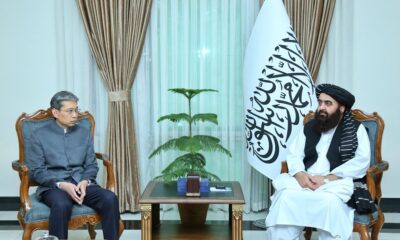
China seeking to build trust between Afghanistan and Pakistan
-
 Business4 days ago
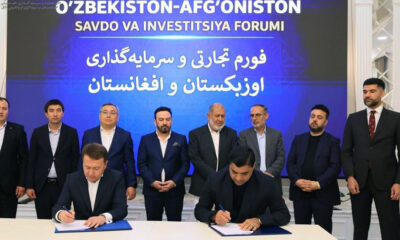
Afghanistan, Uzbekistan sign $400 million trade deals in push to deepen ties
-
 Regional5 days ago
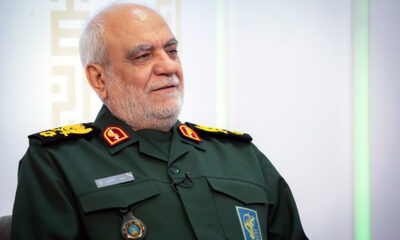
IRGC intelligence chief killed as wave of strikes continues against Iran’s leadership
-

 International Sports4 days ago
IPL 2026: Rain scuppers KKR vs PBKS match
-
 Business5 days ago
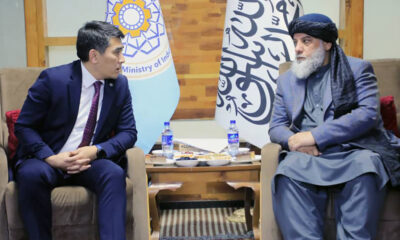
Afghanistan, Kyrgyzstan aim to boost trade to $1 billion
-
 Sport5 days ago
Afghanistan U-17s open their CAFA campaign against Kyrgyzstan
-
 Latest News4 days ago
Heavy rains in Nangarhar leave 16 dead and injured
-
 Health5 days ago
Afghanistan and Uzbekistan seek stronger ties in health sector