
Latest News
UN deputy chief to chair Doha meeting on Afghanistan
On Tuesday, the Islamic Emirate announced that its spokesman Zabihullah Mujahid will lead the IEA’s delegation to the meeting.

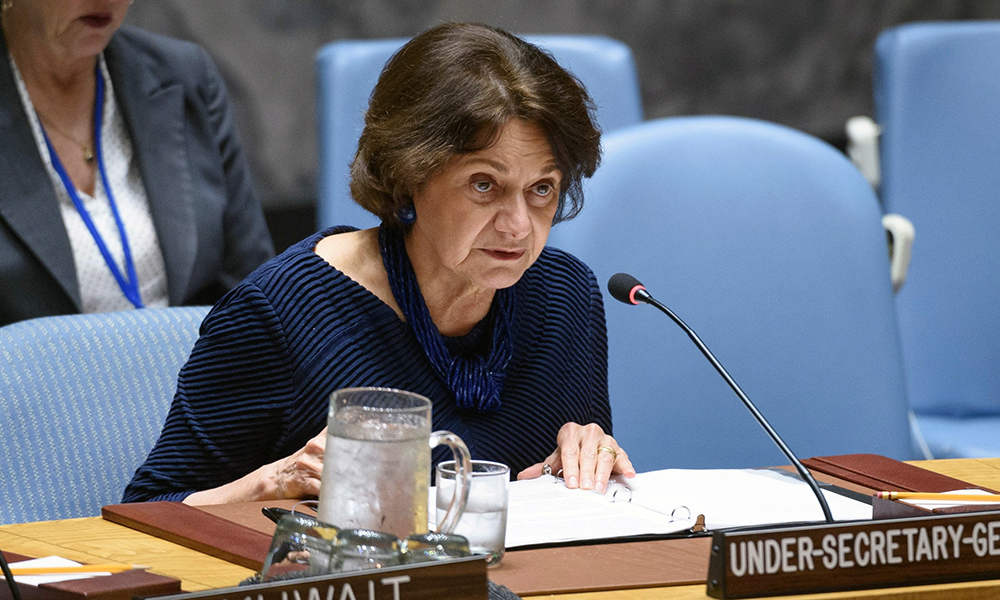
The upcoming UN-led Doha meeting on Afghanistan will be chaired by the United Nations Under-Secretary-General for Political and Peace building Affairs Rosemary DiCarlo on behalf of the Secretary-General Antonio Guterres.
According to a statement issued by the UN, the meeting, scheduled for June 30 and July 1, will discuss how to advance international engagement on Afghanistan in a more coherent, coordinated, and structured manner.
The meeting follows talks in Doha in May 2023 and February 2024.
It will provide for direct discussions between the Special Envoys on Afghanistan of countries from the region and around the world and the Islamic Emirate. Some 30 countries and international institutions have been invited to participate.
The Doha meeting will also discuss the independent assessment on engagement with Afghanistan submitted to the Security Council in November 2023.
On 2 July in Doha, DiCarlo and Special Envoys are set to meet with representatives of Afghan civil society, including human rights and women’s rights advocates.
The Special Representative of the Secretary-General and Head of the United Nations Assistance Mission in Afghanistan (UNAMA), Roza Otunbayeva, will also take part in the Doha discussions.
Ahead of the meeting, DiCarlo said: “The Doha discussions are part of a process; they are not a one-off. The ultimate objective of this process is an Afghanistan at peace with itself and its neighbors, fully integrated into the international community and meeting its international obligations, including on human rights, particularly those of women and girls.
“At this week’s meetings we will discuss the multiple challenges facing the Afghan people, Afghanistan’s neighbors and the region, and the wider international community. There will also be an opportunity to explore avenues for further principled engagement with the de facto authorities for the benefit of all Afghans.”
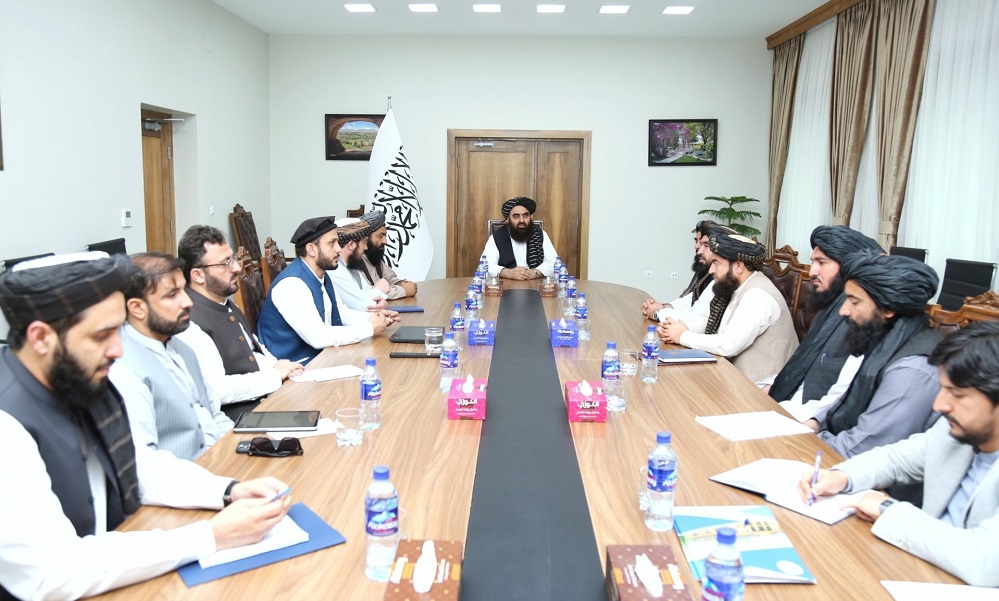
On Tuesday, the Islamic Emirate announced that its spokesman Zabihullah Mujahid will lead the IEA’s delegation to the meeting.
This was announced after a meeting on the upcoming event, which was chaired by Acting Foreign Minister Amir Khan Muttaqi.
Related Stories:
IEA spokesman Mujahid to lead delegation at Doha meeting on Afghanistan
UN: Afghanistan is one of seven countries that has no women in its cabinet



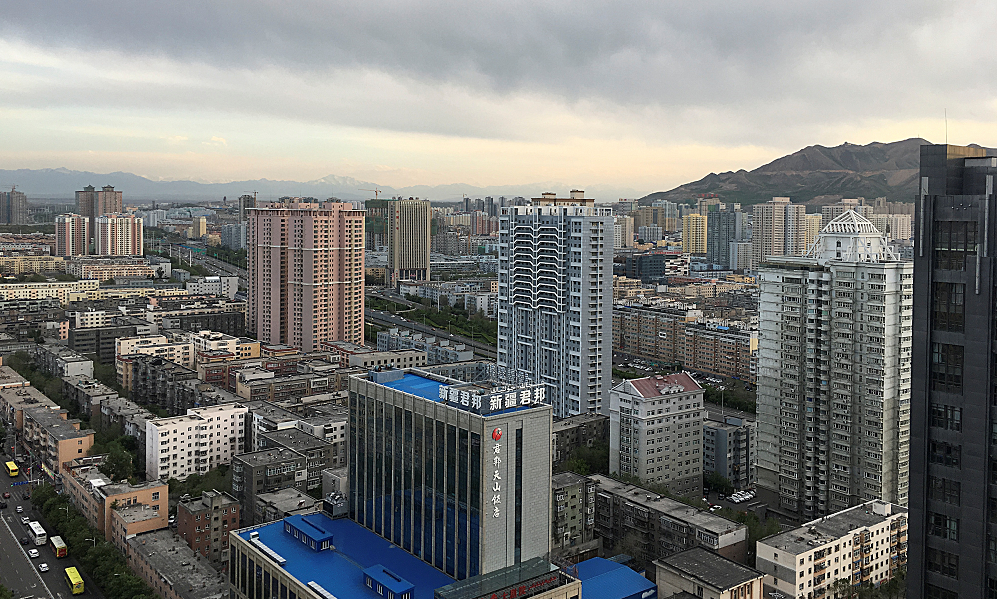
A delegation of the Islamic Emirate of Afghanistan has left for Urumqi, China, to hold talks with Pakistani officials, sources told Ariana News on Wednesday.
Mohibullah Wasiq, foreign minister’s chief of staff, is leading the Afghan delegtion.
The delegation also includes the heads of foreign relations of the Ministry of Defense, the Ministry of Interior and the General Directorate of Intelligence.
Pakistan’s Special Representative for Afghanistan Mohammad Sadiq is heading the Pakistani delegation.
Pakistan and Afghanistan’s worst fighting in years erupted last month, claiming heavy human losses on both sides.
Islamabad accuses the Islamic Emirate of harbouring and supporting militants who carry out attacks inside Pakistan. Kabul denies it, saying the militancy is Pakistan’s domestic problem.
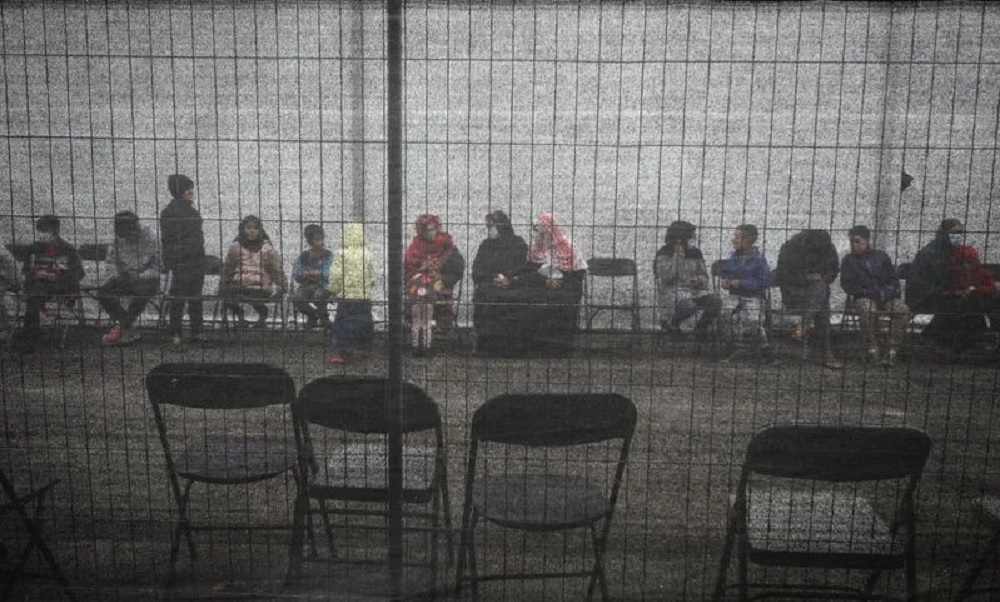
The US Department of Homeland Security announced Tuesday it is easing asylum restrictions for vetted migrants from low-risk countries, while maintaining bans on “high-risk” nations, including Afghanistan, Syria, Yemen, and Somalia.
The move comes after last November’s attack near Washington’s Farragut Square, in which an Afghan asylee killed one National Guardsman and injured another, prompting stricter asylum screening under President Donald Trump.
A DHS spokesperson said thorough vetting remains unchanged for all applicants, with resources now focusing on higher-risk cases.
Latest News
Peshawar jirga urges Pakistan, Afghanistan to halt clashes and pursue peace through dialogue
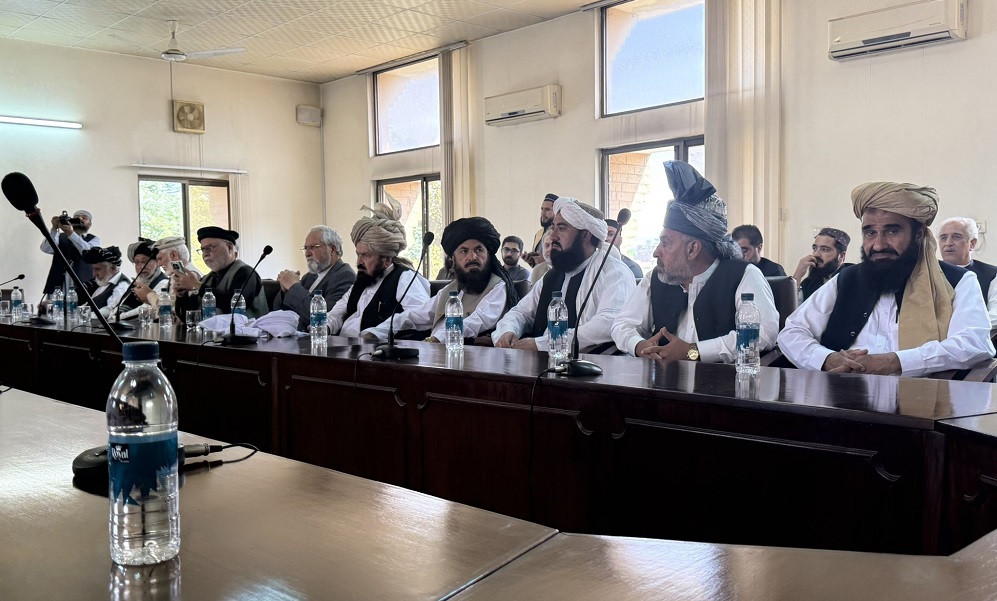
Participants at a jirga held on Tuesday in Peshawar urged the governments of Pakistan and Afghanistan to halt ongoing Durand Line clashes and resolve their disputes through dialogue.
The “Pakistan-Afghanistan Peace Jirga,” organised by Aspire Khyber Pakhtunkhwa and the National Reform Movement, brought together political and religious leaders, business representatives, and members of the media to address rising tensions between the two neighbours, Dawn newspaper reported.
Speakers stressed that both countries should prioritise diplomatic channels, noting their shared religious, cultural, and social bonds. They described bilateral ties as deep-rooted and warned that continued conflict would have serious consequences for people on both sides of the border.
The jirga called for an immediate ceasefire and strict enforcement to ease tensions. In a joint declaration, participants urged both countries to ensure their territories are not used against one another, in line with international principles, and to enforce this commitment with full state authority.
They emphasised that all disputes should be resolved through negotiation and diplomacy, arguing that war is not a solution and that lasting peace depends on mutual respect and understanding.
The gathering also called for sustained engagement through a permanent platform to improve communication, build trust, and better understand each other’s challenges. It warned policymakers against allowing narrow interests to undermine broader national priorities, public safety, and the long-standing historical and cultural ties between the two nations.
“Peace is the greatest need for both Pakistan and Afghanistan,” the declaration stated.
Participants said the jirga platform would be expanded to include wider political, religious, and social leadership at the national level, with efforts focused on promoting peace through active public diplomacy.
Earlier, organisers said the initiative aimed to provide a forum for collective discussion and to develop practical recommendations for reducing tensions and advancing peace between the two countries.


Latest News2 hours ago
Afghan delegation heads to China for talks with Pakistan

Latest News3 hours ago
US eases asylum freeze for vetted migrants, keeps Afghanistan ban

Sport3 hours ago
Punjab Kings edge Gujarat Titans in thrilling IPL clash as tournament gathers pace

Latest News5 hours ago
Peshawar jirga urges Pakistan, Afghanistan to halt clashes and pursue peace through dialogue

Regional5 hours ago
Emirates airline says Iranian nationals barred from entering or transiting UAE

Latest News4 weeks ago
Prominent Muslim scholar issues fatwa calling for Afghanistan-Pakistan ceasefire

Latest News2 weeks ago
IEA Supreme Leader issues Eid-ul-Fitr message urging unity and support for Islamic system

Latest News3 weeks ago
14 Pakistani soldiers killed after military post falls along Durand line: MoD

International Sports4 weeks ago
Ronaldo’s private jet flies out of Saudi Arabia following US Embassy drone strike in Riyadh

Business4 weeks ago
Afghanistan steps in to replace Iran in supplying fruits and vegetables to Russia

Tahawol16 hours ago
Tahawol: Escalation of conflict in Middle East discussed

Saar19 hours ago
Saar: Formation of Jirga in Khyber Pakhtunkhwa

Tahawol2 days ago
Tahawol: Pakistani military shelling in Kunar

Saar2 days ago
Saar: Impact of Middle East conflict on Afghanistan

Tahawol3 days ago
Tahawol: Efforts for Kabul-Islamabad de-escalation
-
 Latest News5 days ago
IEA says Iranian drivers no longer need visas to enter Afghanistan
-
 Latest News4 days ago
Afghan defense forces stand ready to protect national sovereignty: MoD
-

 International Sports3 days ago
Injury concerns mount ahead of FIFA World Cup 2026 as stars sidelined
-
 Latest News2 days ago
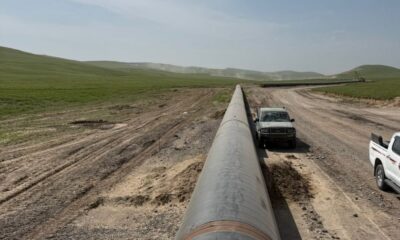
TAPI gas pipeline advances 25 km in Afghanistan
-

 World5 days ago
US Vice President Vance emerges as key figure in Iran peace efforts: Report
-
 Business3 days ago
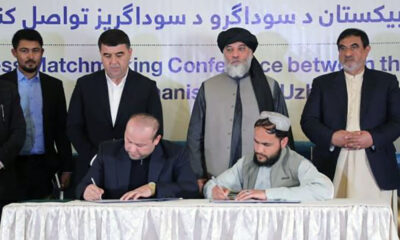
Afghanistan, Uzbekistan ink $514.8 million deals to deepen trade ties
-
 Latest News5 days ago
Afghans in Iran face growing uncertainty as war enters second month
-
 Latest News3 days ago
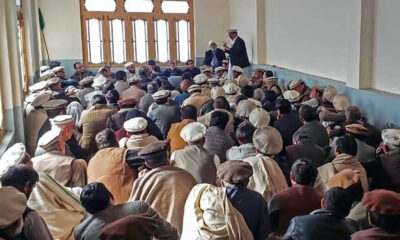
Peshawar to host key Pakistan-Afghanistan peace jirga amid ongoing tensions