
Regional
UN Security Council to hold emergency meeting on Iran amid military escalation
The Security Council session comes hours after the United States and Israel launched coordinated strikes on Iranian targets early Saturday

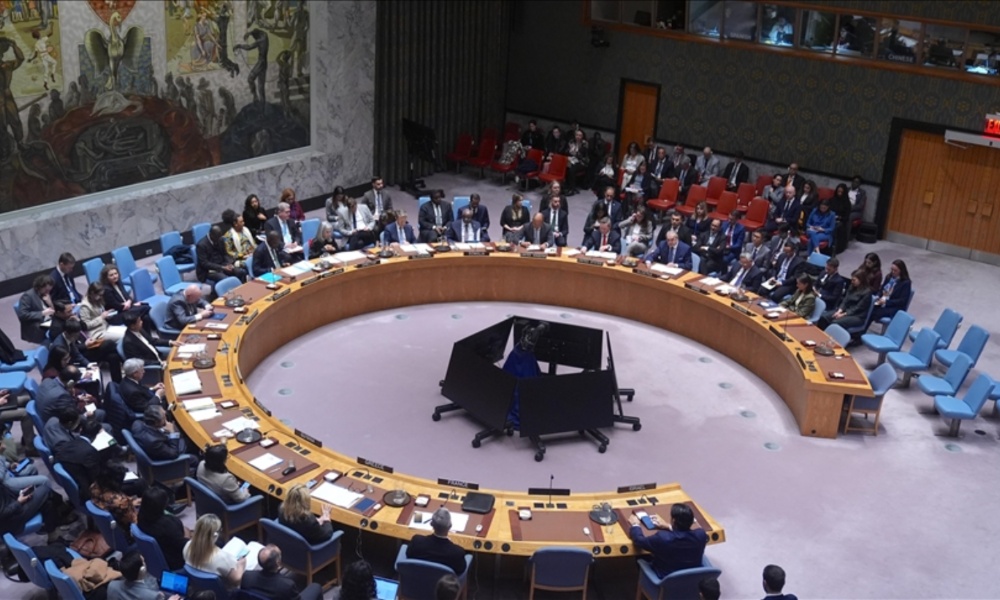
The United Nations Security Council will convene an emergency session on Saturday following large-scale airstrikes on Iran by the United States and Israel, a move that has triggered sharp international backlash and heightened fears of a broader regional conflict.
The emergency meeting was requested by France, Bahrain, China, Russia and Colombia, according to a statement from Russia’s permanent mission to the UN.
“The reckless actions by Washington and West Jerusalem against a sovereign UN member state constitute a direct violation of the fundamental principles and norms of international law,” the Russian mission said, warning that the strikes risk undermining peace, stability and security across the Middle East.
Moscow said it would demand that the United States and Israel “immediately cease their illegal and escalatory actions” and shift toward a political and diplomatic resolution.
Escalation after joint strikes
The Security Council session comes hours after the United States and Israel launched coordinated strikes on Iranian targets early Saturday, saying the operation was aimed at neutralizing threats posed by the Iranian government.
In separate video statements, Israeli Prime Minister Benjamin Netanyahu and U.S. President Donald Trump defended the military action. Both leaders suggested the strikes could create conditions for political change in Tehran, with Trump saying the operation could give Iranians an opportunity to determine their own future.
Iran condemned the attacks as a violation of its sovereignty and international law and responded with retaliatory missile and drone strikes targeting Israeli territory and U.S. assets in the region.
Growing international concern
Diplomatic tensions have mounted rapidly, with several governments urging restraint and warning of the potential for a wider war.
France, one of the countries that requested the emergency meeting, has previously called for renewed diplomatic engagement to address concerns over Iran’s nuclear and ballistic missile programs while avoiding further escalation.
The Security Council gathering is expected to feature heated exchanges among permanent members, particularly between Russia and the United States, as divisions deepen over the legality and consequences of the strikes.
With active hostilities ongoing and civilian casualties reported, the UN session will serve as an early test of whether global powers can contain the crisis — or whether the confrontation will continue to spiral.




Regional
US and Israel strike Iran; Trump says action gives Iranians chance to ‘topple their rulers’
Israel believes it has killed several senior Iranian officials, according to a source briefed on the military’s operations, though Tehran has not confirmed those claims.
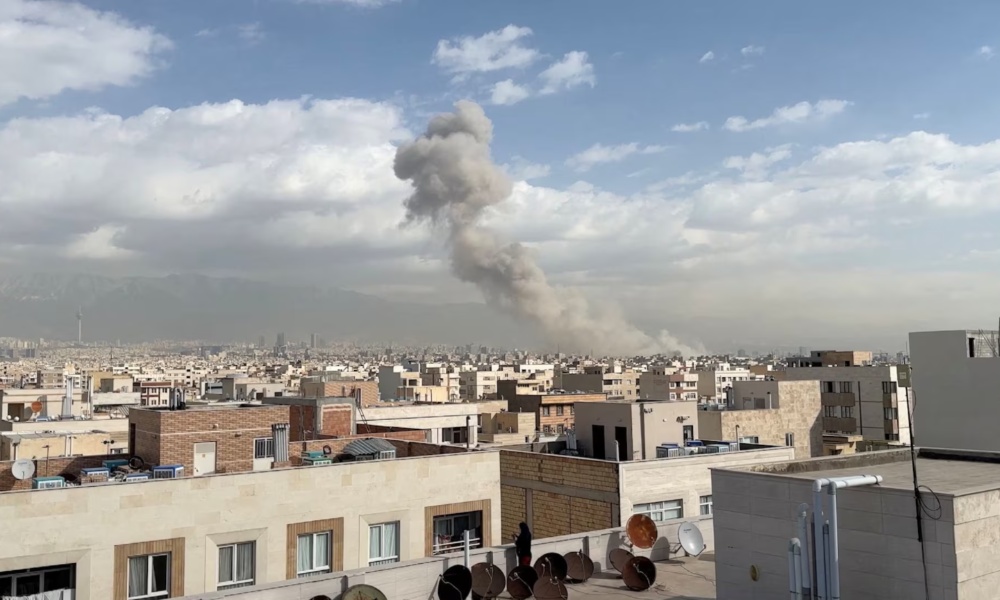
The United States and Israel have launched a sweeping wave of military strikes against Iran, dramatically escalating tensions in the Middle East and triggering missile exchanges across the region, as President Donald Trump said the action could give Iranians an opportunity to “topple their rulers.”
Explosions were reported across multiple Iranian cities early Saturday, including in the southeastern port city of Chabahar, according to Iranian state media. Israeli officials said the strikes targeted senior Iranian leadership and military infrastructure, with one official claiming Iran’s Supreme Leader, Ayatollah Ali Khamenei, had been among those targeted. A source said Khamenei had been moved to a secure location.
Israel believes it has killed several senior Iranian officials, according to a source briefed on the military’s operations, though Tehran has not confirmed those claims.
Iran retaliates across region
Iran responded with missile and drone strikes aimed at Israeli territory and U.S. bases in the region. The Israeli military said another wave of missiles had been launched toward Israel, while witnesses reported blasts over Jerusalem and Tel Aviv as air defense systems intercepted incoming projectiles.
At least four people were killed in Syria’s southern city of Sweida when an Iranian missile struck a building, according to state news agency SANA. Missile debris was also reported in Quneitra and the Yarmouk Basin in Daraa province.
Explosions were heard in the United Arab Emirates and Qatar. Witnesses in Dubai reported at least three large blasts, and Reuters journalists in the city said windows shook from the impact. The UAE defense ministry said it had intercepted a new wave of missiles and later condemned the Iranian strikes as a serious threat to regional stability.
In Abu Dhabi, a very loud bang was heard, according to a Reuters witness. It remains unclear whether the sound was linked to missile interception or impact.
Civilian casualties mount in Iran
Iranian state media said the death toll from an Israeli strike on a girls’ primary school in Minab, southern Iran, had risen to 40. Earlier reports had put the number at 24. The attack has intensified anger inside Iran and raised fears of broader civilian casualties as the conflict deepens.
Speaking from his Mar-a-Lago resort in Florida, Trump posted an eight-minute video on his Truth Social account framing the operation as a decisive move against Tehran’s nuclear ambitions and its four-decade-long hostility toward the United States.
While Axios earlier reported Trump would address the nation Saturday morning, the White House said no formal address had been scheduled and no guidance had been issued.
According to a source familiar with the matter, congressional leaders known as the “Gang of Eight” were briefed by the administration.
Trump said the strikes would prevent Iran from obtaining a nuclear weapon and argued they could open the door for change within the country, saying Iranians now had a chance to “topple their rulers.”
The confrontation comes despite renewed negotiations between Washington and Tehran earlier this week. Oman’s foreign minister said active mediation efforts had been undermined by the escalation.
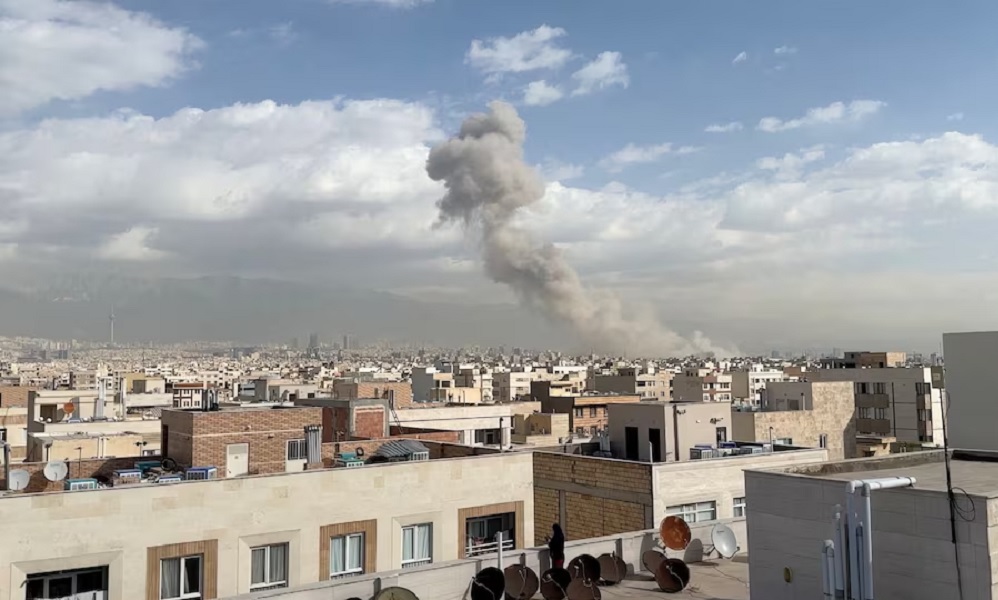
Israel said it launched a pre-emptive attack against Iran on Saturday, pushing the Middle East into a renewed military confrontation and further dimming hopes for a diplomatic solution to Tehran’s long-running nuclear dispute with the West.
The New York Times, citing a U.S. official, reported that U.S. strikes on Iran were underway. A source told Reuters that Iran’s supreme leader, Ayatollah Ali Khamenei, was not in Tehran and had been transferred to a secure location.
The attack, coming after Israel and Iran engaged in a 12-day air war in June, follows repeated U.S.-Israeli warnings that they would strike again if Iran pressed ahead with its nuclear and ballistic missile programmes, Reuters reported.
“The State of Israel launched a pre-emptive attack against Iran to remove threats to the State of Israel,” Defence Minister Israel Katz said.
An Israeli defence official said the operation had been planned for months in coordination with Washington, and that the launch date was decided weeks ago.
Explosions were heard in Tehran on Saturday, Iranian media reported, and sirens sounded across Israel around 08:15 local time in what the military said was a proactive alert to prepare the public for the possibility of an incoming missile strike.
The Israeli military announced the closure of schools and workplaces, with exceptions for essential sectors, and a ban on public airspace. Israel closed its airspace to civilian flights, and the airports authority asked the public not to go to any of the country’s airports.
The U.S. and Iran renewed negotiations in February in a bid to resolve the decades-long dispute through diplomacy and avert the threat of a military confrontation that could destabilise the region.
Israel, however, insisted that any U.S. deal with Iran must include the dismantling of Tehran’s nuclear infrastructure, not just stopping the enrichment process, and lobbied Washington to include restrictions on Iran’s missile programme in the talks.
Iran said it was prepared to discuss curbs on its nuclear programme in exchange for lifting sanctions but ruled out linking the issue to missiles.
Tehran also said it would defend itself against any attack.
It warned neighbouring countries hosting U.S. troops that it would retaliate against American bases if Washington struck Iran.
In June, the U.S. joined an Israeli military campaign against Iranian nuclear installations, in the most direct American military action ever against the Islamic Republic.
Tehran retaliated then by launching missiles toward the U.S. Al Udeid air base in Qatar, the largest in the Middle East.
Western powers have warned that Iran’s ballistic missile project threatens regional stability and could deliver nuclear weapons if developed. Tehran denies seeking atomic bombs.

The United States and Iran made progress in talks over Tehran’s nuclear program on Thursday, mediator Oman said, but hours of negotiation ended with no sign of a breakthrough that could avert potential U.S. strikes amid a massive military buildup.
The two sides plan to resume negotiations soon after consultations in their countries’ capitals, with technical-level discussions scheduled to take place next week in Vienna, Omani Foreign Minister Sayyid Badr Albusaidi said in a post on X after the day’s meetings in Switzerland, Reuters reported.
Badr Albusaidi will hold talks with U.S. Vice President JD Vance and other U.S. officials in Washington on Friday, MS NOW reported late on Thursday. Neither the White House nor Oman’s embassy in Washington immediately responded to requests for comment.
Any substantial move toward an elusive agreement between longtime foes Washington and Tehran could reduce the imminent prospects for U.S President Donald Trump to carry out a threatened attack on Iran that many fear could escalate into a wider war.
But Tuesday’s indirect talks wrapped up without a deal, still leaving the region on edge.
The Omani minister’s upbeat assessment followed indirect talks between Iranian Foreign Minister Abbas Araqchi and U.S. envoys Steve Witkoff and Jared Kushner in Geneva, with one session in the morning and the second in the afternoon.
“We have finished the day after significant progress in the negotiation between the United States and Iran,” Badr Albusaidi said.
But with many analysts seeing the latest diplomacy as the last chance before Trump could decide to go to war, Badr Albusaidi provided no details and stopped short of saying the two sides had overcome their biggest stumbling blocks to a deal.
Describing the talks as some of the most serious that Iran has had with the U.S., Araqchi told Iranian state television: “We reached agreement on some issues, and there are differences regarding some other issues.”
“It was decided that the next round of negotiations will take place soon, in less than a week,” he said. The Iranians, he added, had clearly expressed their demand for lifting of U.S. sanctions, which Washington has long insisted will only come after deep concessions from Tehran.
There was no immediate comment from the U.S. negotiating team on the outcome of the talks. But Axios quoted a senior U.S. official as saying the Geneva negotiations were “positive.”
The discussions about the decades-long dispute over Iran’s nuclear work come as fears grow of a Middle East conflagration. Trump has repeatedly threatened action if there is no deal, and the U.S. military has amassed its forces in waters near the Islamic Republic.
‘INTENSE AND SERIOUS’ TALKS
A senior Iranian official told Reuters earlier on Thursday that the U.S. and Iran could reach a framework for a deal if Washington separated “nuclear and non-nuclear issues.”
The Trump administration has insisted that Iran’s ballistic missile program and its support for armed groups in the region must be part of the negotiations.
After the morning session, Badr Albusaidi said the two sides had exchanged “creative and positive ideas”.
But a senior Iranian official said at the time that some gaps still had to be narrowed.
Washington, which believes Tehran seeks the ability to build a nuclear bomb, wants Iran to give up all uranium enrichment, a process that makes fuel for atomic power plants but that can also yield material for a warhead.
Iran has long denied wanting a bomb and said earlier on Thursday it would show flexibility at the talks. Reuters reported on Sunday that Tehran was offering undefined new concessions in return for removal of sanctions and recognition of its right to enrich uranium.
U.S. Secretary of State Marco Rubio said on Wednesday that Iran’s refusal to discuss its ballistic missile program was a “big problem” which would have to be addressed eventually.
The missiles were “designed solely to strike America” and pose a threat to regional stability, he said, but offered no proof to back the claim that U.S. territory could be targeted.
TRUMP THREATENS ‘REALLY BAD THINGS’
Trump said on February 19 that Iran must make a deal in 10 to 15 days, warning that “really bad things” would otherwise happen.
He briefly laid out his case for a possible attack on Iran in his State of the Union speech on Tuesday, underlining that while he preferred a diplomatic solution, he would not allow Tehran to obtain a nuclear weapon.
In June, the U.S. joined Israel in hitting Iranian nuclear sites and has been ramping up the pressure on Tehran again since January, when Trump threatened to intervene over its crushing of nationwide protests with thousands killed.
Since then, Trump has deployed fighter jets and aircraft carrier strike groups in the region.
Iran responded to last summer’s strikes by firing fusillades of missiles at Israel and has threatened to retaliate fiercely if attacked again, raising fears of a wider regional conflict that has alarmed Gulf oil producers.
Within Iran, Supreme Leader Ayatollah Ali Khamenei faces the gravest crisis of his 36-year tenure, with an economy buckling under tightened sanctions and renewed protests following the major unrest and crackdown in January.
President Masoud Pezeshkian said on Thursday that Khamenei has banned weapons of mass destruction, which “clearly means Tehran won’t develop nuclear weapons,” reiterating a religious decree issued in the early 2000s.


UN Security Council to hold emergency meeting on Iran amid military escalation

Saar: Afghan retaliatory operations against Pakistan discussed

Haqqani and Syrian FM discuss situation in Afghanistan and Pakistan

US and Israel strike Iran; Trump says action gives Iranians chance to ‘topple their rulers’

Afghan FM Muttaqi discusses Pakistan tensions with Qatari and Saudi officials

IEA releases three Pakistani soldiers to mark Ramadan

AFC Futsal Asian Cup: Afghanistan to face Iran in crucial Group D clash

Afghanistan’s Chief of Armed Forces underscores readiness and equipment for national defense

Afghanistan welcomes investment and technology partnerships with India

Grateful to Afghans and Ulama for obeying the Islamic Emirate, says Hibatullah Akhundzada
Saar: Afghan retaliatory operations against Pakistan discussed

Tahawol: Carrying out retaliatory operations against Pakistan discussed

Saar: Resumption of retaliatory operations against Pakistan discussed

Tahawol: IEA’s military response against Pakistan discussed

Saar: Discussion on silence over Pakistan’s attacks in Afghanistan
-
 Latest News1 day ago
Afghan Air Force conducts airstrikes in Islamabad, other cities
-
 Latest News1 day ago
IEA: Special circle in Pakistan has launched mission to destabilize region
-
 Latest News11 hours ago
Pakistani military jet downed in Afghanistan’s Jalalabad, pilot captured alive
-

 International Sports4 days ago
AFC Champions League Elite gears up for Round of 16 as league stage concludes
-

 Sport4 days ago
Richard Pybus appointed as head coach of Afghanistan’s national cricket team
-

 World3 days ago
India’s Modi backs Israel in address at Israeli parliament
-

 International Sports4 days ago
Winter Olympics 2026 concludes with Norway on top of medal standings
-
 Latest News4 days ago
Bennett expresses concern over civilian casualties in Pakistani airstrikes on Afghanistan