
Latest News
UN warns of mounting humanitarian and human rights pressures in Afghanistan
The UN documented 399 civilian casualties in Afghanistan between 1 April and 30 June, including 57 deaths and 342 injuries.

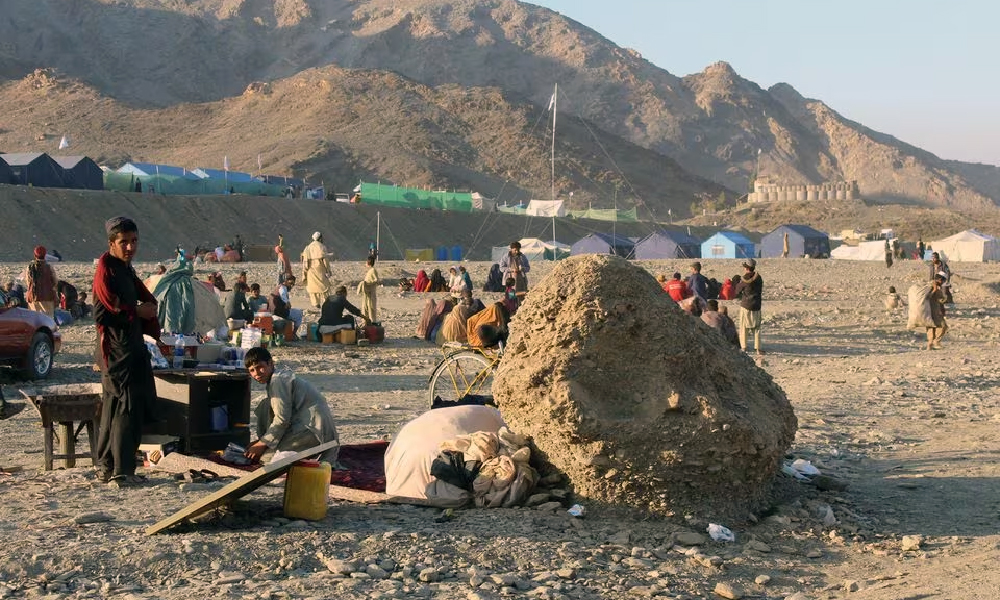
The United Nations has warned that Afghanistan continues to face serious humanitarian, economic, security and human rights challenges, despite the Islamic Emirate (IEA) maintaining overall territorial and administrative control.
In its latest report, covering 22 May to 9 September 2026, the UN said relative stability masked growing risks, including human rights concerns, economic pressures, humanitarian needs and tensions with Pakistan.
The report said IEA policies continued to raise concerns over the rights of women and girls, restrictions affecting men and women, arrests of journalists, reported violations of the general amnesty and the continued use of corporal punishment.
Between 1 May and 31 July, the UN recorded 2,947 safety and security-related incidents, an 11 percent increase compared with the same period in 2025. Armed opposition groups claimed responsibility for 88 incidents across 21 provinces, of which 55 were verified.
The attacks mainly involved ambushes and assaults on checkpoints targeting IEA personnel and military facilities.
The UN also reported a suicide bombing outside a boys’ school in Kabul on 5 June, although no group claimed responsibility.
In Badakhshan, the Homeland Soldiers Front briefly seized administrative buildings in Yaftal-e Payin District on 17 July before withdrawing.
On 24 July, the Afghanistan Freedom Front attacked a security checkpoint in Zaybak District, but the IEA reportedly repelled the attack and retained control.
The Afghanistan-Pakistan frontier remained volatile, with drone activity, airstrikes, shelling and clashes reported on both sides.
The UN documented 399 civilian casualties in Afghanistan between 1 April and 30 June, including 57 deaths and 342 injuries.
Pakistani airstrikes on 28 June in Kunar, Paktika and Paktiya were reported to have killed 28 civilians and injured 189.
Pakistan said the strikes targeted terrorist hideouts, while the IEA rejected the allegations.
On 30 June, the IEA Ministry of Defence announced retaliatory drone attacks against alleged ISIL-K (Daesh) and anti-IEA group locations in Pakistan.
Pakistani authorities confirmed that drones had crossed into Pakistani territory and said they were intercepted.
The UN also reported that ISIL-K claimed an attack on a military checkpoint in Nuristan on 30 June, while an IEA official was killed near Faizabad in Badakhshan on 29 July.
Humanitarian pressure
The humanitarian response remained severely underfunded, the UN reported stating that the 2026 Afghanistan Humanitarian Needs and Response Plan had received $513 million of the $1.7 billion required, leaving it 29.9 percent funded.
The UN projected that 13.8 million people would face crisis or emergency levels of food insecurity in 2026, while 3.7 million children under five and 1.2 million pregnant and breastfeeding women were projected to face acute malnutrition.
Nearly 1.15 million Afghans returned between 1 January and 22 August, including 686,200 from Pakistan and 465,000 from Iran. The UN said a large share of the returns were involuntary, placing additional pressure on labour markets and communities.
The report also noted that an estimated 2.4 million Afghan girls were systematically excluded from secondary education, according to UNESCO.
A UNICEF study estimated that restrictions on women’s education and labour-force participation cost Afghanistan at least $84 million annually.
Regional engagement
Despite the challenges, Afghanistan continued regional economic and diplomatic engagement.
Afghan and Uzbek traders signed 22 trade agreements worth $200 million, while Uzbekistan agreed to simplify visa procedures for Afghan patients seeking medical treatment.
Afghanistan also held discussions with Turkmenistan, Iran and India on energy, bilateral cooperation and agriculture.
Turkmenistan reported that construction of the Turkmenistan-Afghanistan-Pakistan-India (TAPI) pipeline had reached 67 percent completion.
UN Secretary-General António Guterres called on the IEA to remove restrictions affecting women and girls, protect media freedom, respect due process and detainee rights, prevent violations of the general amnesty and end corporal punishment.
He also urged all parties involved in Afghanistan-Pakistan hostilities to protect civilians and comply with international law, while calling for returns to Afghanistan to be voluntary, safe, dignified and supported by sustainable reintegration.


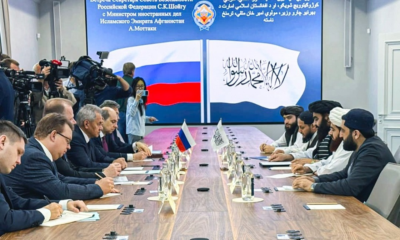



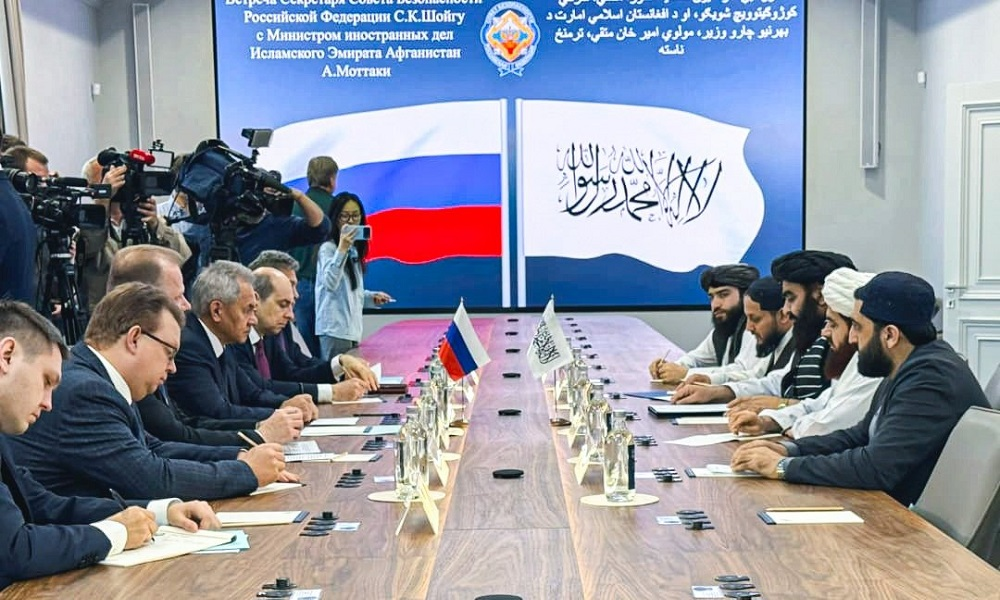
Amir Khan Muttaqi, Minister of Foreign Affairs, met on Tuesday with Sergei Shoigu, Secretary of Russia’s Security Council, to discuss bilateral relations, regional security, and security cooperation.
In a statement issued on Tuesday, the Ministry of Foreign Affairs of the Islamic Emirate said the two sides also discussed counter-narcotics efforts and expanding security cooperation between Afghanistan and Russia.
Muttaqi, referring to the positive progress in political relations between the two countries, thanked Russia for recognizing the Islamic Emirate of Afghanistan and stressed the importance of strengthening security cooperation, regular consultations, and expanding economic and trade relations.
The Foreign Minister also said Afghanistan would continue its efforts to ensure regional security and combat narcotics, and supports expanding cooperation with regional countries through direct contacts and practical cooperation.
Meanwhile, Sergei Shoigu described Afghanistan-Russia relations as expanding in various areas and expressed satisfaction with Afghanistan’s efforts to maintain security and combat narcotics.
The Secretary of Russia’s Security Council emphasized that Moscow would continue political consultations and practical cooperation with Afghanistan.
Latest News
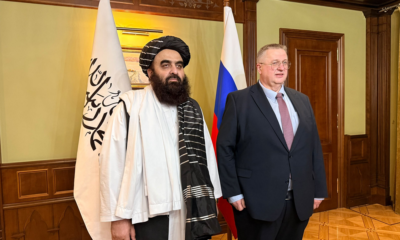
Muttaqi, Russian deputy PM discuss expanding economic ties
Overchuk expressed Russia’s readiness to expand economic cooperation with Afghanistan, saying conditions are now in place for launching practical cooperation.
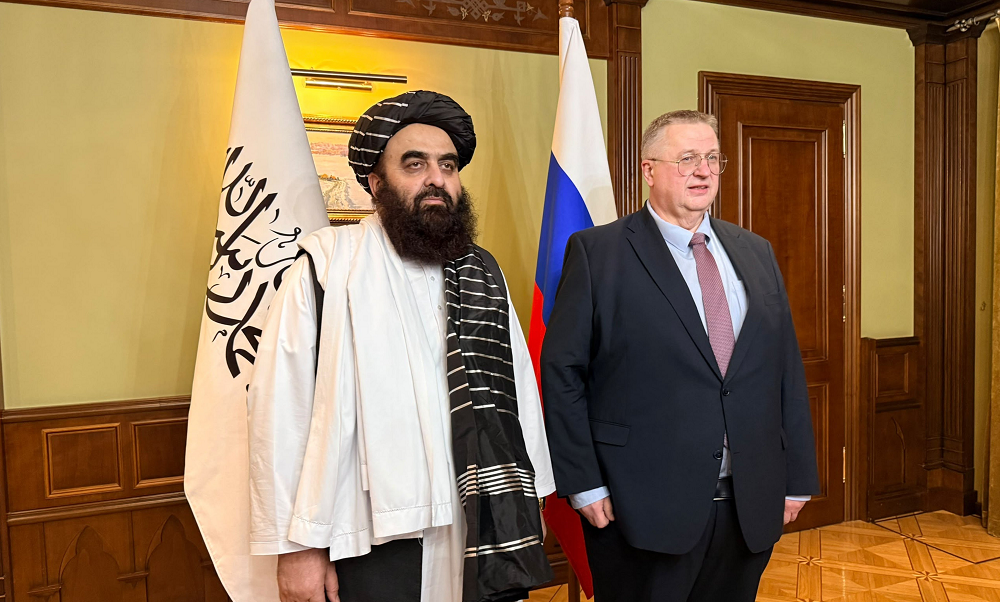
Afghanistan’s Foreign Minister Amir Khan Muttaqi met with Russian Deputy Prime Minister Alexei Overchuk in Moscow to discuss expanding political and economic cooperation between the two countries.
The talks focused on strengthening trade, transit, regional connectivity and energy cooperation, as well as investment and other areas of mutual interest, Afghan foreign ministry said in a statement.
Muttaqi highlighted the positive trajectory of political relations between Kabul and Moscow and thanked the Russian leadership for what he described as its positive policy toward Afghanistan.
He said the existing political understanding should be translated into practical economic partnerships, stressing the need to expand trade and transit, attract Russian investment to Afghanistan, cooperate in energy and mining, and facilitate banking and payment mechanisms between the two countries.
Overchuk expressed Russia’s readiness to expand economic cooperation with Afghanistan, saying conditions are now in place for launching practical cooperation.
He also stressed the importance of expanding joint work in transit, transport, energy and other sectors, while pointing to a significant increase in bilateral trade last year. He expressed hope that further practical economic cooperation between the two countries would develop in the near future.
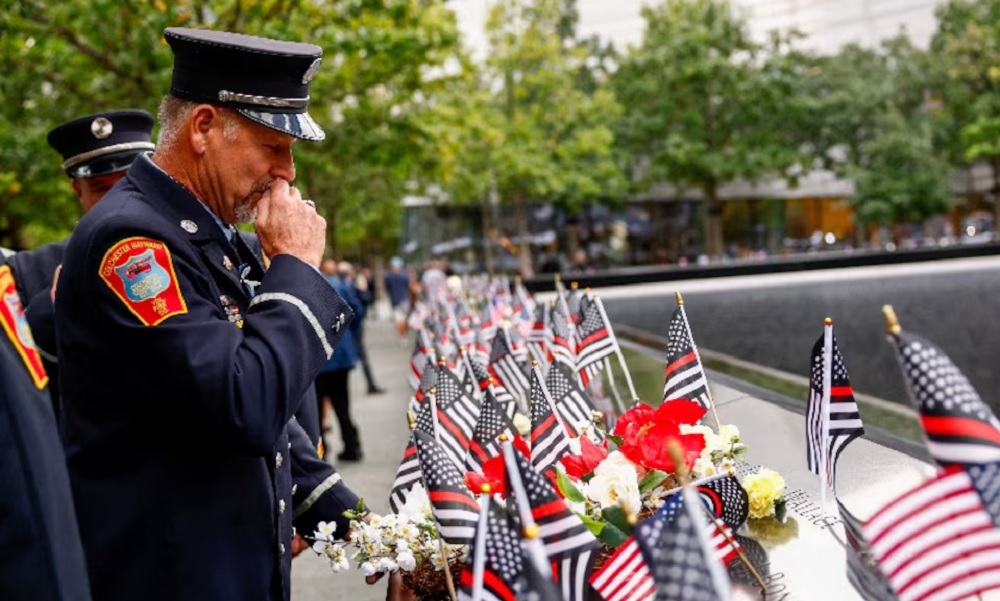
The attorneys general of 30 US states have asked the US Supreme Court to review a case involving around $3.5 billion in frozen assets of Da Afghanistan Bank that victims and families of the September 11 attacks are seeking to use for compensation.
The Iowa Attorney General’s Office said in a statement on Monday that the states filed a brief with the Supreme Court in support of the victims and their families, who have obtained compensation judgments in US federal courts.
According to the office, after years of legal proceedings, the victims and their families have secured nearly $17 billion in court-ordered compensation.
However, the US Second Circuit Court of Appeals ruled that around $3.5 billion in assets belonging to Afghanistan’s central bank cannot be used to satisfy those compensation awards.
The assets were frozen by the U.S. Treasury Department on August 15, 2021, the day the Islamic Emirate entered Kabul.
The state attorneys general argue that US law allows the frozen assets to be used to satisfy court-ordered compensation.
Iowa Attorney General Brenna Bird said the victims and their families had pursued justice and compensation through the US legal system and should be able to access the money awarded to them by the courts.
This comes as the Islamic Emirate has repeatedly called for the release of Da Afghanistan Bank assets.


Vance says Iran must cut enrichment to end war

Tahawol: Discussion on outcome of Moscow Format meeting

ACL: Sarbaz Yashlar and Khurasan Faryab play out goalless draw

Saar: Expansion of relations between Kabul and Moscow discussed

Aino Mina Kandahar defeat Istiqlal Kabul 3–2

Saudi energy group signs major Afghanistan deals covering gas exploration and pipeline plans

Khalilzad: Afghanistan ready to attract major investment

UAE firm eyes investment in Salang’s second tunnel and pharmaceutical factories

US Treasury ratchets up pressure on Iran with sweeping new aviation sanctions

AI could pose ‘existential’ risk to humanity, UN rights chief warns
Tahawol: Discussion on outcome of Moscow Format meeting
Saar: Expansion of relations between Kabul and Moscow discussed

Tahawol: Afghanistan-Iran: shared opportunities and challenges discussed

Saar: Pakistan’s hostile policy toward Afghanistan discussed

Tahawol: Doha process seeks new cooperation opportunities
-

 Sport2 days ago
Cricket Bonanza: Afghanistan set for packed international schedule
-
 Sport5 days ago
ACB announces Afghanistan squads for Bangladesh, Zimbabwe series
-
 Latest News5 days ago
Russia expects to ease Afghanistan-Pakistan tensions at Moscow Format meeting
-
 International Sports5 days ago
Afghanistan to face Pakistan, India and Australia at 2027 Cricket World Cup
-
 Regional5 days ago
Saudi-led coalition says Houthis attacked power station for Prophet’s Mosque in Medina
-
 Regional5 days ago
Cargo stacks up as Pakistan seizes containers to block capital routes
-
 Latest News4 days ago
Kazakhstan, Uzbekistan and UAE sign MoU on CASA railway project via Afghanistan
-
 Regional4 days ago
Pakistan says Mecca pact members to hold emergency talks on engaging Houthis