
Latest News
Unprecedented surge in US aerial refueling tankers cross Atlantic amid Middle East tensions
The aircraft flew at altitudes and in formations consistent with strategic deployment, rather than routine training or ferry missions.

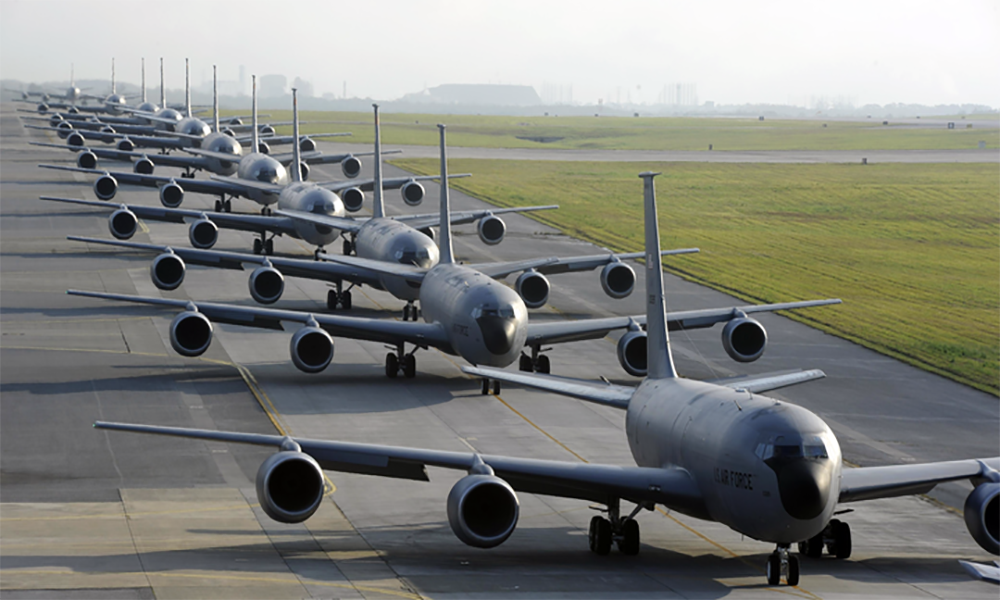
A large and unusual movement of United States Air Force aerial refueling aircraft crossing the Atlantic on Sunday night has drawn heightened attention from military analysts, as tensions continue to simmer in the Middle East.
Observers tracked over two dozen American tanker aircraft — including KC-135 Stratotankers and KC-46 Pegasus tankers — flying eastbound in what appeared to be a coordinated transit from North America, the UK Defense Journal reported Monday.
The aircraft flew at altitudes and in formations consistent with strategic deployment, rather than routine training or ferry missions.
The scale and timing of the deployment has prompted speculation among defense experts, particularly because no major multinational exercises, such as Atlantic Trident, are currently scheduled.
The absence of such exercises has led many to conclude that the tankers are being pre-positioned to support potential military operations or contingency plans.
Although the final destinations of the aircraft remain unconfirmed, several flight paths suggest the tankers were en route to Europe or US and NATO bases in the Middle East.
This region has seen a sharp rise in military activity, with the US already reinforcing its presence by deploying AEGIS-equipped destroyers and THAAD missile defense systems in support of Israel, UKDJ reported.
The deployment of so many refueling aircraft significantly enhances the operational reach of U.S. airpower, enabling fighter jets, bombers, and ISR (intelligence, surveillance, reconnaissance) aircraft to operate at greater distances for longer durations. This could be a vital asset in any extended or rapid-strike campaign.
Strategic Role of Aerial Refueling
Aerial refueling is a cornerstone of American global force projection. The KC-135 and KC-46 tankers are capable of transferring tens of thousands of pounds of fuel mid-air, supporting a wide range of aircraft — from F-35 and F-15 fighters to B-52 and B-2 bombers, surveillance planes, and even other tankers in complex relay operations.
Though no accompanying strike aircraft were publicly visible on tracking platforms, analysts caution that operational aircraft could be flying without transponders or have taken different routes to avoid detection.
No Official Comment, But Signals Readiness
The U.S. Department of Defense has not issued any statement regarding the deployment. However, the scale of the movement — combined with current geopolitical dynamics — suggests a state of elevated operational readiness. Whether the tanker surge is part of a broader deterrent posture, a routine rotation under classified parameters, or preparation for imminent operations, remains unclear.
What is certain, however, is that this type of high-volume tanker mobilization is rare — and typically reserved for moments requiring significant strategic flexibility, the UKDJ reported adding that the coming days may reveal whether this movement marks the prelude to intensified military activity, or a calculated show of capability and preparedness.








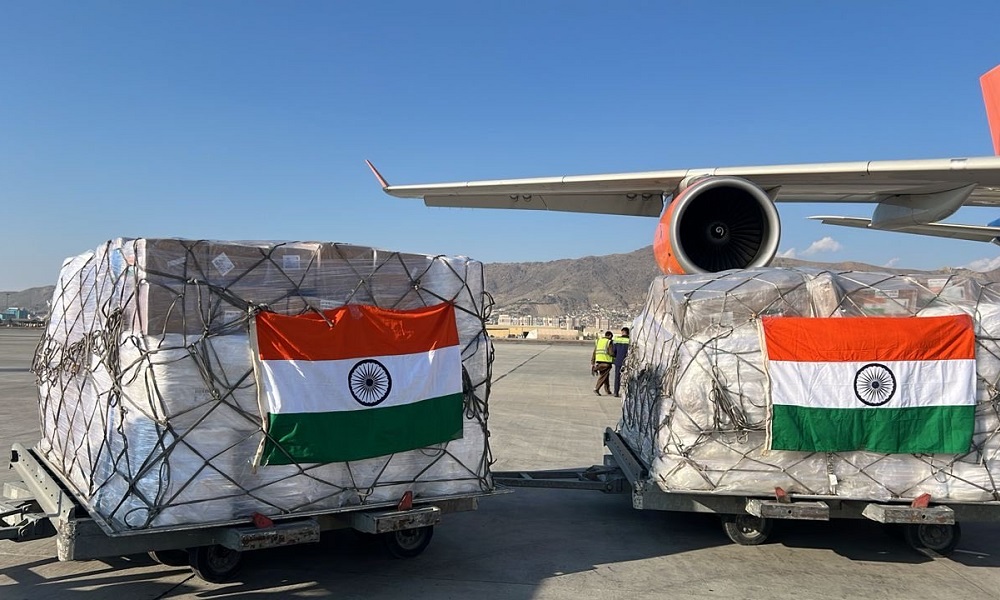
Randhir Jaiswal, spokesperson for India’s Ministry of External Affairs, announced on Friday that a 2.5-ton consignment, including emergency medicines, medical disposables, kits, and equipment has been delivered to Kabul.
According to him, the aid shipment is intended to support the swift recovery of those injured in the recent airstrike by Pakistan’s military regime.
He emphasized that India stands with the people of Afghanistan and will continue to provide all possible humanitarian assistance.

The Afghanistan Journalists Center (AFJC) has announced that Mahdi Ansary, a reporter for the Afghan News Agency (AFKA), has been released after serving one and a half years in Bagram prison.
In a statement welcoming his release, AFJC emphasized that the fundamental rights of this journalist—who had been tried and imprisoned on charges of cooperating with exiled and foreign media—were “seriously” violated.
Ansari was arrested on October 5, 2023, after returning from his workplace in Kabul.
He was sentenced on January 1, 2024 by the Kabul Primary Court to one and a half years in prison on charges of “propaganda against the Islamic Emirate.”
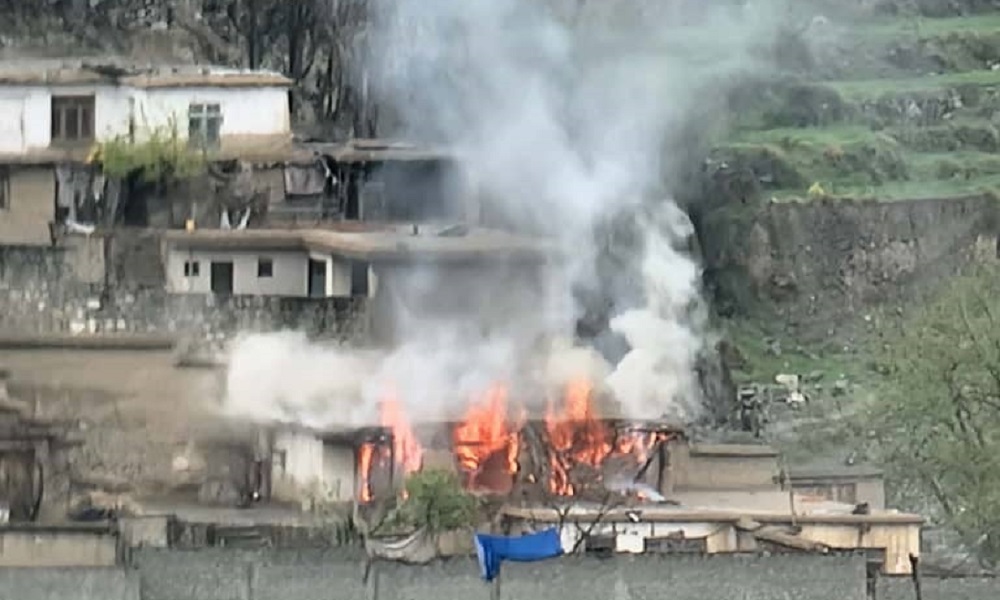
Farid Dehqan, spokesperson for the Khas Kunar police command, said that rocket attacks by the Pakistani military regime are still ongoing in the province.
These attacks come despite earlier announcements by the Pakistani military of a temporary ceasefire for Eid.


Tawsia: Assessment of Afghanistan’s economic activities in 1404

India sends 2.5-ton medical shipment to Afghanistan

Trump compares Iran strikes to Pearl Harbor in meeting with Japan’s leader

Afghanistan national buzkashi falls short in Kokpar World Championship semifinals

Mahdi Ansary, local journalist, released from prison

Pakistani military jet downed in Afghanistan’s Jalalabad, pilot captured alive

Afghan Air Force conducts airstrikes in Islamabad, other cities

Afghanistan welcomes investment and technology partnerships with India

Prominent Muslim scholar issues fatwa calling for Afghanistan-Pakistan ceasefire

Afghan air force strikes key Pakistani military installations in retaliatory operation
Tawsia: Assessment of Afghanistan’s economic activities in 1404

Tahawol: Temporary ceasefire draws broad support

Saar: Emphasis on resolving conflicts through diplomacy

Tahawol: Global reactions to Pakistan’s recent attacks discussed

Saar: Consequences of Pakistani airstrikes on Afghans discussed
-

 Latest News4 days ago
IEA Supreme Leader issues Eid-ul-Fitr message urging unity and support for Islamic system
-

 Business4 days ago
Turkmenistan, Afghanistan discuss steps to speed up land acquisition for TAPI pipeline
-

 Latest News2 days ago
IEA announces temporary pause in defensive operations against Pakistan for Eid
-

 Latest News2 days ago
Pakistan opposes normal Afghanistan–India relations: Shaheen
-

 Sport3 days ago
Afghanistan national buzkashi team defeats Hungary 14–0
-

 Latest News4 days ago
CAIR-Texas calls for probe after Afghan refugee dies in ICE custody
-

 Latest News4 days ago
IEA condemns alleged airstrike by Pakistan on drug treatment hospital in Kabul
-
 Latest News3 days ago
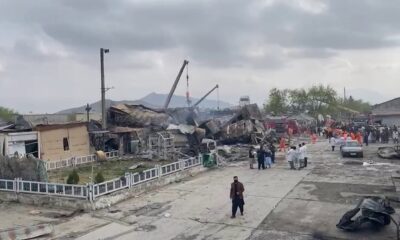
Afghanistan warns Pakistan of ‘teeth-breaking’ response after deadly Kabul bombing