
Latest News
US contractors paid millions for incomplete projects in Afghanistan

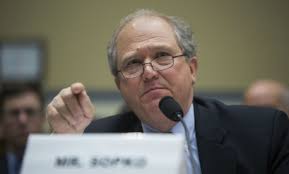
After six years of inspection reports, the Special Inspector General for Afghanistan Reconstruction (SIGAR) has a decidedly mixed review of U.S. Defense Department reconstruction projects in Afghanistan.
In testimony delivered to the US House Committee on Oversight and Government Reform, SIGAR John Sopko commented that although his organization’s reports cover only a fraction of the Pentagon’s reconstruction projects.
A new review of 36 inspection reports by the Special Inspector General for Afghanistan Reconstruction (SIGAR) covering 44 reconstruction projects with a combined value of $1.1 billion found serious problem in a majority cases.
Sixty-three percent of the projects failed to meet the requirements of the contract or technical specifications, 36 percent were structurally unsound or hazardous to the occupants, and a roughly a quarter were delayed, including one more than two and half years behind schedule.
Many contractors who performed shoddy work were still paid the full contract amount. Roughly one-third of completed projects are still vacant, and contractors usually received full payment for poorly built and late projects.
But continued corruption, political instability and a lack of resources in Afghanistan mean the Afghan government isn’t able to operate the facilities independently, and American taxpayers are on the hook until they can.
“Currently, it is unclear when the Afghan government will be able to take over this responsibility,” Sopko said in statements prepared for a hearing on DOD Afghanistan construction projects before the House Oversight and Government Reform Committee. “Until it is able to do so, U.S. taxpayer funds will continue to be expended to sustain the facilities DOD has built for the Afghans.”
It remains unclear how, or even if, the Afghan government and its national security forces will be able to take responsibility for the facilities the U.S. is paying for. Until then, the SIGAR office warns, American taxpayers will have to continue paying for the Defense Department projects.
Bathkhak School in Kabul province, for example, “had such serious design and construction flaws” that inspectors urged a delay in transferring the school to the Afghan government.
Inspectors found “collapsible soil due to poor compaction; improperly installed heating and cooling systems; inoperable water systems; inadequate testing of mechanical systems; electrical wiring that was not up to code; use of substandard building materials; poorly mixed, cured, and reinforced concrete; and improperly installed roofs.”
Despite these reports, the inspector general is optimistic about the future and points to two signs that the situation on the ground may change: The Defense Department has implemented almost 80 percent of the recommendations the agency has made, and the government in Afghanistan under the leadership of President Ashraf Ghani has pledged to fight corruption – an endemic issue across all federal offices and ranks considered the key contributor to the government’s woes.

International Sports
FIFA appoints record number of match officials for 2026 World Cup
A total of 52 referees, 88 assistant referees and 30 video match officials have been selected from across all six confederations and 50 member associations.

FIFA has announced the full list of match officials for the upcoming FIFA World Cup 2026, confirming what will be the largest refereeing team in the tournament’s history.
A total of 52 referees, 88 assistant referees and 30 video match officials have been selected from across all six confederations and 50 member associations, following a rigorous evaluation process that spanned more than three years.
The selection was based on FIFA’s “quality first” principle, with officials assessed on their consistency and performances in domestic leagues, international competitions and previous FIFA tournaments.
Pierluigi Collina said the chosen officials represent the highest standard in global football officiating. He noted that candidates were closely monitored over several years, taking part in seminars and major tournaments while undergoing regular performance reviews.
“This will be the biggest World Cup in history,” Collina said, referring to the expanded 48-team format and 104 matches set to be played across three host countries. He added that the officiating team has grown significantly compared to the 2022 tournament in Qatar, reflecting the increased scale of the competition.
Collina also highlighted the continued inclusion of women referees, with six female match officials selected, building on progress made during the previous World Cup.
Officials will undergo final preparations at a training camp in Miami starting on May 31, where they will receive support from fitness coaches, medical staff and match analysts to ensure they are in peak physical and mental condition ahead of the tournament.
Massimo Busacca said preparations began immediately after the conclusion of the 2022 World Cup, with a structured programme of workshops, monitoring and technical development designed to maintain the highest standards.
During the tournament, referees will continue daily training sessions, supported by detailed match analysis and on-field simulations involving local players.
Technology is also set to play a central role, with FIFA confirming the use of goal-line technology, an enhanced version of semi-automated offside systems and connected ball technology.
In a first for the World Cup, fans will also be able to view matches from the referee’s perspective using newly introduced body cameras, enhanced by artificial intelligence to improve video quality.
Following the Miami training camp, video match officials will relocate to Dallas, home of the International Broadcast Centre, while referees and assistant referees will remain in Miami for the duration of the tournament.
FIFA said additional measures aimed at increasing match tempo and reducing time-wasting—approved earlier this year by the International Football Association Board—will also be implemented.
With preparations now entering the final phase, FIFA says it is confident that “Team One” will be ready to meet the demands of what is expected to be a historic and groundbreaking World Cup.
Click here for full list of appointed match officials for the FIFA World Cup 2026.
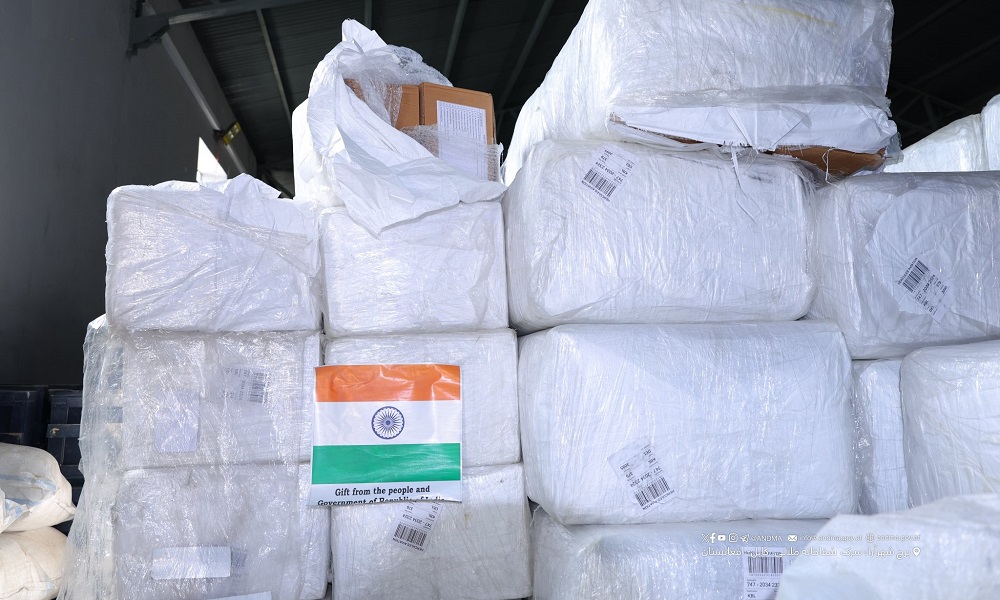
India has delivered three tons of humanitarian assistance to Afghanistan to support families impacted by recent flooding, the Afghanistan National Disaster Management Authority (ANDMA) said on Thursday.
Officials confirmed the aid shipment was received the same day and includes essential relief items such as 300 medical kits, 50 kitchen sets, 495 blankets, and 165 tarpaulins.
ANDMA expressed appreciation for India’s continued humanitarian support, noting that the assistance will help address urgent needs in flood-affected areas.
The authority added that a formal assessment is underway and that the aid will be distributed in a transparent and equitable manner to the most affected and vulnerable families.
Flooding has repeatedly affected several regions of Afghanistan, leaving communities in need of immediate relief and longer-term recovery support.
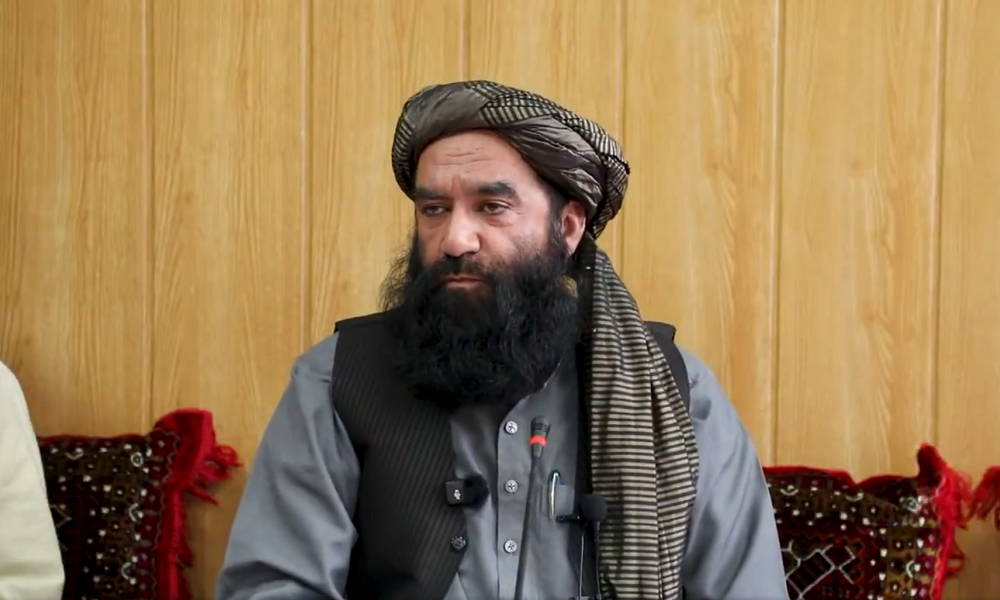
Noorullah Noori, Afghanistan’s Minister of Borders, Ethnic Affairs and Tribes, says the barbed-wire fencing along the disputed Durand Line is viewed by Afghans as a wire placed on the chest of the nation, stressing that Afghans will never accept a foreign barrier imposed on their land.
Noori made the remarks during a meeting with a number of political analysts, tribal elders and university professors at his office, where he emphasized that Afghanistan does not recognize an official border with Pakistan and that this position has been clearly communicated on multiple occasions.
Speaking at the gathering, the minister said the current governing system has emerged from among the people and that public cooperation and support have played a key role in reaching this stage.
He added that the system belongs to all Afghans and that all citizens of the country are treated equally. According to him, since the Islamic Emirate came to power, thousands of tribal and local disputes across the country have been resolved, and serious measures have been taken to safeguard the country’s borders.
Meanwhile, Mohammad Ali Jan Ahmad, Deputy Minister for Jirgas and Tribal Coordination at the ministry, said one of the most important factors behind the success of any society and political system is intellectual and ideological unity among the people.
He noted that such unity exists among the Afghan nation.
During the meeting, political analysts and tribal elders also emphasized the importance of unity and solidarity with the current system, stating that the people of Afghanistan will stand alongside the country’s security and defense forces to protect the nation and its territorial integrity.


ATN seals Ariana Snooker Championship deal for five seasons

Tahawol: China to host 2nd round of Kabul–Islamabad talks discussed

Saar: Fragile ceasefire in the Middle East reviewed

FIFA appoints record number of match officials for 2026 World Cup

Afghanistan U-17s fall to Uzbekistan as CAFA campaign nears conclusion

IEA Supreme Leader issues Eid-ul-Fitr message urging unity and support for Islamic system

14 Pakistani soldiers killed after military post falls along Durand line: MoD

IEA supreme leader orders replacement of foreign terminology in official documents

Afghan airstrikes target Pakistani military sites in retaliation for air attacks

Turkmenistan, Afghanistan discuss steps to speed up land acquisition for TAPI pipeline
Tahawol: China to host 2nd round of Kabul–Islamabad talks discussed
Saar: Fragile ceasefire in the Middle East reviewed

Tahawol: Two‑week truce agreement between Iran-US reviewed

Saar: US–Iran two-week ceasefire agreement discussed

Tahawol: Ongoing negotiations between Kabul-Islamabad discussed
-
 Latest News4 days ago
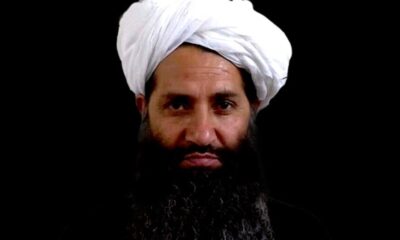
IEA supreme leader orders replacement of foreign terminology in official documents
-
 Latest News4 days ago
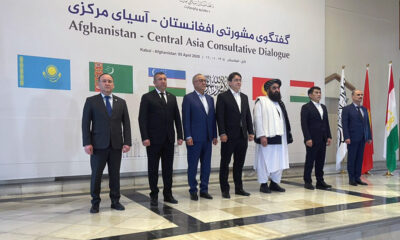
Afghanistan hosts inaugural Afghanistan–Central Asia Consultative Dialogue to strengthen regional cooperation
-
 Latest News5 days ago
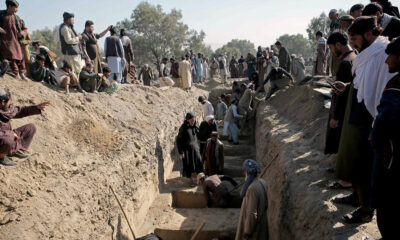
IEA accuses Pakistan of war crimes amid heavy civilian losses
-

 World5 days ago
US rescues 2nd F-15 pilot hit above Iran: Trump
-
 Latest News2 days ago
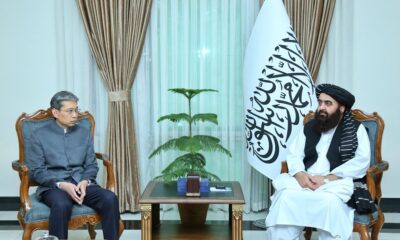
China seeking to build trust between Afghanistan and Pakistan
-

 International Sports4 days ago
IPL 2026: Lucknow hold nerve in final over to defeat Sunrisers
-
 Regional4 days ago
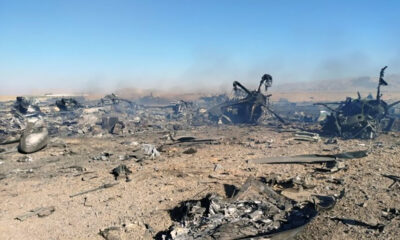
Iran claims it shot down US C-130 support aircraft in Isfahan
-
 Latest News4 days ago
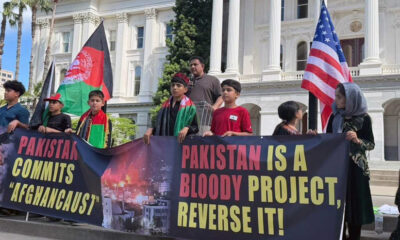
Afghan community in California condemns Pakistani strikes amid growing global protests