
World
US Defense Secretary Lloyd Austin back in hospital, transfers duties

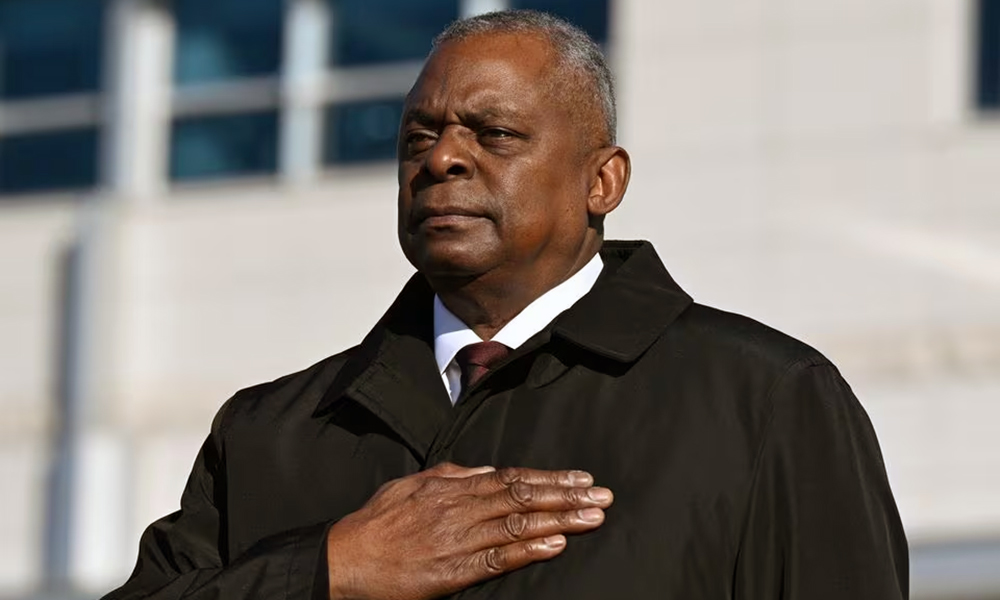
U.S. Secretary of Defense Lloyd Austin was hospitalized in Washington on Sunday for treatment of “symptoms suggesting an emergent bladder issue”, Reuters quoted a Pentagon spokesperson said.
Austin, 70, later transferred the duties of his office to Deputy Secretary of Defense Kathleen Hicks, Pentagon Press Secretary Major General Pat Ryder said in a statement.
Both Republican and Democratic lawmakers criticized Austin last month for failing to disclose a cancer diagnosis and subsequent hospitalizations in December and January, including to President Joe Biden. Some prominent Republicans, including former President Donald Trump, called for Austin to be removed from his job.
The incident was an embarrassment for Biden, and Austin apologized during a televised news briefing. He is scheduled to testify before Congress on Feb. 29 about the situation, read the report.
Biden, a Democrat, has said he has confidence in Austin despite what the president agreed was a lapse in judgment.
With its announcement of the secretary’s trip to the hospital and the quick decision to transfer his duties to a deputy, the Pentagon appeared determined to avoid a repeat of last month’s political uproar.
Austin, a retired four-star general who led forces in Iraq and is America’s first Black defense secretary, was still in hospital last month as U.S. forces launched a retaliatory strike against an Iranian-backed militia leader in Baghdad.
There are now three different investigations into Austin’s behavior, including one by the office of the Pentagon’s Inspector General, a watchdog agency that tracks military waste, fraud and abuse. The Republican chair of the House Armed Services Committee, Mike Rogers, has called Austin to testify.
Austin is scheduled to travel to Brussels for a Wednesday meeting of the Ukraine Defense Contact Group. It was not clear if his hospitalization would affect those travel plans, Reuters reported.



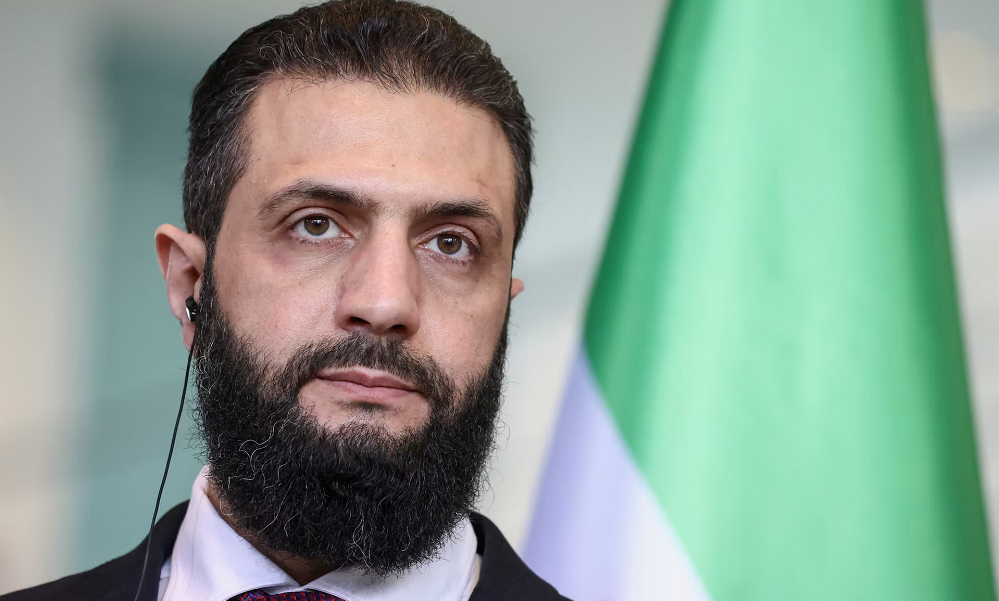
Syrian President Ahmed al-Sharaa said on Tuesday that his country will stay out of the U.S.-Israeli war against Iran unless Syria is subject to aggression and has no diplomatic solutions.
“Unless Syria is targeted by any party, Syria will remain outside any conflict,” the Syrian president said at an event hosted by think tank Chatham House in London, Reuters reported.
“We do not want Syria to be an arena of war. But unfortunately, today, things are not governed by wise minds. The situation is volatile and random,” the president said.
The month-long conflict has spread across the region, killing thousands, disrupting energy supplies, and threatening to send the global economy into a tailspin.
“We want Syria to have ideal relationships with the entire region, with Lebanon, Iraq, Turkey, Saudi Arabia, and world powers like the UK, France, Germany and the U.S. I think that Syria is qualified to start a strategic relationship network,” he said, responding to a question on whether Syria would stay neutral while the conflict goes on.
Syria has been keen to stay on the sidelines of the regional conflict that has pulled in neighbouring countries, including Lebanon, where armed group Hezbollah is locked in fighting with Israeli ground troops, and Iraq, where Iran-aligned factions have launched drone and rocket attacks.
Syria sent thousands of troops to its western border with Lebanon and its eastern border with Iraq earlier this month. Syria’s defense ministry said the deployment was part of efforts to “protect and control the borders amid the escalating regional conflict”.
“We had enough war. We paid a large bill. We are not ready for another war experience,” Syria’s president said.
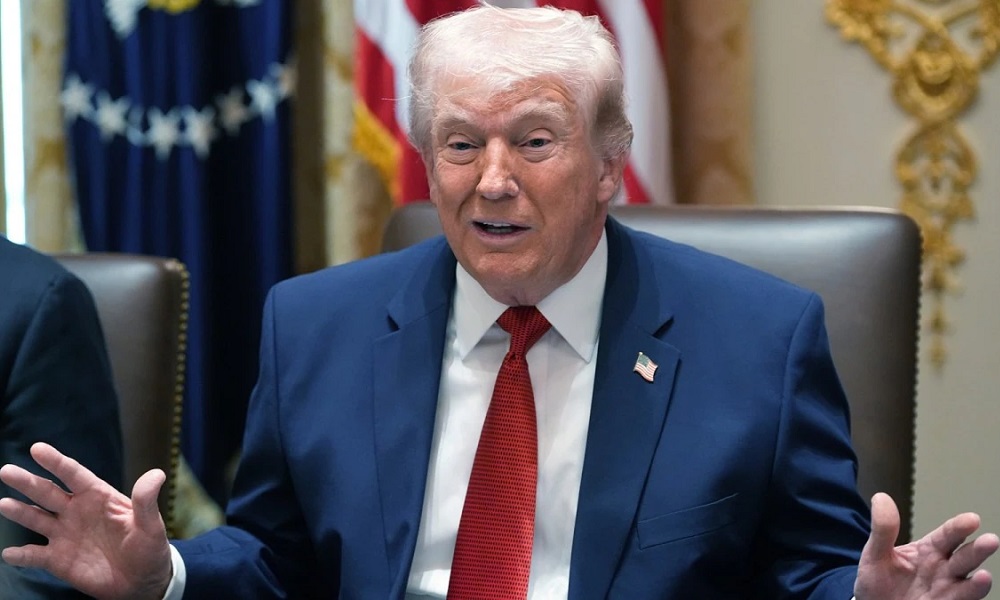
US President Donald Trump again on Tuesday lashed out at allies urging those affected by fuel shortages to secure their own supplies or buy from the United States.
In a post on Truth Social early in the day, Trump criticised allies stating: “All of those countries that can’t get jet fuel because of the Strait of Hormuz, like the United Kingdom… I have a suggestion for you: Number 1, buy from the U.S., we have plenty, and Number 2, build up some delayed courage, go to the Strait, and just TAKE IT,” he wrote.
He added: “You’ll have to start learning how to fight for yourself, the U.S.A. won’t be there to help you anymore… Go get your own oil!”
The remarks come amid heightened tensions in the Gulf, where shipping traffic has been severely disrupted, contributing to rising oil prices and concerns over global supply chains.
Pentagon briefing
At a press briefing on Tuesday, the Pentagon sought to clarify the US position, stopping short of endorsing Trump’s remarks.
Officials said the United States continues to prioritise freedom of navigation in the Strait of Hormuz and is working with regional partners to maintain stability. They emphasised that while all options remain under consideration, there has been no formal shift toward encouraging unilateral action by allied countries.
Pentagon spokespersons also noted that contingency planning is ongoing in response to escalating threats in the region, including missile and drone attacks, but reiterated that diplomatic efforts remain a key component of US strategy.
Key shipping route
The Strait of Hormuz, located between Iran and Oman, handles a significant share of the world’s oil and liquefied natural gas shipments. Any disruption to traffic through the waterway has immediate global repercussions, particularly for energy markets.
Recent weeks have seen escalating tensions involving Iran, with reports of restricted maritime movement and increased military activity in the region. Shipping slowdowns have already pushed oil prices higher and raised fears of prolonged economic fallout.
Trump’s comments also reflect a broader shift in tone toward allies, suggesting a reduced willingness by the United States to intervene militarily on behalf of partner nations.
Despite the controversy, US officials have not formally clarified whether the remarks signal a change in policy or were intended as rhetorical pressure on allies to strengthen their own energy security and defence capabilities.
Ongoing conflict
Trump’s remarks came against the backdrop of another night of intense fighting across the region, underscoring the growing volatility of the conflict.
Iranian forces reportedly struck a large Kuwaiti oil tanker off the coast of Dubai overnight, setting it ablaze and initially raising fears of a major oil spill. However, officials said on Tuesday that the fire had been contained, confirming that no oil leak occurred and no injuries were reported.
Earlier in the day, the United Arab Emirates Ministry of Defense said it had intercepted and responded to missiles and drones launched by Iran targeting the country.
As tensions ripple across the Gulf, Saudi Arabia also reported drone attacks overnight, highlighting the widening regional impact of the conflict. Iran’s foreign minister, however, insisted that the strikes were directed at US-linked targets and not at what he described as “brotherly” nations in the region.
Elsewhere, central Israel came under attack, with multiple strikes reported. The Israel Defense Forces said emergency responders had been dispatched to impact sites, while local media reported casualties.
In response, the IDF said it had carried out a series of strikes targeting government infrastructure in Tehran.
The Israeli military also confirmed it was continuing operations against the Iran-backed militant group Hezbollah in southern Lebanon, stating that several weapons depots, command centres, underground facilities and a rocket launcher had been destroyed.
However, Israel has also reported further losses, announcing that three additional soldiers had been killed in ongoing operations.
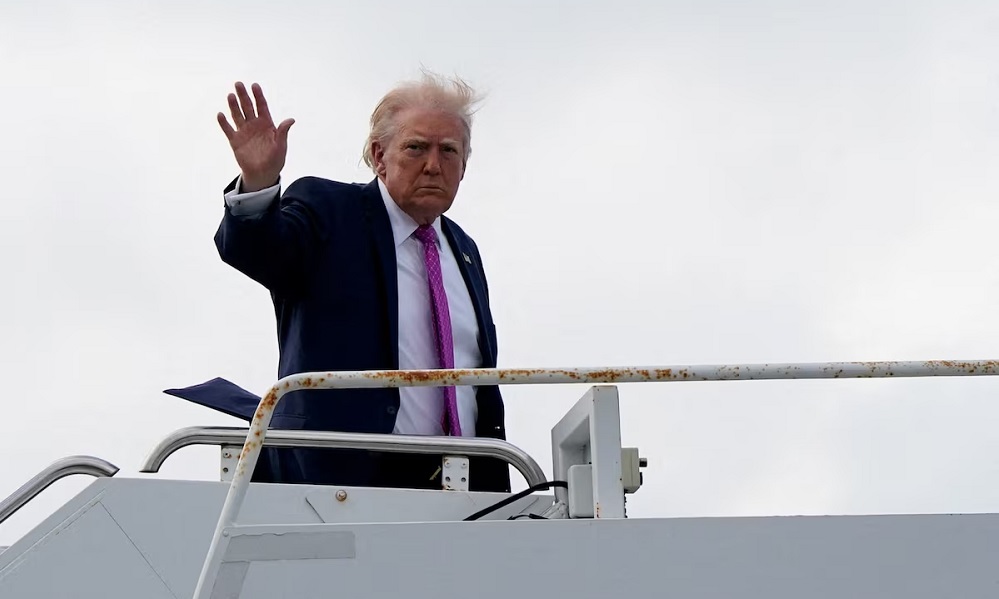
U.S. President Donald Trump told aides he is willing to end the military campaign against Iran even if the Strait of Hormuz remains largely closed and leave a complex operation to reopen it for a later date, the Wall Street Journal reported on Monday, citing administration officials.


Baradar approves 17 projects worth over one billion AFN

Afghan delegation heads to China for talks with Pakistan

US eases asylum freeze for vetted migrants, keeps Afghanistan ban

Punjab Kings edge Gujarat Titans in thrilling IPL clash as tournament gathers pace

Peshawar jirga urges Pakistan, Afghanistan to halt clashes and pursue peace through dialogue

Prominent Muslim scholar issues fatwa calling for Afghanistan-Pakistan ceasefire

IEA Supreme Leader issues Eid-ul-Fitr message urging unity and support for Islamic system

14 Pakistani soldiers killed after military post falls along Durand line: MoD

Ronaldo’s private jet flies out of Saudi Arabia following US Embassy drone strike in Riyadh

Afghanistan steps in to replace Iran in supplying fruits and vegetables to Russia

Tahawol: Escalation of conflict in Middle East discussed

Saar: Formation of Jirga in Khyber Pakhtunkhwa

Tahawol: Pakistani military shelling in Kunar

Saar: Impact of Middle East conflict on Afghanistan

Tahawol: Efforts for Kabul-Islamabad de-escalation
-
 Latest News4 days ago
Afghan defense forces stand ready to protect national sovereignty: MoD
-

 International Sports3 days ago
Injury concerns mount ahead of FIFA World Cup 2026 as stars sidelined
-
 Latest News2 days ago
TAPI gas pipeline advances 25 km in Afghanistan
-
 World5 days ago
US Vice President Vance emerges as key figure in Iran peace efforts: Report
-
 Business3 days ago
Afghanistan, Uzbekistan ink $514.8 million deals to deepen trade ties
-
 Latest News3 days ago
Peshawar to host key Pakistan-Afghanistan peace jirga amid ongoing tensions
-

 Latest News3 days ago
US report flags continued presence of anti-India militant groups in Pakistan
-

 Regional4 days ago
Twelve US troops wounded in Iran strike on base in Saudi Arabia, US official says