
Regional
US pulling non-essential staff from embassy in Beirut amid Iran tensions
Iranian Foreign Minister Abbas Araqchi said on Sunday that he expects to meet with Trump’s special envoy Steve Witkoff in Geneva on Thursday.

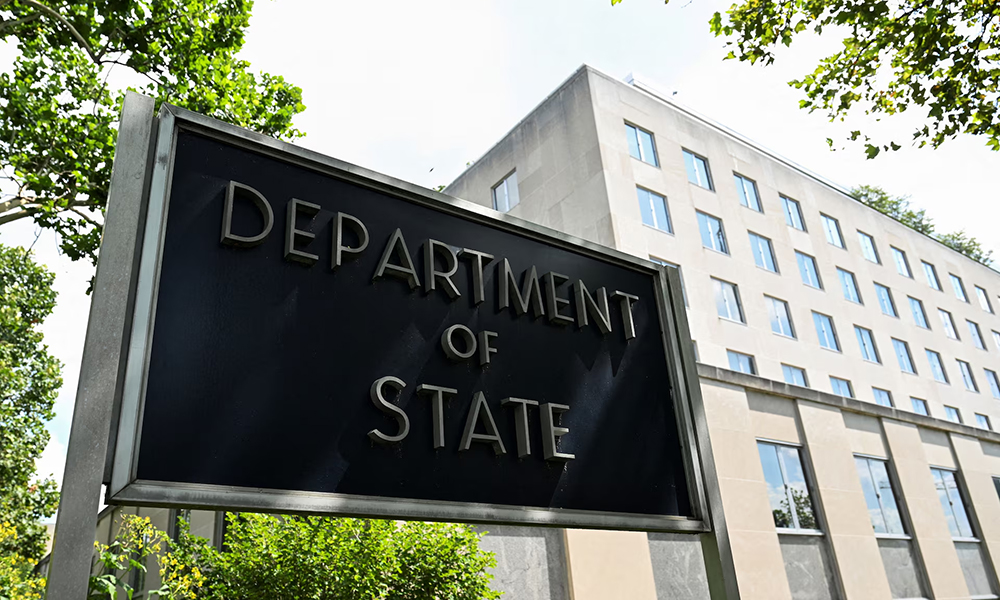
The State Department is pulling out non-essential government personnel and their eligible family members from the U.S. embassy in Beirut, a senior State Department official said on Monday, amid growing concerns about the risk of a military conflict with Iran, Reuters reported.
“We continuously assess the security environment, and based on our latest review, we determined it prudent to reduce our footprint to essential personnel,” said a senior State Department official, speaking on condition of anonymity.
“The Embassy remains operational with core staff in place. This is a temporary measure intended to ensure the safety of our personnel while maintaining our ability to operate and assist U.S. citizens,” the official said.
A source at the U.S. embassy said 50 people had been evacuated, while an official at Beirut airport said 32 embassy staff, along with family members, had flown out of Beirut airport on Monday.
The U.S. has built up one of its biggest military deployments in the Middle East, with President Donald Trump warning on Monday that it will be a “very bad day” for Iran if no deal is reached to solve a longstanding dispute over Tehran’s nuclear program. Iran has threatened to strike American bases in the region if it is attacked.
“Should employees occupying emergency positions wish to depart post, please review alternative arrangements to fill the emergency position and consult with your regional bureau Executive Office as necessary,” said an internal State Department cable on the pullout, which was seen by Reuters.
The State Department on Monday updated its travel advisory for Lebanon, repeating its warning that U.S. citizens should not travel to the country. Remaining embassy personnel are restricted from personal travel without advance permission and additional travel restrictions may be imposed “with little to no notice due to increased security issues or threats,” the advisory said.
American interests were repeatedly targeted in Lebanon in the 1980s during the 1975-90 civil war, during which the U.S. held the Iran-backed Hezbollah responsible for attacks including the 1983 suicide bombing against the U.S. Marines’ headquarters in Beirut, which killed 241 servicemen, and a 1983 suicide attack on the U.S. embassy in Beirut that killed 49 embassy staff, read the report.
Meanwhile, U.S. Secretary of State Marco Rubio, who is scheduled to travel to Israel on Saturday and meet with Prime Minister Benjamin Netanyahu, was still planning to do that, but “the schedule remains subject to change,” the U.S. official said.
The United States wants Iran to give up its nuclear program, but Iran has adamantly refused and denied it is trying to develop an atomic weapon. Washington views enrichment inside Iran as a potential pathway to nuclear weapons.
Iranian Foreign Minister Abbas Araqchi said on Sunday that he expects to meet with Trump’s special envoy Steve Witkoff in Geneva on Thursday, adding that there was still “a good chance” of a diplomatic solution. A U.S. official confirmed the meeting.
Both sides remain sharply divided – even over the scope and sequencing of relief from crippling U.S. sanctions – following two rounds of talks, a senior Iranian official told Reuters.
“I am the one that makes the decision, I would rather have a Deal than not but, if we don’t make a Deal, it will be a very bad day for that Country and, very sadly, its people, because they are great and wonderful, and something like this should never have happened to them,” Trump said in a post on his Truth Social platform.
On Friday, citing officials on both sides and diplomats across the Gulf and Europe, Reuters reported that Tehran and Washington are sliding rapidly toward military conflict as hopes fade for a diplomatic settlement, Reuters reported.
It would be the second time the U.S. and Israel have attacked Iran in less than a year, following U.S. and Israeli airstrikes against military and nuclear facilities last June.
On Sunday, Witkoff said the president was curious as to why Iran has not yet “capitulated” and agreed to curb its nuclear program.






Regional
Pakistan warns Iran to rein in Houthis as Riyadh strikes back
Pakistan’s warning to Iran carries significant weight because of its defence pact with Saudi Arabia and Turkey.
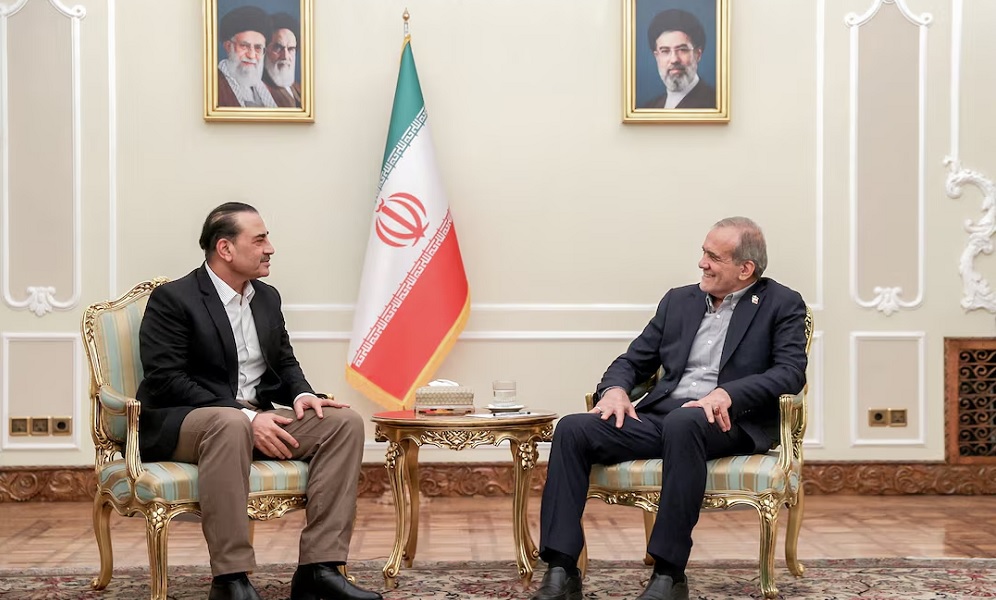
Pakistan has delivered a Saudi warning to Iran to rein in its Yemeni Houthi allies after they stepped up attacks on the kingdom, in a coordinated effort to prevent the crisis from spiralling, Reuters reported, citing Saudi, Pakistani and Iranian sources.
The Houthis struck an airbase in Khamis Mushait and oil infrastructure in nearby cities on Tuesday, wounding 73 people, in one of the biggest attacks on Saudi Arabia since the start of the U.S.-Israeli war on Iran in February.
Houthi military spokesman Yahya Saree said on Wednesday that Saudi warplanes carried out 54 airstrikes across various Yemeni provinces over the past 12 hours, adding that they would “not go unanswered and unpunished”.
The escalating conflict, which represents a second theatre of war to threaten global energy supplies, comes as Iran and the United States wage their biggest declared wave of tit-for-tat attacks on shipping in the Gulf region since their war began.
Pakistan’s warning to Iran carries significant weight because of its defence pact with Saudi Arabia and Turkey.
While officials in Islamabad stressed any military role would be confined to defending Saudi territory, Pakistani Defence Minister Khawaja Asif said attacks spilling into the kingdom could trigger a joint security arrangement involving Riyadh, Ankara and Islamabad.
“An aggression on one country will be considered an aggression on all three countries,” Asif said on Pakistani TV.
“There is no ambiguity or doubt… Unprovoked aggression or spillover… into Saudi Arabia will definitely make this agreement operational.”
The Pakistani defence ministry, foreign ministry and the military did not respond to a Reuters request for comment.
FEARS OF PROXY WAR TURNING INTO WIDER REGIONAL CRISIS
Pakistan’s intervention, after years of balancing ties with Saudi Arabia and Iran, has underscored the seriousness of the Houthi attacks. The message to Tehran is clear: rein in the Houthis or risk turning a proxy conflict into a broader regional security crisis, the sources said.
A senior regional diplomat said Pakistan had conveyed the message to Iran over the past 24 hours, urging Tehran to use its influence to halt Houthi attacks on Saudi Arabia.
A senior Iranian official confirmed that Pakistan conveyed the message to Tehran on Tuesday and Tehran’s response was that “Iran does not control the Houthis”.
However, two Iranian sources said Tehran had told the Houthis last week to carry out attacks on Saudi Arabia. Tehran promised additional funding and weapons, they said, while several Islamic Revolutionary Guard Corps commanders had travelled to Yemen to help coordinate the attacks.
The regional diplomat said Islamabad was seeking to restrain the Houthis before the escalation reached a point where Riyadh could press Pakistan to play a more active role in defending it.
“Pakistan has an agreement with Saudi Arabia, but I am hopeful the situation will not reach the point where Pakistan has to practically step in,” the diplomat told Reuters. “It will pursue a diplomatic solution for now.”
PAKISTANI SUPPORT FOR SAUDIS
The Pakistani source said Saudi officials had met senior Pakistani and Turkish military representatives in Riyadh to coordinate their response. The three countries agreed that their troops would not enter Yemen and that any response would be launched from Saudi territory, the source added.
A second Pakistani source said no decision had been made to join retaliatory strikes, stressing that its military pact with Riyadh was defensive and limited to protecting Saudi territory. Pakistani forces could provide military, technical, ground or air support within Saudi Arabia, but would not take part in combat operations on foreign soil, the source said.
The pressure campaign waged by Iran and the Houthis could have the opposite effect to that intended by Tehran, the regional diplomat said.
By targeting Gulf security in a bid to pressure Washington over its blockade of Iranian ports, Tehran risks driving Saudi Arabia, Pakistan, Turkey and other U.S.-aligned states into closer security coordination rather than fracturing their ties.
TRUMP’S BLOCKADE OF IRAN SET TO CONTINUE
Regional officials also see little sign that Washington is prepared to relent.
President Donald Trump appears committed to maintaining the U.S. blockade until Iran reaches an agreement with Washington, the diplomat said, while Qatar is quietly exploring new proposals aimed at bringing both sides back to negotiations.
Another regional source said Saudi Arabia’s military response would remain focused on the Houthis rather than Iran itself. Nor do Saudi officials believe Houthi attacks will achieve Tehran’s broader objective of ending the U.S. blockade.
Riyadh is not expected to press Washington to lift the blockade, that source said, stressing that Trump believes sustained economic coercion is the most effective pathway to negotiations.
“The question is how much pain Iran can absorb, and for how long,” the source said. “Trump does not want a military solution. He wants to squeeze them through the blockade.”
Regional
Iran attacks US base in Jordan, ships near Hormuz after tankers sunk
Iran has targeted U.S. assets and allies in the region throughout the war, including in Jordan several times, killing at least two U.S. military personnel during one strike in July.
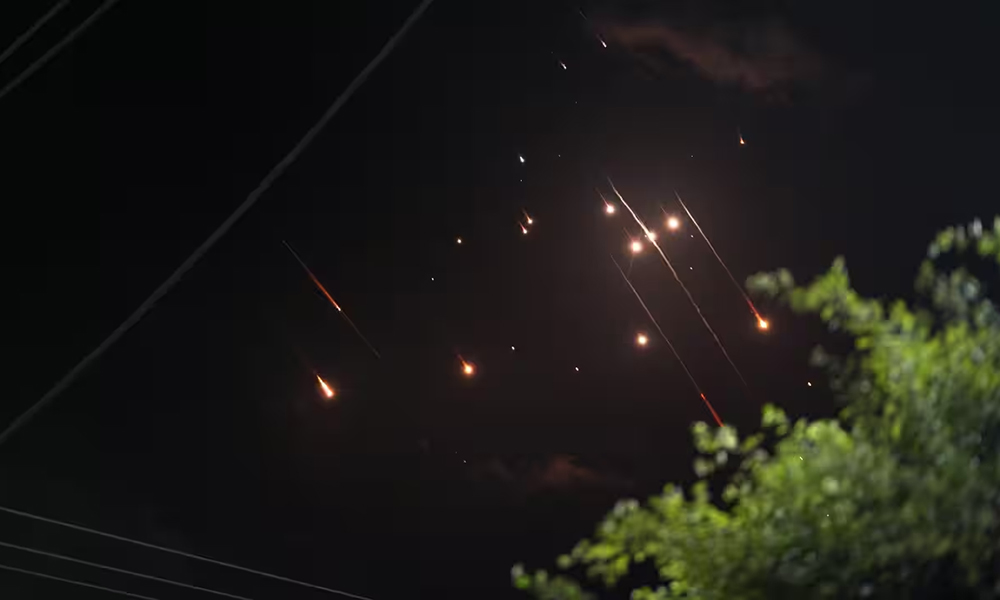
Iran’s Revolutionary Guard said it fired ballistic missiles at a base in Jordan used by the U.S. military and attacked 10 ships on Wednesday, after the U.S. said it had destroyed five Iranian oil tankers, in a sharp escalation of the six-month-old war, Reuters reported.
Increased attacks by both the U.S. and Iran have shattered a month of relative calm, hitting military, shipping and energy assets, sending oil prices surging and drawing in regional allies in recent days.
The Americans said they destroyed five Iranian oil tankers on Tuesday. The U.S. military’s Central Command posted video of the strikes, which it called a response to Iran’s Islamic Revolutionary Guard Corps (IRGC) targeting a U.S. Navy warship twice with ballistic missiles over the previous two days. No Americans were harmed, the U.S. said.
“Iran continues to try to hit U.S. naval ships, and for every time they do that or try to do that, they’re going to lose tankers,” U.S. Secretary of State Marco Rubio told reporters during a visit to Colombia.
Iran then carried out a ballistic missile attack on a base used by U.S. forces near Al Azraq in Jordan, according to an IRGC statement on state media.
Although Iran said its missiles inflicted heavy damage, Jordan said its air defences intercepted 18 of the 20 Iranian missiles, with two falling in unpopulated areas, and that there were no casualties. A U.S. official said Iran’s strikes in Jordan were ineffective and all American troops were accounted for.
The IRGC said on Wednesday it also attacked 10 ships, including two U.S. vessels and eight oil tankers, attempting to cross a “prohibited and unsafe” area of the Strait of Hormuz, a vital energy conduit largely choked off by Iranian attacks.
Iran has targeted U.S. assets and allies in the region throughout the war, including in Jordan several times, killing at least two U.S. military personnel during one strike in July.
Iran has also threatened oil tankers in Kuwaiti and Bahraini ports, according to a statement carried by state media. A maritime security source reported a liquefied natural gas tanker was damaged in the Emirati port of Khor Fakkan, though it was unclear who was responsible.
Oil prices extended gains in early trade on Wednesday with Brent crude nearing $100 a barrel on market concerns over the disruption of oil tanker traffic in the Strait of Hormuz. Recent attacks by Yemen’s Iran-aligned Houthis on top energy producer Saudi Arabia have added to supply concerns, read the report.
On Tuesday, Houthis launched an attack on several cities in Saudi Arabia, further undermining regional stability.
The Houthi attacks wounded 73 people and set oil installations ablaze in what appeared to be a major expansion of the conflict, which began on February 28 with joint U.S.-Israeli attacks on Iran.
The Houthis, who control most of Yemen’s populated areas, including the capital, have further pressured U.S. allies by periodically disrupting shipping on the other side of the Arabian Peninsula, at the entrance to the Red Sea.
They said they had launched a broad operation deep into Saudi territory, using drones and missiles to strike a Saudi air base in the southern city of Khamis Mushait as well as Saudi state oil company assets in the cities of Abha, Najran and Jazan.
Saudi authorities reported blazes at the sites and said women and children were among the wounded.
Saudi Arabia has led an Arab coalition battling against the Houthis in Yemen for more than a decade, after the Houthis drove the Yemeni government from the capital. That war had calmed in recent years, but a ceasefire there has broken down.
The wider war in the Gulf has turned into a test of wills between the U.S. and Iran, with each side hoping that economic pressure from competing blockades will force the other to yield.
Washington is trying to increase the flow of oil to world markets by guiding ships through the Strait of Hormuz, while cutting off Iran’s exports with a blockade, Reuters reported.
Central Command said the tankers it destroyed on Tuesday were part of a shadow network that funds the IRGC and its regional proxies. Iran has long supported what it calls an “Axis of Resistance”, which includes the Palestinian Islamist group Hamas, Lebanon’s Hezbollah, Iraqi Shi’ite militias and the Houthis.
Regional
Hormuz traffic dips to lowest since May after US, Iranian strikes on ships
the IRGC navy said on Saturday it targeted three oil tankers travelling unauthorized routes in the strait as well as three additional U.S. vessels in other areas.
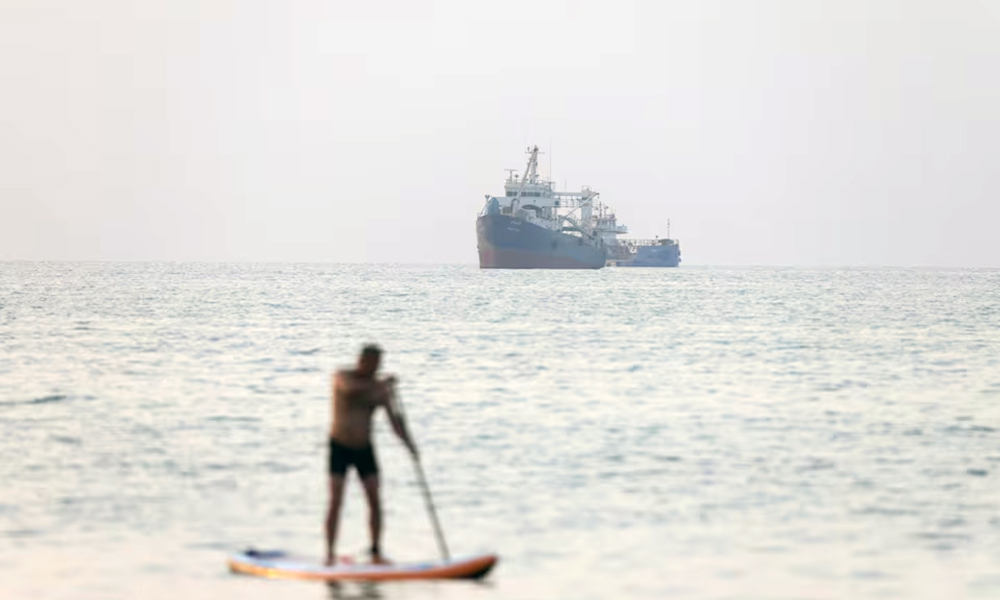
An average of 10 commodity ships transited the Strait of Hormuz per day over the past 10 days, the lowest since May, according to shipping data on Monday, after U.S. and Iranian strikes on tankers, Reuters reported.
The 10-day moving average was 10 on Sunday, down from more than 15 on Friday and nearly 13 on Saturday, data from analytics firm Kpler found.
Only two vessels passed through the strait on Saturday while six went through on Sunday, mostly using the Iranian route.
U.S. forces struck three Iranian oil tankers on Saturday, U.S. Central Command said, including one off Kharg Island, Iran’s key oil export hub, following attacks by Iran’s Islamic Revolutionary Guard Corps on U.S. warships in the region.
In retaliation, the IRGC navy said on Saturday it targeted three oil tankers travelling unauthorized routes in the strait as well as three additional U.S. vessels in other areas.
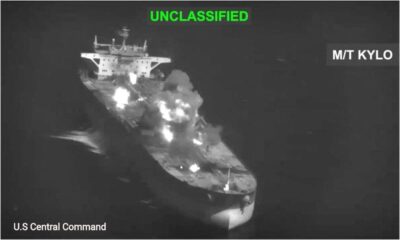
The three Iranian tankers were Downy, Stark I and Kylo, also known as Noxen, maritime intelligence firm Marisks said in a note.
The Saturday attacks represented a “major escalation in the maritime conflict”, Marisks said.
“Commercial tankers are now being deliberately used as instruments of reciprocal economic pressure, substantially weakening the previous distinction between military confrontation and commercial shipping,” it added.
“Risk is therefore assessed as extreme for Iranian/Iran-linked tonnage and materially elevated for U.S.-linked or U.S.-escorted shipping throughout the Strait of Hormuz and Gulf of Oman.”
There have been 27 projectile strike incidents since July 6, resulting in damage to vessels operating in and around the Strait of Hormuz, the United Kingdom Maritime Trade Operations (UKMTO) said in its weekly report.
On Sunday, one very large crude carrier and three bulk carriers laden with metals, grains or oilseeds entered the strait, Kpler data showed.
A tanker carrying refined products loaded from a Saudi port attempted to exit but was turned back, data from LSEG showed.
There has been no VLCC exiting the strait since Wednesday, according to Kpler data.


Pakistan: Afghan students with valid visas can complete their education

Saar: UN reaffirming support for Afghanistan discussed

Acting Afghan ambassador meets Malaysian House Speaker over bilateral ties

Baradar discusses expanding economic and trade ties with Turkish envoy

Trump touts $5,000 payout if Republicans win as Vance waits in wings

Four mediators struggle to secure lasting Pakistan-Afghanistan ceasefire

HesabPay unveils new visa card and digital payment app in Kabul

AFC Champions League Elite draw nears as Al-Nassr seeded above Al-Hilal

Juma Khan Fateh surrenders to IEA forces in Badakhshan

Afghanistan’s trade diversification challenges Pakistan
Saar: UN reaffirming support for Afghanistan discussed

Saar: Pakistan’s decision to expel Afghan medical students discussed

Tahawol: Victory of Germany’s far-right party in state election discussed

Saar: UN Human Rights Council meeting on Afghanistan reviewed

Tahawol: Possible future scenarios for Ukraine crisis
-
 Business4 days ago
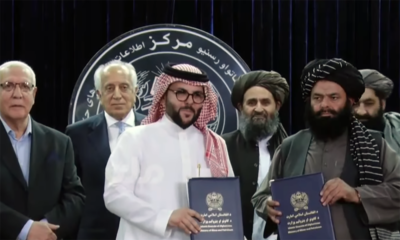
Saudi energy group signs major Afghanistan deals covering gas exploration and pipeline plans
-
 Latest News4 days ago
Khalilzad: Afghanistan ready to attract major investment
-

 Latest News5 days ago
Maryam Nawaz says Punjab faces greater security threats from neighbouring provinces
-
 Latest News2 days ago
Amnesty International condemns Pakistan order requiring Afghan medical students to return
-
 Regional5 days ago
US and Iran exchange fire on vessels near Strait of Hormuz
-
 Latest News2 days ago
Afghan Embassy in Islamabad calls for halt to expulsion of Afghan students
-

 International Sports5 days ago
Messi returns to Inter Miami after Argentina retirement
-

 Business5 days ago
Imam Abu Hanifa exhibition to draw exhibitors from more than 20 countries