
Latest News
US shows greater willingness to engage with the IEA

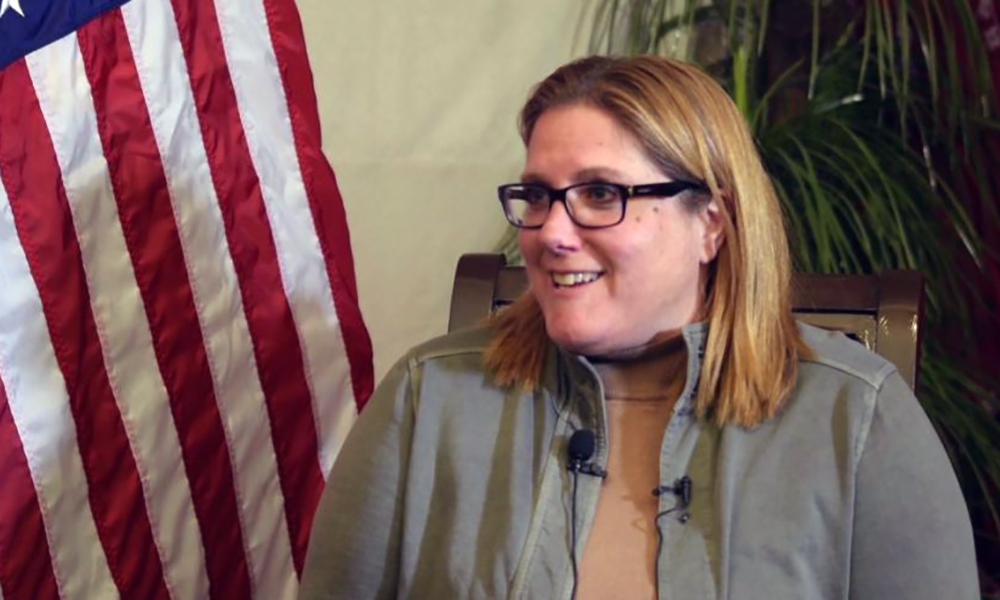
Washington is willing to move towards greater engagement with the Islamic Emirate of Afghanistan (IEA) as it seeks to tread a fine line between its human rights concerns and helping the Afghan people, interviews with top US officials and senior aid figures reveal.
Speaking to The New Humanitarian on the sidelines of a donor meeting in Istanbul last month, Karen Decker, chargé d’affaires of the US mission to Afghanistan, said Washington has “learned the hard way that isolation is ruinous. It’s ruinous for the Afghan people. It’s ruinous for the region”.
In the past year, the UN, several international and local NGOs, and Washington have all signaled that avoiding the Islamic Emirate won’t solve Afghanistan’s economic and humanitarian issues, The New Humanitarian reported.
This comes despite the IEA still refusing to allow girls and women to study beyond the sixth grade.
Decker told The New Humanitarian that Washington is now in a position where it must “very carefully navigate the non-recognition policy”, which requires a delicate balance of keeping in mind that the IEA took power by force rather than a democratic vote while still finding ways to reach the millions of Afghans who require emergency assistance.
One NGO source, who asked to remain anonymous, was quoted as saying by The New Humanitarian that “engagement [with the IEA] is necessary, but we have to find a way to balance engagement while not compromising on our principles.”
Decker agreed, saying Washington would continue to engage with the IEA on “pragmatic issues”, with humanitarian assistance and human rights being her primary areas of concern.
Because its non-recognition policy precludes US officials from working in the country, Washington has partnered with local and international groups on the ground to deliver assistance directly to the Afghan people.
But even with that cooperation, it’s not always so easy, as these groups must also tread carefully amid increasing IEA restrictions and regulations, The New Humanitarian reported.
Even though there is still a long way to go, particularly in terms of addressing US human rights concerns, Decker told The New Humanitarian she feels Washington’s efforts have led to some positive results.
“Eighteen months ago, we were worried about famine, and there is no famine in Afghanistan,” Decker said, crediting this largely to the work of local and international aid organizations.
However, she pointed out that Afghans still need more food assistance than in the past: “So, in some respects, you trade one problem for another.”
Decker raised another issue that adds to the difficulty of engaging further: the Islamic Emirate’s unwillingness to acknowledge any problems in the country: “They like to present Afghanistan as a success story… [and] they don’t want anyone thinking there’s anything wrong.”
She said if the Islamic Emirate were more straightforward to deal with, then humanitarian actors would save a lot of time and money and be able to reach those in need more quickly.
“We use a lot of time and effort making it work, because of the Taliban (IEA). They are fundamentally the challenge to making this work. We are able to navigate [it], but it would be much more efficient if the Taliban were much more [open].”
Decker did, however, give the Taliban some credit, saying they had shown some flexibility, especially in emergency situations.
She pointed to the Islamic Emirate’s responses to a series of earthquakes that rocked the western province of Herat, and the recent mass expulsions of hundreds of thousands of Afghans from neighboring Pakistan, as examples of when the IEA saw it necessary to amend or loosen some of their restrictions, The New Humanitarian reported.
“Women were suddenly allowed to work because they had to reach women beneficiaries,” she said.
While engagement efforts have sparked widespread criticism, all the sources The New Humanitarian spoke to said they saw little benefit in pretending the Islamic Emirate does not exist.
With an “overwhelming need in the country”, simply ignoring the IEA will do nothing to improve the lives of the millions of Afghans who remain in need, said Decker.
“It’s not in anyone’s interest for us to isolate the country,” she added. “And I say this over and over: I feel strongly that if the United States does not advocate for the Afghan people, nobody will. So, I don’t need any more motivation than that.”
The New Humanitarian reached out to the Islamic Emirate’s Ministry of Foreign Affairs for comment on several matters related to the issue of engagement, but it failed to respond.
Decker and other sources did however, express some hope based on private meetings and the public statements of several high-ranking Islamic Emirate officials, who have acknowledged that all girls and women should be allowed to return to school and that the government must expand beyond just the IEA.
“We know that there [are] senior Taliban leaders who have their daughters in school outside of the country, and some of them have even been open in their own statements about the importance of education,” said Decker.
However, for progress to be made towards US recognition, she said the Islamic Emirate must officially change some of its policies, pointing to increased work opportunities for women and real inclusion of non-IEA members in the government as concrete examples of possible game-changers.












Kazakhstan’s Foreign Minister Mukhtar Tileuberdi has called for pragmatic and coordinated international engagement with Afghanistan, saying the country’s long-term stability is closely linked to the security and sustainable development of Central Asia.
Speaking during the general debate of the 81st session of the United Nations General Assembly in New York on Friday, Tileuberdi said humanitarian assistance to Afghanistan remains essential but alone cannot break the cycle of poverty, displacement and dependency.
He said Kazakhstan supports a “pragmatic, coordinated and step-by-step” approach to international engagement with Afghanistan, with the United Nations playing a central role.
Tileuberdi also said Kazakhstan is working with the UN to operationalize the United Nations Regional Centre for the Sustainable Development Goals for Central Asia and Afghanistan in Almaty.
He said the success of the centre should be measured by the results and assistance it delivers to the region.


Abu Muslim Farah defeat Khurasan Faryab 2-0 in ACL season six

Saar: Concerns over Pakistan’s political crisis discussed

Afghanistan Champions League: Omar Zawak Herat beat Toofan Herat 1-0

Blast in Pakistan’s Dera Ismail Khan kills 11, injures 30

Ariana Afghan Airlines increases Kabul-Delhi cargo flights

Saudi energy group signs major Afghanistan deals covering gas exploration and pipeline plans

Trump floats idea of renaming Atlantic or Pacific Ocean

US hits Egyptian bank branches with Iran sanctions as war marks six months

Nepal flood rescue mission enters critical phase as thousands remain missing

Iranian clubs to face Gulf opponents at neutral venues in Asian Champions League Elite
Saar: Concerns over Pakistan’s political crisis discussed

Exclusive interview with Abdul Latif Mansoor, Minister of MRRD

Tawsia: Overview of Afghanistan’s iron mines

Tahawol: Discussion on fresh Pakistani airstrikes on Afghanistan

Saar: Calls for international support for Afghanistan discussed
-

 World5 days ago
CNN, MS NOW and Politico sue Trump, challenging White House ban
-

 Latest News4 days ago
Ariana Afghan Airlines ranks seventh among 45 Central Asian airlines
-

 Latest News5 days ago
UN reiterates call for respect for international law after Kunar airstrikes
-

 Regional4 days ago
US and Iran hold first talks since June after Trump’s ‘annihilation’ threat
-

 Latest News4 days ago
Silk Road highway in Wakhan corridor now reaches the China border
-

 Regional3 days ago
Iran airlines cancel flights as US sanctions hit
-

 Latest News5 days ago
Afghan Official: Pakistan’s airstrikes will not go unanswered
-

 Regional5 days ago
G7 foreign ministers call on Iran to stop arming Houthis